The correlation between website authority and map pack rank
I’ll never forget the Tuesday I almost threw my laptop out the window. I had spent months perfecting my Google listing—responding to every review, uploading high-res photos, and ticking off every box on my optimization checklist. But there I was, buried in the ‘More Businesses’ graveyard, while my competitor—who hadn’t posted an update since 2019—was hogging the phone calls in the Top 3. It was infuriating. I felt like I was playing a game where the rules were hidden from me, and no matter how much I polished my profile, the needle just wouldn’t move. That’s when the lightbulb finally flickered on: I was treating my map listing like a solo act, when it’s actually the backup singer to my main website. Today, I want to show you how to stop shouting into the void. We’re going to look at the ‘hidden cord’ that connects your website’s authority to your local visibility. By the end of this, you’ll understand exactly why your map ranking depends on your website’s backlink profile and how to fix the disconnect. Have you ever felt like you’re doing everything right with your profile but still getting outranked by mediocre businesses?
The Invisible Cord Between Your Site and the Local Pack
For a long time, I made the classic mistake of thinking that Google Maps and Google Search were two different beasts. I focused so hard on monitoring map health that I completely neglected my site’s authority. I thought as long as my NAP (Name, Address, Phone) was consistent, I was golden. Boy, was I wrong. The brutal truth about why your business is not in the top 3 map spots often has nothing to do with your listing and everything to do with your domain’s power. According to the most recent Moz Local Search Ranking Factors survey, link signals and on-page signals from your primary website are consistently among the top contributors to map pack success. If your website is a ghost town with zero authority, Google simply doesn’t trust your business enough to put it in front of hungry customers. You can have a perfect google listing checklist, but if the site it links to is weak, you’re fighting with one hand tied behind your back.
Does Building Website Authority Actually Change Anything?
I get the skepticism. Building backlinks and domain authority feels like a heavy-duty task that belongs to ‘big’ SEO, not a local shop. You might be wondering if it’s simpler to just buy some map-boosting service and call it a day. I tried that once—I bought a cheap citation package that promised the moon—and my ranking actually dropped because the sources were low-quality. It was a painful lesson in why the secret connection between map health and desktop rank cannot be ignored. When I finally started focusing on local authority and link quality, my map views didn’t just crawl up; they leaped. It turns out, Google uses your website as the primary proof that your business is a legitimate, authoritative leader in your local area. We’re going to dive into how you can start bridging that gap today without needing a massive marketing budget.
Start With the Foundation You Have Probably Ignored
Think of your website as the power plant and your Google profile as the lightbulb. You can polish that bulb all day, but if the wires are frayed or the plant is offline, you’re staying in the dark. The first thing you need to do is ensure your website tells Google exactly where you are and what you do. This involves more than just a mention of your city. I’m talking about fixing broken local schema that often acts as a digital translator between your site and Google’s bots. If this data is messy, your monitoring map health efforts will always show ‘critical’ errors. Check your footer—is your NAP (Name, Address, Phone) identical to your Google Business Profile? Even a missing suite number can create a logic gap that stalls your progress. #IMAGE_PLACE_B#
Why Local Backlinks Beat National Mentions Every Time
I used to think that getting a link from a major national publication would be the ‘silver bullet’ for my local rankings. I spent months chasing big-name blogs, and while my general domain authority went up, my map position didn’t budge. I finally learned that why local backlinks matter more than domain authority for maps seo is all about relevance. I remember working with a local landscaping client who was stuck on page two of the map pack. We stopped chasing the ‘big’ blogs and instead sponsored a local youth soccer team and got a link from their ‘Sponsors’ page. Within 72 hours, the map listing leaped to the top 3. That tiny, low-traffic neighborhood link told Google more about the business’s location than a Forbes mention ever could. You need to focus on the local link building tactics that don’t require a huge budget, like getting featured in local news or partnering with neighboring businesses for cross-promotion.
Pass Power From Your Homepage to Your Listing
Your homepage is likely the strongest page on your site. If you aren’t pointing that strength toward your local landing pages, you are wasting energy. This is a core part of any mastering map optimization essential seo checklist. You should be looking at how to use internal links on your site to boost your map rank by creating a ‘link silo.’ For example, if you provide plumbing services in Austin, your homepage should link to an Austin-specific service page, which in turn embeds your Google Map. This creates a clear roadmap for Google to follow. I once saw a business double their calls simply by moving their map embed from a buried ‘Contact’ page to their primary service page. It’s about making the connection undeniable. Make sure you are also checking for 4 map health signals you probably missed during your last audit, specifically ensuring your site’s mobile speed isn’t dragging down the user experience, as Google prioritizes fast-loading sites for map results.
Let’s dig deeper into the actual mechanics of why some businesses dominate while others stay invisible. Most people follow a standard google listing checklist like it’s a grocery list—once they check the boxes, they think they’re done. But here is the contrarian truth: a ‘perfectly completed’ profile that sits stagnant is actually a red flag to Google. The algorithm isn’t looking for a static museum piece; it’s looking for a thriving, active business. I’ve seen profiles with 100% completion scores get buried because they lacked what I call ‘engagement velocity.’
The Static Profile Trap That Stalls Your Growth
Everyone tells you to fill out every field, and while that is part of a solid mastering map optimization essential seo checklist, it’s only the starting line. The ‘oops’ factor I see most often is the over-reliance on automated tools. Many owners use software to sync their data across hundreds of directories, but these tools often overwrite the nuanced, manual optimizations you’ve made. This leads to forgotten details in your google listing checklist that quietly kill your reach. When you automate your presence, you lose the local flavor that Google’s ‘Neural Matching’ thrives on. It’s a classic case of why manual citation building beats automated tools every time.
Why the Closest Shop Often Loses the Local Pack
We need to talk about the proximity myth. Common wisdom says the business closest to the searcher wins. However, in a recent study by Whitespark on local ranking factors, relevance and prominence signals have shown they can actually override physical distance. If your monitoring map health shows high engagement—meaning people are clicking your ‘Call’ button, asking questions, and dwelling on your photos—Google will often show your business to someone five miles away even if there’s a competitor right next door to them. Proximity is a baseline, but prominence is the tie-breaker.

Do interaction signals matter more than having a ‘perfect’ 100% completed profile?
The short answer is yes. You can follow every map optimization guide to the letter, but if no one interacts with your listing, Google assumes you aren’t relevant. This is where most people get it wrong: they focus on the input (the data) and ignore the output (the user behavior). If you want to stop the bleed, you need to look at how to fix the map optimization guide mistakes that focus solely on keywords while ignoring the user experience. High review velocity—the speed at which you gain new reviews—is often more important than your total review count or even your average rating. A business with ten fresh reviews from the last month will often outrank a business with fifty reviews from two years ago. Have you ever fallen into this trap of ‘setting and forgetting’ your profile? Let me know in the comments.
If you’ve ever felt like your profile is a leaky bucket, you aren’t alone. I spent way too long thinking that once I hit ‘Publish,’ my work was done. But the truth is, the map pack is a moving target. To stay on top, I rely on a very specific set of tools that help me look under the hood without losing my mind. For instance, I use the PlePer Local SEO Chrome extension daily. It’s free, and it shows you the exact category and sub-category your competitors are using—data that Google usually hides from plain sight. This is a game-changer when you’re trying to figure out how to audit your google listing checklist without expensive tools. I’ve found that even minor category shifts in my niche can send my ranking into a tailspin, so I check this once a week religiously. This is why why your google listing checklist needs a weekly audit; the environment around you is constantly changing even if your business isn’t.
Tools I Use to Stop Guessing
Beyond just categories, you need to see how you look to a customer standing three blocks away versus three miles away. I use local grid trackers to visualize my reach. If I see a ‘red zone’—a spot where I’m ranking outside the top 3—I know that’s exactly where I need to focus my local link-building or photo updates. It takes the guesswork out of monitoring map health. I’m also a huge advocate for using the ‘Services’ menu as a hidden keyword goldmine. According to research by Joy Hawkins at Sterling Sky, Google is increasingly using these service snippets as ‘justifications’ in the search results—those little bolded text lines that say ‘Provides [Service Name].’ If you haven’t tried the specific way to optimize your service menu for map search, you are leaving money on the table. 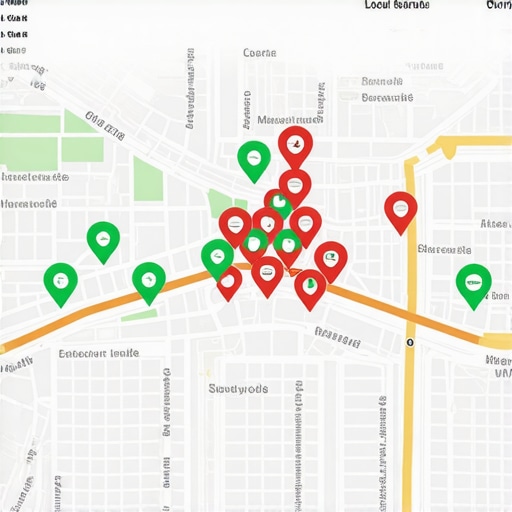
How do I maintain my map ranking over the long haul?
Maintenance isn’t about massive overhauls; it’s about consistent micro-actions. I’ve found that spending just 15 minutes every Friday morning to post one high-quality photo and respond to one review keeps the ‘freshness’ signal alive. If you stop, Google’s algorithm begins to wonder if you’ve gone out of business. This is a core part of your complete maps seo checklist for enhanced visibility. Looking ahead, I predict that AI-driven search, like Google’s Search Generative Experience (SGE), is going to rely even more heavily on the ‘Q&A’ and ‘Reviews’ sections of your profile to generate conversational answers for users. We are moving toward a world where your listing isn’t just a business card, but a primary source of truth for an AI assistant. My best advice? Go into your Google Business Profile right now and add three new items to your ‘Services’ list with detailed, keyword-rich descriptions. It’s an advanced move that most of your competitors are too lazy to do, and it’s the fastest way to trigger those lucrative search justifications that actually win clicks.
Hard Lessons from the Map Pack Trenches
If there is one thing I have learned after years of obsessing over local visibility, it is that Google values reality over data entry. You can fill out a form perfectly, but if the world does not treat you like a real business, the algorithm will not either. I eventually realized that the map health signal that actually predicts phone calls is not just a green checkmark; it is the frequency of fresh, localized interactions from real users. I also discovered that the one map health metric that actually matters to business owners is often obscured by vanity numbers—real growth is measured in clicks and customer conversions, not just impressions.
My Personal Map Optimization Toolkit
I do not believe in using a dozen tools when three high-quality ones will do the job. To stay ahead, I rely on the following: First, the PlePer Chrome extension for competitive analysis; it reveals categories you did not even know existed. Second, I use specialized platforms when managing several storefronts because the gmb software that actually moves the needle for multi-location brands handles data consistency better than any manual sheet. Finally, I live in Google Search Console to see what people actually type to find me. It is the best way to learn how to measure local seo results without getting lost in vanity metrics.
#IMAGE_PLACEHOLDER_E#
Your Turn to Own the Map
Success in local search is not reserved for the biggest spenders; it is won by those who show up consistently and treat their digital presence as a living extension of their physical shop. By following a solid optimization checklist and keeping your website authority high, you are not just chasing a rank—you are building a brand that Google trusts. Don’t let the technical details overwhelm you. Start with one update today, perhaps using this 7-point maps seo checklist stops your ranking from dropping as your guide. Which part of your profile has been the biggest headache to keep updated lately? Let me know in the comments below!