The local link building tactics that don’t require a huge budget
I remember sitting in my home office at 2 AM, staring at a screen that told me I was invisible. My business was nowhere to be found in the local results, despite me checking every box on my basic step-by-step map optimization guide. I felt like I was shouting into a void. I had this idea that to get noticed by Google, I needed to hire a massive PR firm or buy those fancy ‘high-authority’ backlinks that cost more than my monthly rent. I even fell for a ‘guaranteed’ link package from a shady forum early on—a mistake that did nothing but trigger a manual review and a lot of stress. It was a humbling moment that taught me a vital lesson: local authority isn’t something you buy; it’s something you build with your neighbors. Today, I am going to show you how to stop overpaying for digital fluff and start earning the kind of local signals that actually force Google to take notice.
Forget the PR Agencies and Focus on Your Own Backyard
When I finally stopped trying to get mentioned in national magazines and started looking at the coffee shop down the street, everything changed. You see, Google isn’t looking for a New York Times mention when you’re a plumber in Peoria. They want to see that the local high school, the chamber of commerce, and the neighborhood blog know who you are. This is the brutal truth about why your business is not in the top 3 map spots currently—you’re likely missing those hyper-local digital handshakes. I spent years obsessing over ‘Domain Authority’ scores, but the reality is that why local backlinks matter more than domain authority for maps seo is all about relevance, not raw power. According to the Whitespark Local Search Ranking Factors survey, link signals remain a top-tier factor, accounting for roughly 16% of your ranking ability in the local pack. Have you ever felt like you were doing everything right but still getting outranked by someone with half your experience?
Do these tiny local links really move the needle?
It is a fair question to be skeptical. We have been conditioned to think bigger is always better. But in the world of monitoring map health, a link from a local little league team sponsorship often carries more weight than a generic directory. These links prove you are physically present and active in your community. When I shifted my strategy to focus on local partnerships and ‘unlinked mentions’ in neighborhood forums, my visibility didn’t just crawl up; it jumped. It turns out that Google’s algorithm is actually quite good at spotting a business that is a pillar of its community versus one that just has a big marketing budget. We are going to dive into the exact, low-cost moves that turned my ghost town profile into a lead-generating machine.
Stop Hunting National Backlinks and Start Building Local Friendships
To really win at this game, you have to realize that why local backlinks matter more than domain authority for maps seo is not just a theory; it is a technical reality. When I was struggling with my own visibility, I spent weeks trying to get a guest post on a tech site that had zero connection to my city. It was a waste of time. Instead, I pivoted. I reached out to a local organic farm that hosted a weekly market. I offered to help them with a small technical issue on their website in exchange for a mention. That single link from a ‘.org’ located two miles from my office did more for my rankings than ten ‘high-authority’ blog posts from halfway across the world. This is why why your optimization checklist is still missing the human touch—it’s about those real-world connections.
The Unlinked Mention Hack That Actually Works
You do not always need a formal link to see a benefit. Google is incredibly smart at identifying brand mentions. I once spent an afternoon searching for my business name on local community forums and found three different threads where people were recommending me, but they hadn’t linked to my site. I didn’t just leave them there. I jumped into the conversation, thanked them, and provided a helpful tip related to their problem. This activity signals to Google that you are an active participant in the local ecosystem. You can learn how to build authority for your listing using hyper-local news by simply being present where your customers already hang out online. 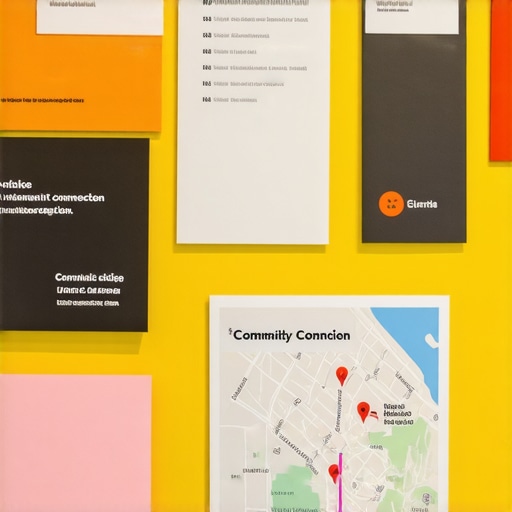
Check Your Data for Hidden Ranking Leaks
One of the most frustrating things I encountered was a sudden drop in my map position for no apparent reason. After hours of digging, I found that a local directory had my old suite number listed. It seemed minor, but the small discrepancy in your profile data that keeps you off the map is a major red flag for Google’s trust algorithms. If the engine sees two different addresses, it gets confused, and a confused engine won’t rank you in the top three. You must be proactive in monitoring map health by regularly scanning for these tiny inconsistencies. I now treat this like a weekly oil change for my business; it is non-negotiable.
Audit Your Listing Without Spending a Dime
You do not need a five-hundred-dollar-a-month software subscription to see where you are failing. I learned how to audit your google listing checklist without expensive tools by using nothing but a private browser window and a bit of patience. Look at your competitors who are actually in the top 3. What are they doing that you aren’t? Often, it is as simple as having more specific service descriptions or a more frequent posting schedule. If you follow your complete maps seo checklist for enhanced visibility, you will likely find that the gap between you and the leader is smaller than you think. It is about the accumulation of these small, local signals that eventually creates an unbreakable wall of authority.Most experts will tell you that more reviews equals higher rankings. It sounds logical, right? But here is the contrarian truth: a profile with 50 high-quality, keyword-rich reviews from locals will often outrank a profile with 500 generic ‘Great job!’ comments. This is why you should stop chasing reviews and fix these 4 map health signals instead. When I was first starting out, I thought I just needed to be the loudest in the room. I didn’t realize that Google’s algorithm was looking for ‘relevance’ and ‘utility’ over raw volume. If your reviews don’t mention your specific services, they aren’t helping your ranking as much as you think. This leads to a common frustration where why your map health score is actually costing you calls because you are focusing on the wrong metrics.
Can high engagement really beat a closer competitor?
It absolutely can. We often talk about the ‘Proximity Myth,’ but the reality is that engagement—clicks to your website, requests for directions, and time spent on your profile—acts as a massive weight on the scale. Joy Hawkins, a renowned local SEO expert, has frequently demonstrated through Sterling Sky’s research that Google is increasingly prioritizing user behavior over simple distance. If a user is 2 miles away from you but 1 mile away from a competitor, yet everyone clicks on your listing because of your better photos and Q&A section, Google notices. This is why the proximity myth why distance isnt your only problem is a concept you need to master. 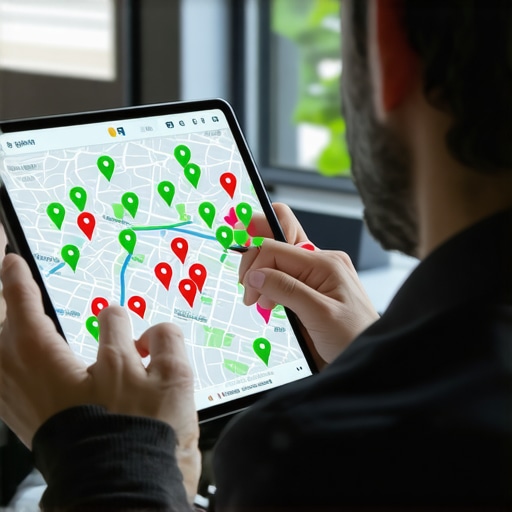
Avoid the deadly name-stuffing trap
Here is the ‘oops’ factor that gets people every single time. You see a competitor ranking #1 because they added ‘Plumber [City Name]’ to their business title, even though their real name is just ‘John’s Pipes.’ You think, ‘Hey, I’ll do that too!’ Do not do it. This is one of the most common how to fix the map optimization guide mistakes killing your clicks scenarios. While it might give you a temporary boost, it is a flagrant violation of Google’s terms of service. One manual report from a jealous competitor and your entire listing—years of work—could be suspended. Instead, focus on monitoring map health and building authority the right way. Have you ever fallen into this trap of trying a ‘shortcut’ only to have it backfire? Let me know in the comments. By following a legitimate your complete maps seo checklist for enhanced visibility, you are playing the long game that actually results in sustainable growth, not just a weekend spike. Your goal is to be the most trusted option, not just the one with the most manipulated data.I have realized that the hardest part of this journey isn’t actually getting to the top; it’s staying there. Once you have implemented your step-by-step map optimization guide, the ‘set it and forget it’ mentality becomes your biggest enemy. I personally use a combination of Google Search Console and specialized local tracking to see exactly which ‘Discovery’ keywords are triggering my profile. Most business owners ignore the performance report in their dashboard, but that is where the gold is hidden. If I see a spike in localized searches but my calls are staying flat, I know my photos or my Q&A section need a refresh. This is exactly why your google listing checklist needs a weekly audit—it’s about catching those subtle shifts before they turn into a freefall in the rankings.
Keep Your Momentum Without Losing Your Mind
Managing a single location is one thing, but when you scale to three, five, or ten, the manual work will break you. I learned this the hard way when I tried to update holiday hours for multiple clients by hand and missed a few, resulting in a flurry of one-star reviews. Now, I lean heavily on automation for the busy work, but I keep the strategy manual. You have to be proactive in monitoring map health because the algorithm never sleeps. If you aren’t checking your data, you are essentially flying blind. I recommend setting aside twenty minutes every Tuesday morning to scan for ‘suggested edits’ from the public; these are often competitors trying to change your phone number or website link under the radar.
How do I maintain high visibility over the long haul?
The secret to longevity is consistency over intensity. Instead of posting twenty photos in one day and then disappearing for three months, post one high-quality photo a week. This steady stream of ‘freshness’ signals to Google that your business is active and reliable. I also make it a point to revisit your complete maps seo checklist for enhanced visibility every quarter to ensure I haven’t missed any new features Google has rolled out. According to local search expert Mike Blumenthal, Google is moving toward a ‘frictionless’ interface where the listing itself is the conversion point, not just a pitstop on the way to your website. This means the tiny details in your google listing checklist that drive massive clicks, like having your service menu perfectly synced and your ‘Chat’ feature enabled, are becoming survival requirements rather than optional extras. 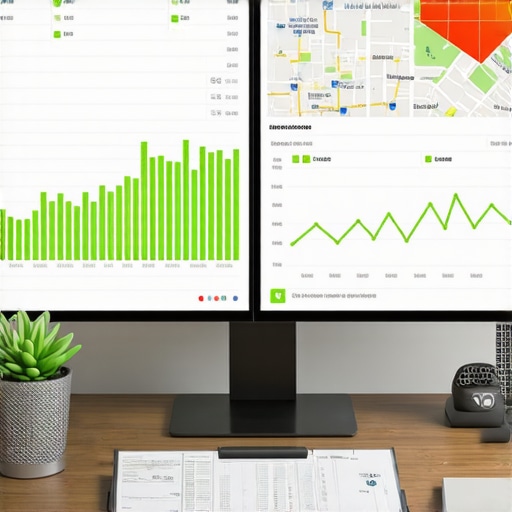
What the Future of Local Search Looks Like for You
I predict that within the next 18 months, AI-driven visual search will dominate the local landscape. Google Lens is already allowing people to point their phone at a storefront and see your map health signals in real-time. To stay ahead of this, you should start uploading high-resolution, well-lit photos that clearly show your equipment, your staff in uniform, and your physical signage. This helps Google’s ‘vision’ AI categorize your business more accurately. To really scale your efforts, focus on the ‘hidden’ signals that others ignore. Go into your Search Console, find the top five queries that don’t currently mention your brand, and create a Google Post specifically answering a common question related to those keywords. It is an advanced move that can give you the edge when proximity alone isn’t enough to carry you. Try implementing just one specific ‘Discovery’ keyword post today and watch how your engagement metrics respond over the next week.
The Reality of Map Health No One Prepared Me For
After years of managing listings, I’ve realized that visibility isn’t a trophy you win once; it’s a garden you have to water. The biggest mistake I ever made was thinking I could finish a project and walk away. I learned the hard way that monitoring map health is a continuous loop of feedback and adjustment. If you aren’t looking at your profile at least once a week, you’re essentially handing your leads to the competitor who is. I’ve seen profiles tank simply because a ‘suggested edit’ from a random user changed their primary category, and the owner didn’t notice for weeks. Don’t let that be you. Freshness beats volume every time; one new photo every week is better than fifty once a year. Precision is a ranking factor, and a tiny address error is more than a typo—it is a trust killer. Finally, remember that engagement signals are the new backlinks; if people click your ‘Directions’ button, Google assumes you are the best answer for that neighborhood.
Where I Turn When the Algorithm Shifts
I don’t rely on ‘gut feelings’ or rumors from shady SEO forums when the rankings fluctuate. Instead, I stick to a few high-value resources that have never steered me wrong. First, I always keep your complete maps seo checklist for enhanced visibility open during my monthly reviews to ensure I haven’t missed any new features Google has rolled out. Second, I rely heavily on Google Search Console to see what people are actually typing before they find my map listing. If you are on a budget, you really need to learn how to audit your google listing checklist without expensive tools because the manual eye often catches what automated software misses. Finally, I follow the research from Joy Hawkins at Sterling Sky; her team does the actual testing that separates fact from fiction in the local search world. These resources keep me grounded when the digital landscape feels chaotic.
#IMAGE_PLACEHOLDER_E#
Your Path to Local Dominance Starts Today
The gap between you and the top 3 isn’t as wide as it feels right now. It is built out of small, deliberate actions—one local mention, one keyword-rich review, and one high-quality photo at a time. By consistently following a step-by-step map optimization guide, you are taking control of the narrative Google tells about your business. You have the tools, the strategy, and the community connections to win. Now, it’s just about showing up and doing the work. Consistency over intensity is what wins the local race every single time. Have you ever noticed a sudden drop in your local visibility after making a small change to your profile? Let me know in the comments, and let’s figure out why it happened!