How to outrank big national brands in your local area
I remember sitting in my truck at 9:00 PM, the glow of my phone screen the only light in the cab, feeling absolutely defeated. I had just spent another $500 on “guaranteed” leads, only to find out the big national franchise three towns over was still hogging the top spot in the local map pack. I knew their service was mediocre—I’d heard the horror stories from customers—but there they were, sitting pretty at number one. It felt like the local game was rigged. I was checking every box on my maps SEO checklist, yet I was invisible. That was my lightbulb moment: I was trying to beat them at their own game of scale, instead of playing the game of local relevance.
National Brands Have Deep Pockets but No Soul
The biggest mistake I made early on—and it’s one I see neighbors making every single day—was trying to look like a “big company.” I thought that using sterile, corporate language and stock photos would make me look more professional. I even hired a generic agency that gave me a map optimization guide that was clearly a template for a thousand other businesses. I was effectively deleting my only competitive advantage: the fact that I actually live here. National brands are often managed by a marketing intern in a skyscraper halfway across the country who uses automated software to blast out updates. They lack the human touch in their optimization checklist, and that is exactly where we are going to strike. Today, we aren’t just talking about keywords; we are talking about building local authority that no amount of corporate funding can buy.
Does local SEO really stand a chance against a billion-dollar marketing budget?
I get the skepticism. When you’re up against a name everyone recognizes, it feels like bringing a pocketknife to a tank fight. But Google’s algorithm has a soft spot for the underdog, provided the underdog is actually helpful. A surprising fact from a BrightLocal study shows that 87% of consumers used Google to find local business information in 2022, and more importantly, they are looking for specific local expertise, not just a famous logo. By consistently monitoring map health and focusing on signals that prove you are part of the community, you can force your way into that coveted top three. Have you ever felt like you’re shouting into a void while the big guys take all the credit? Drop a comment and tell me about your biggest local competitor—it’s time we stopped playing nice. The secret is that Google’s local algorithm isn’t just looking at who has the most money; it’s looking at who is the most relevant to the searcher’s physical location. Those massive companies often struggle with the tiny details in their google listing checklist because they are managing thousands of profiles at once. We are going to walk through how you can leverage your local presence to create a footprint that the big guys simply can’t match, starting with the foundation of your profile.
Clean Up Your Digital Storefront Right Now
You can’t build a skyscraper on a swamp. Most business owners I talk to skip the basics because they aren’t “sexy,” but this is where 90% of the battle is won. Think of your google listing checklist as the deed to your house; if the address is wrong or the boundaries are fuzzy, nothing else matters. I remember a local HVAC guy who was pulling his hair out because his calls dropped to zero. We dug into his profile and found a “tiny” error: his secondary categories were competing with his main one, confusing Google’s bots. Once we cleaned up his small discrepancy in profile data, his phone started ringing again within 48 hours. It wasn’t magic; it was just removing the friction.
Prove You Actually Live in the Neighborhood
Google is like a skeptical local bartender. They don’t care how shiny your corporate suit is; they want to know if you’re a regular. To beat the national chains, you need to provide signals they can’t replicate from a desk in Chicago. This means your maps seo checklist must include hyper-local content. Stop posting generic “Happy Monday” graphics. Instead, post a photo of your truck parked in front of a recognizable local landmark or a shot of you helping at the high school football game. These local signals carry more weight than keywords because they provide proof of presence that a billion-dollar brand simply doesn’t have.

Stop Treating Your Profile Like a Billboard
A billboard is static; it just sits there and fades in the sun. A high-ranking map listing is more like a garden. If you don’t water it, it dies. This is what we call monitoring map health. If you aren’t responding to every single review—even the bad ones—you’re telling Google your business is abandoned. I once ignored a string of “no comment” 4-star reviews because I thought they didn’t matter. My visibility plummeted. I had to learn the hard way that consistent engagement is the signal that tells the algorithm you are open for business and ready to help customers right now.
Make Your Photos Do the Heavy Lifting
Most people treat their map optimization guide like a one-time setup. But here is a secret: Google’s AI is actually “looking” at your photos. If you upload a photo of a specific tool you use for a specific local problem, Google connects those dots. This is a massive part of a google listing checklist that drives massive clicks. Don’t just show the finished product; show the process. Show the grit. National brands use stock photos of smiling people in clean hardhats; you should show the reality of the job site. This authenticity is your greatest weapon against a massive marketing budget.
I see it every day: business owners obsessed with their citation count like it’s 2015. They think if they just get listed on five hundred more obscure directories, they’ll magically leapfrog the competition. But here is the brutal truth: Google is getting smarter, and your current citation strategy is probably failing to move the needle. In my experience, chasing volume is a vanity metric that distracts you from what actually drives revenue. I’ve seen profiles with only twenty high-quality, local citations absolutely crush competitors who had hundreds of automated, low-quality links. The algorithm is shifting toward engagement and relevance, yet most people are still following a maps seo checklist that’s stuck in the past. It’s not about how many places your name appears; it’s about how many humans are actually interacting with your data.
Can you actually outrank a business closer to the searcher?
This is the question that separates the pros from the amateurs. Most people believe proximity is a hard ceiling—that if a customer is standing next to your competitor, you have zero chance of appearing. While proximity is a massive factor, the latest Whitespark Local Search Ranking Factors survey highlights that ‘relevance’ and ‘prominence’ can often override physical distance. This is where monitoring map health becomes your secret weapon. If your profile shows a higher click-through rate and more ‘direction’ requests than the guy next door, Google begins to view you as the superior answer, regardless of the extra half-mile. I once helped a coffee shop outrank a franchise located right inside a transit hub simply by focusing on local signals that carry more weight than keywords, like customer-uploaded photos of specific menu items.
The Hidden Trap of Over-Optimizing Your Listing
Here is the ‘oops’ factor that gets even the smart ones. There is a very thin line between a ‘thorough’ google listing checklist and over-optimization that triggers a manual review. I’ve watched businesses get their profiles ghosted because they tried to stuff every single neighborhood name into their business description or used a ‘virtual office’ to try and game the proximity system. This brutal reason your google listing checklist isn’t working is usually because Google’s AI detects patterns that don’t look like a real human business. If your profile looks too perfect, too keyword-heavy, and too ‘SEO-ed,’ it raises red flags. Authenticity is messy. Real businesses have reviews with typos; real businesses have photos that aren’t professionally lit. If you’ve been following a map optimization guide that tells you to be ‘perfect,’ you might actually be making yourself invisible.
Stop Looking at Rankings and Start Looking at Conversions
Rankings are a lie if the phone isn’t ringing. I’ve seen businesses sit at number one for months while their actual leads hit the floor. This happens when you focus on a google listing checklist that kills local reach by ignoring the ‘Zero-Click’ searcher. These are people who find everything they need on your map pin without ever visiting your website. If your map health signals aren’t optimized for immediate action—like having an updated service menu or active Q&A section—you are essentially paying for traffic you aren’t catching. Have you ever fallen into the trap of celebrating a ‘Number 1’ rank while your bank account stayed empty? Let me know in the comments. We need to stop treating our optimization checklist as a set-it-and-forget-it task and start treating it as a live conversation with our neighbors.
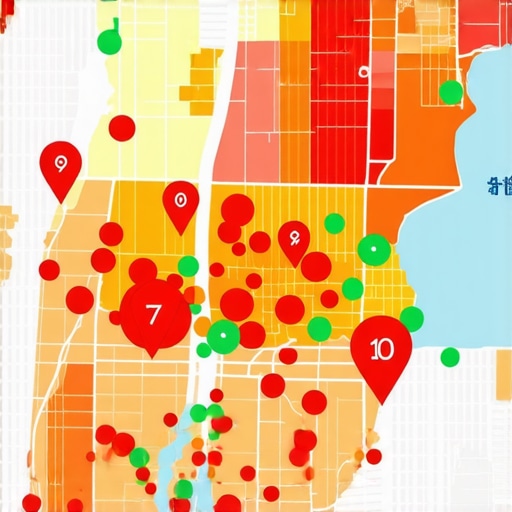
I learned the hard way that ranking at number one is a lot like staying in shape; you don’t just hit the gym once and expect to stay fit forever. For months, I was flying blind, relying on ‘ego searches’ from my own office, thinking I was winning. Then I realized that my phone was seeing what I wanted it to see. To truly scale, you need to ditch the guesswork. I personally swear by grid-tracking tools like Local Falcon or BrightLocal. Why? Because a single ranking number is often a lie. These tools show you a map of your city with ‘pins’ that tell you exactly where you rank on every street corner. If you find that your local SEO software is feeding you useless ranking data, it’s usually because it isn’t accounting for the physical distance of the searcher. I use these heatmaps to find the ‘dead zones’ where I’m invisible and then I double down on hyper-local content for those specific neighborhoods.
How can I keep my listing healthy month after month?
Maintenance doesn’t have to be a full-time job, but it does require a rhythm. I’ve found that your google listing checklist needs a weekly audit to catch the small things that can tank your reach. Every Monday morning, I spend fifteen minutes checking for ‘suggested edits’ from competitors or confused users. People can literally change your phone number or business hours, and if you don’t reject those edits, they become live. I also use this time to check the map health signal that actually predicts phone calls: your response time to messages and new reviews. If you let a lead sit for three days, Google notices that you aren’t ‘active,’ and they will gladly give that traffic to a competitor who is ready to answer the phone.
The Future is About Entity Recognition Not Just Keywords
If you think the old-school way of stuffing keywords into your description will work forever, you’re in for a rude awakening. We are moving toward a world of ‘Search Generative Experience’ (SGE) where Google’s AI tries to understand if you are a real authority. Joy Hawkins from Sterling Sky has pointed out through extensive testing that Google is increasingly looking at the ‘entity’ of your business—your brand’s footprint across the entire web, not just your map pin. This means that monitoring map health now includes making sure your brand is mentioned on local news sites, neighborhood blogs, and even local event pages. In the next few years, I predict that your ‘Map Health Score’ will be determined more by how many people search for your business by name rather than by a generic service keyword. You want to be the brand people ask for, not just the one that shows up by accident.
Don’t fall into the trap of thinking you’ve ‘finished’ your maps SEO checklist. The businesses that stay on top are the ones that treat their profile like a living, breathing part of their sales team. You need to keep feeding the machine with fresh photos, weekly updates, and real human interactions. If you’re feeling overwhelmed, my best advice is to pick one ‘dead zone’ on your ranking heatmap this week and go take five photos of a job site in that specific neighborhood. Upload them, tag the location, and watch what happens to your visibility. It’s time to stop being a passive observer and start being the local authority your community is looking for. Go open your ranking tracker right now and find one neighborhood where you’re currently in the number four or five spot—that’s your target for the next seven days.
Lessons from the Map Pack Trenches
I’ve spent thousands of hours staring at ranking grids and analyzing why some profiles soar while others sink. One of the biggest realizations I had was that distance isn’t your only problem; it’s often a lack of distinct local identity. I used to think I needed to be everywhere, but the real wins came when I focused on being the most useful option in a three-block radius. Another lightbulb moment was finding the tiny discrepancy in map health scores that was actually costing me phone calls—it wasn’t about the quantity of info, but the accuracy of the service area details. Most importantly, I learned that Google trusts a messy, active profile more than a polished, abandoned one.
My Go-To Stack for Beating National Chains
You don’t need a hundred tools, just a few that tell the truth. I personally rely on Local Falcon for its visual heatmaps because standard local SEO software often feeds you useless data that ignores the searcher’s real-time location. For keeping up with algorithm shifts, I follow Joy Hawkins and the team at Sterling Sky; their real-world testing is far more valuable than any corporate blog post. Finally, I keep a physical copy of my complete maps SEO checklist on my desk to ensure I never miss the small weekly tasks that maintain my authority.
Take Back Your Neighborhood Today
It’s easy to feel like the little guy when you see big brands throwing money at the map, but remember: you have the home-field advantage. They are trying to optimize from a distance, while you are right there on the ground, shaking hands and solving problems. By sticking to a consistent weekly audit for your listing, you are building a moat around your business that no corporate budget can breach. Don’t wait for the “perfect” time to start; go grab your phone, take a photo of your latest happy customer, and upload it right now. Your neighbors are looking for you, and it’s time you made it easy for them to find you with a solid maps SEO checklist. Have you ever noticed a sudden drop in your map visibility after a big brand moved into your area? Let me know in the comments below!