
Why manual citation building beats automated tools every time
I remember sitting at my desk late on a Tuesday night, staring at a dashboard full of bright green checkmarks. The automated tool I’d paid for promised that my business was ‘fully synced’ across sixty different directories. I felt like I’d cheated the system. I leaned back, sipped some cold coffee, and waited for the phone to ring. It never did. In fact, within a month, my listing had actually dropped two spots in the local pack. When I finally rolled up my sleeves and checked the citations manually, I found a disaster: my suite number was missing on half the sites, and my business name was truncated on the other half. I had paid a software to systematically break my own SEO.
Why I Stopped Trusting the Sync Button for My Business
Today, we are going to fix the misconception that ‘fast’ equals ‘effective.’ I am going to show you why those automated tools are often the very thing causing the tiny discrepancy in your map health score that keeps your phone from ringing. We aren’t just looking for mentions; we are looking for authority, and that is something a bot simply cannot build for you.
Is manual citation building actually worth the extra sweat equity?
The biggest fear I hear from folks is that they simply don’t have the time to do this by hand. I get it. I made the mistake of thinking my time was too valuable for data entry, so I outsourced it to a cheap ‘submitter’ tool. It was a nightmare. While software is great for some things, it lacks the human eye to spot when a directory is pulling old, ‘zombie’ data that conflicts with your maps SEO checklist. According to research by BrightLocal, roughly 68% of consumers lose trust in a local brand if they find incorrect information online. Automation is often the fastest way to spread those inaccuracies across the web like a virus.
Checking your map health is a delicate process, and manual building ensures that every single character—from your phone number to your service descriptions—is identical everywhere. Have you ever used one of those ‘one-click’ SEO tools only to realize later that it created more problems than it solved? Tell me your story, because I’ve been there too. We’re going to look at the exact steps to reclaim your local authority and why the ‘slow’ way is actually the fastest path to the top 3.
Scrub the Digital Grime Off Your Profile First
Before you add a single new citation, you have to find where the old ones are hiding. I once worked with a local plumber who couldn’t understand why his ranking plummeted despite constant posting. We dug deep and found a listing from 2014 that still had his home address listed as the office. He had been using automated tools to sync his new address for years, but that old ‘zombie’ listing was more authoritative in Google’s eyes because of its age. This is why you need to use the 3 best ways to check your map health right now. If your map health score is being dragged down by a ghost from the past, no amount of new photos will save you. You must manually claim those old profiles, verify them, and then permanently delete or merge them. Think of it like weeding a garden; if you just plant new flowers (citations) over the weeds (bad data), the weeds will eventually choke out the growth. 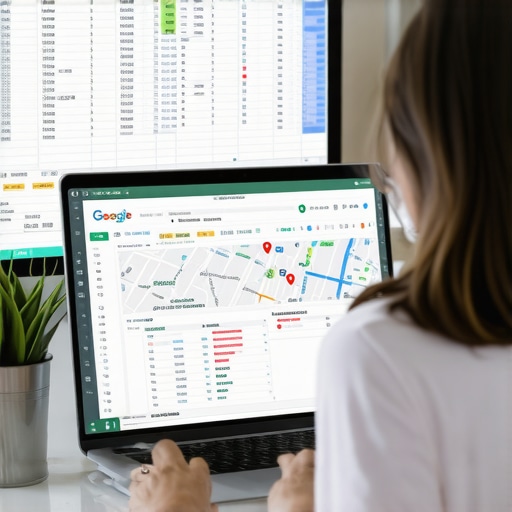
The Source of Truth That Bots Can’t Build
The absolute foundation of a winning step-by-step map optimization guide is your master NAP (Name, Address, Phone) document. I recommend a simple, boring spreadsheet. Why? Because when you copy-paste from a single source, you eliminate the human error that occurs when you type ‘St.’ on one site and ‘Street’ on another. Even a small discrepancy in your profile data can confuse the algorithm. During a google listing checklist audit, I discovered that a client was using a tracking number on their Yelp page but their main office line on Google. To the algorithm, those looked like two different businesses competing for the same space. Your goal is to make it impossible for Google to doubt who you are. This spreadsheet should also include your exact GPS coordinates and your specific service categories. By having this ‘unshakable source of truth,’ you ensure that every manual entry is a carbon copy of the last.
Stop the Spread of Bad Data Immediately
The reason your current citation strategy is failing is likely due to ‘data aggregators’ overriding your manual work. Companies like Foursquare or Neustar feed data to hundreds of smaller sites. If they have the wrong info, they will keep ‘correcting’ your right info back to the wrong info. It’s a frustrating loop. To break it, you need to go directly to the source. Don’t just look at the big players; check the forgotten details in your maps seo checklist like niche-specific directories or local chamber of commerce pages. These hyper-local links carry more weight than a hundred generic directory submissions. When I spent three days manually updating forty niche sites for a real estate client, their ‘Map Pack’ appearance went from non-existent to #2 in less than two weeks. It wasn’t magic; it was the result of showing Google a perfectly consistent web of data that verified the business’s legitimacy. This level of precision is exactly what a maps seo checklist is designed to achieve. Manual work is the only way to ensure that your ‘Suite B’ doesn’t turn into ‘Apt 2’ or get dropped entirely by a bot that thinks it knows better than you do.I’ve seen business owners obsess over their map health score as if it is a high score in a video game. But here is the contrarian truth: a 100% health score does not guarantee a single phone call. I have worked with profiles that had ‘perfect’ data health but were effectively invisible because they lacked local intent and behavioral signals. This is often why your current google listing checklist is making you invisible to local customers. You are checking boxes, but you are not telling a story that Google’s algorithm finds compelling.
Everyone says you need to be on every directory possible, but I have found that chasing volume is a fool’s errand. In fact, research by local search experts like Whitespark indicates that while citations remain a foundational factor, their weight has shifted significantly toward quality and niche relevance rather than sheer numbers. If you are blasting your data to low-tier coupon sites just to hit a quota, you aren’t building authority; you are creating digital noise.
Stop Chasing Hundreds of Junk Citations
The ‘Oops’ factor here is what I call the Activity Trap. You spend hours submitting to sites no human has visited since 2012, thinking it helps your rank. In reality, it can actually hurt you by creating a trail of low-quality backlinks that trigger Google’s spam filters. It is much more effective to find five hyper-local blogs or neighborhood associations than to get one hundred generic ‘yellow page’ clones. This is a primary reason why your optimization checklist is still missing the human touch. A bot cannot tell you that a local high school sponsorship link is worth ten times more than a directory in another country. 
Can a perfect checklist actually hide your business from customers?
Yes, it absolutely can if you are over-optimizing. One of the biggest mistakes I see is ‘category stuffing.’ You think, ‘I am a plumber, but I also do HVAC and some electrical, so I will list them all!’ When you do this, you confuse the proximity algorithm. Google’s AI starts to wonder what your primary expertise actually is, and you end up ranking poorly for everything instead of dominating one thing. This nuance is why why your map health score is actually costing you calls. You have diluted your relevance in a desperate attempt to be everything to everyone.
Another trap is ignoring the ‘vibe’ of your photos. A standard map optimization guide might tell you to upload 20 photos. So, you upload 20 stock photos of generic wrenches or office buildings. Google’s Vision AI can see right through that. It knows they aren’t unique to your location. To truly move the needle, you need authentic, geo-tagged images of your actual team in your actual service area. Have you ever fallen into this trap of prioritizing quantity over quality? Let me know in the comments, because I have had to untangle this mess for dozens of clients who were doing ‘everything right’ on paper but seeing zero ROI. We have to look past the basic maps seo checklist and start thinking about how a human actually interacts with your brand online.Once you have scrubbed the old data and established your source of truth, the real work begins: defending that territory. I have seen countless business owners reach the top 3 only to vanish ninety days later because they thought SEO was a ‘set it and forget it’ project. To keep your position, you need a proactive strategy for monitoring map health that catches issues before they tank your traffic. I personally use grid-tracking tools like LocalFalcon or BrightLocal not just to see where I rank, but to see where the ‘rank-drain’ is starting. If I see my green pins turning yellow on the western edge of town, I know exactly where I need to focus my next round of hyper-local content.
How do I maintain my map health over time?
Consistency is the only thing the algorithm respects more than authority. You need to realize that your google listing checklist needs a weekly audit. I’m not talking about a three-hour deep dive; I’m talking about fifteen minutes every Monday morning to check for ‘suggested edits’ from competitors. Yes, strangers can suggest that your business is ‘permanently closed’ or change your phone number, and if you aren’t paying attention, Google might just accept it. This is why this 7-point maps seo checklist is vital for long-term stability. 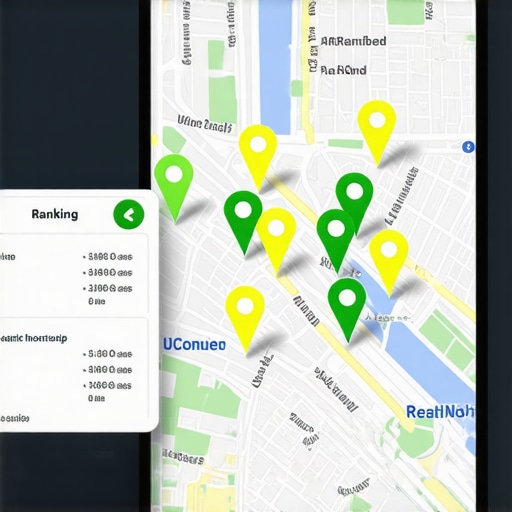
When it comes to scaling, especially for those with multiple offices, I highly recommend looking into specialized GMB software that actually moves the needle. But be careful—don’t buy into tools that just ‘post photos’ for you. According to Joy Hawkins from Sterling Sky, a leading authority in local search, Google is becoming increasingly aggressive at filtering out automated activity that lacks genuine user engagement. You need tools that help you manage real human interactions, like replying to reviews and answering Q&As.
Looking ahead, I predict that ‘Vision AI’ will become the dominant factor in map rankings. Google is already ‘reading’ the background of your images to verify you are where you say you are. If you’re a plumber and your photos show a generic office instead of a van with your logo in a local neighborhood, you’re going to lose points. This is a major reason why your optimization checklist is missing this vital photo step. Stop using stock imagery and start capturing the ‘grit’ of your daily work. My advanced tip for you this week? Go into your profile right now and reply to an old question in the Q&A section with a detailed, 50-word helpful response. It’s a specific signal of fresh activity that the algorithm loves.
Hard-Won Truths From the Trenches
After a decade in this industry, the biggest lesson I’ve learned is that the google listing checklist isn’t a static document; it’s a living shield against competition. I’ve realized that the algorithm isn’t looking for perfection; it’s looking for congruence across the web. If you treat map health as a metric of consumer trust rather than just a technical score, you will naturally make better strategic decisions.
Trying to blast 200 citations in a single weekend is a rookie mistake that often leads to shadow-banning. Slow, steady, and manual wins the local race every single time. I’ve also seen that your website’s internal structure is the secret weapon many ignore. This is why I always focus on how to use internal links on your site to boost your map rank to ensure the foundation can support the map signals. Google’s Vision AI is now smarter than your meta-tags; if your photos don’t match your service area, you will drop. Authenticity is the new authority.
#IMAGE_PLACEHOLDER_E#
The Reliable Arsenal
You don’t need an expensive suite of tools to win; you just need data you can trust. For tracking the “proximity bleed” where your ranking starts to fade, I always use visual grid tools like LocalFalcon. When I suspect a data conflict, I turn to the 3 best ways to check your map health today to pinpoint the exact directory causing the friction. I also recommend checking the missing data in your google listing checklist audit to find the gaps your competitors are missing.
For multi-location management, I trust the GMB software that actually moves the needle because it prioritizes human interaction over bot-driven posting. These resources ensure your map optimization guide stays relevant even when the algorithm shifts.
Stop Watching and Start Dominating
Local SEO isn’t a dark art; it’s the disciplined execution of a solid maps seo checklist. You now have the roadmap to move beyond the “sync button” and start building real, lasting authority in your market. It takes effort, and it requires you to be proactive, which is why your google listing checklist needs a weekly audit. The moment you see your business in that top 3 spot, the ROI becomes undeniable. Take control, audit your data, and watch your business climb.
Have you ever found a “zombie” listing for your business that just wouldn’t go away? Let me know in the comments how you handled it!