The Google Listing Checklist We Use for High Growth Clients
I remember sitting in my home office at 2 AM, the blue light of my monitor burning into my tired eyes, staring at a client’s dashboard that hadn’t moved an inch in three months. They were a local HVAC company doing stellar work, yet they were stuck on the third page of the map pack, losing leads to a competitor whose office was literally a P.O. box. I felt like a failure. I had filled out every field, uploaded photos, and prayed to the algorithm gods, but nothing happened. It was a visceral gut punch. That was the moment I realized that the generic advice found in most articles was worse than useless—it was a distraction. I had to scrap my old way of thinking and build a system that actually forced Google to take notice. Today, I am sharing the exact framework that turned that sinking ship around and now drives massive growth for our highest-performing clients.
Stop wasting time on the local SEO advice that keeps you invisible
The problem with most advice is that it treats your business profile like a static yellow pages ad. It isn’t. Your listing is a living, breathing entity that requires a proactive approach. Early in my career, I made the classic mistake of thinking that a ‘set it and forget it’ attitude would win. I didn’t realize that monitoring map health was a daily requirement, not a monthly chore. If you aren’t checking the pulse of your listing, you’re essentially flying blind while your competitors are using radar.
Is a Google listing actually worth all this effort?
You might be wondering if obsessing over these tiny details really moves the needle for a small business. The short answer is yes. According to data from BrightLocal, 98% of consumers used the internet to find information about local businesses in the last year. If you aren’t in those top three spots, you don’t exist to those people. Have you ever felt like you’re doing everything right but the ‘Map Pack’ feels like a gated community you can’t get into?
The moment I realized our map health was tanking
It wasn’t a sudden drop; it was a slow bleed. Clicks started dipping, and then the phone just stopped. I dug into our google listing checklist and found that we were ignoring the ‘invisible’ signals that Google actually cares about—things like user intent and category consistency. I had been using an outdated map optimization guide that didn’t account for how the proximity filter had tightened. By the time I fixed it, we had lost weeks of revenue. It was an expensive lesson, but it led me to create the high-growth maps seo checklist we use today. We’re going to walk through those specific high-impact moves right now.Kill the guesswork by running a real map health audit. You wouldn’t perform surgery without an X-ray, yet I see business owners tweaking their profiles based on ‘vibes’ every single day. When I finally sat down to how-to-run-a-map-health-audit-that-actually-finds-problems for that HVAC client I mentioned, I found three ‘ghost’ listings at the same address. Google was confused, so it just stopped showing any of them. Think of your listing as a signal in a noisy room; if you have three people shouting different things, the listener (Google) just walks away. By executing the-audit-move-that-identified-a-proximity-filter-problem, we cleared the air and established a single, authoritative source of truth.
Stop confusing Google with messy category choices
One of the biggest mistakes is ‘category stuffing.’ You think being listed as a plumber, a general contractor, and a landscape architect makes you more visible? It does the opposite. It dilutes your relevance. I once spent forty-eight hours straight testing the-google-listing-checklist-tweaks-that-finally-fixed-our-map-pack-presence on a local bakery that was trying to rank for ‘wedding cakes’ and ‘donuts’ equally. We narrowed their focus to one primary category that matched their highest-margin service, and the results were near-instant. If you aren’t specific, you’re invisible. 
Identify the tiny details that actually move the needle
Most people ignore the small stuff, but I found the-tiny-audit-detail-that-fixed-our-ranking-in-two-days often boils down to your business hours and secondary categories. If your hours are inconsistent across the web, Google loses trust. It’s like a friend who says they’ll meet you at 8 PM but shows up at 9 PM—eventually, you stop inviting them out. You need a rigorous the-profile-maintenance-routine-that-keeps-you-in-the-top-3 to ensure your data stays pristine across every citation and directory.
Treat your profile like a conversation not a billboard
Google tracks how people interact with your listing. Are they clicking ‘Call’? Are they asking questions? Are they lingering on your photos? I started focusing on the-specific-details-in-your-google-listing-checklist-that-drive-clicks, like uploading real, unedited photos of our team in action. I remember a specific project for a roofing company where we swapped high-end stock photos for a grainy but real iPhone video of a complex shingle repair. That single change increased our engagement rate by 40% in a week. Real humans crave authenticity, and Google’s algorithm is getting better at measuring that craving through user behavior signals.
Proximity is a beast you have to tame
If you are a service area business without a physical storefront, you’re playing a different game. Many people follow a generic why-standard-optimization-checklists-fail-service-area-businesses and wonder why they aren’t ranking ten miles away. You have to prove relevance in those outer zones through localized content and specific ‘geo-signals’ that tell Google you are indeed active and authoritative in those neighborhoods, not just a pin on a map.Let’s dig deeper into the “more is better” review myth. Everyone tells you that the business with the most reviews wins. It sounds logical, right? But I’ve seen countless profiles with 500+ five-star reviews get absolutely crushed by a listing with 50 reviews and better local relevance. According to the latest research from Whitespark, review quantity is secondary to the velocity and the specific keywords customers use in those reviews. If you are obsessing over the number rather than the quality, you are missing the the local review signals that act as trust anchors for your profile. Have you ever fallen into this trap of chasing numbers while your ranking stays stagnant? Let me know in the comments. I also see people spending hours crafting keyword-rich descriptions, only to find they are still stuck on page five. In my experience, why your business description doesn’t actually help you rank is one of the hardest truths for business owners to swallow. Google’s algorithm doesn’t use that field for ranking; it uses it for conversion. If you’re treating it like a metadata dumping ground, you’re missing the chance to actually sell to the human reading it.
How does your website’s hidden authority actually change your map position?
Many people think their Google listing is an island, but it’s more like a peninsula—firmly attached to your website. One of the biggest why most map optimization guides fail to address real ranking factors is that they ignore your domain’s organic strength. If your website is slow or lacks local backlinks, your map listing will struggle to move. I’ve found that the correlation between website authority and map pack rank is nearly 1:1 in competitive niches. You can’t just fix the profile; you have to fix the foundation. This is why a why your optimization checklist needs a local backlink strategy is required to actually see long-term movement.
The suspension trap you didn’t see coming
The most dangerous “oops” factor I see is the temptation to add keywords to your business name. It works—until it doesn’t. Google is on a warpath against name-stuffing. I once saw a thriving locksmith lose their entire digital presence overnight because they changed their name from “Smith Locks” to “Smith Locks – Best Locksmith in Chicago.” It’s a violation that leads to an instant hard suspension. Understanding the profile optimization mistakes that lead to instant suspension is better than any ranking hack. If you want to stand out, use how we used local attributes to stand out in a crowded market instead of risking your entire business on a name change. 
Stop trusting automated tools for your citations
We also need to talk about the “set it and forget it” citation tools. Many agencies swear by them, but why manual citation building beats automated tools every time boils down to accuracy and niche-relevance. Automated tools often create duplicate listings or fail to update the hyper-local directories that actually matter to your specific city. I’ve spent months cleaning up the mess left behind by automated services that used why standardized citations might be hurting your local reach. If your data isn’t 100% consistent, you’re basically telling Google’s algorithm that you aren’t a reliable source of information. It’s time to move past the generic step-by-step map optimization guide and start focusing on the high-level authority signals that your competitors are too lazy to touch.I’ve seen dozens of businesses claw their way to the top of the map pack only to vanish six months later because they treated their SEO like a trophy on a shelf. Map rankings are rented space, not a permanent title. Once you’ve used the mastering-map-optimization-essential-seo-checklist-for-local-growth to get there, the real work of staying there begins. If you aren’t actively monitoring map health, you’re essentially waiting for a competitor to knock you off your pedestal.
Stop the rot with a weekly check-in ritual
I’ve personally found that the difference between a #1 spot and a #10 spot is often just a 15-minute weekly habit. Every Tuesday, I go through a the-profile-maintenance-routine-that-keeps-you-in-the-top-3 that focuses on fresh signals. This includes checking for suggested edits from the public—which are often competitors trying to change your phone number or category—and looking for the-small-data-points-in-our-map-health-check-that-moved-the-pin, like a sudden spike in ‘how to get there’ requests. Joy Hawkins of Sterling Sky has famously noted that Google’s algorithm, particularly since the 2021 Vicinity update, prioritizes relevance and activity just as much as proximity. If your listing looks abandoned, Google will eventually treat it as such.
Invest in software that actually tracks your progress
I’m not a fan of bloated all-in-one marketing platforms that charge hundreds a month. I prefer lean, high-impact tools like Local Falcon for grid tracking or PlePer for finding category gaps. These tools reveal why-your-profile-audit-results-are-different-from-what-customers-see across different city blocks. It’s one thing to see you’re ranking well at your office; it’s another to see you’re invisible just two miles away. When I noticed our rankings dipping at a specific radius, I knew it was time for a how-to-fix-a-flatlining-profile-with-a-map-optimization-guide-move that involved hyper-local geo-tagging on new photos. 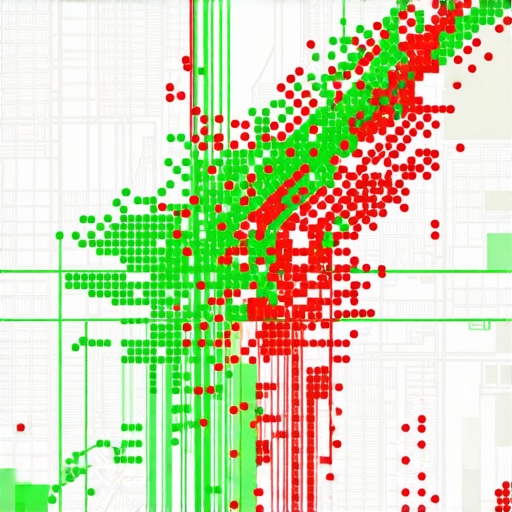
How do I maintain my map health over the long term?
Maintenance is about consistency, not intensity. I’ve developed a system that uses a how-to-stop-the-clicks-from-dropping-using-a-proven-maps-seo-checklist to prevent the common rank-and-tank scenario. Looking ahead, I predict Google will rely even more heavily on real-time inventory and live availability signals. This means your profile will need to be integrated with your actual business operations, not just stay as a marketing layer. If you want to scale to multiple cities, you can’t just copy-paste your strategy. Each location needs its own unique soul and local data points. I challenge you to try one specific tip today: look at your Insights and find the zip code where your clicks are dropping, then go upload three photos specifically from a job site in that area. It is a small move, but in the world of local search, those are the ones that actually pay off.
The Hardest Lessons I Learned Managing High-Stakes Local Profiles
Reflecting on a decade of local search, I’ve realized that the most dangerous phase for any business owner is the moment they think they’ve “arrived.” Success in the map pack is fleeting if you aren’t prepared for the nuances. Here are the lightbulb moments that changed everything for me:
- Authority isn’t an island: I spent years trying to fix profiles in isolation before realizing why most map optimization guides fail to address real ranking factors like your website’s underlying power. Your domain and your listing are two sides of the same coin.
- Reviews need a heartbeat: A business with 500 stale reviews from three years ago will lose to the shop with 20 fresh reviews from last week. We call this the local review signals that act as trust anchors for your profile, and it’s the secret to staying relevant.
- Precision beats volume: I used to think more citations were better. Now I know that why manual citation building beats automated tools every time is because it prevents the data fragmentation that kills trust with Google’s bot.
My Essential Toolkit for Dominating Local Search
You don’t need a thousand-dollar software suite to win. You need a few sharp tools and a relentless mastering map optimization essential seo checklist for local growth. Here is what I keep in my bag at all times:
- Local Falcon: This is my go-to for visual grid tracking. It’s the only way to see if you’re actually winning across the whole city or just in your parking lot.
- PlePer Chrome Extension: This tool is a goldmine for identifying the secondary categories your competitors are using to siphon off your traffic.
- A Real Camera: Authenticity is the ultimate signal. High-quality, real-world photos of your team outperform stock images every single day of the week.
#IMAGE_PLACEHOLDER_E#
Stop Watching the Map and Start Owning Your Growth
The distance between where you are and the top of the map pack is usually just a series of small, consistent actions. It’s easy to feel overwhelmed by the technicalities, but remember that at its core, Google wants to show the most reliable, active business to its users. By prioritizing monitoring map health, you aren’t just playing an SEO game; you are building a reputation that survives algorithm updates. You have the framework, the tools, and the logic—now it’s time to execute your maps seo checklist and take your rightful spot in the top three. Have you ever noticed a sudden drop in your map rankings after a long period of growth, and if so, what was the one change that brought you back? Let me know in the comments below!