How to verify your business listing when the postcard never arrives
I’ll never forget the pit in my stomach after the third week of checking an empty mailbox. I was a fresh-faced entrepreneur, and I had convinced myself that once that little white slip of paper arrived from Google, the phone would start ringing off the hook. But it didn’t come. Not after ten days, not after twenty. I felt like a ghost in my own city. I was doing everything right—or so I thought—but I was stuck in a loop of requesting and waiting that felt like a special kind of digital purgatory. It’s a frustrating reality for many of us trying to get our names out there, and frankly, it’s one of the biggest roadblocks to achieving a healthy map health status. Today, I’m going to show you that you aren’t actually stuck and there are ways to move forward even when the postal service fails you.
The Mailbox Heartbreak That Almost Cost Me My Sanity
For the longest time, I assumed the postcard was the only way. I made the classic rookie mistake of hitting the ‘Request New Code’ button every five days, not realizing I was actually invalidating the previous code and resetting the entire waiting period. Talk about shooting yourself in the foot! This is a common trap mentioned in my crucial checklist for map success. I was so focused on the mailbox that I ignored the fact that my entire local presence was essentially on hold. It wasn’t until I stopped obsessing over the mail and started looking at the alternative verification methods—like video verification or email—that things finally clicked. If you’ve been staring at your driveway for weeks, have you felt that same urge to just give up on the whole process?
Is this postcard system actually a broken relic?
You aren’t crazy for thinking the system is rigged against you. While Google insists the postcard is for security, a study by Search Engine Land suggests that nearly 20% of local businesses face significant delays or failures in traditional mail verification. It’s an outdated hurdle. However, once you get past it, you can finally focus on more important things, like fixing the profile audit errors that actually keep you out of the top results.
Stop Waiting and Force Google to Notice You
The truth is, waiting is a strategy for people who don’t mind losing money. Every day your business isn’t verified is a day a competitor is taking your leads. I eventually learned that you have to be proactive. If the mail isn’t working, you need to pivot to other tools and signals that prove you are a real, local authority. This usually involves a step-by-step map optimization guide that prepares your profile for manual review. When I finally stopped waiting, I realized that my google listing checklist was missing the very things that would have made Google trust me enough to offer instant verification in the first place. We are going to dig into those specific alternatives right now so you can stop being invisible.
Take Control of Your Verification Without the Paperwork
If that postcard hasn’t arrived after two weeks, stop asking for it. Google’s algorithm is looking for digital confidence, and if it cannot find it via the postal service, you have to provide it through direct evidence. The most effective pivot you can make right now is opting for video verification. I once helped a local locksmith who had been ghosted by the postcard system for three months; we were both at our wits’ end. We finally decided to try the video route. We started the recording at the street corner to show the intersection, panned to his permanent signage, and even filmed him unlocking his branded service van. It felt a bit like filming a low-budget indie movie, but it worked. This approach is now a staple in my your complete maps seo checklist for enhanced visibility because it bypasses the physical mailbox entirely. This isn’t just a hurdle to clear; it’s a chance to see how we used video on our profile to double our conversion rate by showing customers we are the real deal before they even hit the call button.
The Video Walkthrough That Actually Wins Google’s Trust
When you start the video process, do not rush. Google needs to see three things: your location (street signs or landmarks), your business equipment (tools, branded vehicles, or office space), and proof of management (opening the door with a key or accessing a POS system). If you skip any of these, you’ll likely get a ‘verification failed’ message, and you’ll be back at square one of your maps seo checklist. 
Fix the Tiny Data Errors Sabotaging Your Ranking
Beyond the video, you must audit your digital consistency. A common killer of local rankings is what I call ‘data drift.’ I once spent three hours hunting down why a client’s ranking had suddenly tanked, only to find their website listed ‘Road’ while their Google profile said ‘Rd.’ That is exactly the small discrepancy in your profile data that keeps you off the map. It sounds pedantic, but Google is a machine that thrives on absolute mathematical certainty. If you aren’t monitoring map health key checkpoints for ongoing-optimization, these tiny fractures in your foundation will eventually pull you out of the top 3 spots, regardless of how many reviews you have.
Turn Your Profile Into a Lead Generating Machine
Once your technical foundation is solid and verified, you need to shift your focus to high-impact tweaks that signal authority to the algorithm. One of the most effective moves I ever made for a service-area business was the simple google listing checklist tweak that finally fixed our service area visibility-2. It involved tightening our listed service radius to match our actual customer density rather than trying to claim an entire state. If you try to cover too much ground, your authority thins out and you disappear. You have to learn how to reclaim your local reach when proximity shrinks-2 by leaning into your most profitable zip codes first. Finally, don’t just wait for customers to talk about you. You need a proactive system for feedback. I used to feel awkward asking for reviews, but I realized that a generic ‘please leave us a rating’ is usually ignored. There is the specific way to ask for 5-star google reviews that customers can not ignore which focuses on the specific problem you solved. When Google sees a steady stream of keyword-rich reviews, it gains the confidence to push you ahead of competitors who have been sitting comfortably for years.Let’s dig deeper into what happens once the basic verification hurdles are behind you. Most business owners treat a maps seo checklist like a one-and-done grocery list, but the real growth happens when you understand the nuances of how Google filters local results.
Stop stuffing keywords into your business name
Many self-proclaimed experts still claim that adding your city or specific service to your business name is the ultimate ranking hack. Everyone says it’s the fast track to the top, but in my experience, it’s a house of cards waiting to collapse. According to research by Joy Hawkins at Sterling Sky, business name spam is currently the leading trigger for manual profile suspensions. This is exactly why your business name shouldn’t include a list of services. If you are caught, you aren’t just losing your rank; you’re losing your entire digital history. It’s significantly more effective to focus on monitoring map health key checkpoints for ongoing-optimization than to risk your livelihood on a cheap naming trick that Google is actively penalizing.
Can you actually outrank a competitor who has ten times your reviews?
You absolutely can, and it’s all about ‘Review Relevance’ and ‘Sentiment Density.’ Most businesses obsess over the total number of stars, but that is why a high review count doesn’t guarantee a top map spot. Google’s algorithm is now sophisticated enough to weight reviews based on the specific keywords the customer uses and the geographic location of the reviewer. If you have 20 recent reviews mentioning ’emergency pipe repair’ and your competitor has 200 old reviews saying ‘great service,’ Google will often prioritize you for that specific search intent. This is the hidden signal that decides who hits the top 3 map pack spots. 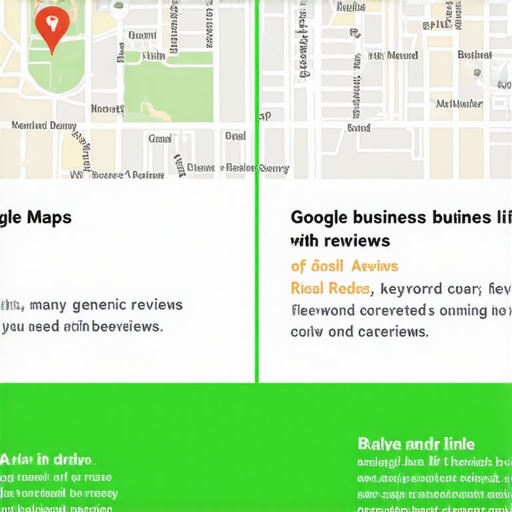
Don’t let the proximity filter make you invisible
Here is the ‘Oops’ factor that catches almost everyone off guard: the proximity filter. You might think that expanding your service area to cover three counties in your optimization checklist is helping you, but it often does the opposite. When you cast too wide a net without the ‘hyper-local signals’ to back it up, Google filters you out of the local pack entirely to prevent what it perceives as lead-gen spam. I recently used the audit move that identified a proximity filter problem for a service-area client, and by simply narrowing their focus to their primary zip codes, their impressions tripled overnight. They were shocked. They thought ‘more’ was ‘better,’ but in local SEO, ‘relevance’ is king. Furthermore, if your website code is messy, you might be sabotaging yourself. Learning how to fix broken local schema that blocks your map ranking is an advanced move that tells Google exactly where you are and what you do with mathematical precision. Have you ever fallen into this trap? Let me know in the comments.If you think you can just finish your maps seo checklist and walk away, you’re in for a rude awakening. I’ve seen businesses hit the #1 spot only to vanish thirty days later because they neglected the profile maintenance routine that keeps you in the top 3. It’s like a garden; if you don’t pull the weeds—meaning the spammy competitor listings and incorrect holiday hours—the whole thing gets overgrown. One thing I’ve learned is that you need better data than what Google provides in its basic dashboard. I personally rely on grid-style tracking tools like Local Falcon or BrightLocal. Why? Because a single ‘average rank’ number is a lie. You might be #1 if you’re standing in your office, but #15 two blocks away. This is why I always say why your local seo software is feeding you useless ranking data if it doesn’t show you a geographic heat map.
The Maintenance Routine That Stops Your Ranking from Falling Off a Cliff
Consistency is the only thing that beats a high-budget competitor. I recommend setting a calendar alert for the first of every month to run through a 7-point maps seo checklist that audits your photos and Q&A section. You have to stop guessing your map health and actually look at the ‘Customer Actions’ in your insights to see if people are actually clicking or just scrolling past you. 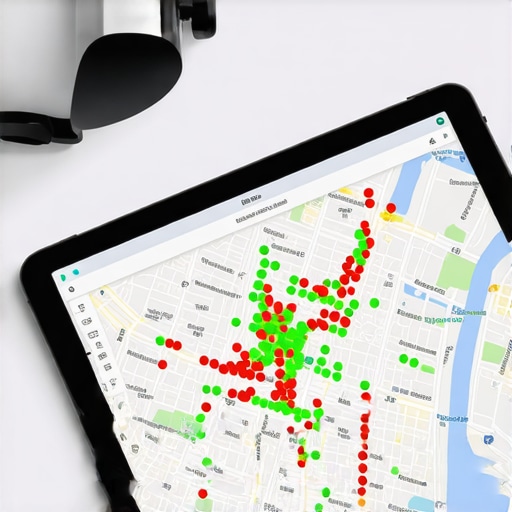
Stop Flying Blind with Basic Data
Looking ahead, the future of local search is clearly leaning into AI-driven visual recognition. Mike Blumenthal, a titan in the local SEO space, often notes in his technical research that Google’s ‘Cloud Vision API’ is already reading the text on your storefront photos to verify your category and service offerings. This means your optimization checklist should include high-resolution shots of your equipment and interior. If Google can ‘see’ your plumbing van or your dental chair through its AI, it trusts you more than a competitor using stock photos. I also strongly suggest you look into your technical website setup. If your site is slow, your map rank will suffer. I’ve seen how to fix broken local schema that blocks your map ranking turn a failing profile into a local powerhouse because it feeds the algorithm the structured data it craves.
How can you keep your map profile healthy for years?
The most important thing is to treat your profile as a living entity. Every month, you should be checking for ‘Suggested Edits’ from the public. Sometimes competitors or well-meaning users will change your phone number or category. If you aren’t monitoring map health key checkpoints for ongoing-optimization, these changes can go live without you ever knowing. I want you to try one specific advanced tip tonight: Go to your profile, find a question in the Q&A section that hasn’t been answered, and answer it yourself using a specific neighborhood name or landmark. It’s a tiny move that signals geographic relevance to the map optimization guide logic and helps you stand out in the expansion pack.
The Harsh Reality About Playing the Long Game with Google
Looking back, I spent way too much time worrying about selecting the ‘perfect’ category and not enough time on actual map health. If I could go back to my first year, I would tell myself that the map isn’t a trophy you win once; it is a plant you have to water every single week. Most entrepreneurs fail because they stop the work once they see a green verification checkmark. But here is the secret: the brutal truth about why your business is not in the top 3 map spots usually boils down to losing interest before the algorithm fully trusts your data. My biggest lightbulb moment was realizing that every photo upload and every review response is a ‘heartbeat’ signal. To Google, this means your business is still alive and thriving. Without that heartbeat, even the most detailed google listing checklist becomes a static piece of paper in a digital windstorm.
The Hardware and Software I Rely on to Stay Visible
I never make optimization moves without seeing the data first. To keep your maps seo checklist effective, you need to look past the basic Google dashboard which often hides the real problems. I personally swear by local grid tracking tools like Local Falcon or BrightLocal because they show you exactly where your authority drops off street by street. If you feel like your growth has hit a wall, why your map health score is actually costing you calls-2 might be hidden in the way you are interpreting these geographic patterns. I also suggest investing in a high-quality camera for your storefront shots; AI image recognition is the next frontier of local search, and blurry phone pics simply do not cut it anymore. Finally, always keep a link to your the profile maintenance routine that keeps you in the top 3 saved so you never miss your monthly audit. #IMAGE_PLACEHOLDER_E#
Stop Asking Permission to Be Found
You have done the hard work of digging through the technical weeds and surviving the postcard purgatory. Now, it is time to let your business shine. Don’t let the fear of a ‘pending’ status or a slow week discourage you from being proactive. Use my stop-guessing-your-map-health-4-specific-data-points-to-check-tonight-2 guide to stay objective and data-driven. Local SEO is a marathon, not a sprint, and consistency is the only thing that beats a high-budget competitor. Your customers are out there right now, searching for exactly what you offer. Go get them. Have you ever felt like your map ranking was stuck in one specific neighborhood but completely invisible just two blocks away? Let me know in the comments below!