The specific way to respond to reviews to boost local trust
I still remember the day I realized I was doing it all wrong. I had a client—a local plumber—who had nearly fifty five-star reviews. On paper, he was winning. But when I looked closer, his google listing checklist was a mess of ignored feedback. He thought that because the stars were there, the work was done. I made the same mistake early on; I used to think that letting the work speak for itself was a badge of honor. It isn’t. It’s a missed connection. It’s a gap in your strategy that no amount of keywords can fill.
Your Silence is Louder Than the Negative Review
The truth is, when a potential customer sees an unreplied review, they don’t just see a busy business owner. They see someone who might not pick up the phone when things go sideways. I’ve seen businesses with lower ratings outrank my clients simply because they were active participants in their own community. It’s a vital part of monitoring map health. If you are ignoring your reviews, you are effectively ignoring the person standing right in front of your cash register. When I finally started responding to every single person—even the grumpy ones—my client’s call volume didn’t just crawl up; it spiked. People want to see a pulse behind the screen.
Does Google Really Care If I Say Thank You?
You might be skeptical. “I’m a plumber, not a social media manager,” you might say. But here is the kicker: according to a BrightLocal consumer study, 88% of consumers are likely to use a business if they see the owner responding to all reviews. It’s not just about the person who wrote the review; it’s about the hundreds of people lurking in the background, deciding if you’re worth the call. This is the “why” behind every maps seo checklist you’ll ever read. We aren’t just checking boxes; we are building a reputation that search engines can’t help but notice.
Building a Local Trust Anchor
Early in my career, I made the mistake of using canned, robotic responses. “Thank you for your feedback, we value your business.” It was dry, cold, and honestly, a bit insulting. It showed I didn’t care enough to even type their name. To truly build a local reputation search engines trust, you need to treat these responses as local review signals. Today, I’m going to walk you through the framework I use to turn a simple “thanks” into a trust-building powerhouse that keeps your listing in the top spots. Have you ever felt like your responses were just disappearing into the void, or are you worried that one bad apple might ruin your entire reputation? Let’s fix that together and get your listing back on the map.
Inject Local Keywords Without Looking Like a Bot
Most business owners treat the reply box like a courtesy, but I want you to treat it like a search engine signal. When you respond to a review, you have a golden opportunity to reinforce your geographic relevance. Instead of a generic ‘thanks,’ mention the specific service and the neighborhood. For instance, if you’re a plumber, say something like, ‘It was great helping with your emergency pipe repair in Downtown Seattle.’ This small tweak is a vital part of your google listing checklist that most people overlook. It tells the algorithm exactly what you do and where you do it, without stuffing keywords in your actual profile name, which is a major risk. To see how this fits into the bigger picture, you should look at the 4-step local seo checklist for service businesses losing traffic to ensure your foundation is solid.
How a Messy Muddy Boot Incident Doubled Our Conversion
I remember working with a local flooring contractor who was terrified of a two-star review. A customer was upset because a technician forgot to wear boot covers and left a smudge on a rug. Instead of getting defensive or deleting the listing—which is a disaster for your monitoring map health routine—we leaned in. We replied publicly, apologized, and detailed the new ‘Triple-Check Boot Cover’ protocol the company was implementing that same day. Within a week, two other leads mentioned that specific reply as the reason they hired him. They didn’t care about the smudge; they cared that he was accountable. This is the core of stop ignoring these customer behavior signals in your profile. If you handle a mistake with grace, you actually build more trust than a perfect record ever could. 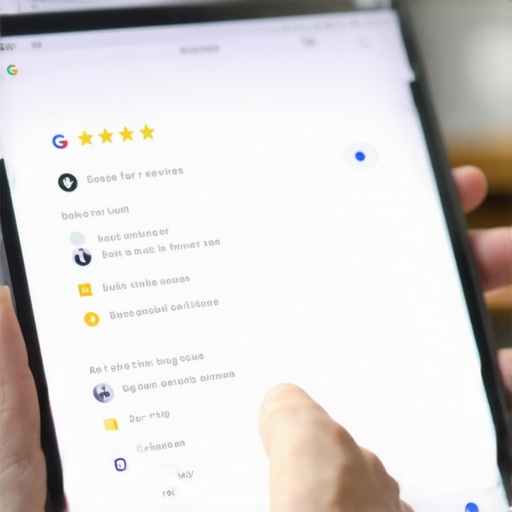
The 24-Hour Velocity Rule for Map Longevity
Speed matters just as much as sentiment. I’ve found that businesses responding within 24 hours maintain a much higher ‘Map Health’ than those who wait until the weekend to batch their replies. This consistent activity tells Google that the business is operational and attentive. If your response rate drops, you’ll likely see a corresponding dip in your reach. This is one of the forgotten details in your google listing checklist that kill local reach. To stay ahead, you need a the profile maintenance routine that keeps you in the top 3 to ensure you never miss a beat.
Put Your Best Photos Where People Actually See Them
While reviews are the engine, photos are the fuel. I’ve seen too many businesses upload a grainy photo of their office and call it a day. You need to be using the simple trick to getting your customers to upload more photos because user-generated content carries significantly more weight than corporate stock shots. When a customer sees a real person in your service area solving a real problem, the conversion happens before they even click ‘call.’ This is a non-negotiable step in any step-by-step map optimization guide for better local rankings. You are building a visual proof of work that acts as a secondary maps seo checklist for the human brain.You’ve probably been told that being closest to the searcher is the only way to win. It’s the most common excuse I hear from business owners: ‘I can’t rank there because my office is too far away.’ In my experience, the proximity myth is exactly that—a myth. While distance is a factor, it is often overridden by what I call ‘Data Integrity.’ I’ve seen businesses five miles further away outrank the guy next door because they didn’t have the small discrepancy in your profile data that confuses Google’s crawlers. When your NAP (Name, Address, Phone) data is messy, Google loses confidence. And a lack of confidence is one of the 3 map health errors sabotaging your local traffic right now. If you aren’t consistently monitoring map health, you’re essentially flying blind while your competitors take your leads.
Don’t Let Automation Kill Your Local Trust
Here is the ‘Oops’ factor that catches even the smartest marketers: relying entirely on automated citation tools. It sounds efficient to push your data to 50 directories at once, but these tools often create duplicate listings or overwrite manual corrections you’ve made. This is why why manual citation building beats automated tools every time. You need a human eye to ensure you aren’t creating a ‘data ghost’ that haunts your rankings for years. I once spent three months cleaning up a ‘ghost listing’ for a client that was created by a cheap automation tool—it was a nightmare that cost them thousands in lost calls. 
Can Your Website Actually Force You Into the Top 3?
Many people treat their Google profile and their website as two separate islands. This is a massive mistake. According to the Whitespark Local Search Ranking Factors survey, on-page signals from your own website are one of the top drivers for map rankings. There is a direct correlation between website authority and map pack rank. If your site is slow, lacks local keywords, or has broken links, your map profile will feel the weight. Think of your website as the foundation and your listing as the storefront; you can’t have a stable store on a crumbling foundation. I’ve seen instances where a simple change to the footer of a client’s website—matching the address exactly to the map listing—resulted in a ranking jump within 48 hours. It sounds trivial, but for an algorithm trying to verify your physical existence, it’s everything.
Stop Chasing Trends and Focus on Relevancy
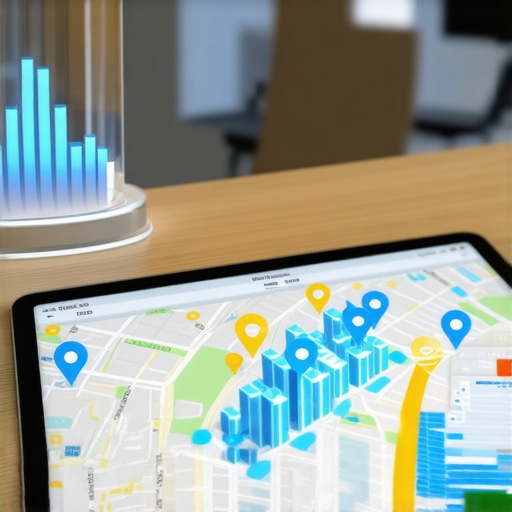
If you want to move the needle, stop looking for the latest ‘hack’ and go back to your step-by-step map optimization guide for better local rankings. The real secret is deep relevancy. Are you answering questions your customers actually ask? Are you mentioning local landmarks? These are the local ranking signals your competitors are using to outrank you while you’re worrying about proximity. It’s about being the most helpful answer, not just the closest one. Have you ever fallen into this ‘proximity trap’ and felt like giving up on a specific neighborhood? Let me know in the comments—I’d love to help you troubleshoot your specific situation.I’ve seen too many people treat their google listing checklist like a set-it-and-forget-it project. It is not a slow cooker; it is more like a garden where the moment you stop watering, the weeds of your competitors start to take over. To scale my own agency work without losing my mind, I had to find tools that didn’t just give me data but gave me actionable clarity. I swear by Local Falcon for this. While some marketers look at a single ranking number and celebrate, I use their grid maps to see exactly where my authority drops off. If I am ranking #1 on 1st Avenue but #10 on 5th Avenue, I know I have a localized relevance problem. It is the most effective way to handle monitoring map health across a wide service area. According to Joy Hawkins, a renowned local SEO expert at Sterling Sky, one of the most underrated factors in ranking is the category dilution effect. Adding too many secondary categories to your profile can actually weaken the ranking of your primary service. This is why my mastering map optimization essential seo checklist for local growth always starts with a brutal pruning of unnecessary categories to keep the ranking signals sharp. 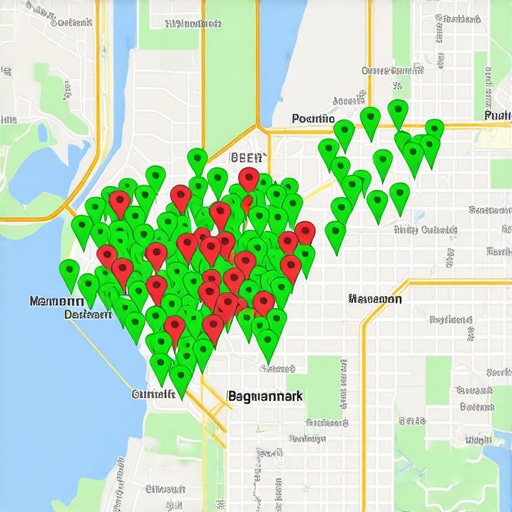
How do I maintain my local map presence over the long haul?
The secret is the the profile maintenance routine that keeps you in the top 3. Every Monday morning, I spend fifteen minutes checking for suggested edits from the public. These community edits are a silent killer; if a competitor suggests your business is permanently closed and you don’t reject it within a few days, Google might just believe them. This check is a non-negotiable part of this 7 point maps seo checklist stops your ranking from dropping 2. I also look for 4 map health signals you probably missed during your last audit 2, specifically watching for shifts in how often people click the Request a Quote button compared to direct phone calls. Looking ahead, I see the Search Generative Experience or SGE taking over. Google is going to start summarizing your reviews to answer hyper-specific user questions. If your reviews don’t contain specific details about your services, you will lose out on these AI-generated leads. That is why you must use the specific way to request reviews that customers won’t ignore to ensure they leave those descriptive keywords naturally. Stop what you are doing and try this right now: go to your profile and answer one question in your own Q&A section that addresses a common customer fear. Use how to use local qa to answer customer objections before they call as your guide. It takes two minutes and builds immediate trust.
Why Most Optimization Sprints Fail Within Three Months
I’ve spent years in the weeds of local SEO, and if there’s one thing I’ve learned, it’s that a one-time setup is just a fancy way to fail slowly. The businesses that stay on top are the ones that treat their google listing checklist as a living document. I’ve seen ‘perfect’ profiles drop from the top 3 simply because they ignored a single community edit or let their map health signals go cold. It isn’t about being perfect; it’s about being present. I used to obsess over every single backlink, but I realized that a fast response to a grumpy customer actually did more for my conversion than ten niche citations ever could. I’ve also found that businesses that neglect the step-by-step map optimization guide for better local rankings usually see their traffic evaporate the moment a more active competitor enters the scene.
The Survival Kit That Keeps Me Sane
You don’t need a thousand-dollar software suite to win this game, but you do need clarity. First, I highly recommend using Local Falcon to visualize your reach—it’s the only way to see if your optimization checklist is actually moving the needle in specific neighborhoods. Second, keep a shortcut to your map optimization guide on your phone’s home screen; if it’s not easy to access, you won’t use it. Finally, I swear by manual audits over automated reports. Even the best tools miss the 3 map health errors sabotaging your local traffic right now. I trust these resources because they focus on real-world outcomes rather than vanity metrics that look good in a board meeting but don’t ring the cash register. Following a google listing checklist manually twice a month has saved my clients more money than any paid ad campaign ever has.
Your Map Authority Starts the Moment You Stop Overthinking
It’s easy to get paralyzed by the technical side of a maps seo checklist, but remember that at the other end of that search query is a person who needs your help. Whether you are fixing a leak or selling a home, your profile is the digital handshake that starts the relationship. Don’t wait for the perfect moment to start monitoring map health or refining your presence. The algorithm favors the active, the honest, and the helpful. When you consistently apply a your complete maps seo checklist for enhanced visibility, the results will compound over time. Have you ever noticed your rankings dip right after you stopped posting updates for a week, or have you found a weird community edit that almost cost you a lead? Let me know in the comments below—I’d love to hear what’s working for you right now.