Why your profile audit results are different from what customers see
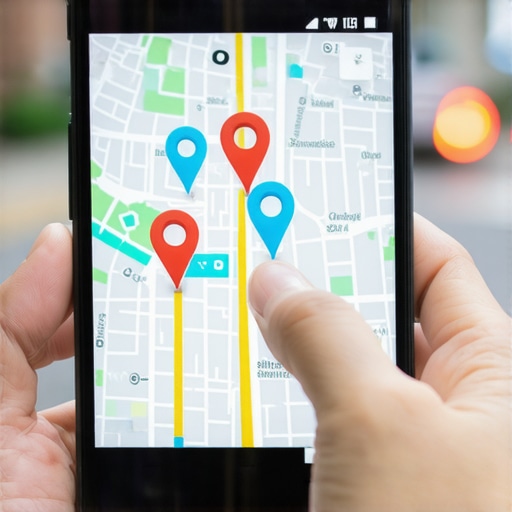
I remember the day I felt like an absolute genius. I was sitting in my office, looking at a beautiful grid of bright green dots on my ranking report—it showed my client was #1 for every major keyword in the city. I felt invincible. Then, the client called. He was standing in a coffee shop just three blocks from his storefront, and when he searched for his own services, he wasn’t even in the top ten. I felt like the floor had dropped out from under me. It was a brutal realization that my fancy tools were showing me a fantasy world, while the real customers were seeing a completely different reality. If you’ve been following a step-by-step map optimization guide but aren’t seeing the phone calls to match your ‘rankings,’ you are likely dealing with this exact same visibility gap.
The Great Disconnect Between Your Dashboard and Reality
We often treat our SEO software like it’s the ultimate truth, but the reality of local search is far more chaotic. When I first started, I assumed that if the software said we were ranking, we were golden. I didn’t account for the fact that your local seo software is feeding you useless ranking data if it doesn’t mimic how a real person moves through the world. Today, we are going to stop chasing those vanity metrics and look at the actual monitoring map health key checkpoints that correlate to real-world visibility. We will solve the mystery of why you look like a king on your laptop but are invisible on a customer’s smartphone.
Is an audit even worth the effort if the data is always wrong?
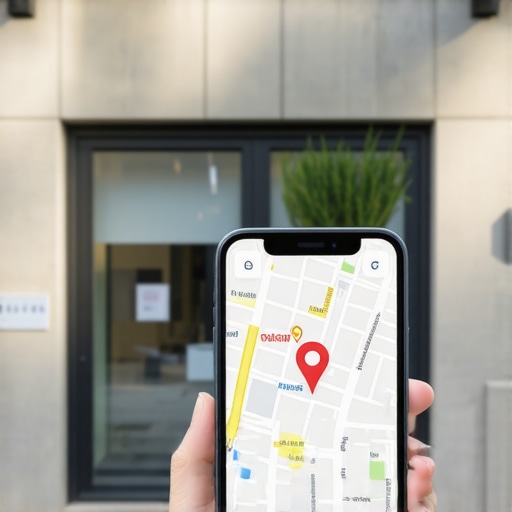
It is a fair question to ask. I used to think that maybe I should just ignore the tools entirely. In my early days, I made the huge mistake of over-optimizing based on a single audit report, only to find out that a small discrepancy in your profile data was causing Google to favor a competitor who was actually further away. The truth is, Google’s algorithm is now so granular that results can change based on the direction a searcher is walking or even the strength of their Wi-Fi signal. In fact, research from Search Engine Journal suggests that proximity remains one of the most volatile and heavily weighted factors in the local pack, often overriding traditional SEO ‘strength.’ Have you ever caught your ranking tool lying to you while you were out in the field? It’s a frustrating experience, but once you understand why it happens, you can finally start building a maps seo checklist that actually delivers results.To bridge the gap between your dashboard and reality, you have to start with the digital foundation of your business address. Think of your business location data as the DNA of your profile. If there is even a slight mutation, the whole organism fails to thrive. I once spent three weeks trying to figure out why a high-end furniture store wasn’t showing up for ‘interior design’ searches despite having 200+ five-star reviews. It turned out that their street address included a compass direction—’North Main Street’—but half their citations just said ‘Main Street.’ This small discrepancy in your profile data effectively split their authority in half. Google wasn’t sure if they were one business or two, so it played it safe and ranked neither.
Fix the Data Ghost Haunting Your Rankings
You need to perform what I call a ‘NAP purge.’ Go through every single major directory and ensure your Name, Address, and Phone number are identical to what is on your Google Business Profile. If you have moved recently or changed your phone number, you are likely suffering from ‘Data Ghosting.’ Running the specific citation audit that cleared up our ranking confusion for that furniture store was the turning point. We manually reached out to the top 20 data aggregators and forced an update. Within a month, their ‘North Main Street’ identity was the only one that existed, and their rankings shot up like a rocket. This isn’t just about being neat; it is about sending a singular, powerful signal to the algorithm. 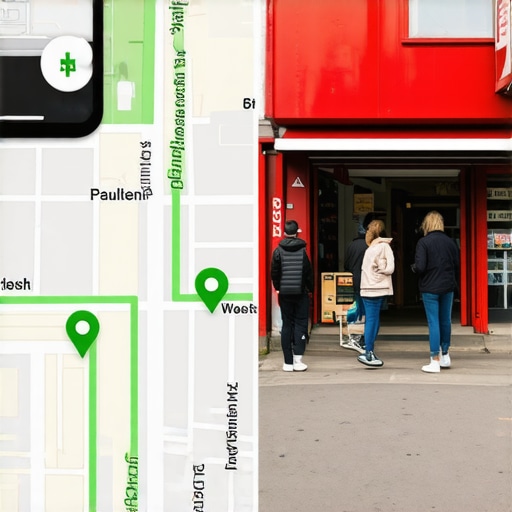
Stop Chasing Reviews and Start Fixing Signals
Most people think more reviews solve everything. It is a trap. I have seen profiles with 500 reviews get outranked by a shop with 20. Why? Because the lower-rated shop had better ‘freshness’ and ‘relevance’ signals. You must stop chasing reviews and fix these 4 map health signals instead to see real movement. One of those signals is the ‘Recency of Engagement.’ If you haven’t uploaded a photo or answered a question in three months, Google assumes your business is dormant. It doesn’t matter how great you were three years ago; the algorithm cares about who is active today. This is a core part of any maps seo checklist worth its salt.
Expand Your Reach Beyond Your Front Door
Proximity is a harsh mistress, but you can negotiate with her. If you are a service-area business, you aren’t stuck in a tiny circle around your office. You can signal relevance to nearby neighborhoods by optimizing your service menu. For a plumbing client, we found that simply adding ’emergency water heater repair’ to specific service areas within the profile—rather than just a generic ‘plumbing’ tag—triggered the algorithm to show them to users five miles further out than before. This simple google listing checklist tweak allowed them to dominate the suburbs they actually wanted to work in. It is about proving to Google that you aren’t just ‘near’ the searcher, but you are the ‘most relevant’ for their specific problem. This is the specific way to optimize for mobile map searchers who are looking for immediate solutions while on the go.
Convert Lurkers Into Callers
Ranking is only half the battle. If 1,000 people see your pin but nobody clicks, Google will eventually stop showing you. High visibility with low engagement is a recipe for a ranking drop. To prevent this, you need to implement 4 profile engagement tactics that actually turn map views into phone calls. Start by using the Q&A section to address common objections. If people always ask if you have parking, answer it yourself in the Q&A. This interaction counts as engagement and provides immediate value to the searcher. Every time a user clicks ‘Call’ or ‘Directions’ or even just expands a photo, it sends a ‘success’ signal back to Google, reinforcing your spot at the top.Now that we’ve covered the basics of engagement, let’s talk about where most ‘pros’ actually fail. There’s a common belief that the more keywords you stuff into your business name, the higher you’ll climb. I’ve seen countless agencies promise this as a shortcut. But here is the brutal truth about why your business is not in the top-3 map spots: Google is getting incredibly good at spotting ‘unnatural optimization.’ If your legal name is ‘Joe’s Plumbing’ but your profile says ‘Joe’s Plumbing Emergency Drain Cleaning Repair New York,’ you are essentially painting a target on your back. In my experience, while you might see a temporary spike, you are setting yourself up for a hard reset. Why your current google listing checklist is making you invisible to local customers-2 often boils down to this: you’re trying to trick an AI that sees billions of data points. I once worked with a law firm that insisted on adding every city in the county to their service description. They thought they were being thorough, but they were actually diluting their local relevance. This is why your map health score is actually costing you calls-2; if Google thinks you’re a ‘jack of all trades, master of none’ across a 50-mile radius, it will prioritize the specialist who is only two miles away. Research from Whitespark’s annual Local Search Ranking Factors study consistently highlights that while ‘keywords in business title’ remains a strong signal, ‘spam fighting’ and reporting by competitors is at an all-time high. One simple report from a rival, and your ‘optimized’ name leads to a suspension that takes months to fix. 
Can an ‘over-optimized’ profile actually trigger a shadow-ban?
It sounds paranoid, doesn’t it? But ‘over-optimization’ is a real phenomenon in the local pack. When you follow a generic maps seo checklist without accounting for your specific niche, you leave digital footprints. For example, if you build 100 citations in a single weekend using an automated tool, Google sees a massive, inorganic burst of data. This is why manual citation building beats automated tools every time. You want your growth to look like a natural business expansion, not a bot-driven SEO campaign. The proximity myth—why distance isn’t your only problem—is that relevance and prominence can overcome physical miles, but only if your profile looks ‘human’ and trustworthy. We often overlook the forgotten details in your google listing checklist that kill local reach-2, such as the consistency of your business hours across the web. If your Google profile says you’re open 24/7 but your Facebook or Yelp page says you close at 5 PM, Google loses confidence in your data. Trust is the hidden signal that decides who hits the top-3 map pack spots. Have you ever fallen into this trap of over-optimizing only to see your rankings vanish? Let me know in the comments. We need to move away from ‘gaming the system’ and toward ‘proving the value.’ This involves the niche citation move that actually wins local service area searches: getting mentioned on a local neighborhood blog or a community association page. These links carry more weight than a thousand directory entries because they cannot be easily automated. This is the level of detail required for a step-by-step map optimization guide that actually delivers sustainable growth.The hardest part of this whole journey isn’t getting to the top; it’s staying there. I’ve seen businesses hit the #1 spot, celebrate with a team lunch, and then disappear by the following month because they thought the work was done. Real success comes from the profile maintenance routine that keeps you in the top-3. I personally don’t rely on 50 different apps anymore. I’ve narrowed it down to one solid grid tracker and a manual spreadsheet. Why manual? Because tools miss the ‘feel’ of a neighborhood. You need to learn how to audit your google listing checklist without expensive tools to truly understand the ‘why’ behind your ranking shifts. If you only look at software, you’re looking at a ghost. I focus on the one map health metric that actually matters to business owners: the ‘Interaction to View’ ratio. If people see you but don’t call, your content is stale.
How do I maintain my map rankings over the long haul?
Consistency is the only real ‘hack’ left. I tell my clients that their Google profile is like a digital storefront window—if the displays never change, people stop looking. You need a dedicated monitoring map health key checkpoints list that you run through every Sunday night. Joy Hawkins from Sterling Sky recently noted in a technical deep dive that Google’s ‘unconfirmed’ updates often target businesses that neglect their core profile attributes in favor of secondary hacks. This means that if you’re chasing the latest ‘trick’ but ignoring your business hours or basic categories, you’re on thin ice. Use a mastering map optimization essential seo checklist for local growth to ensure you aren’t missing the forest for the trees. 
The AI Wave is Reshaping Local Search
We are entering the era of Search Generative Experience (SGE). Soon, Google won’t just show a list of pins; it will summarize *why* a business is the best fit for a user’s specific, conversational prompt. If someone asks, ‘Where can I find a plumber who is good with old Victorian pipes?’ Google will crawl your reviews and your Q&A to find that exact answer. This is why your complete maps seo checklist for enhanced visibility must include semantic keywords within your profile updates. Don’t just post ‘We do plumbing’; post about the specific types of homes and problems you solved this week. Looking ahead, the businesses that treat their profile as a living, breathing conversation will be the ones that survive the AI transition. My challenge to you today: Go into your profile right now and answer one unaddressed question in your Q&A section with a detailed, helpful response. It takes two minutes and signals to Google that you are an active, authoritative voice in your local market.
What the Data Grids Never Showed Me
The most important realization I had throughout my years in local search wasn’t about an algorithm update; it was about the searcher’s mindset. I realized that a green dot on a ranking report is useless if the person behind the screen doesn’t trust the information they see. You have to learn how to measure local seo results without getting lost in vanity metrics because at the end of the day, an impression is just a score, but a click for directions is a customer. Another lightbulb moment was seeing how fragile rankings are—one competitor’s spam report can undo months of work, so building a base of genuine customer sentiment is your only real shield. I also found that monitoring map health key checkpoints for ongoing optimization needs to be a weekly habit, not a monthly chore. If you wait thirty days to check your data, you’ve already lost the momentum that drives local growth.
The Audit Kit I Carry Into Every Neighborhood
I don’t believe in over-complicating my tech stack with dozens of expensive subscriptions. I trust the annual Local Search Ranking Factors study from the team at Whitespark to understand high-level shifts across the industry. For those managing a whole fleet of storefronts, I recommend looking into the gmb software that actually moves the needle for multi-location brands to keep your data synced across the web. However, my most used ‘tool’ is actually a simple browser on my smartphone with ‘incognito’ mode active, walking the actual streets where my clients operate. I also suggest following the Sterling Sky blog for technical deep-dives that most automated SEO tools are far too slow to pick up on.
Take Back Your Local Visibility
Local search isn’t a mountain you climb once; it’s a garden you tend every single day. By using a consistent maps seo checklist, you are giving your business the best possible chance to be found when it matters most—the moment a customer is ready to buy. Don’t let the technical jargon or the shifting algorithms intimidate you. Start with your NAP consistency, clean up your primary categories, and engage with your customers like they are standing right in front of you. If you ever face a sudden dip in traffic, don’t panic; instead, learn how to handle a sudden drop in customer calls from your listing by systematically checking your behavioral signals. You’ve got the tools and the strategy—now it’s time to put them to work and dominate your local pack. Have you ever noticed your ranking software showing a #1 spot while your own phone shows you are invisible? Let me know in the comments below!