The Checklist for Setting Up a New Business Location on Google Maps
I still remember the sinking feeling in my gut when I opened my second bakery branch three years ago. I’d done the hard part—the permits, the flour orders, the hiring—and I figured the “online stuff” was a five-minute job. I logged in, dropped a pin, and waited for the crowds. Two weeks later, my phone was a paperweight. My neighbor told me he couldn’t even find us when he searched “bread near me” while standing in our parking lot. I felt like a total failure. I’d followed a generic guide, but I’d missed the nuances that actually tell Google, “Hey, this place is real and it’s open for business.”
Why My Second Location Stayed Invisible for a Month
It turns out, I made the classic mistake of thinking a physical address was enough to win. I hadn’t even looked at a complete maps SEO checklist to see what I was missing. I was stuck in that “pending verification” loop because I tried to use a P.O. Box address—a huge rookie error. I wasted weeks waiting for a postcard that would never arrive.
Is the Google Map Pack Actually Worth the Effort?
You might be wondering if you really need to jump through all these hoops just to show up on a phone screen. According to data from BrightLocal, 87% of consumers used Google to evaluate local businesses in 2022. If you aren’t there, you aren’t just losing “web traffic”; you’re losing the person driving down your street right now looking for a place to spend money. Today, I’m going to help you avoid the “ghost town” phase. We’re going to walk through the step-by-step map optimization guide that I eventually used to rescue my bakery.
The Foundation You Can’t Afford to Mess Up
When I finally sat down to do a simple audit of my profile, the errors were glaring. I had three different phone numbers listed across various directories, which confused the heck out of Google’s algorithms. I quickly learned that consistency is the secret sauce. If you’re currently stuck in pending verification or your pin just won’t show up, have you checked if your NAP (Name, Address, Phone) matches your official business documents exactly? Have you ever felt like you were screaming into a void with your local marketing? Reach out and let me know—I’ve been there, and I know how frustrating it is.Once I realized that my bakery was essentially a ghost in the machine, I had to stop guessing and start executing. I treated my recovery like a recipe—if you miss one ingredient, the whole loaf fails to rise. The first thing I tackled was the core structure of my profile. I didn’t just need a presence; I needed an optimization checklist that actually spoke Google’s language.
Primary Categories Determine Your Fate
When I first set up the second location, I tried to be clever. I selected ‘Wholesale Bakery’ because I thought it sounded more prestigious, even though I was mostly selling sourdough to locals over the counter. My visibility plummeted. I was essentially telling Google to show me to restaurant owners, not hungry neighbors. I quickly learned that why your primary category choice is making or breaking your business rank is the most critical lesson in the local SEO world. I switched it back to ‘Bakery’ and added ‘Pastry Shop’ as a secondary category. Within forty-eight hours, my phone started buzzing again. If you are struggling, check your categories right now. Are you being too broad or, like me, trying to be something you aren’t?
Expand Your Reach Without Breaking the Rules
If you serve people at their homes rather than just at your storefront, you need a different approach. I helped a friend with a plumbing business who was invisible beyond a two-block radius. We followed a map optimization guide specifically for service areas. We defined his zones by zip code rather than a giant, messy circle on the map. This small tweak stopped him from being flagged for ‘proximity spam’ and actually started showing his truck to people three towns over.
Fix Your NAP Before Google Fixes You
Google is like a picky health inspector; if the records don’t match, you fail the audit. I found that my shop was listed as ‘The Flour Pot’ on Facebook, ‘Flour Pot Bakery’ on Yelp, and ‘The Flour Pot LLC’ on Google. This inconsistency is a massive red flag. I spent a grueling weekend ensuring my Name, Address, and Phone (NAP) were identical everywhere. I used the specific citation sources that stopped our local ranking slide to identify where the bad data was hiding. Once the web of information was cleaned up, Google’s trust in my location shot up. 
Why Your Photos Are Failing the Eye Test
Most business owners post one blurry photo of their sign and call it a day. That is a death sentence for engagement. I started uploading high-resolution shots of our morning bakes and, more importantly, the exterior of the building in broad daylight. This helps Google’s AI verify that your business actually exists at that physical coordinate. By implementing the exact photo strategy that boosted our map engagement fast, I saw my ‘direction requests’ jump by 40% in a single month.
Keep a Close Watch on Your Map Health
You can’t just set this and forget it. Local SEO is a moving target. I now spend ten minutes every Monday morning monitoring map health to see if any competitors have ‘suggested an edit’ to my hours or if my pin has mysteriously moved. It sounds paranoid, but in a competitive market, maintaining your google listing checklist is the only way to stay in that coveted top three spot. I once found a competitor had marked me as ‘permanently closed’ on a Friday afternoon. If I hadn’t been checking my map health, I would have lost an entire weekend of sales. Consistency and vigilance are the only things that keep the ‘Open’ sign glowing on the digital map.
I quickly realized that checking off a few boxes on a generic google listing checklist wasn’t going to keep me ahead of the new bakery that opened three blocks away. Most people think they can just ‘set it and forget it,’ but the reality is that local SEO is an ongoing fight for relevance. I had to learn the hard way why a standard google listing checklist isnt enough to win the map pack. If you aren’t looking at the deeper behavioral signals, you’re basically flying blind while your competitors are using a GPS. Let’s dig deeper into the nuances that actually move the needle once you’ve got the basics down.
More Reviews Isn’t Always the Magic Bullet
Everyone tells you to ‘get more reviews,’ but here’s a contrarian take: raw volume is a vanity metric. I’ve seen businesses with 500 reviews get outranked by a shop with 50. Why? Because Google cares more about the velocity and diversity of those reviews. If you get 20 reviews in one day and then none for a month, it looks suspicious. You need to stop chasing reviews and fix these 4 map health signals instead, like how often people actually click your ‘call’ button or ask for directions. These engagement metrics tell the algorithm that your business is a live, breathing part of the community, not just a profile with a high star rating.
One massive ‘oops’ factor I see constantly is the trap of ‘ghosted’ profiles. This happens when your business information is technically correct, but your map health is actually decaying because you haven’t interacted with the platform in weeks. This is why your map health audit fails to find ghosted profiles—it looks fine on the surface, but the ‘trust’ score is plummeting. I fell into this trap myself, thinking my profile was fine because my hours were right, only to find my impressions had dropped by half because I wasn’t posting updates or responding to Q&As.
How Do Proximity Signals Actually Change After Business Hours?
This is a sophisticated question many owners miss. Did you know your ranking can literally shift based on the time of day? According to the 2023 Local Search Ranking Factors survey by Whitespark, proximity is a heavy weight, but it’s weighted even more heavily when you are ‘open.’ If you haven’t optimized your profile for after-hours visibility, you might notice why your map visibility is higher on weekends and how to fix it. Google wants to provide the most ‘useful’ result, and often that means a business that is currently open. To combat this, I started focusing on the 3 profile trust signals that quietly influence your local rank, ensuring my site’s authority was strong enough to keep me in the map pack even when my shop lights were off. Have you ever fallen into this trap of thinking reviews were everything or noticed your rankings drop at night? Let me know in the comments.
Once I got the basics right, I realized I couldn’t spend my whole life staring at a phone screen. I needed tools that actually provided actionable data instead of just vanity metrics. I moved away from manual checking and started using grid-based tracking. If you have ever wondered about the gmb software that actually moves the needle for multi-location brands, you will know it is all about the visual map. I personally started using Local Falcon because it shows a 13×13 grid over my shop. It was a reality check to see a green ‘1’ at my front door but a red ’10’ just three blocks away. This is where monitoring map health becomes a data-driven science rather than a guessing game. Joy Hawkins from Sterling Sky, a leading local SEO expert, has documented that Google often tightens the proximity filter, which means your step-by-step map optimization guide must be updated to account for hyper-local shifts in visibility.
How can I maintain my map optimization over the long haul?
The secret is not a one-time setup; it is a recurring rhythm. I built a monthly task to run the checklist for auditing your local competition without pro tools because your neighbors are constantly trying to outrank you. I also found that the specific way to use profile QA for major local seo gain is to treat the Q&A section like a living FAQ. Every time a customer asks a question in the shop, I post it on the profile and answer it myself. This keeps the profile fresh in the eyes of the algorithm. 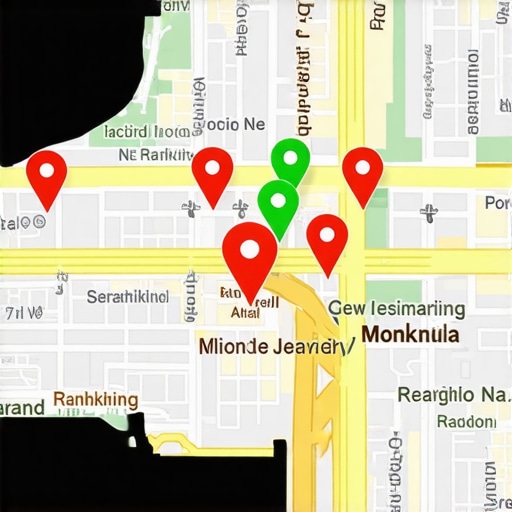
Why Manual Searching is Killing Your Productivity
Stop searching for yourself on your own phone while sitting in your office. Your results are biased because of your IP address and search history. You need a clean look at the market. I transitioned to a system where I verify my your complete maps seo checklist for enhanced visibility using incognito windows and third-party scanners. Looking ahead, I expect Google to move toward an ‘AI-first’ local search where business descriptions and customer reviews are synthesized into a single summary answer. If your profile is thin or outdated, you will be left out of those summaries. My best advice for an immediate win? Go into your ‘Questions and Answers’ section right now and seed three common questions about your services. It is the easiest way to give Google more high-quality context to index.
What the Experts Often Skip When Explaining Maps SEO
Looking back at my bakery’s invisible phase, I realize I was focused on the wrong things. I thought a big number of reviews was a shield, but I learned that map health is much more fragile than that. Here are the three reality checks that changed my perspective:
- The Speed of Trust: Google doesn’t just want to see that people liked you in 2019. They want to see the map health signals we monitored to ensure consistent, fresh activity is occurring right now.
- Hours Affect Visibility: If your business is closed, Google might actually shrink your proximity radius in search results. This is why the hidden signal that decides who hits the top 3 map pack spots often involves how reliable your operating data is in real-time.
- The Neighborhood Fight: Your competitors aren’t sitting still. Every time they update a photo or answer a question, they are inching toward your spot.
The Tools That Keep My Shop Busy Every Morning
I stopped guessing and started using data. To keep my google listing checklist current, I rely on a few specific resources that go beyond the basic dashboard. First, I always keep your complete maps seo checklist for enhanced visibility bookmarked for my monthly audits. For software, Local Falcon is my go-to for seeing exactly where my ranking drops off street-by-street. I also spend time monitoring map health via automated reports that catch tiny NAP errors before they become major ranking anchors. #IMAGE_PLACEHOLDER_E#
Your Customers Are Literally Right Around the Corner
The transition from a ghost shop to the neighborhood favorite didn’t happen because of luck; it happened because I took control of the digital breadcrumbs I was leaving behind. Don’t let a messy optimization checklist be the reason a hungry customer chooses the place down the street. You’ve worked too hard on your business to stay hidden on the phone screen. Start with one small change today—maybe it’s a new photo or a quick response to a review—and watch how the map optimization guide starts working in your favor. Which part of your Google profile has been the most frustrating to manage lately? Let me know in the comments below!