The Truth About Buying Local Reviews and Why It Always Backfires
I remember the cold sweat of staring at a “Suspended” notification on a profile I had spent three years building. It happened years ago, right after I’d succumbed to the siren song of a “reputation management” service that promised 50 five-star reviews for a flat fee. I thought I was being savvy; instead, I was being reckless. That moment of failure taught me more about the maps SEO checklist than any textbook ever could. If you have ever felt that sinking feeling when your rankings stall out while your competitor seemingly cheats their way to the top, this is for you. Today, I am going to show you exactly why those shortcuts are a death sentence for your local visibility and how to fix your map health without risking your livelihood.
Your Business Profile is More Fragile Than You Think
I’ve spent thousands of hours analyzing local listings, and the biggest realization I ever had was that Google doesn’t just read your reviews—it audits the human behavior behind them. When you buy a pack of reviews, you aren’t just buying words; you are buying a footprint of suspicious activity that sticks to your listing like glue. I once helped a local contractor who had “outsourced” his review growth, only to find his profile completely invisible to anyone more than a mile away. We had to go back to basics, using a step-by-step map optimization guide to prove to the algorithm that he was actually a real, trustworthy business. If you’re not seeing the calls you expect, it is likely because of the brutal truth about why customers ignore your review requests, not a lack of fake praise.
Does Google really have the tech to spot fakes?
The short answer is a resounding yes. According to a recent study by the Federal Trade Commission, the government is now actively pursuing businesses that use deceptive endorsements, with potential fines reaching over $50,000 per violation. Google’s internal AI is even more aggressive, often flagging reviews before they even go public based on the reviewer’s GPS history and device ID. I remember a colleague who thought they were being clever by using a VPN to post their own reviews; they weren’t just caught—they were blacklisted. Have you ever felt the temptation to take a quick shortcut when your phone stops ringing? I’ve been there, but let’s look at how to hit the top 3 Google Maps spots without buying shady reviews and build something that actually lasts.It starts with a brutal audit. I remember working with a local plumber whose rankings had completely flatlined for six months. We didn’t buy a single link or review. Instead, we followed a maps SEO checklist to find that his suite number was listed differently on four major directories. It sounds like a minor detail, but to Google, it looked like four different businesses fighting for the same spot. This is why you must prioritize your map health before trying any advanced tactics. You have to ensure your data is a mirror image across the entire web, or the algorithm will simply lose trust in your location.
Hunt Down the Tiny Errors Sabotaging Your Rank
Think of your business data like a digital fingerprint. If the print is smeared, Google won’t verify the ID. I spent a long weekend once cleaning up a client’s old phone numbers from retired YellowPages listings. It was tedious, messy, and felt like a waste of time—until their impressions jumped by 40% in two weeks. This is the power of a google listing checklist that focuses on the foundation. Most businesses fail here because they want the ‘cool’ stuff like AI-generated posts, but they haven’t even claimed their secondary citations. 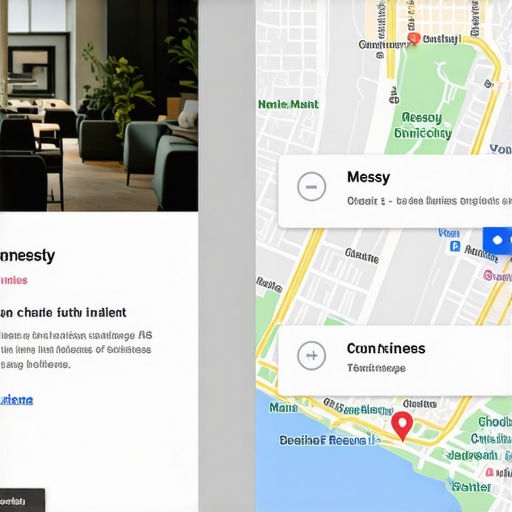
Pick Your Niche with Surgical Precision
Most business owners pick a broad primary category and wonder why they are buried under corporate chains. I once saw a boutique law firm triple their call volume by simply switching from ‘Lawyer’ to ‘Personal Injury Attorney’ and filling out their service menus. This is why your primary category choice is making or breaking your business rank. You need to use a map optimization guide to identify the specific sub-categories your competitors are ignoring. Don’t be a generalist; in the world of Maps, generalists are invisible.
Make Google Trust Your Real-World Activity
Engagement is the new backlink. If your profile is a ghost town, why should Google show it to anyone? I found a ‘local authority hack’ when I started forcing a client to reply to every single review within 24 hours and post one photo of a finished job every Tuesday. We fixed a stagnant profile using this local authority hack and saw the ‘Request a Quote’ buttons finally start clicking. It’s about proving there is a pulse behind the screen. You can also see how we used community posts to influence our local map visibility by treating the business profile like a social feed rather than a static billboard. This level of optimization checklist execution is what separates the top 3 from the businesses on page two that are wondering where their customers went.Most people believe that the key to winning the local pack is simply out-voluming the competition. They think if a competitor has 100 reviews, they simply need 101. This logic is fundamentally flawed. In my experience, Google rewards precision over raw numbers. I have seen profiles with a few dozen reviews consistently outrank behemoths because they maintained superior map health through consistent, high-quality engagement rather than a one-time blast. If you are just checking off boxes on a generic maps SEO checklist, you are likely missing the nuances that the algorithm actually uses to determine trust.
Stop Chasing Review Volume and Start Chasing Velocity
The biggest oops factor I see with local businesses is the Review Spike. A business owner gets inspired and asks every past client for a review on the same day. This is a massive red flag. According to the 2023 Whitespark Local Search Ranking Factors survey, review velocity—the steady pace at which you receive reviews—is far more influential than the total count. When you get 20 reviews in 24 hours after months of silence, Google’s spam filters go into overdrive. Instead, you need a sustainable optimization checklist that encourages a natural, weekly flow of feedback. Have you ever fallen into this trap of binge-requesting reviews? Let me know in the comments.
The Service Area Trap That Shrinks Your Reach
I once audited a service-based business that had claimed every city within a sixty-mile radius. They thought they were being smart by casting a wide net, but they were actually diluting their local relevance. This is a primary reason why your service area map looks small; the algorithm can’t pinpoint where your center of authority truly is. You are better off dominating a five-mile radius than being invisible across five counties. Focus your step-by-step map optimization guide efforts on the areas where you have actual physical proximity or the highest job density. 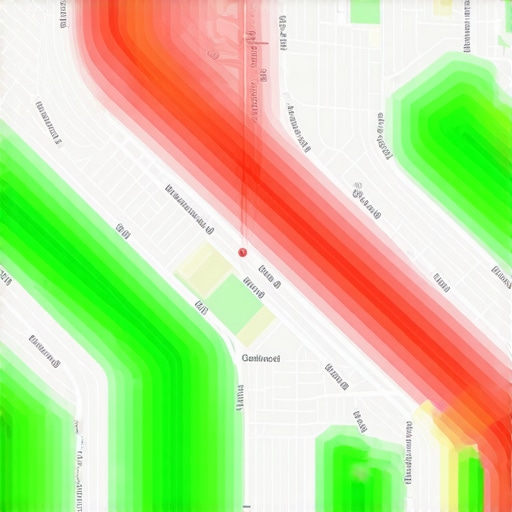
Does Local Schema Actually Change Your Ranking Over Night?
Advanced SEOs often argue about the weight of on-page code, but the truth about local schema is that it serves as the essential connective tissue. It doesn’t necessarily boost you, but it validates the data you provide in your profile. Without it, your google listing checklist is just a series of unsubstantiated claims. If you’ve been working hard but seeing no movement, it is time to look at the 7 maps SEO checklist items for profiles that stopped showing up to find the technical gaps your competitors are likely ignoring. Real growth isn’t about magic; it’s about making sure your digital fingerprints match perfectly across every platform.Once you have cleaned up the mess of inconsistent data, the real work begins: staying at the top. I’ve seen dozens of businesses hit the top 3 and then immediately stop posting, stop replying, and stop auditing. Within three months, they are back on page two. To prevent this, I treat map health as a weekly hygiene task rather than a one-time project. I personally use Local Falcon to run weekly grid reports. If you’re only looking at a single ranking number from a generic tool, you are essentially flying blind. This is why your local SEO software is feeding you useless ranking data; it doesn’t account for the street-by-street proximity of the searcher.
The Maintenance Trap That Kills Successful Listings
I also swear by category analysis tools like PlePer to keep an eye on the landscape. I frequently check what the ‘big players’ are doing with their secondary categories. If a competitor suddenly jumps ahead of you, they might have added a niche service you missed. This is where the GMB software that actually moves the needle comes into play—it is not about automation; it is about actionable insight. You need to know if you’re losing ground because of a technical glitch or because someone else updated their google listing checklist more recently than you. 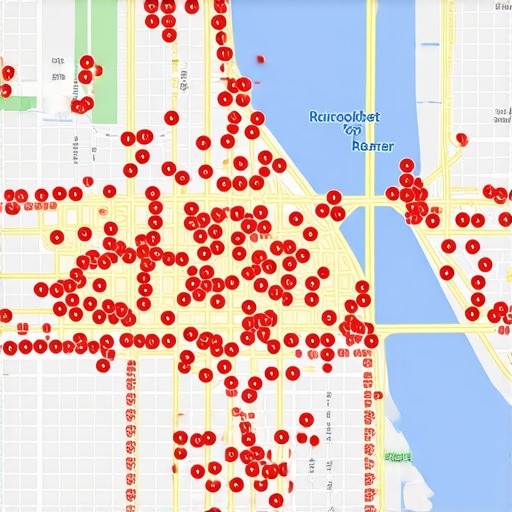
Tools I Actually Use to Stop Guessing
Consistency beats intensity every single time. You don’t need a viral post; you need a pulse. I follow a strict mastering map optimization essential SEO checklist that dictates one high-res photo per week and responding to every review—even the critical ones—within 48 hours. I also recommend a monthly ‘citation scrub’ to ensure no new scrapers have created duplicate listings for you. Darren Shaw, a leading expert in local search and founder of Whitespark, notes that while proximity is a massive ranking factor, relevance and prominence are what you can actually control. By keeping your data fresh and your maps SEO checklist updated, you tell Google your business is more relevant than the one two blocks closer that hasn’t updated a photo since 2019.
How do I maintain my map ranking over the long haul?
Looking ahead, I predict that Google will rely even more on ‘Zero-Click’ interactions. We are already seeing Google’s Search Generative Experience (SGE) summarize reviews to answer queries directly. If your profile doesn’t have the specific keywords inside customer reviews that match these AI summaries, you’ll lose out. You need to learn how to measure local SEO results without getting lost in vanity metrics like total impressions, and start focusing on ‘intent-based’ calls. Try this today: Go into your profile and add three specific questions and answers to the Q&A section that address common customer objections. It’s a tiny move that builds massive trust with the algorithm.
Three Local Ranking Myths That Held Me Back
I used to believe that simply having the most reviews was the golden ticket. I was wrong. The first big lesson I learned was that Google values relevance over volume. A profile with 200 reviews about ‘great service’ often loses to a profile with 50 reviews that mention specific keywords like ‘leaky faucet repair’ or ’emergency pipe fix.’ This is why your maps seo checklist must focus on the substance of your feedback, not just the stars. Second, I realized that ‘setting and forgetting’ is a recipe for invisibility. If you aren’t active, Google assumes your business is less ‘alive’ than the competitor who posts a weekly update. Finally, I discovered that map health is a fragile ecosystem. One single incorrect phone number on an old directory can act like a weights on your ranking, dragging you down despite your best efforts.
The Personal Toolkit I Use to Stay Ahead
I don’t believe in guessing when it comes to my local footprint. To keep my clients at the top, I rely on a specific set of tools that provide data-driven clarity. I use Local Falcon to see exactly where my ranking drops off on a street-by-street basis, which is essential for diagnosing why your service area map looks small. For category research, I lean on PlePer to ensure I am not missing out on high-intent sub-categories that my competitors might be exploiting. These tools are the foundation of my optimization checklist, allowing me to make surgical strikes rather than broad, ineffective changes. I trust these resources because they move the needle from vanity metrics to actual phone calls. #IMAGE_PLACEHOLDER_E#
Your Path to the Top Three
The journey to the local pack isn’t a sprint; it’s a commitment to accuracy and engagement. If you feel overwhelmed, start by fixing the brutal reason your google listing checklist isnt generating phone calls by auditing your core NAP data today. You have the tools and the knowledge to stop being invisible. Focus on providing real value to your customers, and the algorithm will naturally follow your lead. Consistency is your greatest competitive advantage in a world of shortcuts. Have you ever seen a competitor with fewer reviews outrank you for a major keyword? Let me know below and let’s figure out why.