The Brutal Truth About Why Your Business Is Not in the Top 3 Map Spots
I spent three months wondering if my business was actually a ghost. I’d pull up my phone, type in my service, and see my competitors—guys with half my experience and way worse equipment—sitting pretty in those top three spots while I was buried on page four. It was embarrassing. I remember sitting at my kitchen table at midnight, scrolling through endless search results, and feeling my face get hot with frustration. I thought I had done everything right, but I was actually falling for the same traps that are likely keeping you sidelined right now. Today, I’m going to show you how to move past the surface-level tweaks and finally claim the visibility you deserve because, frankly, the ‘standard’ advice is costing you money.
Stop Falling for the ‘More Reviews’ Trap
I used to think that if I just begged every single customer for a five-star rating, Google would eventually have no choice but to promote me. That was a huge mistake. I spent so much energy on that one metric that I completely ignored my actual map health. The truth is, your ranking is a living, breathing thing that requires a more nuanced approach than just a high star count. In fact, stuffing keywords into my business description was another early blunder of mine; I thought I was being smart, but I was just flagging myself as a spammer to the algorithm. It felt like I was shouting into a void while my competitors were whispering directly into the ears of my potential customers. Have you ever felt like you’re doing all the right things but still getting zero calls from your profile? It’s a special kind of heart-sink when you see ‘1,000 views’ in your dashboard but your phone remains as silent as a grave.
Is getting into the top 3 actually worth the effort?
Many people tell me they’ve given up on the map pack because it feels rigged or just too competitive for the little guy. I get it. Early in my journey, I followed a bloated google listing checklist that was outdated before I even finished reading it. It was full of advice about ‘citations’ that didn’t move the needle anymore and ‘geo-tagging photos’ that felt like mindless busy work. But here’s a startling reality: according to BrightLocal’s consumer research, nearly 98% of people read online reviews for local businesses, and the vast majority never look past the first three results displayed. If you aren’t there, you’re leaving money on the table for your competitors to scoop up every single morning. We need to look at how to fix the map health leaks that are draining your potential before we worry about anything else. I learned the hard way that a single tiny discrepancy in my office hours across the web was enough to keep me sidelined for months. It’s time to stop guessing and start using a maps seo checklist that actually reflects how local search works today. We’re going to dive into the nuts and bolts of why you’re being skipped over and how to turn those impressions into actual phone calls, starting with the foundation you probably didn’t know was cracked.
Clean Up the Digital Mess Holding You Back
Think of your Google Business Profile like a high-performance engine. If there is grit in the oil—meaning inconsistent data across the web—it doesn’t matter how much gas you give it; you’re not going anywhere fast. I once spent an entire weekend hunting down a ‘ghost address’ for a local HVAC client. We couldn’t figure out why his profile was stuck on page three despite him having 200 more reviews than the guy in the top spot. It turned out an old Yelp listing from 2014 had his old suite number, and that tiny discrepancy in your map health score was enough for Google to lose trust in his current location. We had to go back to basics and scrub every mention of his business name, address, and phone number (NAP) until they were identical down to the last comma. This isn’t just busy work; it’s about proving to the algorithm that you are a legitimate, reliable entity. You can start this process by using a 10-minute maps seo checklist to identify where your data is leaking.
Synchronize Your Hours and Service Areas Immediately
One of the most common ways businesses accidentally sabotage themselves is by having ‘mismatched’ hours between their website and their Google profile. If Google thinks you’re closed but your website says you’re open, it’s not going to risk showing you to a searcher who needs help right now. This is a core part of how to fix the map health leaks that quietly drain your visibility. 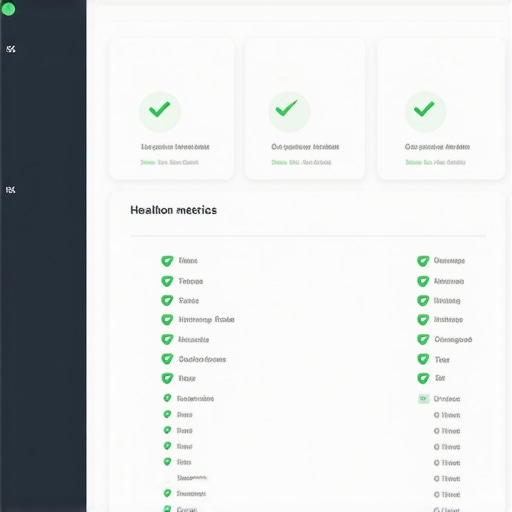
Signal Your Relevance Without Saying a Word
Once your data is clean, you need to start sending ‘freshness’ signals. Google loves active profiles. I remember working with a local bakery that was getting zero traction. We didn’t change their keywords; we just changed their habits. We started uploading three new photos every Monday morning—not stock photos, but real shots of the kitchen and the staff. Within three weeks, their ‘discovery’ searches jumped by 40%. It’s about showing Google that the lights are on and someone is home. You should be looking at google listing checklist items you need to update weekly to keep that momentum going.
Stop Guessing Which Photos Actually Drive Clicks
Don’t just dump your entire camera roll onto your profile. Focus on ‘action’ shots. If you’re a plumber, show the van, the tools, and the finished repair. These visual cues act as trust signals for both the bot and the human user. I’ve found that following a structured map optimization guide specifically for your industry can prevent you from wasting time on photos that don’t convert.
Answer Every Question Even if You Didn’t Ask It
The ‘Questions and Answers’ section of your profile is often a wasteland of unanswered queries or, worse, spam. I make it a point to go in and prepopulate this section with the top five questions customers ask on the phone. This isn’t just helpful for users; it allows you to naturally integrate the service terms people are actually typing into the search bar. This is one of those ‘hidden’ steps in a proper maps seo checklist that separates the winners from the also-rans. By taking control of the narrative, you stop being a passive participant in your local market and start dictating where your traffic comes from.
Stop Obsessing Over Proximity and Focus on Authority
Most people assume that Google’s proximity filter is an immovable wall. I used to think that if I wasn’t within two miles of the city center, I’d never crack the top three for my most profitable terms. But that’s a rookie mistake. In reality, you can influence your ‘relevance radius’ far more than you think. While everyone else is following a basic step-by-step map optimization guide, the real winners are building what I call ‘brand prominence.’ Joy Hawkins, a leading expert at Sterling Sky, has demonstrated through extensive testing that Google often favors a business with high engagement and strong local signals over a closer, but less relevant, competitor. This means your proximity myth is likely what’s keeping you from expanding into those high-value neighboring zip codes.
How do you actually beat a competitor who is closer to the customer?
The secret isn’t just more citations; it’s better engagement. I once saw a locksmith who was ten miles away outrank local shops because his profile was a magnet for ‘directions’ requests and long-tail searches. He had effectively taught the algorithm that people were willing to travel—or wait—for him. This is where the one map health metric that actually matters comes into play: user intent signals. If you’re just checking boxes on a generic monitoring map health list, you’re missing the forest for the trees. 
The Trap of Automated Citation Management
One massive ‘oops’ factor I see constantly is the over-reliance on automated citation tools. I’ve seen businesses pay thousands for ‘power-listings’ that actually created more mess than they solved. These tools often overwrite custom-optimized descriptions with dry, corporate boilerplate, essentially nuking your local personality. It’s one of the biggest red flags most businesses miss when hiring a maps seo service. You need to be looking for how to fix the map health leaks manually, ensuring that your unique value proposition isn’t being scrubbed away by a bot. To truly dominate, you have to think about how Google perceives the ‘real world’ through digital breadcrumbs. It’s not just about what you say on your profile; it’s about what your website says back. If your site doesn’t have local schema that mirrors your map data, you’re creating a friction point that hurts your map health score. Another subtle trap is the ‘category dilution’ error. I’ve seen business owners select ten different categories thinking it makes them more visible. In reality, it confuses the algorithm. It’s better to be the absolute authority in one primary category than a ‘maybe’ in five. This is a critical part of a modern mastering map optimization strategy. Have you ever fallen into the trap of thinking ‘more is always better’ when it comes to your listing details? Let me know in the comments.
Stop Guessing and Start Visualizing Your Reach
I used to rely on my phone’s GPS to see if my business was ranking, but that’s like trying to check the weather by looking through a keyhole. It doesn’t give you the full picture. Now, I use Local Falcon to run a scan every Sunday evening. This tool creates a map grid showing exactly where my ‘pins’ are visible across the city. If I see a cluster of red dots where they used to be green, I know there is a problem with my map health signal before the phone even stops ringing. It’s the difference between being proactive and being out of business. You need a way to see how your visibility shrinks and expands in real-time, or you are just flying blind.
How do I maintain my map health over the long haul?
Maintenance isn’t about doing a massive overhaul once a year; it’s about the micro-tasks that keep the algorithm happy. I follow a strict 7-point maps seo checklist that focuses on engagement and data integrity. Every Wednesday, I spend exactly fifteen minutes checking for ‘suggested edits’ from users. This is where competitors or well-meaning locals might try to change your phone number or website link. If you don’t catch these, they can trigger a ranking drop before it happens. I also use this time to ensure my key checkpoints for ongoing optimization are met, like checking that my secondary categories are still relevant to the current season. 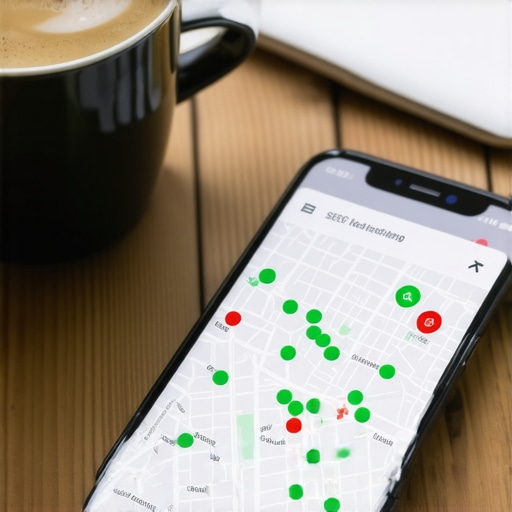
The AI Shift is Coming for Your Local Leads
We are moving toward a world where Google’s Search Generative Experience (SGE) will summarize your entire business history in a single paragraph. Mike Blumenthal, a leading authority on local search, often highlights how Google is increasingly using ‘attributes’—those little tags like ‘locally owned’ or ‘wheelchair accessible’—to decide who gets the AI-generated recommendation. If you aren’t filling out every single attribute in your dashboard, you’re essentially opting out of the future of search. I predict that within eighteen months, the ‘standard’ google listing checklist will be 80% focused on how well you provide data to these AI models rather than just keywords.
Audit Your Profile Before Your Competitors Do
It is much easier to stay at the top than it is to climb back up after a fall. I’ve seen businesses lose 50% of their call volume overnight because they neglected a weekly audit and allowed their data to grow stale. To avoid this, you need to be religious about your local ranking decay prevention. If you haven’t looked at your ‘Insights’ tab this month, you are missing the story your customers are trying to tell you. Are they finding you through ‘Discovery’ or ‘Direct’ searches? If discovery is down, your essential maps seo checklist needs an immediate update. Take five minutes right now to log into your dashboard and check for any ‘pending’ updates from Google—clearing those out is the simplest way to show the algorithm you’re still in the game.
The Hard-Earned Lessons That Finally Fixed My Map Ranking
After years of trial and error, the biggest realization I had was that Google values stability over speed. I used to change my primary category every time business slowed down, which was a disaster for my rankings. I eventually learned that focusing on the 3 missing trust signals keeping you out of the local pack is far more effective than trying to trick the algorithm with keyword stuffing. It turns out that Google is looking for consistency more than anything else. Another lightbulb moment was realizing that my website’s footer is just as important as my dashboard; if that NAP data doesn’t match your map perfectly, your authority will plummet. Also, remember that why your optimization checklist is still missing the human touch often comes down to how you interact with real-world customer queries, not just the digital ones.
Tools and Resources That Actually Move the Needle for Me
I don’t trust every ‘guru’ out there, but I do swear by a few specific sources that have never steered me wrong. Local Falcon is my go-to for visualizing rank; it is the only way to truly see how to fix the map health leaks costing you revenue across different neighborhoods. I also highly recommend keeping an eye on Joy Hawkins’ work at Sterling Sky—her data-driven approach to local SEO is the gold standard. For those looking for a structured way to stay ahead, I always suggest using a comprehensive map optimization guide to ensure no technical details slip through the cracks. Finally, Mike Blumenthal’s insights on the future of search are essential for anyone wanting to stay relevant as AI changes the landscape.
Claim the Local Visibility Your Hard Work Deserves
Dominating the local map pack isn’t about being a technical genius; it is about being the most reliable and relevant option in Google’s eyes. By sticking to a solid maps seo checklist for improving search visibility fast, you are building a foundation that pays dividends for years to come. Don’t let your competitors own the conversation in your town while you sit on the sidelines. Start today, even if it is just updating one photo or responding to an old review. You have the tools and the knowledge—now it is just about the execution. Have you ever struggled with getting your service areas to show up correctly on the map? Let me know in the comments below.