
The local review signals that act as trust anchors for your profile
I was sitting in my home office three years ago, staring at a screen that proudly displayed a 4.9-star rating for my local service business. I had worked my tail off for those reviews. I did the awkward follow-up calls, sent the ‘how did we do?’ texts, and even hand-wrote thank you notes. But the phone was dead. Silence. Meanwhile, a competitor three blocks over with a messy 4.2-star rating and half the total count was consistently appearing in the local pack. It felt like a punch to the gut. I realized then that I had been treating reviews like a trophy to be collected rather than living, breathing trust anchors that Google uses to verify if I am still relevant today. I was missing the forest for the trees, and it nearly cost me my business before I discovered the nuances of the maps seo checklist that actually matters to the algorithm.
The Day I Realized My Reviews Were Useless
The mistake I made was thinking that volume was the only metric. I had fifty reviews from six months ago and nothing new since. Google saw a stagnant profile, not a thriving business. I eventually learned the brutal truth about why your business is not in the top 3 map spots: it is often because your reputation signals have gone cold. Your reviews need to be more than just stars; they need to act as anchors that tether your business to specific services and locations through the keywords your customers use in their feedback. If your reviews don’t mention your service area or the specific job you did, they aren’t helping you rank for those terms.
Is a perfect five-star rating actually worth the hype?
Honestly? No. A perfect 5.0 often looks manufactured. Real customers are messy, and real businesses eventually hit a snag. I found that my conversion rates actually improved when I stopped hiding from the occasional critique and learned the specific way to handle negative reviews without losing rank. It shows you are a real person behind the keyboard. According to a BrightLocal consumer survey, 81% of people evaluate local businesses on Google, but they are looking for recency and detailed responses, not just a flawless score. Have you ever felt like you’re doing everything right with your Google profile but still getting ghosted by local customers?
The Secret to Making Google Trust Your Reputation
Once I stopped begging for any old review and started focusing on quality, things shifted. I had to refine the specific way to request reviews that customers wont ignore so that they would actually mention the ‘pipe repair’ or ’emergency service’ I provided. This contextual data is what transforms a simple rating into a powerful trust anchor. I also realized that my google listing checklist was missing a critical step: responding to every single person within 24 hours. When you ignore your customers, you’re telling Google you’ve checked out of the business. You need to treat your profile like a conversation, not a billboard. We are going to dive into how to turn those reviews from static numbers into active ranking engines today.
Stop Guessing and Start Auditing Your Map Health
Before you add a single new keyword, you need to know if your foundation is cracked. Think of your Google Business Profile like a high-performance engine; if the timing belt is frayed, it doesn’t matter how much premium fuel you pump into it. I remember helping a local florist who was convinced her proximity to the city center was enough to keep her busy. We spent three weeks monitoring map health only to find her NAP (Name, Address, Phone) was slightly different on Yelp versus her own website. That 1% discrepancy was a silent killer that made Google hesitate. You need to verify that every citation across the web is an exact mirror of your profile. Even a missing suite number or an old phone line on an obscure directory can trigger the 3 map health errors sabotaging your local traffic right now.
Why Your Service Areas Aren’t Triggering Calls
One of the biggest mistakes I see is businesses claiming they serve a 50-mile radius without giving Google any proof. If your office is in the suburbs but you want to rank downtown, you can’t just draw a circle on a map and hope for the best. Google looks for relevance signals tied to those locations. I once worked with a plumber who couldn’t understand why your service areas aren’t triggering the local map pack despite him being the best in the county. The fix? We started attaching location-specific photos and mentions of neighborhood landmarks in his updates. Without these hyper-local anchors, your profile is just a floating island that the algorithm eventually ignores.
Cleaning Up the Technical Mess Google Hates
Efficiency is the name of the game here. You need a step-by-step map optimization guide that prioritizes technical accuracy over fluff. The first thing you should check is your primary category. If you are a ‘Personal Injury Lawyer’ but your profile is set to ‘Legal Services,’ you are fighting an uphill battle against competitors who are more specific. Also, look at your business name. I’ve seen countless owners get suspended because they tried to stuff keywords into their title. There is a very specific reason why your business name shouldn’t include a list of services—it’s a massive red flag for spam filters that can lead to a hard suspension.
The Simple Trick to Getting Your Customers to Upload More Photos
User-generated content is the ultimate social proof for the algorithm. It proves you are doing real work for real people. However, getting customers to actually pull out their phones is like pulling teeth. I found that the simple trick to getting your customers to upload more photos isn’t asking for ‘a photo’; it’s asking them to ‘show off the finished result’ of the specific project you just completed. When a customer uploads a photo of a new roof or a freshly painted room, Google’s AI reads the metadata and the visual content, which reinforces your authority for those specific search terms. This is a core part of any maps seo checklist that actually moves the needle in competitive markets.
Everyone tells you that completing every field in your profile is the finish line. In my experience, that is exactly where the real work begins. The biggest myth in local search is that a finished google listing checklist guarantees a spot in the top three. It doesn’t. Google isn’t just looking for completion; it is looking for engagement and behavioral signals. If people see your listing but never click your phone number or request directions, Google assumes you aren’t relevant for that specific search, regardless of how many keywords you have stuffed into your description. This is the missing item in your seo checklist for maps: the human element. You need to stop thinking like a bot and start thinking like a local customer who is in a hurry.
Stop treating your checklist like a static document
I see so many business owners treat their map optimization guide as a ‘set it and forget it’ task. They spend a weekend tweaking things and then wonder why their rankings tank three months later. The truth is that your map health is a decaying metric. Much like a garden, if you don’t pull the weeds of incorrect citations or respond to new user-suggested edits, the algorithm loses confidence. I once saw a thriving dental practice lose its ranking because a competitor suggested an ‘edit’ that changed their primary category to ‘Orthodontist’ instead of ‘Dentist.’ Because the owner wasn’t monitoring map health weekly, it took a month to notice the drop in calls. You have to be proactive, not reactive, which is why your google listing checklist needs a weekly audit to catch these subtle sabotages.
Avoid the category-stuffing death spiral
Here is a trap I fell into early on: I thought more categories meant more visibility. I added everything from ‘Consultant’ to ‘Marketing Agency’ to ‘Internet Marketing Service.’ It was a disaster. By trying to be everything to everyone, I became nothing to the algorithm. This is the tiny discrepancy in your map health score costing you leads right now. Google wants to see a tight, focused identity. When you dilute your primary category with too many secondary ones that don’t perfectly align with your website content, you confuse the AI. You need a maps seo checklist that emphasizes specificity over breadth. Have you ever fallen into this trap of over-optimizing until your profile felt like spam? Let me know in the comments.
How much does website authority actually leak into your map ranking?
This is where the sophisticated players separate themselves from the amateurs. Many people assume their website and their Google profile are two separate entities, but they are deeply intertwined. A study by Whitespark consistently shows that organic ranking factors, like your backlink profile and on-page SEO, are top drivers for map pack success. If your website is slow or lacks local relevance, your map listing will struggle to break the top 3. I’ve found that why your map ranking depends on your websites backlink profile is often the hardest pill for local owners to swallow because it requires actual outreach and PR. You cannot ignore the correlation between website authority and map pack rank and expect to win in a competitive city. If you aren’t looking at your organic health, you’re only seeing half the picture. You have to learn how to spot map seo health checks that are just vanity metrics and focus on the technical links that actually move the needle.
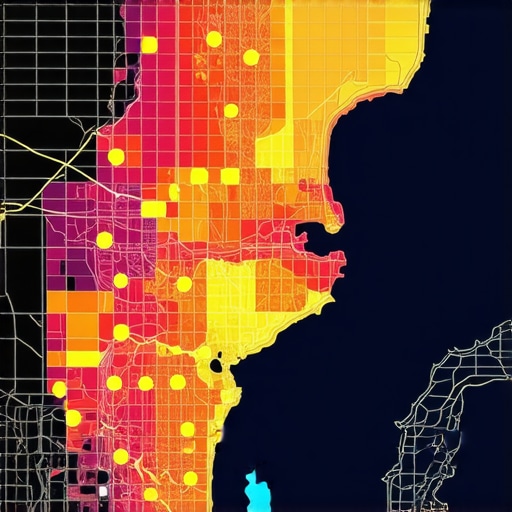
I realized that if I wasn’t checking the numbers daily, I was basically driving blind. I stopped relying on gut feelings and started monitoring map health using specific heat-map data that shows exactly where my visibility drops off. This is where most people fail—they see a ‘rank #1’ report and celebrate, but they don’t realize they are only number one in their own parking lot. To avoid this, I had to find the gmb software that actually moves the needle for multi-location brands and individual owners alike. I use tools that provide a grid-view of rankings because it tells the real story of my reach. If you are seeing green pins at your office but red pins two miles away, your map health is localized, not dominant. You need a strategy that pushes that radius outward by focusing on geo-tagged content and local mentions.
How do I maintain my map health without losing my mind?
It comes down to a rhythm. I don’t spend hours every day on this; I spend fifteen minutes every Monday morning. I’ve developed a way to how to audit your google listing checklist without expensive tools by manually checking for ‘Justifications’—those little snippets Google pulls from your site like ‘Their website mentions…’. Expert Joy Hawkins from Sterling Sky has pointed out that these justifications are massive drivers for click-through rates because they provide immediate proof of relevance to the searcher. If your profile isn’t triggering these, your google listing checklist is failing to connect with your website’s content. I make sure my service pages are mirrored in my profile’s service menu so Google has no choice but to see the connection. 
Build a moat around your ranking with a weekly ritual
I have seen too many businesses climb to the top only to be knocked off by a more aggressive newcomer within a month. To stay there, you need this 7-point maps seo checklist stops your ranking from dropping even when the algorithm shifts. My personal secret weapon is the ‘Q&A’ section. I treat it like a living FAQ. If a customer calls and asks about my emergency rates, I post that question and answer it myself on the profile. This keeps the profile active and feeds the AI new, relevant keywords. This is a core part of any map optimization guide that focuses on longevity rather than quick hacks. I also keep a close eye on the ‘Suggested Edits’ from the public. If you aren’t monitoring map health checkpoints for ongoing optimization, a competitor could suggest your business is ‘permanently closed’ and Google might actually believe them if you don’t reject the edit within a few days.
Where local search is heading in the next eighteen months
I predict that ‘Searcher Intent’ and ‘Behavioral Signals’ will soon outweigh traditional citations entirely. Google is getting better at seeing if a user actually physically went to your store after searching for it. This means your maps seo checklist needs to shift toward creating a reason for people to interact with your listing. Stop obsessing over having 500 citations on obscure directories and start focusing on getting people to click your ‘Directions’ button. Looking ahead, I suspect we will see more AI-generated summaries of reviews appearing directly in the map pack, which makes the specific language your customers use more important than ever. If you want to stay ahead, try this advanced move today: Go into your Google Business Profile and update your ‘Services’ menu with 300-word descriptions for each item, specifically mentioning the neighborhoods you serve. This is the specific way to optimize your service menu for map search and it is the fastest way to trigger those lucrative justifications. Don’t wait for your rankings to dip—audit your service descriptions right now.
The hard truth about why your maps seo checklist is never truly finished
I’ve learned the hard way that the most dangerous time for a local business is right after you hit the top 3. It’s easy to get complacent, but that’s exactly when your competitors start studying your profile for weaknesses. I now realize that the one map health metric that actually matters to business owners isn’t just the ranking itself—it’s the interaction rate. If you stop updating your profile, your click-through rate eventually dips, and Google interprets that as a loss of neighborhood relevance. This is often the missing item in your seo checklist for maps that keeps otherwise great businesses stuck in the #4 spot for months. You have to keep the signal active by checking for the tiny discrepancy in your map health score costing you leads, such as mismatched holiday hours or an outdated service list that no longer reflects your website.
My go-to resources for staying dominant
I don’t navigate the algorithm alone. I keep a close eye on the real-world tests run by Joy Hawkins at Sterling Sky and use platforms like Whitespark to monitor citation health across the web. However, you don’t need a massive marketing budget to see immediate results. I often show my peers how to audit your google listing checklist without expensive tools by simply using incognito browsers and location emulators to see how they appear in different neighborhoods. These manual checks often reveal more about your real map health than a simplified dashboard ever could.
#IMAGE_PLACEHOLDER_E#
Take the first step toward map pack dominance today
Your Google profile is more than just a digital yellow page; it is the heartbeat of your local reputation and the first thing people see when they need help fast. By following a structured map optimization guide, you are building a moat around your business that protects your traffic from sudden algorithm shifts. Don’t let the technical jargon of a maps seo checklist intimidate you. Start with the basics of your optimization checklist today, focus on one neighborhood at a time, and watch how the quality of your incoming calls starts to shift. Have you ever seen a competitor with significantly worse reviews outrank you? Let me know your biggest map ranking frustration below.