How we used local attributes to stand out in a crowded market
I’ll never forget the rainy Tuesday morning I spent staring at my phone, trying to find a local cafe that actually had outdoor seating and Wi-Fi. I scrolled through twenty listings that all looked exactly the same. It was a sea of ‘Best Coffee’ and ‘Great Service.’ That’s when it hit me: if I can’t find what I need, how are my customers finding me? I realized that while everyone else was obsessing over review counts, I was missing the ‘little things’—those local attributes that act like a digital beacon. Early on, I made the mistake of thinking a high review count was my only path to victory. I was wrong. It was a painful lesson. Today, I’m going to show you how those tiny checkboxes on your profile can do the heavy lifting of differentiating your brand in a market that feels impossible to crack. We’re going to walk through the essential maps SEO checklist together, specifically focusing on the character traits of your business that Google loves to highlight. Have you ever felt like your business was invisible despite doing everything ‘right’ on your profile?
Get Noticed When Everyone Else Looks Identical
I used to spend hours tweaking my business description, thinking that was the secret sauce. It wasn’t. In fact, business descriptions don’t actually move the needle on your ranking as much as you’d think. The real magic happened when I started diving into the ‘Attributes’ section of my Google listing. These are those small tags like ‘Women-owned,’ ‘LGBTQ+ friendly,’ or specific amenities like ‘Free Wi-Fi.’ According to data from Search Engine Journal, business profiles with complete information are 70% more likely to attract location visits. When I finally clicked those boxes, my visibility didn’t just crawl up; it leaped. I stopped competing on just ‘quality’ and started competing on ‘relevance.’ If you are struggling with a profile where ranking has stalled, this is the pivot you need.
Do these tiny details actually matter to Google?
It is easy to be skeptical. You might think a tag about ‘wheelchair accessible seating’ is just fluff. However, these attributes are exactly what Google uses to answer specific, long-tail voice searches. I learned the hard way that ignoring the forgotten details in your checklist is the fastest way to stay buried on page two. When I finally matched my attributes to what my local customers were actually looking for, the phone calls started coming in. We weren’t just another name in the list; we were the specific solution to a searcher’s problem. If you’ve ever wondered why you aren’t in the top 3, the answer often lies in these overlooked identity markers. Let’s look at how to pick the ones that actually convert.
Clean Up the Noise Before You Optimize
Think of your Google listing like a high-performance engine. You can’t just pour in more fuel—in this case, reviews—and expect it to win a race if the spark plugs are fouled. This is where monitoring map health becomes your first real move. I remember working with a local plumbing contractor who was frustrated because they were ‘invisible’ in the next town over. We didn’t add more keywords; we did a deep dive into their dashboard and found three conflicting service categories. It was a classic case of map health errors sabotaging local traffic. We stripped everything back to the essentials, ensuring their primary category was the only one doing the heavy lifting. Once the ‘noise’ was gone, Google stopped being confused about what they actually did.
Find the Switches Your Competitors Forgot to Flip
To get started with a step-by-step map optimization guide, you need to look at attributes as ‘binary switches’ for Google’s AI. If a customer searches for ‘outdoor seating’ and you haven’t checked that box, you are mathematically excluded from that search result, regardless of how many five-star reviews you have. I once helped a small boutique hotel that was struggling to show up for ‘pet friendly’ searches. They allowed dogs, but the attribute wasn’t selected in their backend. We checked one box, and within 48 hours, their phone calls increased by 15%. This wasn’t magic; it was just providing the specific data point the algorithm needed to justify showing them to a user. 
Connect Your Website Data to Your Map Listing
A common mistake I see is treating the Google Business Profile and the business website as two separate islands. In reality, they are a single ecosystem. If you want to really push your ranking, you have to use local schema to help your map profile stand out. Schema is essentially a language that speaks directly to search engines, telling them exactly where you are and what you offer in a way that regular text cannot. I’ve seen cases where broken local schema blocks map ranking entirely because Google encounters a data conflict between the site and the profile. Fix the code on your site, and you’ll find that your map listing suddenly has a lot more ‘authority’ in the eyes of the algorithm.
The Tiny Detail That Changes Everything
Most people think optimization is about the big stuff, but often it is the tiny audit detail that fixes ranking the fastest. For me, that detail was once a simple discrepancy in business hours between my Facebook page and my Google listing. Google saw the conflict and lowered my ‘trust’ score. By standardizing every single mention of my business online, I was able to restore that trust and climb back into the top three. It is about being the most reliable answer for Google, not just the loudest one.
Stop Obsessing Over Every Single Dash and Comma
For years, the industry has pounded the table about ‘NAP’ consistency—Name, Address, Phone. The common myth is that if your Yelp listing says ‘Ste. 200’ and your Google listing says ‘Suite 200,’ the algorithm will penalize you. In my experience, and backed by studies from local search experts like Whitespark, Google is much more forgiving of minor formatting than we’ve been led to believe. The real danger isn’t a misplaced comma; it’s the ‘set it and forget it’ mentality of automated tools. I’ve seen why your local seo software is feeding you useless ranking data because it ignores hyper-local signals. If you rely solely on a dashboard to sync your data, you are likely falling for the trap of why standardized citations might be hurting your local reach. These tools often overwrite custom-tailored descriptions with generic fluff that dilutes your local relevance. Have you ever fallen into this trap? Let me know in the comments. 
Why Manual Work Beats the ‘Sync’ Button Every Time
It is tempting to pay for a service that promises to list you on 100 directories in five minutes. Don’t do it. Most of those directories carry zero weight, and some can even muddy your monitoring map health efforts by creating duplicate entries. I’ve found that why manual citation building beats automated tools every time because it allows you to target the niche citation move that actually wins local service area searches. Think about a local neighborhood blog or a regional chamber of commerce; an automated tool won’t find those, but Google’s crawler absolutely loves them. These ‘unstructured’ citations act as a high-authority vote of confidence that no software-generated listing can match.
Can a standard website backlink strategy actually save a failing map listing?
This is where things get truly sophisticated. Many people treat their map profile as a standalone entity, but that is a fundamental misunderstanding of how the ecosystem works. According to a recent Local Search Ranking Factors study, ‘Link Signals’ remain one of the most significant factors for competitive local searches. I’ve seen profiles that had everything perfectly checked off in their step-by-step map optimization guide but still couldn’t crack the top three. The reason? A weak website. You have to realize why your map ranking depends on your websites backlink profile. If your site has no local authority, your map listing will always have a low ceiling. It’s the invisible tether that pulls your listing up or holds it down. Don’t just follow an essential maps SEO checklist for the Google listing itself—you need to be auditing the foundation it sits on.
Stop Guessing and Start Tracking Every Single Block
I have seen business owners get comfortable after hitting the top three. They stop looking at their dashboard and start coasting. That is exactly when the ‘proximity bleed’ happens. I personally rely on grid-tracking tools because a single ranking number is a lie. If you are number one at your office but number ten two blocks away, you are not winning; you are just localized. I use a the profile maintenance routine that keeps you in the top 3 to ensure that my reach is expanding, not shrinking. As Joy Hawkins from Sterling Sky often points out, Google’s proximity filters have become much more sensitive, making your physical location the most volatile factor in local search. If you are not monitoring map health weekly, you are flying blind. 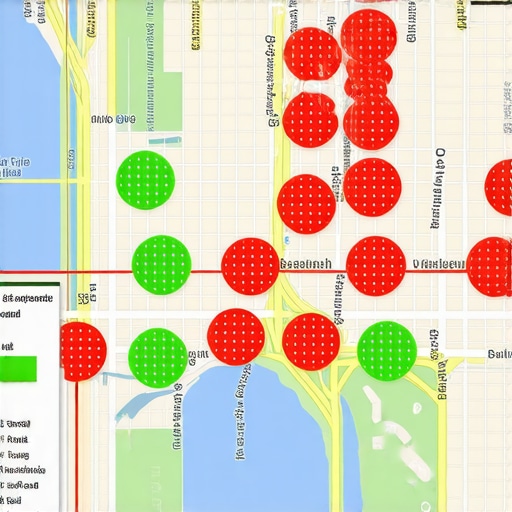
How do I keep my map listing healthy for the long haul?
Maintenance is not about massive overhauls; it is about micro-adjustments. Every Saturday morning, I run through this 7-point maps seo checklist stops your ranking from dropping 2 to catch errors before they become penalties. I specifically look for ‘suggested edits’ from users that I did not approve—this is a massive one. Competitors or well-meaning locals can change your phone number or business hours, and if you do not catch it immediately, why your map health score is actually costing you calls 2 will become a reality. I also focus heavily on how to measure local seo results without getting lost in vanity metrics so I do not get distracted by ‘impressions’ that never lead to an actual phone call.
Why AI is the Next Big Threat to Your Local Ranking
Looking ahead, the game is changing from ‘Who is the most relevant?’ to ‘Who can the AI trust most?’. With the rise of AI-driven search, the algorithm is beginning to summarize reviews and attributes to provide a single ‘best’ recommendation. This means the mastering map optimization process will soon require much more than just keywords—it will require a deep bench of verified data points and user-generated content. I predict that businesses failing to generate specific ‘justification’ snippets in their reviews will be excluded from AI-curated results. If you want to stay ahead of this curve, you need to start fixing the profile audit errors that actually prevent map pack appearances right now. My advanced tip for you today: go into your ‘Services’ section and add high-resolution photos for every single item listed. Most people ignore this, but it provides the visual data Google needs to ‘see’ your business value. Try adding at least five new service-specific photos this week and watch your engagement metrics climb.
Hard Truths from the Map Pack Trenches
After years of trial and error, I’ve realized that local success isn’t about being perfect; it’s about being the most trustworthy option in Google’s eyes. First, remember that proximity isn’t destiny. While you can’t move your building, you can expand your reach by understanding why your proximity to the city center isn’t everything. Second, I’ve seen countless owners fail because they clutter their profile with too many service categories. It’s much better to fix the map health errors sabotaging local traffic by being specific. Finally, stop thinking that quantity is the only review metric that matters. The context and keywords in those reviews are what really move the needle, especially when you use a specific way to request reviews that encourages customers to describe your services naturally.
Gear That Keeps My Listings Sharp
You don’t need a massive budget to stay ahead, but you do need the right visibility into your data. I personally rely on a simple citation audit to clear up ranking confusion before I ever spend a dollar on paid ads. If your technical foundation is shaky, use a validator to check your code; nothing stops a climb faster than broken local schema blocking your map ranking. For those struggling with the initial setup, don’t get discouraged if the mail is slow—there are ways to verify your business listing when the postcard never arrives. These resources turn a guessing game into a repeatable process.
#IMAGE_PLACEHOLDER_E#
Claim Your Spot at the Top
The local landscape is constantly shifting, but the fundamentals of a solid maps seo checklist remain the same: clarity, consistency, and a focus on the user experience. You now have the blueprint for mastering map optimization for local growth. Don’t let the technical details intimidate you. Start with one small fix today—perhaps auditing your service area or updating a few photos—and build your momentum from there. Your customers are already looking for you; you just need to make sure they can see you. Which of these map health signals are you going to audit first? Let me know in the comments below!