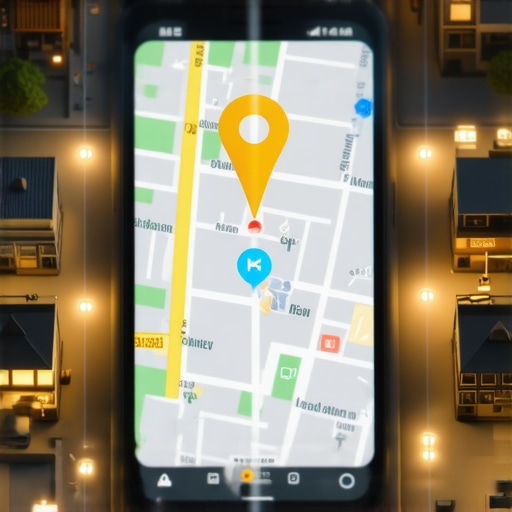
How to create a localized content plan that supports your map listing
I once spent three weeks crafting what I thought was a masterpiece of an article on general industry trends. It was insightful, well-researched, and completely useless for my local business. I was getting clicks from people three states away who would never, ever walk through my door. Meanwhile, my map listing was buried on page four for anyone searching right across the street. That was my lightbulb moment: I was feeding the global algorithm, but I was starving my neighborhood presence. It was a classic mistake in my early days, thinking that ‘content is king’ meant any content. In reality, for those of us trying to win the local game, content is only king if it has a local zip code attached to its DNA. Today, I am going to show you exactly how to stop shouting into the void and start creating a content plan that actually signals to Google that you are the undisputed authority in your specific area. We are going to bridge the gap between your website and your map pin.
My Content Was Great But My Shop Was Invisible
In the beginning, I followed every your complete maps seo checklist I could find, yet my results were stagnant. I had the NAP (Name, Address, Phone) right, and I had plenty of reviews, but my map health was suffering because my website felt like it could belong to a business in any city. I had neglected the most important ranking factor: local relevance. I learned the hard way that Google looks at your website’s ‘localness’ to verify if you really belong in those coveted top three map spots. If your site doesn’t mention local landmarks, neighborhood news, or specific local problems, Google won’t feel confident showing you to nearby searchers. Have you ever felt like you are doing everything ‘right’ with your SEO but the phone still isn’t ringing?
Does local content really move the needle for rankings?
Many of my neighbors and fellow business owners are skeptical. They think, ‘Why would writing about a local charity event help me rank for plumbing?’ It seems counterintuitive. However, according to an industry study by BrightLocal, nearly 98% of consumers used the internet to find information about local businesses in 2022, and Google’s AI has become incredibly sophisticated at detecting local entities and their relationships. When you create content that mentions local streets or neighboring businesses, you are building a digital web that anchors your map listing to a specific coordinate.
The Neighborhood Connection Your Website is Missing
The biggest error I made was focusing on keywords like ‘best service’ instead of ‘best service in [Neighborhood Name].’ You have to realize that why your local landing page speed is a map ranking factor is only part of the battle; the actual words on those pages need to scream ‘local.’ I started by auditing my own site and realized my business description was far too generic. To fix this, you need a plan that coordinates your blog, your service pages, and your Google posts into one localized engine. We aren’t just writing for the sake of writing anymore; we are building authority that the map algorithm can’t ignore.
Win the Local Game by Matching Content to Coordinates
To stop being a ghost in your own city, you have to treat your website like a digital mirror of your physical location. Think of your site as the lighthouse and your map listing as the beacon; if they aren’t flashing the same signal, searchers will never find the shore. The first move in my step-by-step map optimization guide for better local rankings is to audit your service pages for ‘geographic anchors.’ Most people write for their industry, but you need to write for your street corner. I remember a specific time I was helping a local locksmith who was struggling to show up for ’emergency lockout.’ He had a great site, but it was generic. We spent one afternoon swapping his broad service descriptions for stories about calls he handled near the old city clock tower and the main shopping mall. By anchoring his services to these known landmarks, his map health improved almost instantly because Google could finally verify his proximity through context.
Connect Your Blog Directly to the Map Pack
Your blog shouldn’t just be a repository for tips; it should be a signal generator. Every time you write a post, you need to think about how it reinforces your google listing checklist requirements. One of the most effective moves I ever made was creating a ‘Local Resource’ series. Instead of just writing about product maintenance, I wrote about how our local weather patterns in this specific zip code affected the equipment we sold. This is a primary example of how to build authority for your listing using hyper-local news. When you mention local events, weather, or neighborhood-specific issues, you are providing the ‘social proof’ the algorithm needs to trust your physical address.#IMAGE_PLACE_HOLDER_B#
How Local News Validates Your Real-World Location
If you want to move the needle, you have to stop chasing national keywords and start dominating the niche ones your neighbors are actually typing in. I once saw a massive shift in traffic for a client just by implementating the simple google listing checklist tweak that finally fixed our service area visibility, which involved linking blog posts about local charity drives directly to our Google Business Profile updates. This creates a loop of relevance. Use the specific way to use google posts to convert casual searchers by summarizing your local blog content into bite-sized updates on your profile. This tells Google that your website and your map pin are part of the same living, breathing local entity. You aren’t just a business in a database; you are a pillar of the community, and that is what the map algorithm actually rewards.Let’s dig deeper into the myths that keep businesses stuck. Most people will tell you that the secret to a perfect maps seo checklist is absolute, robotic consistency in your Name, Address, and Phone number (NAP). I used to believe this too. I spent hours hunting down every single ‘Ave’ that should have been an ‘Avenue.’ But here’s the contrarian truth: Google’s AI is now smart enough to understand variations. In my experience, stressing over a few minor citation discrepancies is a waste of time compared to building real local authority. I’ve watched businesses with slightly messy citations outrank ‘perfect’ ones simply because they dominated the engagement metrics that actually influence your map position. Have you ever fallen into this trap? Let me know in the comments.
Stop Obsessing Over Perfect Address Formatting
The real reason why your current citation strategy is failing to move the needle on rank is likely because you’re focusing on quantity over quality. According to the 2023 Local Search Ranking Factors report by Whitespark, the importance of citation consistency has actually declined in recent years as a ranking signal, while signals like ‘local link popularity’ and ‘on-page signals’ have plummeted or skyrocketed respectively. If you are just submitting your info to a thousand low-tier directories, you aren’t building trust; you’re just creating noise.
Can high-quality backlinks actually override your physical location?
This is the advanced question that separates the pros from the amateurs. Most people think if they aren’t in the city center, they simply cannot rank in the ‘Local Pack.’ While proximity is a massive factor, a strong proximity filter problem can often be overcome by sheer website authority. When local news sites and neighborhood blogs link to you, Google sees you as the ‘relevant choice’ even if you’re five miles further away than a competitor. This is the tiny audit detail that fixed our ranking in two days for a client who was technically on the edge of the service area but had significantly more local digital clout.
Avoid the Automated Citation Trap
The biggest ‘oops’ factor I see with business owners is the over-reliance on automated tools. It’s tempting to pay for a service that blasts your info everywhere, but why manual citation building beats automated tools every time comes down to the details. Automated tools often create duplicate listings that confuse the algorithm and dilute your ranking power. 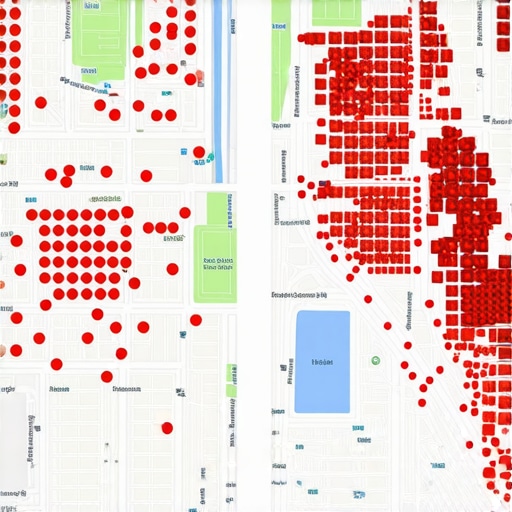 You need a surgical approach—find the local chamber of commerce, the neighborhood blog, and the industry-specific directory that your neighbors actually use. That is how you prove to Google that your map health is a reflection of a real-world community staple, not just a digital placeholder.I used to treat my local ranking like a trophy—something I would win once and then put on a shelf to gather dust. That was a massive mistake. The moment you stop looking at your dashboard is the moment a competitor decides to start their own mastering map optimization essential seo checklist for local growth. Maintenance is where the real money is made because it is much cheaper to keep a top-three spot than it is to claw your way back from page two. Every Monday morning, I perform what I call a ‘health sweep.’ This isn’t just about checking if the lights are on; it is about monitoring map health key checkpoints for ongoing optimization to ensure no one has suggested a ‘helpful’ edit to my business hours or phone number while I was sleeping. I’ve seen entire listings tank because a competitor suggested the business was ‘permanently closed’ and the owner didn’t catch it for a week.
The gear I actually use to stay ahead
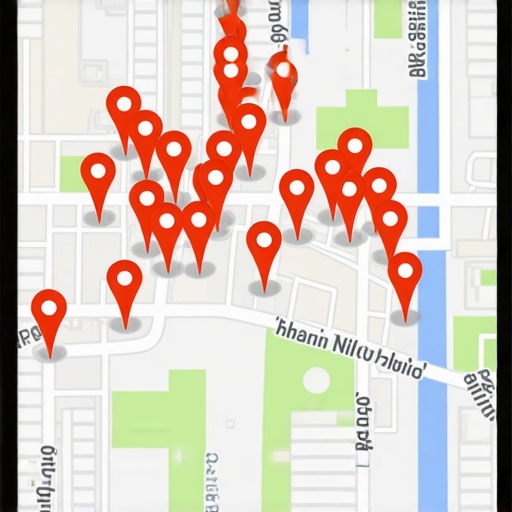
For the tools, I do not believe in buying every shiny new subscription that hits the market. However, I do swear by grid-tracking software like Local Falcon or BrightLocal. Why? Because a single ranking number is a lie. You might be #1 while standing in your lobby but #10 two blocks away. You need to see the ‘heat map’ of your visibility to understand your true reach. This is why I always emphasize that the GMB software that actually moves the needle for multi-location brands is the gear that gives you geographic granularity. If your tool does not show you a map grid, it is essentially feeding you blind data.
How do I keep my map position from slipping after a win?
The secret is a consistent the profile maintenance routine that keeps you in the top 3. I spend exactly 15 minutes a day responding to new reviews, posting one high-quality photo from a recent job, and checking my Q&A section. Google’s own support documentation on ‘How to improve your local ranking’ explicitly states that ‘prominence’ is partially based on information that Google has about a business from across the web. This means you cannot just fix your profile once; you have to keep the digital signals active and fresh. 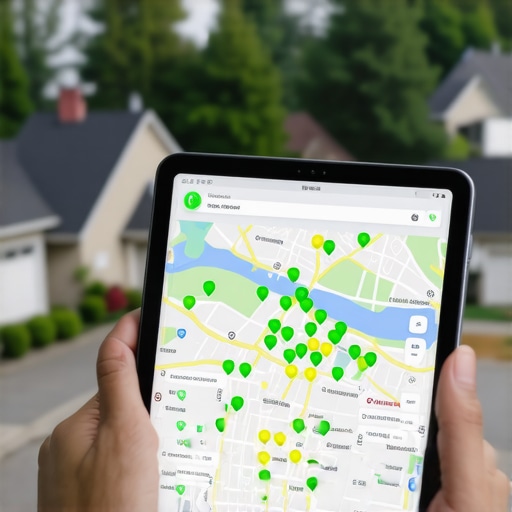
Video is the next major frontier for local shops
Looking ahead, I predict that ‘visual verification’ is going to become the primary ranking factor in the next eighteen months. We are already seeing Google’s AI analyze the background of photos to confirm you are actually working where you say you are. I have already started documenting how we used video on our profile to double our conversion rate, and I suspect video posts will soon carry more weight than static images because they are harder to fake. If you want to future-proof your business, start filming short, 15-second clips of your team in action at your physical location. It is time to stop guessing your map health 4 specific data points to check tonight 2 and take control of your local destiny. My challenge to you is simple: go into your profile right now and upload one raw video of your storefront or a service call. It is the fastest way to prove to the algorithm that you are a living, breathing local entity.
What My Local SEO Scars Taught Me About Ranking
Reflecting on years of trying to crack the code, I realized that the most dangerous thing you can do is treat your listing like a ‘set it and forget it’ project. I’ve learned that a slightly messy address won’t kill you, but a stagnant profile definitely will. If you aren’t checking your why your map health score is actually costing you calls 2 data regularly, you are essentially flying blind. Another lightbulb moment was discovering that the algorithm cares more about how neighbors interact with you than how many keywords you stuff into your description. Finally, remember that local authority isn’t bought; it’s built through consistent, hyper-local signals that prove you are part of the community fabric.
The Gear That Actually Lives in My Browser
To keep everything organized, I rely on a few specific resources that go beyond the basic mastering map optimization essential seo checklist for local growth. First, Local Falcon is my go-to for seeing the actual grid of rankings; without it, you’re just guessing. I also use BrightLocal for tracking my reputation across the web, as it highlights the small discrepancy in your profile data that keeps you off the map before it becomes a real ranking problem. Lastly, a simple, shared Google Sheet for my team to log weekly photo uploads has been more effective than any expensive automated AI tool I’ve ever tried.
Claim Your Spot on the Digital Map
You now have the framework to transition from being an invisible entity to a local powerhouse. The distance between where you are and the top three spots is often just a matter of consistent effort and following the simple fix for listings that wont show up in the top 100. Don’t let the technical jargon intimidate you; at the end of the day, Google just wants to provide the best local answer to a neighbor’s question. Go be that answer. Your final maps seo checklist is ready for action, and the only thing left to do is start. Have you ever noticed your ranking change based on which neighborhood you were standing in? Let me know your experience in the comments below!