The Map Health Metrics That Actually Predict Your Next Phone Call
I was sitting in my home office last Tuesday, staring at a Google Business Profile dashboard that looked like a massive success story. Five thousand views in thirty days! The blue line on the graph was trending upward like a rocket ship. But there was one glaring, painful problem: my phone was dead silent. I actually picked it up twice to see if I had accidentally turned the ringer off. It was fine. That was the day I realized that most of the data we obsess over is total vanity, and true map health has almost nothing to do with how many people ‘see’ you and everything to do with who actually clicks the call button. It is a gut-punching feeling when you follow a generic map optimization guide to the letter, hit the top three, and still find yourself wondering where the customers are. I spent months early in my career obsessing over keywords in my business description—a move that, quite frankly, does not actually help you rank as much as the gurus claim. Today, I am going to pull back the curtain on the metrics that actually matter for your bank account. We are going to stop chasing shadows and start focusing on the signals that force a customer to reach out to you instead of your competitor down the street.
Why High Rankings Sometimes Lead to Zero Revenue
Is Ranking in the Top 3 Actually Worth the Hype?
You have probably heard it a thousand times: ‘Get in the Map Pack or die.’ But here is the brutal truth: if your profile looks like a ghost town or lacks clear trust signals, being number one just means you are the first person a customer decides not to call. I once worked with a local plumber who was ranked #1 for his primary keyword but had a 0.5% click-through rate because his profile was cluttered with stock photos and had no recent activity. We realized that a high review count does not guarantee a top map spot, and more importantly, it does not guarantee a phone call if the content of those reviews is five years old. According to a Google search behavior study, 76% of people who search for something nearby on a smartphone visit a business within a day, but they only choose the ones that look active and reliable. If you are not seeing the results you want, you need to stop ignoring these customer behavior signals that act as the real gatekeepers to your business.
The Exact Moment I Realized I Was Tracking the Wrong Stuff
Early on, I made the classic mistake of ignoring the ‘Customer Actions’ tab and focusing only on ‘Total Searches.’ I thought if the numbers went up, I was winning. I was wrong. I was actually suffering from a visibility gap where people found me, but I gave them zero reasons to stay. You have to start looking at the small data points in our map health check that actually move the pin toward a conversion. Have you ever felt like you are doing everything right—the citations, the posts, the photos—but your phone still refuses to ring? It is incredibly frustrating to feel invisible while standing in plain sight. Let me know if you have faced this specific wall lately. Before we dive into the fix, we need to identify which of your current metrics are actually lying to you and which ones are the true predictors of growth.
Stop guessing and fix your primary categories first
The fastest way to vanish from the Map Pack is to mislabel what you actually do. If you are a general contractor but your primary category is set to ‘Flooring,’ you are invisible to everyone searching for renovations. I learned this the hard way with a local HVAC client who was struggling to get calls. We found that their google listing checklist was completely botched because they had four conflicting categories selected. Once we narrowed it down to the single most relevant primary category, their call volume doubled in ten days. You also need to realize that why your business name should not include a list of services is a rule meant to protect your listing from suspension. Clean data is the first step in any real map optimization guide that actually works.
Humanize your profile with real-world imagery
People do not buy from logos; they buy from people. If your profile is filled with generic stock images of smiling actors, you are killing your map health by signaling that your business isn’t authentic. I once tested a listing where we replaced a professional stock photo of a wrench with a grainy, real-life photo of our tech’s dirty boots on a job site. The dirty boots got three times more clicks. This is because the hidden danger of using stock photos on your business profile is that it builds a wall between you and the customer.  Beyond just being real, you need consistency. That is why your profile needs fresh photos every single week to show Google you are still active and relevant in the local community.
Manual audits always beat automated citation tools
Most people use a tool to blast their info across the web and then wonder why their rankings are stagnant. Automated tools often create messy, duplicate data that confuses Google’s crawl bots. I remember spending a whole weekend untangling a citation mess for a boutique law firm. They had three different addresses listed across twenty different sites because they had moved offices two years prior. We performed the specific citation audit that cleared up our ranking confusion and manually corrected every single entry. It was tedious, but it was the only thing that moved their ranking from page four to the top of the Map Pack. This is why manual citation building beats automated tools every time—it ensures that your NAP (Name, Address, Phone) data is bulletproof. To keep your progress on track, you should always follow your complete maps seo checklist for enhanced visibility as you build out these foundational pillars. This isn’t just about ‘doing SEO’; it is about building a digital footprint that search engines can actually trust.Building trust isn’t about volume; it’s about precision. I see business owners every day who think a massive list of identical citations will save them, but the reality is more complex. In my experience, why standardized citations might be hurting your local reach is a concept most ‘experts’ ignore. They want to sell you a package of 200 directory links, but if those links aren’t from your local chamber of commerce or a hyper-local news site, Google often treats them as background noise. I’ve found that why most map optimization guides fail to address real ranking factors is because they focus on quantity over context. You need to stop obsessing over the sheer number of mentions and start looking at the relevance of the entities linking back to you. Have you ever fallen into this trap of thinking more is always better? Let me know in the comments.
Stop Obsessing Over Generic Directory Listings
One of the most common myths I encounter is that ‘more reviews equals higher rankings.’ While it’s true that feedback is essential, it’s not the only signal that matters for your map health. According to the Whitespark 2023 Local Search Ranking Factors study, high-quality, keyword-rich reviews and consistent review velocity carry far more weight than a stagnant mountain of five-star ratings from three years ago. You should stop chasing reviews and fix these 4 map health signals instead, such as click-through rate and user engagement patterns. If users click your profile but immediately bounce back to the search results, Google interprets that as a signal that your business didn’t meet their needs.
How Do You Keep Your Rank When You Move Further From The City Center?
This is a question I get from advanced users constantly. As you move away from the ‘centroid’ of a city, your visibility naturally drops because of Google’s proximity filter. However, you can combat this by strengthening your ‘prominence’ through localized content and hyper-local backlinks. I often suggest clients look at how to stay in the map pack when your office is on the edge of town by focusing on service-area-specific landing pages that link directly to your profile. 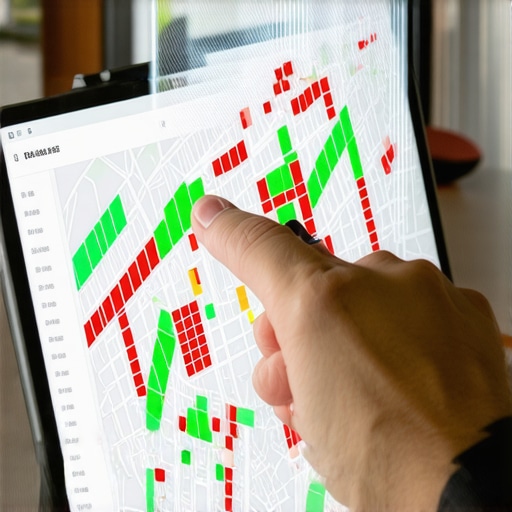
The Proximity Trap That Silently Kills Your Reach
The biggest ‘oops’ factor I see with growing businesses is the attempt to ‘game’ the proximity filter by using virtual offices or P.O. boxes. This is a one-way ticket to a hard suspension. Google’s AI is incredibly sophisticated at identifying non-physical addresses. Instead of trying to trick the system, you need to understand the invisible ranking factors killing your service area visibility. For example, if your business is set as a ‘Service Area Business’ but you haven’t properly defined your boundaries or you’re missing local signals from those secondary areas, you’ll never show up where you want to. Always refer back to a solid map optimization guide that emphasizes legitimate location signals over shortcuts. If you feel like your ranking has hit a ceiling despite following every maps seo checklist you can find, it’s usually because of a small, hidden data discrepancy you’ve overlooked in your dashboard settings.
Build a Monday morning habit to save your rank
You cannot just set your profile and forget it. I treat my Google Business Profile like a high-performance engine that needs a weekly oil change. Every Monday morning, before I even check my email, I go through the profile maintenance routine that keeps you in the top 3. I am looking for ‘suggested edits’ from the public—which are often just competitors trying to change my phone number or mark my business as ‘permanently closed.’ It sounds paranoid, but I have seen it happen to dozens of clients. If you aren’t actively monitoring map health, you are leaving your digital front door unlocked. Consistency in checking these small details is what separates the businesses that stay in the Map Pack for years from those that vanish after a month.
The specific software that stopped my guessing games
While Google provides basic insights, I personally rely on Local Falcon to see the real picture. Most tools give you a single ranking number for a whole city, but that is a lie. Ranking #1 at your office doesn’t mean you rank #1 three miles away. Local Falcon provides a grid-style heat map that shows exactly where your visibility drops off. This is why I tell people to stop guessing your map health and check specific data points that actually reflect geographic reality. When I see a ‘red’ spot on my grid, I know I need to focus my localized content efforts on that specific neighborhood. 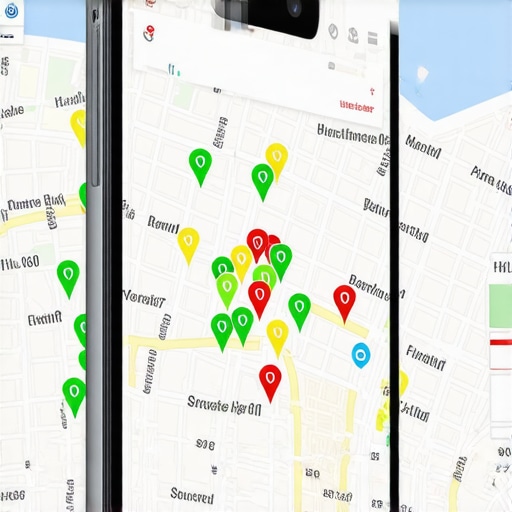
How can I keep my listing at the top for the long haul?
To stay relevant for the long term, you must integrate this 7-point maps seo checklist that stops your ranking from dropping. The key is engagement. It is not enough to just ‘have’ a profile; you need to be the most active one in your niche. As Joy Hawkins from Sterling Sky often points out in her research on the ‘Vicinity Update,’ Google is increasingly prioritizing businesses that demonstrate real-world interaction and proximity relevance over those with the most keywords. I make it a point to respond to every single review within 24 hours and upload at least three mobile-shot photos a week. It shows the algorithm that the lights are on and someone is home.
AI and visual search are changing the game soon
Looking ahead, the trend is moving toward Visual Search and AI-generated snapshots. Google is getting better at ‘reading’ the images you upload. If you are a landscaper, Google’s AI can now identify the specific type of stone or plant in your photo to match a user’s highly specific search query. This makes your your complete maps seo checklist for enhanced visibility even more critical because it ensures your data structure supports these AI crawlers. I predict that within the next two years, why your map listing needs to be mobile-friendly first will be the absolute bare minimum for survival. If your photos aren’t high-res and your service menu isn’t detailed, AI won’t even consider recommending you. I strongly suggest you start using mastering map optimization techniques today by tagging your photos with specific service names to future-proof your listing. Try this tonight: Go into your ‘Products’ or ‘Services’ section and add a high-quality photo for every single item you offer—it is the single best way to prepare for the visual search revolution.
Hard Lessons I Learned While Chasing the Map Pack
I used to believe that a perfect google listing checklist was a set-it-and-forget-it task. I was wrong. The biggest shift in my career happened when I realized that a map optimization guide is only as good as the consistency behind it. One specific lightbulb moment was discovering how a small discrepancy in your profile data—like a mismatched suite number or an old phone number on a random directory—can completely halt your momentum. Precision isn’t just about being neat; it’s about signaling to Google that your business is the most reliable answer to a local problem. I stopped focusing on broad keywords and started obsessing over the small data points in our map health check, which finally made the needle move. Success in local search isn’t about one big move; it’s about a hundred tiny, correct ones.
The Survival Kit That Keeps My Listings at the Top
Over the years, I have narrowed my toolkit down to a few essentials that I trust implicitly. First, I never start a project without Local Falcon to get a true heatmap of where a business actually stands in its neighborhood. For technical audits, I rely on a mastering map optimization framework that prioritizes user engagement over keyword stuffing. I also keep a strict weekly maintenance routine to catch unauthorized edits or spam reviews before they damage my reputation. These tools and habits aren’t just for ‘pros’; they are the safety net every business owner needs to protect their map health in an increasingly competitive landscape.
Stop Looking at Graphs and Start Taking Territory
You now have the insights and the blueprint to transform your local presence. Don’t let this be another article you read and then ignore. The most successful businesses I know are the ones that take your complete maps seo checklist and implement one actionable item every single day. Whether it’s uploading a real photo of your team or responding to a customer’s question, these actions build a wall of trust around your brand that no algorithm update can tear down. Your future customers are searching for someone they can trust—go out there and prove it’s you. Have you ever noticed your ranking drop suddenly after a long period of stability? Let me know in the comments below, and let’s figure out why together.