The impact of user-generated content on your map pack placement
I spent six hours last Tuesday staring at a map marker that refused to move. I had the keywords, the perfect category, and a website that loaded faster than a heartbeat. Yet, a tiny coffee shop three blocks away—one with a profile that looked like it was managed by a distracted teenager—was crushing me in the rankings. I was frustrated. I was confused. Then I saw it: their profile was alive. It was a chaotic, beautiful mess of customer photos, frantic Q&As, and fresh reviews. That’s when the lightbulb finally flickered on. It wasn’t my data that was lacking; it was the social proof. I had been following a rigid essential seo checklist for local growth but I had ignored the most human element of all: user-generated content.
Your Customers Are Doing the Heavy Lifting Now
Early in my journey, I made the classic mistake of treating my Google Business Profile like a static billboard. I thought if I just checked off every box on a google listing checklist, the algorithm would bow to my superior organization. It doesn’t work that way. Google wants to see a living, breathing business. When a customer uploads a grainy photo of your storefront or leaves a detailed story about their experience, they are providing a level of verification that you simply cannot buy or fake. This interaction tells the algorithm that you aren’t just a business on paper, but a vital part of the community. Today, we are going to bridge the gap between your technical setup and the authentic engagement that actually moves the needle. I will show you how to stop obsessing over your own descriptions and start leveraging what your audience is already saying to get your customers to upload more photos and content.
Is this just another way to get me to beg for reviews?
I know exactly what you’re thinking because I thought the same thing. No one wants to be the business owner who makes every transaction feel like a homework assignment for the customer. It feels desperate, right? But user-generated content (UGC) is so much bigger than just a five-star rating. It includes photos, video clips, and even the questions people ask in your public Q&A section. According to a study by BrightLocal, 98% of consumers at least ‘occasionally’ read online reviews, but they are also looking for visual proof of recent activity. Have you ever felt like you’re shouting into a void despite having a technically perfect profile? We need to look at the engagement metrics that actually influence your map position. It is time to shift from being a manager of data to a facilitator of experiences. You don’t need to beg; you just need to use tactics that actually work to encourage natural sharing.
Stop the Bleeding with a Clean Data Foundation
Think of your Google Business Profile like a car engine. You can have the flashiest paint job in the world (great photos and reviews), but if your spark plugs are fouled, you aren’t going anywhere. Before we chase the high-level engagement metrics, we have to address the boring stuff. I once worked with a local bakery that was losing 40% of its potential traffic because their phone number was slightly different on three different directories. It sounds trivial, but that tiny friction point is one of the tiny audit details that fixed our ranking. You need to pull up a step-by-step map optimization guide and verify that your NAP (Name, Address, Phone) data is identical across the web. If you are struggling with visibility, check for map health errors sabotaging your local traffic right now. Clean data isn’t just for the bots; it builds a foundation of trust that allows the algorithm to confidently recommend you to nearby searchers.
How One QR Code Turned a Service Profile Into a Gallery
Last summer, I consulted for a plumber who had exactly zero customer photos. His profile looked like a ghost town. We didn’t ask for reviews; instead, we printed simple cards with a QR code that said, ‘Show us your shiny new faucet!’ and asked customers to snap a photo for our gallery. Within three weeks, he had fifteen high-quality, customer-uploaded images. This isn’t just about aesthetics; it’s about signaling. When a customer uploads a photo, Google tags it with metadata that proves the interaction happened at your location. I learned quickly that specific photo types boost customer engagement more than any professional shoot ever could. If you want to replicate this, you need to follow the simple trick to getting your customers to upload more photos by making it part of the physical transaction.
Check Your Vital Signs Before the Algorithm Does
You cannot set your profile and forget it. I’ve seen thriving businesses drop out of the Map Pack in 48 hours because they ignored a ‘suggested edit’ from a competitor or a confused user. Regular maintenance is your best defense against the ‘proximity filter’ and other invisible hurdles. You should be monitoring map health key checkpoints at least once a week. This includes checking for duplicate listings, which can dilute your authority and confuse search engines. If you find one, don’t panic, but you must know how to handle a duplicate listing without losing your hard-earned review history. Beyond the profile itself, don’t forget the ‘silent’ signals. For example, your local landing page speed is a map ranking factor that many people miss because they focus too much on the map interface and not enough on the destination website.
Why Consistency Beats Intensity Every Time
The biggest mistake I see is the ‘burst’ method—getting twenty reviews in a weekend and then going silent for three months. To Google, this looks like a spam attack or a paid campaign. It is much better to have two reviews and one photo upload every week for a year than a mountain of content all at once. This steady stream of data is a core part of a complete maps seo checklist. While you are at it, make sure you aren’t over-optimizing your name. A common trap is adding keywords where they don’t belong; your business name shouldn’t include a list of services, as this can lead to a suspension that is a nightmare to fix. Focus on providing real value, and use local schema to help your map profile stand out technically while your customers handle the social proof.
Most business owners I talk to are obsessed with the volume of their data. They want 500 citations, 200 reviews, and a keyword-stuffed description. But here is the contrarian truth: chasing volume usually leads to a messy profile that Google eventually ignores. In my experience, the more you rely on automated tools to blast your business name across the internet, the more likely you are to trigger a verification loop. This is why manual citation building beats automated tools every time. Automated systems often overlook the tiny nuances of your address, like ‘Suite’ versus ‘Ste’, which can create the very map health errors sabotaging your local traffic that you were trying to avoid in the first place.
Why do my rankings look different when I leave the office?
This is the question that keeps most marketers up at night. You check your rank at your desk, and you are #1. You walk two blocks to get a coffee, check again, and you have vanished. This happens because of the ‘proximity filter,’ and most people try to fight it by adding more keywords to their profile. That is a massive mistake. Instead of stuffing your name with services, you need to realize that why your profile audit results are different from what customers see is often tied to your website’s local authority, not just the map listing itself. If you want to rank further away from your physical front door, you have to stop looking at your google listing checklist in isolation and start looking at your backlink profile.

The ‘Oops’ factor usually hits when a business owner decides to ‘fix’ their proximity issues by creating a second listing for a virtual office. Don’t do it. Google’s AI is incredibly good at spotting these ghost locations, and it will lead to a hard suspension. According to the Whitespark Local Search Ranking Factors study, the importance of your website’s on-page signals has surged, while the weight of simple ‘description’ keywords in your profile has actually decreased. This means that if you aren’t using local schema to help your map profile stand out, you are leaving the heavy lifting to a profile that isn’t designed to carry that much weight alone.
You should be monitoring map health key checkpoints like your primary category selection and your landing page speed every single month. I once saw a law firm lose its entire map presence because a well-meaning intern changed their primary category from ‘Personal Injury Lawyer’ to ‘Law Firm.’ It took three months to recover those rankings. Have you ever fallen into this trap of over-optimizing and accidentally breaking what was already working? Let me know in the comments. Before you make any more changes, go through your complete maps seo checklist one more time to ensure you aren’t ignoring the foundational signals for the sake of flashy hacks. Consistency and accuracy will always beat a clever trick that the algorithm will patch next Tuesday.
Keep Your Spot Without Breaking Your Back
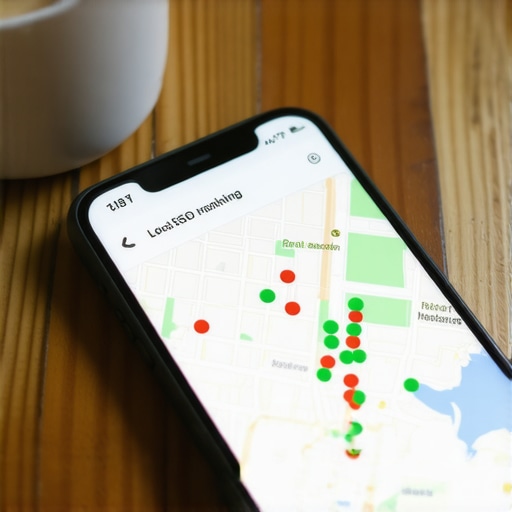
Once you have clawed your way into the top three, the real work begins. I used to think the hard part was over once the calls started coming in, but local SEO is like a garden; if you stop weeding, the competitors will sprout right over you. To stay on top, I rely on a very specific set of tools that go beyond the basic Google dashboard. Personally, I use LocalFalcon for its grid-based tracking. It gives me a visual heatmap of exactly where my ranking drops off, which is far more useful than a single rank number. If you are still relying on static reports, you are likely missing why your profile audit results are different from what customers see in the real world. I also keep a strict profile maintenance routine that keeps you in the top 3, which includes a weekly scan for ‘suggested edits’ that could tank my visibility overnight.
How do I maintain my map health over time?
Maintenance is about consistency, not intensity. Every Monday morning, I spend exactly fifteen minutes checking for map health errors sabotaging your local traffic. This isn’t just about looking for errors; it is about verifying that your automation hasn’t gone rogue. As noted by industry expert Joy Hawkins from Sterling Sky, even small changes in the local algorithm can prioritize different signals, such as ‘openness’ or business attributes, making monitoring map health key checkpoints an absolute necessity. I also make it a point to audit my local schema every quarter. If you haven’t checked your code lately, you might need to use local schema to help your map profile stand out to ensure the bots are reading your data correctly as search technology evolves.
The Software That Actually Earns Its Keep
There is a lot of junk software out there claiming to ‘automate’ your rankings. I avoid anything that promises to build 500 citations for fifty bucks. Instead, I focus on tools that help me measure local seo results without getting lost in vanity metrics. I prefer BrightLocal for citation tracking because it highlights the ‘active’ errors that actually matter. When I scale a project, I look at how the website’s authority is supporting the map listing. You cannot ignore the fact that your map ranking depends on your website’s backlink profile. If you aren’t building local links, your map profile will eventually hit a ceiling that no amount of ‘keyword stuffing’ can break through. My prediction for the next eighteen months is that Google will lean even harder into visual search. We are already seeing the algorithm identify objects within customer photos to answer queries. If you want to future-proof your business, you need to start thinking about your profile as a visual database. My challenge to you: Go into your profile today, find one high-performing local keyword you’ve been missing, and upload a photo that specifically illustrates that service or product. It’s a small move that signals massive relevance to the algorithm.
What I Finally Realized After 500 Lost Map Rankings
If there is one thing I’ve learned from years of trial and error, it’s that the algorithm rewards honesty over hacks. I used to think I could outsmart the system by over-stuffing my data, but the truth is far simpler: Google is looking for signals that you are a real, reliable solution to a local problem. My biggest lightbulb moment happened when I realized that map health errors sabotaging your local traffic are usually the result of over-thinking the technical side while ignoring the customer experience. Don’t let your data become a wall between you and your neighbors.
Another hard lesson was learning that consistency isn’t just about posting; it’s about the technical foundation. I now spend more time monitoring map health key checkpoints than I do tweaking keywords. When you treat your profile like a living asset rather than a static chore, the rankings naturally follow. Remember, a single consistent listing is worth more than ten fragmented ones across the web.
The Toolkit That Actually Pays for Itself
You don’t need a massive budget to win at local SEO, but you do need the right visibility. Personally, I never start a week without checking LocalFalcon; seeing your rank in a grid format is the only way to truly see why your profile audit results are different from what customers see in their actual cars and homes. For technical heavy lifting, BrightLocal remains my top choice for spotting NAP discrepancies before they trigger a suspension.
I also highly recommend keeping a copy of Whitespark’s research handy. Their data-driven approach to how your map ranking depends on your website’s backlink profile changed my entire strategy. Finally, use the Google Search Console to ensure your local landing pages are fast and healthy, as your website’s performance is the invisible hand guiding your map position. These tools help you measure local seo results without getting lost in vanity metrics that don’t actually put money in the bank.
Take Your Map Presence Back from the Competitors
The local map pack is the most valuable real estate on the internet for a small business owner. It is easy to feel overwhelmed, but you don’t have to do everything at once. Start by cleaning up your data, then focus on fostering real engagement from your happy customers. If you follow your complete maps seo checklist with a focus on long-term health rather than short-term tricks, you will eventually outlast the competitors who are looking for shortcuts. Your business deserves to be seen, and now you have the blueprint to make it happen. Have you noticed your rankings drop significantly when you move just a few blocks away from your office? Let me know your experience in the comments below!