How to rank your map listing for multiple cities safely
I remember sitting in my home office, staring at a local heat map of my business. In my home city? Glowing green. Five miles over in the next town? Deep, depressing red. It felt like I was invisible to half my potential customers. I tried the old-school tricks. I added every city name I could think of to my description. I even thought about “renting” a mailbox in the next county just to get a pin there. Spoiler alert: do not do that. I nearly got my entire profile nuked for trying to cheat the system. Realizing that the google listing checklist I was following was outdated changed everything for me.
Why You Are Only Winning in Your Own Backyard
The truth is, Google is obsessed with proximity, but proximity isn’t the only thing that dictates your reach. Most of us fall into the trap of thinking our physical address is a cage. When I first started digging into my own data, I realized I was ignoring the invisible ranking factors killing your service area visibility. You see, Google wants to see local authority that extends beyond your front door. If your website and your profile only talk about your specific street, why would Google trust you to handle a customer ten miles away? I learned this the hard way when I realized my service areas weren’t triggering the local map pack at all. I was a big fish in a tiny pond, and it was costing me thousands in lost leads every month. According to data from BrightLocal, proximity is the top ranking factor for local search, but since the “Vicinity” update, Google has significantly tightened the radius, making it harder for businesses to show up in neighboring cities without a specific strategy.
Can You Really Expand Without Getting Suspended?
This is the big one. Most people are terrified that if they touch their service area settings or try to rank for another city, Google will flag them as a spammer. And honestly? You are right to be worried if you are doing it wrong. I used to think the proximity myth meant I was stuck forever. But expanding safely isn’t about tricking the algorithm; it is about proving you are relevant to those other areas through consistent map health signals and localized content. Have you ever looked at a competitor who lives miles away but somehow ranks right next to you? It is enough to make you want to throw your laptop out the window. If you have faced this specific problem, I would love to hear which city you are struggling to break into. Today, I am going to show you the checklist we use to audit service area business profiles so you can finally break out of your neighborhood. We are going to look at the specific proximity move that finally put us in the top 3 map pack across multiple zones without breaking a single rule.
Your Website Is Your Secret Weapon for Map Dominance
Think of your Google Business Profile and your website as two gears in the same machine. If the website gear isn’t turning, the map gear stays stuck. To rank in a neighboring city, you can’t just list the city name in your footer and call it a day. Google looks for deep relevance. I started seeing real movement when I began building ‘City Pages’ that actually provided value to those specific communities. This is a core part of any step-by-step map optimization guide for better local rankings. You need to prove that you have a footprint there. I remember working with a real estate client who was invisible in a high-value zip code just three miles away. We didn’t just change their service area settings; we audited why your map ranking depends on your websites backlink profile and started earning local mentions from that specific town’s neighborhood blog. The moment Google saw a connection between their site and that local community, the pin on the map started to crawl into that new territory. 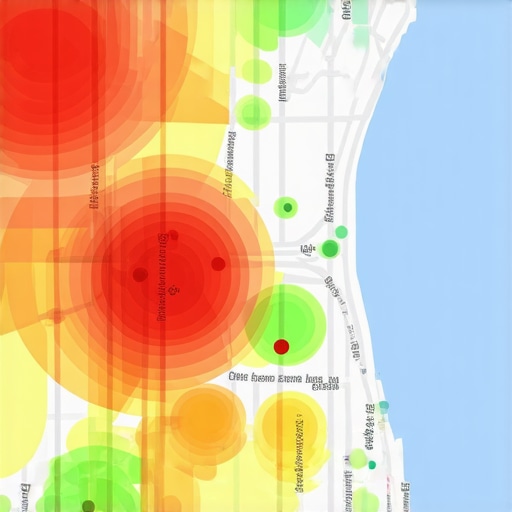
Clean Up the Ghost Listings Holding You Back
Most business owners have a trail of digital ‘ghosts’—old addresses, former phone numbers, or different versions of their business name—scattered across the web. These are massive red flags for map health. If the algorithm sees three different phone numbers for you, it loses trust. It doesn’t matter how many reviews you have if your basic data is fractured. I spent a whole weekend once manually searching for my business on obscure directories I hadn’t looked at in five years. I found a listing on an old ‘local yellow pages’ site that had my old home office address. It was essentially telling Google I was in two places at once. Fixing that was one of the 4 map health signals you probably missed during your last audit. You need to perform a specific citation audit to ensure every single mention of your business is identical. I recommend staying away from ‘one-click’ automated fixes for this; why manual citation building beats automated tools every time becomes clear when you realize how many errors the bots actually miss.
The Micro-Engagement Strategy That Woke Up My Profile
Activity is the pulse of a healthy listing. If you want to know why your map health score is actually costing you calls, look at your ‘Updates’ section. Is it a graveyard? I started a habit of posting one high-quality photo every Tuesday—not a stock photo, but a real shot of a job site or our team. This simple move is a staple in the 4 step local seo checklist for service businesses losing traffic. I even went as far as the simple trick to getting your customers to upload more photos by offering a small monthly giveaway for the best customer-shot image. Why? Because a photo uploaded by a customer carries ten times more weight with Google’s ‘Vision AI’ than one you upload yourself. It proves you are actually doing work at that location. This isn’t about being a social media influencer; it’s about signaling to the algorithm that your business is active, reliable, and physically present in the areas you claim to serve. If you aren’t providing these signals, your competitors who are following a map optimization guide will eventually push you out of the pack.Most “gurus” tell you to cram every service you offer into your business name. It’s the first thing people do when they download a maps seo checklist. I’ll be blunt: it’s a trap. Not only does it look desperate to potential customers, but Google’s algorithm has become incredibly sophisticated at detecting this. In fact, why your business name shouldn’t include a list of services becomes obvious when you see your competitors—the ones with clean, brand-focused names—slowly climbing past you. The real nuance is that Google prioritizes entity clarity. If you confuse the algorithm by looking like a list of keywords rather than a real brand, you lose the trust factor. Have you ever fallen into this trap of trying to game the name? Let me know in the comments.
Your Website Authority Is The Ceiling for Your Map Rank
People treat their map profile and their website like separate islands. They follow a map optimization guide perfectly but ignore their site’s technical health. This is where the “Oops” factor hits hard. You can optimize your listing until you’re blue in the face, but if your website is slow or lacks local signals, your map rank will hit a glass ceiling. I’ve seen businesses with hundreds of 5-star reviews get stuck on page two because their site had broken local schema. According to the Whitespark Local Search Ranking Factors study, on-page signals and the quality of your backlinks are among the top drivers for local pack success. You need to understand the correlation between website authority and map pack rank if you want to stay in the top 3 long-term.
Does Your Desktop Authority Actually Dictate Your Mobile Map Rank?
It’s a sophisticated question that most beginners don’t even think to ask. The answer is a resounding yes. When we started monitoring map health, we noticed a strange pattern: our mobile visibility would spike only after we improved our internal linking structure on the desktop version of our site. This is the secret connection between map health and desktop rank that most agencies miss. If your desktop site isn’t passing authority to your location pages via smart internal links, your mobile “near me” rankings will eventually stall. 
Don’t Let These Data Leaks Drain Your Leads
The most dangerous mistake I see is ignoring the “invisible” data. I’m talking about the tiny discrepancy in your profile data—like a suite number missing on one obscure directory but present on your main site. It seems pedantic, but these are map health errors sabotaging your local traffic right now. Google is a massive verification engine; if the data doesn’t align, it simply won’t risk showing you to a user. Instead of chasing more reviews, fix these 4 map health signals instead. This shift in focus from “more” to “cleaner” is what separates the winners from the also-rans. It’s the core philosophy behind a truly effective google listing checklist.I used to be a tool junkie, thinking that if I just bought the most expensive software, my rankings would magically fix themselves. I quickly realized that most ‘all-in-one’ platforms are just glorified data scrapers that don’t actually help you win. When I stopped looking for a silver bullet and started focusing on monitoring map health with precise, surgical tools, the game changed. I personally swear by PlePer’s Chrome extension for a quick look at competitor categories and a simple grid tracker to see the real-world ‘red and green’ map of my reach. This isn’t just about vanity; it’s about identifying how we found the map health leak draining our local clicks before it costs us a month of leads. If you are managing multiple spots, the gmb software that actually moves the needle for multi-location brands isn’t the one with the best UI—it’s the one that flags data discrepancies the second they happen.
Stop Paying for Fancy Dashboards You Don’t Need
Most business owners are overpaying for tools that just tell them what they already know. You don’t need a $300/month subscription to see that you aren’t in the top 3. You need to know why. I use a maps seo checklist that focuses on the ‘Searcher Intent’ data found directly in your Google Business Profile Insights. It’s free, and it’s more accurate than any third-party tool. I’ve found that why your local seo software is feeding you useless ranking data often comes down to the tool using a static IP address instead of simulating a real person walking down the street with a smartphone. 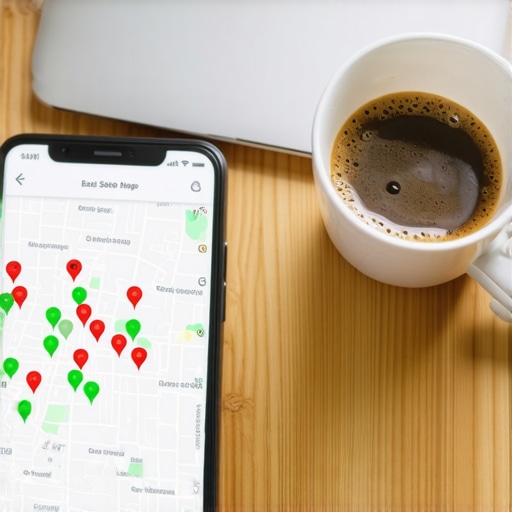
How do I keep my rankings from dropping next month?
The biggest mistake is thinking Map SEO is a ‘one and done’ task. It is a living, breathing ecosystem. I spend exactly thirty minutes every Sunday night doing a ‘sanity check.’ I look for the tiny discrepancy in your map health score costing you leads, like an unreturned Q&A or a suggested edit from a ‘helpful’ competitor that changed my business hours. Google’s documentation on ‘How to improve your local ranking’ explicitly states that ‘Prominence’ is based on information that Google has about a business from across the web, including links, articles, and directories. This is why I constantly verify why your map ranking depends on your websites backlink profile. If your site loses a high-quality local link, your map pin often feels the weight of that loss within days.
The Future of Maps is Visual and AI-Driven
Looking ahead, the ‘keyword’ era of maps is dying. Google’s ‘Search with Live View’ and its heavy investment in Vision AI mean the algorithm is looking at your photos to see what you actually do. If you’re a plumber, Google isn’t just reading the word ‘water heater’; it’s ‘looking’ at the photo of the Rheem unit you just installed. My prediction? In the next two years, the mastering map optimization process will be 70% image-based. If you aren’t already following a step-by-step map optimization guide for better local rankings that prioritizes geo-tagged, high-resolution original photography, you are going to be left behind by the AI-shift. Take one minute today and upload a photo of a completed project from your phone—no filters, just the raw proof of your work. It is the single most effective ‘advanced’ tip I can give you to prove your proximity and authority right now.
What My Local SEO Scars Taught Me About Map Health
Looking back at years of trial and error, I have realized that map health is a delicate balance of data precision and actual human engagement. One of the biggest shifts in my thinking happened when I stopped viewing my listing as a digital business card and started treating it as a dynamic conversation with the algorithm. I used to obsess over the total number of reviews, but I quickly learned that the tiny discrepancy in your map health score costing you leads is often more important than a few extra five-star ratings. If your phone number is formatted differently across three major directories, Google’s trust in your location wavers. I also learned that you can’t ignore the ‘back end’ of your website and expect the front end of your map to win. There is a direct correlation between website authority and map pack rank that most business owners completely overlook. It isn’t just about what you do on Google Business Profile; it is about the signals your entire digital footprint sends. Finally, never underestimate the power of ‘niche’ attributes. Telling Google you are ‘Veteran Owned’ or ‘Wheelchair Accessible’ isn’t just a social signal—it’s a data point that helps the algorithm match you with specific searcher intent.
The Tools That Actually Move Your Pin
I am often asked what is in my personal toolkit for staying on top of the local pack. While there are hundreds of options, I keep it simple to avoid ‘data fatigue.’ First, I always start with a solid google listing checklist to ensure the foundation is poured correctly. For monitoring my actual reach, I use PlePer for category analysis and BrightLocal for their local search grid reports. These tools allow me to see exactly where my visibility drops off, block by block. I also recommend Whitespark for citation audits because their manual approach catches the errors that automated bots always seem to miss. Lastly, keep Google Search Console open in a tab at all times. It tells you which local keywords are driving traffic to your site, which you should then mirror in your business profile posts and Q&A section to strengthen your monitoring map health routine.
#IMAGE_PLACEHOLDER_E#
Your Journey to the Top 3 Starts with One Photo
The road to local dominance can feel long, but it is built one small optimization at a time. Don’t feel like you have to master the entire map optimization guide in a single afternoon. Start by cleaning up your core data, then move into the more advanced strategies like building local backlinks and optimizing for mobile searchers. The most important thing is to stay consistent and keep your profile ‘alive’ with regular updates and real customer interactions. When you use a structured maps seo checklist, you take the guesswork out of the equation and start making data-driven moves that the algorithm rewards. You have the tools, you have the knowledge, and now you have the strategy to break out of your backyard and own your entire city. Have you noticed your map ranking change after updating your website content? Drop a comment below and let’s talk about it!