Why Your Competitor’s Spammy Name Is Still Outranking You
I was staring at my screen, blood pressure rising, as I looked at the local map pack. My client, a dedicated plumber with 300 five-star reviews, was sitting at position four. Who was in the top three? A guy whose business name was literally ‘Emergency Plumber Repair 24/7 Fast Chicago.’ No brand name. No real office. Just a string of keywords masquerading as a business. It felt like a slap in the face. I had done everything by the book, yet I was losing to a ghost profile with a spammy name. It is a frustrating reality many small business owners face daily. You put in the hard work, but the algorithm seems to reward those who cut corners. [IMAGE_PLACEHOLDER]
Stop Letting Keyword Stuffing Rob Your Revenue
It took me a long time to realize that getting mad at the spammers was not going to get my clients more calls. I had to understand exactly why Google’s algorithm was falling for it. I have since developed a robust map optimization guide that does not just focus on the ‘proper’ way to do things, but the effective way. Today, I am going to show you why those spammy names work and, more importantly, how you can use a more sophisticated maps seo checklist to beat them without risking a suspension. Early in my career, I made a massive mistake. I thought I could out-spam the spammers. I changed a client’s business name to include ‘Best’ and ‘Near Me’ and their profile got suspended within 48 hours. It was a nightmare. That failure taught me that while the name is powerful, it is not the only way to climb the ranks. We are going to look at the local ranking signals your competitors are using to dominate the map pack and how we can counter-punch with better data.
Can You Actually Win Without Being a Spammer Too?
You might be thinking that the system is rigged. If ‘AC Repair Pros Fast’ is winning, why should you bother with branding? It is a fair question. According to research from Joy Hawkins at Sterling Sky, keyword stuffing in the business name remains the single most influential ranking factor in local search, despite being against Google’s guidelines. This is why you see so many people doing it. However, relying on a spammy name is a house of cards. One algorithm update or one diligent competitor reporting you, and your business disappears. I want to help you build something that lasts. We are not just looking for a quick win; we are looking for map health that sustains your business for years. Have you ever looked at a competitor’s profile and felt like you were screaming into a void because they were clearly cheating? You are not alone. We are going to fix your visibility gap today by focusing on a comprehensive google listing checklist that addresses the weaknesses in your current strategy. Let us dig into the brutal truth about why your business isnt in the top 3 and how we can shift the momentum back in your favor.
Stop Guessing and Fix Your Primary Category
Picking your primary category is like choosing which shelf your product sits on in a massive department store. If you sell high-end watches but you are listed in ‘General Accessories,’ the people looking for a Rolex will never find you. I remember a locksmith client who was struggling to even show up for basic searches. We realized he had ‘Security System Supplier’ as his primary category. It was technically true—he sold locks—but it was not what his customers were typing into their phones. Once we pivoted to ‘Locksmith,’ his visibility exploded within days. This is a core part of any essential seo checklist. You have to be specific and prioritize the service that actually drives your revenue. Why let a secondary service dilute your ranking power?
Master the Proximity Gap Without Moving Your Office
You cannot just pack up your office and move it to the center of the city to rank better, though I have had clients ask if they could. Proximity is a heavy ranking factor, but it is not the only one. Think of it like this: if you are looking for a great steak, you will drive five miles past a mediocre diner to get to the high-rated steakhouse. Google treats your business the same way. If your ‘Authority’ is high enough, Google will expand your reach. I used a specific proximity move involving localized content that pushed a suburban roofer into the downtown search results. It is about proving you are the most relevant answer, regardless of the mile marker. #IMAGE_PLACE_HOLDER_B#
Identify the Data Gaps Killing Your Rank
Most people think their profile is ‘fine’ because the phone number is correct. But when I run a simple audit, I almost always find invisible errors. Maybe your website says ‘Suite 101’ and your Google profile says ‘Ste 101.’ It seems trivial to a human, but to an algorithm, that is a trust gap. I once found a client whose ranking stalled for six months because of a duplicate listing they did not even know existed. We followed a maps seo checklist detail that focuses on these tiny data discrepancies, and the restoration of their traffic was almost immediate. Consistency is the silent engine of map health.
Build Trust Signals That Google Cannot Ignore
You need to stop thinking about your profile as a static billboard and start seeing it as a living conversation. Google tracks how often you update photos, how quickly you respond to reviews, and even if you are answering questions in the Q&A section. We recently helped a dentist who was losing to a newer practice down the street. The fix was not more backlinks; it was focusing on profile trust signals that the competitor was ignoring. By implementing a complete maps seo checklist, we turned his stagnant listing into a lead-generation machine. It was not magic; it was just better data hygiene and consistent engagement that signaled to the algorithm that this business was the most active and reliable choice in the area.Most of the advice you find online about a google listing checklist is dangerously outdated. You have likely heard that you need to be listed in every possible directory from here to Timbuktu to rank. This ‘more is better’ approach to citations is a relic of 2012. In my experience, chasing volume is a fast track to nowhere. I have seen businesses with 500 citations get crushed by a competitor with only 20 high-quality, hyper-local links. This is because Google’s algorithm has evolved to prioritize relevance over raw data points. If you are still paying for bulk directory submissions, you are likely suffering from why paying for citations might be a total waste of your seo budget. The real needle-mover is the local relevance of the data, not the sheer number of times your NAP (Name, Address, Phone) is mentioned. 
The Category Trap That Dilutes Your Authority
One of the biggest ‘oops’ moments I see during a map health audit is category bloat. Business owners think that by adding five or six secondary categories, they are casting a wider net. In reality, you are poking holes in your own boat. Every secondary category you add that isn’t perfectly aligned with your core service dilutes the ‘thematic authority’ of your primary category. Whitespark’s annual Local Search Ranking Factors study consistently shows that while categories are vital, over-optimization here can lead to ranking stagnation. I recently worked with a contractor who removed three irrelevant secondary categories and saw their main keyword jump from page two to the top three in less than a week. It is a classic case of why your primary category choice is making or breaking your business rank.
How Do You Spot a Ghosted Profile Before It Kills Your Leads?
This is a sophisticated problem that most beginner guides completely ignore. A ‘ghosted’ profile is one that appears active in your dashboard but is filtered out of the actual search results by Google’s proximity or deduplication filters. You might think your optimization checklist is complete, but if you have a duplicate listing or a ‘virtual office’ nearby, Google might be suppressing your main profile without ever sending you a notification. This is why a standard map optimization guide isn’t enough; you need to understand why your map health audit fails to find ghosted profiles. If your rankings have plateaued despite having more reviews than everyone else, you are probably dealing with a filter issue, not a content issue. Have you ever fallen into this trap? Let me know in the comments. To truly scale, you have to move beyond the basics and look at the local ranking signals your competitors are using to manipulate the map pack. We have to stop looking at the maps seo checklist as a one-time setup and start viewing it as an ongoing battle for data supremacy. If you are feeling stuck, it is usually because of a tiny detail you missed, like this maps seo checklist detail that fixed our hidden ranking issues in a week. It is time to stop guessing and start auditing the signals that actually matter.I stopped relying on generic SEO dashboards three years ago when a client’s rank dropped because of a new competitor I did not even see coming. Now, my process lives and breathes inside Local Falcon’s grid search. If you are not using a tool that maps your ranking on a grid, you are flying blind. This is exactly why your local seo software is feeding you useless ranking data; it gives you a static number that ignores the reality of proximity. I use the grid to see where my authority ‘bleeds’ out and then I strengthen those areas with the specific way to structure city pages for real local reach. 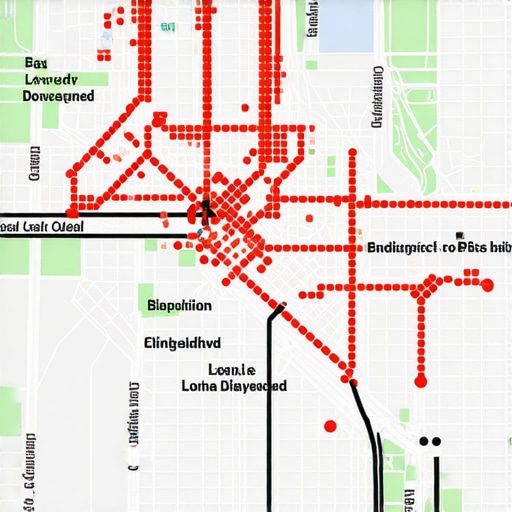
How do I maintain my local visibility over the long haul?
Maintenance is not a passive task. It requires a relentless focus on monitoring map health. I set a calendar reminder every Friday to check for ‘suggested edits’ from users. Google allows anyone to suggest changes to your hours or services, and if you do not reject the wrong ones, they go live. Beyond that, why your local listing success depends on consistent customer activity becomes clear when you look at the logs. If nobody is clicking your ‘Call’ button or asking for directions, Google thinks you are less relevant. I tell my clients to use the profile for everything—even as their primary ‘updates’ hub—to keep that signal strong. Darren Shaw’s 2023 Local Search Ranking Factors survey highlights that ‘high-quality’ reviews and sustained engagement are now out-pacing the old-school obsession with bulk directory links. To stay ahead, you need to be unlocking google listings crucial checklist for map success items that your competitors are too lazy to touch.
The shift toward AI and visual relevance
Looking ahead, the game is changing. Google’s Vision AI is getting incredibly good at ‘reading’ the photos you upload. It is no longer enough to just have a picture of your truck. You need photos that show your team actually performing the services mentioned in your categories. This is among the map health signals we monitored to see a massive lift in conversions. If you want to scale, especially if you are an agency, you should look into the white label local seo moves that automate the data collection but keep the strategy human. My best tip for you today? Go into your profile right now and audit your secondary categories using an essential seo checklist. If you have even one category that does not fit your core business, delete it. That single move could clarify your authority for the algorithm by tomorrow morning.
The Map Ranking Breakthroughs I Learned the Hard Way
I used to think that a google listing checklist was just a set of boxes to tick off and forget. But the reality is that map health is a pulse, not a destination. One major lightbulb moment for me was realizing that why your profile ranking stalled and the fix that restored our clicks often comes down to user intent signals rather than just keyword density. Another lesson? Don’t ignore the technical side; the truth about local schema and its effect on your map pack rank is that it provides the structured data Google craves to confirm your location’s legitimacy. Real growth happens when you stop chasing the algorithm and start serving the searcher better than anyone else in your zip code.
Tools and Resources I Use Daily
You don’t need a hundred tools, but you do need the right ones. For tracking the grid and seeing where your authority drops off, I swear by Local Falcon. When it comes to managing multiple storefronts without losing your mind, the gmb software that actually moves the needle is essential for keeping your data clean and synchronized. I also highly recommend digging into the annual Whitespark reports to see which signals are gaining weight. By combining these with a solid unlocking google listings crucial checklist for map success, you take the guesswork out of your weekly routine and start making data-driven moves.
Stop Planning and Start Ranking
The biggest hurdle isn’t the complexity of the algorithm; it is the hesitation to change what isn’t working. Your business deserves to be found by the people who need your help right now. By applying this maps seo checklist, you are building a digital asset that generates revenue while you sleep. Don’t let a spammy competitor with a keyword-stuffed name discourage you; they are building on sand, while you are building on authority. Focus on the the maps seo checklist tactics that actually move the needle and stay consistent. Your local authority is waiting to be claimed. Have you ever found a weird secondary category on your profile that you didn’t even add yourself? Let me know in the comments below!