The 3 Best Ways to Optimize Your Listing for Voice Search Queries
I was standing in my garage, elbows deep in a messy engine repair, and I needed a specific wrench. I yelled at my phone, ‘Hey Siri, find a tool shop nearby that’s open on Sunday.’ Silence. Then, a list of shops thirty miles away popped up. I felt like a ghost in my own town. This was my wake-up call: if my phone couldn’t find a shop five minutes down the road because of how I asked, then my own business was definitely invisible to my neighbors. I realized my current google listing checklist was built for robots, not human voices.
Stop Optimizing for Keyboards and Start Listening
For years, I made the classic mistake of stuffing my profile with stiff, awkward keywords. I thought ‘Emergency Plumber Dallas’ was the gold standard. It’s not. People don’t talk like that when they’re in a panic or driving. They ask questions. They use full sentences. If you aren’t answering those specific questions, you are losing out on the fastest-growing segment of local search. According to a Statista report, nearly half of US adults use voice search daily, and most of those queries have local intent. Today, I’m going to share the three ways I pivoted my strategy to capture that traffic without spending a dime on ads. We’re going to bridge the gap between your website authority and how people actually speak into their devices.
Is Voice Search Just a Gimmick for Techies?
You might be thinking this is just more SEO hype. I thought so too, until I noticed our conversions flatlined because we weren’t showing up for ‘near me’ queries. Voice search isn’t just for kids with gadgets; it’s for the mom with her hands full and the contractor driving a truck. It’s about convenience and speed. If you’re not there in that split second, your competitor is. I’ve seen businesses with lower ratings jump ahead simply because their profile was better at answering a spoken question. Have you ever tried searching for your own business using only your voice while driving? It’s a humbling experience.
Capture the Conversational Queries That Matter
The first step is realizing that voice search is inherently local and incredibly specific. When I finally sat down to look at hidden keyword gaps in my profile, I saw that nobody was typing the stuff I was ranking for. They were asking ‘Where can I get…?’ or ‘Who is the best…?’ We need to move beyond the standard map optimization guide and focus on natural language. I started by looking at my Q&A section and my business description. I stopped being a directory listing and started being a neighbor who provides answers. [image_placeholder]
Turn Your Q&A Into a Local Conversation
Think of your business profile like a dinner party. If you walk in shouting ‘PLUMBING SERVICES 24/7,’ everyone backs away. But if you answer someone’s question about a leaking faucet, you’re the hero. I once spent an entire Saturday morning rewriting the Q&A section for a HVAC client who was invisible in voice results. We moved from ‘Services offered: AC repair’ to ‘Do you offer emergency AC repair on Sundays in Austin?’ and answered with a resounding ‘Yes, we are the only shop open until 10 PM near the stadium.’ Three days later, they booked a $2,000 job from a guy who asked his car for help while driving home from a game. This is the specific way to use profile QA for major local seo gain. Most people leave this section blank, which is like leaving a phone ringing in an empty office. I make it a habit of seeding my own questions based on common phone inquiries. It is not cheating; it is being helpful. 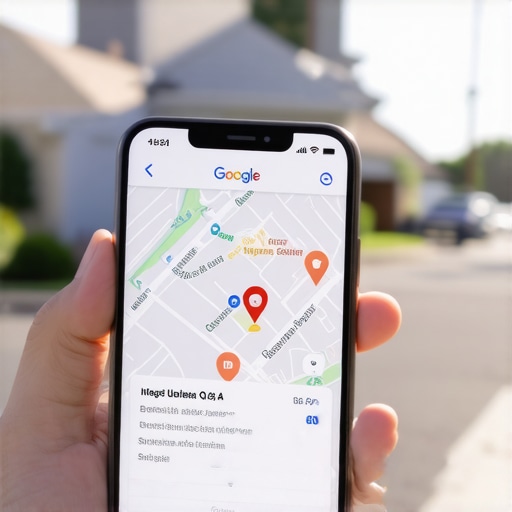
Speak the Search Engine’s Native Language Without a Translator
Beneath the surface, you need to bridge the gap between human talk and machine code. This is where understanding how to fix broken local schema that blocks your map ranking comes into play. Schema is like a digital translator. When a voice assistant ‘reads’ your site, it is looking for specific tags that confirm your address, hours, and service area. I remember a bakery that couldn’t rank despite having five hundred reviews. Turns out, their schema was pointing to a location they moved out of two years ago. The voice assistant saw the conflict and simply stopped recommending them. If you do not keep an eye on monitoring map health key checkpoints for ongoing optimization, these tiny technical glitches act like a mute button for your business.
Get Your Customers to Do the Heavy Lifting for You
The way your customers talk about you matters more than the stars they give. If everyone just leaves a ‘Great job!’ review, Google does not learn anything about your local relevance. You want them to use the words you want to rank for naturally. I started using the specific way to request reviews that customers wont ignore by asking them to mention the specific problem I solved. Instead of ‘leave a review,’ I would tell them, ‘It helps neighbors find us if you mention which part of town we were in today.’ Suddenly, our profile was flooded with phrases like ‘best drain cleaning in Oak Creek,’ which is exactly what voice searchers are asking for. It transforms your profile from a static page into a living, breathing entity that Google trusts. You also need to ensure you are fixing the profile audit errors that actually prevent map pack appearances before you go all-in on reviews. A broken link or a mismatched phone number will kill the momentum of even the best testimonial. It is about creating a frictionless path from the moment someone asks a question to the moment they click ‘call.’Most business owners follow a standard map optimization guide and then wonder why they’re still stuck on page two. Here is the uncomfortable truth: if you are just checking boxes, you are already losing. I see it every day—people obsessing over having hundreds of citations on obscure directories that haven’t seen a human visitor since 2012. In my experience, why paying for citations might be a total waste of your seo budget is one of the hardest lessons to learn because it feels like you are doing work, but you are really just making noise.
Stop chasing citation counts that do not move the needle
The old-school belief is that more mentions of your business equals higher authority. That is a myth. Google has become incredibly sophisticated at identifying which sources actually matter to your local community. If you are following a your complete maps seo checklist for enhanced visibility, focus on the quality of the data, not the quantity of the links. One local news mention or a backlink from a neighborhood association is worth more than a thousand junk directories. 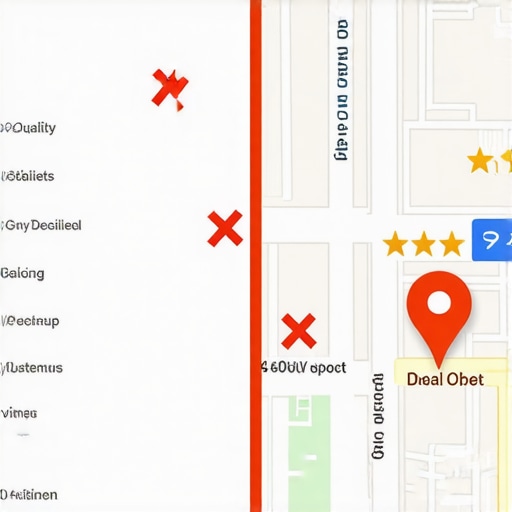
Why being the closest shop does not guarantee the top spot
There is a common misconception that proximity is the king of local search. While being near the searcher is important, it is not the only factor. I have analyzed dozens of profiles where the business three blocks away outranked the one across the street. This happens because Google prioritizes ‘Prominence’ and ‘Relevance’ alongside distance. According to the Whitespark Local Search Ranking Factors survey, review sentiment and behavioral signals are heavily weighted. This is the hidden signal that decides who hits the top 3 map pack spots. If your competitors have better engagement, Google will literally drive customers past your front door to get to them. Have you ever wondered why proximity alone isnt putting your business in the top 3? It usually comes down to a lack of local authority signals that prove you are the best answer, not just the closest one.
Can you actually rank without a physical storefront in every city?
This is the advanced question most service-based businesses get wrong. They try to cheat the system by using virtual offices or friend’s houses, which is a massive ‘oops’ factor. This is a fast track to a permanent suspension. Instead, you need to master monitoring map health key checkpoints for ongoing optimization and focus on service area pages that actually reflect your real-world activity.
The trap of over-optimization that triggers suspensions
The biggest mistake I see from ‘experts’ is stuffing keywords into the business name. It might work for a week, but it is a house of cards. One competitor report and your profile is gone. True growth comes from the map health signals we monitored to triple our service area clicks, such as consistent posting and real user interactions. If you aren’t checking for this maps seo checklist detail fixed our hidden ranking issues in a week, you might be missing tiny data discrepancies that tell Google your business is untrustworthy. Have you ever fallen into this trap of over-complicating things while missing the obvious health signals? Let me know in the comments.
If you think the job is done once you hit the top three, you are in for a rude awakening. Maintenance is the graveyard of local businesses. I have watched dozens of profiles climb to the summit only to vanish three months later because the owner ignored monitoring map health key checkpoints for ongoing optimization. It is like owning a classic car; you do not just fix the engine once and expect it to run forever. You have to check the fluids, listen for pings, and keep it polished. I personally spend thirty minutes every Monday morning auditing my ‘vital signs.’ I am looking for suggested edits from ‘helpful’ competitors who might have changed my phone number or flagged me as ‘permanently closed’ while I was sleeping.
Stop trusting rank reports that only tell half the story
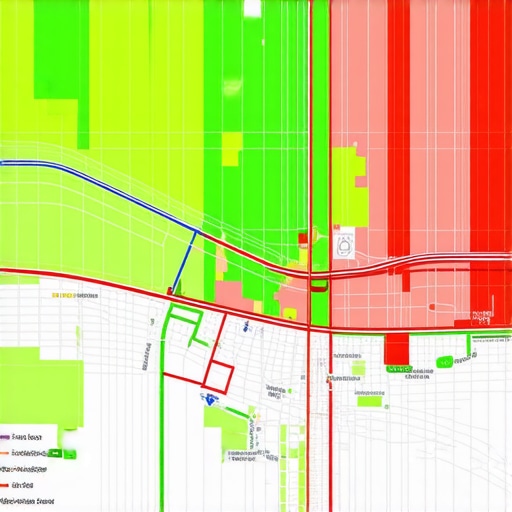
Most business owners are flying blind because their reports are too static. I realized why your local seo software is feeding you useless ranking data early on—it is because most tools only check your rank from one single point in the city. But maps do not work like that. If I move two blocks to the left, the search results change. That is why I transitioned to grid-based tracking. It shows a heat map of your city, and seeing a sea of green pins turn into red dots at a specific neighborhood tells you exactly where your authority is leaking. This level of detail is non-negotiable for mastering map optimization essential seo checklist for local growth. If you are not seeing the literal ‘dead zones’ in your city, you cannot fix them.
How can I maintain my map health over the long haul?
Consistency is the only currency Google truly values over time. You need to treat your profile like a social media feed, but with a purpose. I make sure my team is constantly checking your complete maps seo checklist for enhanced visibility to ensure we are not missing the basics, like refreshing our service photos or responding to every single review—even the ones without text. According to Joy Hawkins at Sterling Sky, a leading authority in the local search space, Google’s recent ‘Openness’ signal update means that your business hours now play a massive role in real-time rankings. If you are marked as ‘closed’ at 6:00 PM, you will likely drop out of the map pack for someone searching at 6:01 PM, even if you are the more relevant business. This is why I always tell my clients to double-check their seasonal hours; a single mistake during a holiday weekend can cause a massive dip in visibility.
The coming shift toward AI-powered local answers
The future of local search is not just about a list of ten blue links or even three pins on a map. We are moving toward a ‘Zero-Click’ reality where AI-driven voice assistants and Search Generative Experience (SGE) provide the answer directly. If you have not started monitoring map health key checkpoints for ongoing optimization, you will not have the structured data necessary for these AI models to recommend you. I predict that within the next twenty-four months, your profile’s ability to answer complex, multi-layered questions will be the primary ranking factor. Think ‘Where is a pet-friendly cafe with high-speed Wi-Fi and outdoor seating open now?’ rather than just ‘cafe.’ If you have why your profile ranking stalled and the fix that restored our clicks as a frequent concern, it is likely because your profile lacks the depth of information to answer those nuanced queries. For those managing multiple sites, investing in the gmb-software that actually moves the needle for multi-location brands is the only way to scale these updates without losing your mind. My advice? Go run a grid-based scan of your primary keyword today and find your ‘red zones.’ Identifying those gaps is the first step toward total neighborhood dominance.
Hard-Earned Lessons from the Local SEO Trenches
Over the years, I have realized that the most dangerous phase for a business is not the climb, but the plateau. When you finally hit that top spot, it is tempting to exhale and walk away. Don’t. I’ve seen thriving profiles vanish overnight because they ignored the simple act of monitoring map health key checkpoints for ongoing optimization. Here are the core truths I live by now:
- Reviews are a dialogue, not a scoreboard. If you treat reviews as a one-way street, Google notices. Engaging back proves you are an active, trustworthy entity.
- Data drift is real. Your address doesn’t change, but how the internet reports it can. Small discrepancies in your name or phone number across the web act like a slow leak in your authority.
- Software is a tool, not a crystal ball. I learned the hard way why your local seo software is feeding you useless ranking data—it often misses the hyper-local nuances of how actual neighbors see your business.
The Arsenal I Use to Keep My Rankings Sharp
I don’t believe in magic bullets, but I do believe in high-quality data. These are the resources that have fundamentally changed how I approach local growth:
- Sterling Sky (Joy Hawkins): This is my ‘North Star’ for local search. Their research into algorithm updates is unparalleled and often debunks common myths before they can hurt your business.
- Grid-Based Ranking Tools: Forget standard rank trackers. You need a tool that shows you a heat map of your city so you can see where your visibility actually stops.
- The Whitespark Local Search Ranking Factors: This annual survey is the closest thing we have to an SEO bible. It helps me prioritize my tasks according to what is actually moving the needle for other pros.
- Our Internal Frameworks: I constantly refer back to my own mastering map optimization essential seo checklist for local growth to ensure I’m not skipping the fundamentals while chasing the latest shiny trend.
Take Command of Your Local Territory
Local SEO isn’t about outsmarting an algorithm; it’s about being the most helpful answer in your community. Every time you update a photo, answer a question, or refine your your complete maps seo checklist for enhanced visibility, you are building a bridge between your front door and a neighbor in need. Don’t be intimidated by the technical jargon or the constant updates. Start with a solid step-by-step map optimization guide for better local rankings and stay consistent. The map pack is waiting for you to claim your spot.
Which part of your local presence feels the most ‘invisible’ right now—your reviews, your map pin, or your voice search results? Let me know in the comments below!