Why your map ranking depends on your website’s backlink profile
I’ll never forget the Tuesday I realized I’d been lied to about Local SEO. I had what I thought was the ‘perfect’ listing: 50 sparkling reviews, professional photos, and every field filled out to the letter. Yet, I was stuck behind competitors who had half the reputation and barely any photos. It felt like I was shouting into a void until I stumbled upon the ‘invisible cord’ connecting my website’s reputation to my map pin. I made the classic mistake of treating my website and my Google profile like two separate entities, but Google sees them as one. Today, I’m going to show you exactly how to strengthen your website’s backlink profile to drag that map ranking out of the basement.
Your website acts as the battery for your map pin
Think of your website as the power source for your local presence. If the battery is dead, the light on the map isn’t going to shine, no matter how many times you polish the bulb. I used to think the proximity myth was my only hurdle, believing that if I wasn’t located right in the city center, I was doomed. But your website’s authority—built primarily through high-quality backlinks—gives Google the confidence to ‘stretch’ your visibility further than your physical front door. A study by Whitespark found that link signals remain one of the top three most influential factors for ranking in competitive local markets. When I finally stopped ignoring my main site and started focusing on why local backlinks matter more than domain authority, my phone actually started ringing again.
Is all this link building just a giant waste of time?
I get it. You’re a business owner, not a digital architect. You might be worried that chasing links is just another ‘SEO fad’ or a rabbit hole designed to drain your marketing budget. But here’s the reality: your competitors are likely already doing this. If you stop guessing your map health and actually look at the data, you’ll see that the businesses sitting in the Top 3 Map Pack almost always have a stronger digital footprint than those stuck on page two. It’s not about being ‘techy’; it’s about proving to Google that you are a trusted local authority. Have you ever felt like your map listing was invisible even though you’re physically right there on the street? Let me know if you’ve hit that same wall, because we’re about to tear it down together.
Stop chasing high-DR sites and look at your own backyard
Most people think they need a link from a massive tech blog to see a difference, but Google’s local algorithm is smarter than that. It’s looking for relevance, not just raw power. When I was working with a struggling landscaper in Austin, he was ready to spend thousands on ‘premium’ outreach to sites that had nothing to do with Texas. Instead, we spent $200 sponsoring a local 5k run and a neighborhood association newsletter. Those two local links—while technically ‘weak’ by global SEO standards—told Google exactly where he was and who he served. Within three weeks, he jumped from the seventh spot to the second in the Map Pack. This is why why local backlinks matter more than domain authority; they anchor your business to a specific geographic coordinate in a way a global link never could. 
Connect the dots on your own site first
You can’t expect Google to understand your location if your own website is a maze. I see so many business owners who hide their address in a tiny footer and never mention it again. Your homepage needs to be an unapologetic signal for your primary service area. If you aren’t using how to use internal links on your site to boost your map rank, you’re leaving money on the table. I once audited a site where the ‘Locations’ page had zero links pointing to it from the rest of the blog. It was an island. By simply adding a few contextual links from their most popular service pages to that location page, we saw an immediate shift in how Google categorized their physical relevance. It’s about building a internal roadmap that leads straight to your map pin.
Audit the hidden signals you probably missed
Sometimes the issue isn’t what you’re doing, but what’s broken behind the scenes. If you how to audit your google listing checklist without expensive tools, you’ll often find small discrepancies that confuse the algorithm. For example, a client of mine had their phone number formatted differently on three different local directory sites. It seems trivial, but Google sees that as a lack of ‘data integrity.’ We used a your complete maps seo checklist for enhanced visibility to scrub those errors and align every single mention of the business online. This isn’t just busy work; it’s about making it impossible for Google to doubt your legitimacy.
The proximity barrier isn’t as solid as you think
You might feel stuck because you aren’t in the geographic center of your city, but authority can override distance. This is what I call the ‘Gravity Effect.’ When your website has strong local signals, your ‘reach’ expands. You start appearing for users who are further away because Google trusts you more than the closer, weaker-rated competitor. This is exactly how the specific way to structure your map optimization guide for better reach works. It’s about building so much digital trust that Google is willing to show your listing even when a searcher is five miles out. If you’ve been wondering about the map health signal that actually predicts phone calls, it’s this combination of site authority and consistent data across the web.Everyone tells you to pick as many categories as possible to ‘cast a wide net,’ but they’re wrong. I call this ‘The Dilution Trap.’ When you tell Google you’re a plumber, an HVAC specialist, and a general contractor all at once, you’re often telling the algorithm you’re a master of none. Your current google listing checklist might actually be making you invisible because you are confusing the primary intent of your business. Joy Hawkins, a leading voice in local SEO from Sterling Sky, has frequently pointed out that adding irrelevant secondary categories can actually pull down your ranking for your most profitable terms. It’s better to be the absolute authority for one niche than a vague option for ten.
Why automated citation tools often do more harm than good
There is a massive ‘Oops’ factor when business owners try to save time with automation. I’ve seen companies lose nearly half their local traffic because a ‘sync’ tool created five near-duplicate listings across the web that started fighting each other for dominance. This is exactly why manual citation building beats automated tools every single time. It’s tedious, sure, but it ensures your map health isn’t sabotaged by ‘ghost’ listings that split your review power and location signals. If you aren’t careful, these 3 map health errors sabotaging your local traffic will keep you stuck in a loop of invisible updates. 
Why does my ranking suddenly drop after I make a small profile edit?
It is the most frustrating thing in the world: you fix a simple typo in your description, and suddenly you drop to page three. Google’s trust is incredibly fragile. When you make changes outside of a structured step-by-step map optimization guide, you risk triggering a manual review or even a soft suspension. The algorithm sees a sudden shift in data as a potential hijacking attempt. Have you ever fallen into this trap where a simple update ruined your week? Let me know in the comments, because I’ve been there and there’s a specific way to fix it without waiting months for Google Support. To avoid this, you need to understand how to fix the map optimization guide mistakes before you hit ‘save’ on your next update. It’s about being deliberate, not fast.I’ve spent way too many nights staring at ranking dots, wondering why my pin moved two blocks to the left and then died. The truth is, once you’ve done the heavy lifting, the ‘set it and forget it’ mentality is what kills most businesses. I rely heavily on specific gear to keep my sanity. For instance, I use the PlePer Chrome extension daily because it lets me peek behind the curtain of my competitors’ primary and secondary categories without paying a dime. When I’m scaling for clients, I lean on the gmb software that actually moves the needle for multi location brands to keep data consistent across fifty different pins. If you aren’t using a grid tracker like BrightLocal or Local Falcon, you’re flying blind. These tools show you exactly where your ‘authority’ ends and where your competitors take over, which is the one map health metric that actually matters to business owners who want real phone calls, not just vanity impressions.
Stop guessing and start measuring with the right gear
Most people get overwhelmed by the sheer amount of data, but you only need a few key tools to see the big picture. I personally use a combination of automated scanning and manual ‘spot checks.’ Every Monday morning, I pull a report to see if any of my core keywords have dropped. If I see a red spot on the map, I don’t panic; I investigate. Is it a new competitor? Or did I lose a crucial citation? Using mastering map optimization essential seo checklist for local growth as a baseline ensures that I’m not just reacting to noise, but following a proven path to recovery. Google’s own documentation on local rankings explicitly states that ‘prominence’ is based on information that Google has about a business from across the web, including links, articles, and directories. This is the foundation of everything we do. 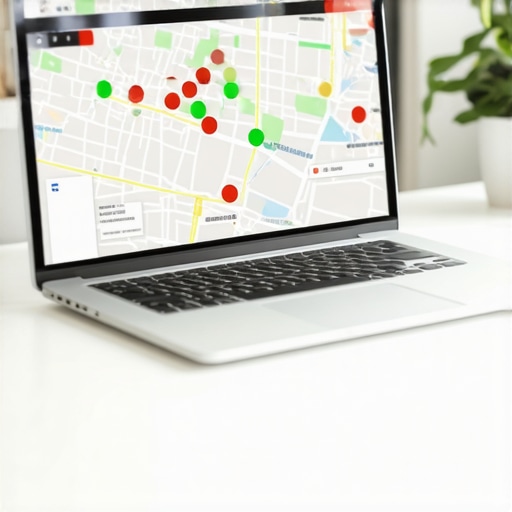
How do I keep my rankings steady over the long haul?
Maintenance doesn’t have to be a second job. I follow a strict monthly routine where I check for ‘suggested edits’ from the public. Did you know anyone can suggest your business is closed or has a different phone number? If you aren’t monitoring map health key checkpoints for ongoing optimization, those malicious or accidental edits can sit there for weeks, slowly eroding your rank. I also make it a point to revisit my your complete maps seo checklist for enhanced visibility every quarter. Google changes the rules constantly—just look at how they recently revamped the ‘Services’ menu to be more prominent. If you’re still using a guide from two years ago, you’re already behind. It’s about feeding the machine fresh, accurate data so it has no reason to look elsewhere.
The future of local search belongs to the conversationalists
Here’s where things are going: AI is going to stop looking for keywords and start looking for answers. We’re already seeing it with the Search Generative Experience where Google summarizes reviews to answer specific user questions. This means why your current map optimization guide is ignoring voice search might be the very reason you lose out in the coming years. People aren’t typing ‘Plumber near me’ as much as they are asking their phones, ‘Who is the best plumber for a broken water heater in this neighborhood?’ To win the long game, you need to start answering these specific questions in your Q&A section and your photo captions. I challenge you to take one common customer question today and add it to your profile’s Q&A section right now. It takes two minutes but tells Google you are an active, helpful authority.
The Hard Lessons That Finally Moved My Map Pin
I used to think a 5.0 rating was a shield that protected me from ranking drops. It wasn’t. The biggest lightbulb moment for me was realizing that Google prioritizes relevance over perfection. A messy website with great local links will almost always outrank a pretty profile with no digital backbone. I also learned that small data discrepancies are like paper cuts; one won’t kill you, but fifty will eventually bleed your traffic dry. Mastering a crucial checklist for map success taught me that consistency—not just activity—is the only way to stay in the Top 3 long-term. I stopped chasing every new SEO trend and started focusing on the health of my core data, and that’s when the results became permanent.
The Gear I Trust to Keep the Phone Ringing
You do not need a thousand-dollar software suite to dominate your local market, but you do need the right eyes on your data. I personally rely on the PlePer Chrome extension for a quick look at category data to see what my competitors are hiding. For the heavy lifting and regular audits, I use a combination of grid trackers like Local Falcon and your complete maps seo checklist for enhanced visibility to keep my data in alignment. These tools are the magnifying glasses that help me find the one map health metric that actually matters: whether or not your profile is actually triggering phone calls. I also keep a physical copy of my audit logs because Google’s digital history can be surprisingly short-sighted.
Take Back Your Territory One Signal at a Time
Local SEO isn’t a dark art; it is a series of deliberate, honest signals that prove you are the best answer for your community. If you feel overwhelmed by the technical jargon, just remember to start small. Grab a step-by-step map optimization guide and fix just one thing this afternoon. Whether it is an internal link on your homepage or a fresh, geo-tagged photo, every action you take builds that digital battery that powers your pin. Your neighborhood is waiting to find you—do not let a few easily fixed technical errors keep you in the shadows. What is the one thing that has been holding your map ranking back lately—is it distance, a lack of reviews, or a messy website? Let me know in the comments below!