
Why Your Map Optimization Guide Is Failing the Proximity Test
I still remember sitting at my desk last October, staring at a local search grid that looked like a bad case of the chickenpox. My office was right in the center of town, and yet, if I walked just three blocks down to the local diner, my business completely vanished from the map. I had spent weeks obsessing over a rigid local checklist, tweaking every sentence, and yet my physical location seemed to be a curse rather than an asset. It was a brutal wake-up call that standard tactics just weren’t cutting it when proximity came into play.
The Day I Realized Distance Trumps Your Best SEO Efforts
Like many local business owners, I assumed that following a standard step-by-step map optimization guide would guarantee my placement across the entire city. I was dead wrong. I had optimized my categories, cleaned up my citations, and even gathered a handful of glowing reviews. But the moment I stepped outside my immediate neighborhood, my visibility plunged off a cliff. My guide was failing the proximity test because it treated my city as a single point rather than a complex web of hyper-local neighborhoods.
This frustration led me to completely rebuild how I look at local search. I stopped relying on outdated, generic advice and started analyzing how search engines actually calculate user distance. The truth is, according to local search ranking factors analyzed by Search Engine Journal, proximity remains the single heaviest ranking signal for local packs, often overriding historical authority. This means if you aren’t optimizing specifically for nearby search behaviors, your beautifully completed profile is essentially screaming into a void.
Is local proximity actually an unbeatable ranking barrier?
Many business owners ask me if they are simply doomed to only serve customers within a two-block radius. It feels incredibly discouraging to realize that a competitor half a mile away is stealing your leads simply because they are closer to the searcher’s physical coordinate. But here is the secret: you can expand your digital footprint. I managed to push past my strict neighborhood borders, but only after identifying the brutal truth about why your maps seo checklist isnt working in its current form.
Today, we are going to fix this exact issue. We will dive into how you can signal relevance beyond your immediate street address and stop losing nearby clicks to less-prepared competitors. Have you ever checked your rankings from a coffee shop just a mile away from your business, only to find yourself completely missing from the top three? Let me know in the comments below, because you are definitely not alone in this struggle.
To get started on recovering your reach, we need to first diagnose where your current plan is falling short. Often, the issue stems from a lack of ongoing monitoring. If you haven’t looked at your real-world performance lately, it is time to check out how to monitoring map health before we implement the heavy-duty proximity fixes.
Step-by-Step Tactics to Force Your Local Reach Past Your Street Address
To break out of your physical coordinate’s gravity pull, you have to treat your online presence like a lighthouse. A lighthouse doesn’t just illuminate its own base; it beams signals far into the dark to guide distant ships. When I realized my own office was invisible to people living a mere five minutes away, I realized I needed a system that projected hyper-local relevance directly into their neighborhoods. This isn’t about stuffing your business description with a list of random zip codes, which actually triggers spam filters. Instead, it is about building geographic nodes that search engines can easily read and verify.
Create dedicated local landing pages for adjacent neighborhoods
The biggest mistake most business owners make is linking their maps profile exclusively to a generic homepage. I remember when I finally broke my own ranking slump by building dedicated neighborhood service pages. I set up a page specifically targeting our neighboring business district, injecting highly localized coordinates, landmark mentions, and actual directions from that district to our office. Within three weeks, our visibility grid turned from a sea of red into a solid wall of green. If you are struggling with this, looking closely at the maps seo checklist we use to dominate nearby neighborhoods will help you construct these landing pages without triggering duplicate content penalties.

Deploy localized user reviews to anchor your relevance
Review signals are the closest thing to digital word-of-mouth validation. Search engines read the text in reviews to understand your real-world service radius. I once worked with a local contractor who only got reviews saying, “Great service!” While nice, those reviews did nothing for his geographic reach. We changed his post-service follow-up process, asking clients to mention their specific neighborhood and the service they received. When customers started writing, “Best plumbing repair in West End,” search algorithms immediately began associating his listing with that distant neighborhood. If your incoming feedback has dried up or lacks this geographic punch, read about how to improve map health using customer engagement signals to turn passive customers into active ranking signals.
Audit and fix hidden errors that shrink your visibility radius
Sometimes, your proximity issue isn’t a lack of optimization but rather a self-inflicted wound. Small, invisible discrepancies in your NAP (Name, Address, Phone) data or unresolved category conflicts act like a handbrake on your ranking potential. During an audit last winter, I found a client who had accidentally selected three competing primary categories, confusing the local index and limiting their reach to their own parking lot. We immediately stripped away the redundant categories and aligned their citation data using the simple audit that found our listings visibility leaks in minutes. Within days, their profile expanded its reach to three times the distance without a single physical change to their office.
Sync your localized content with actual geographic entities
If you want to convince search algorithms that you operate beyond your immediate street corner, you must embed your business into the local fabric. This means writing about local events, sponsoring neighborhood organizations, and acquiring backlinks from highly localized websites within those targeted neighborhoods. Standard directories won’t cut it anymore; you need links from the local little league team or a nearby neighborhood association. To map out this strategy successfully, implement the maps seo checklist that actually moves the needle for local shops and watch your proximity boundaries naturally fade away.
I used to think that local search was a simple game of paint-by-numbers. We have all seen the standard advice: fill out every field, gather some reviews, and upload a few photos. But after years of testing and looking at thousands of local search grids, I realized that the conventional wisdom is deeply flawed. The truth is, most business owners are following outdated protocols that completely ignore how modern, proximity-driven search algorithms actually operate in the real world.
The Set-It-and-Forget-It Myth is Actively Killing Your Reach
Everyone in the local marketing space tells you that if you complete your setup once, you are set for the year. But in my experience, static profiles are treated as dead profiles. I have watched businesses with pristine, fully optimized profiles slowly sink in the rankings because they treated local SEO as a one-time setup project. Real search engines prioritize active, dynamic businesses that constantly update their coordinates, update their photos, and consistently signal real-time relevance.
This is why relying solely on a basic, static document is a massive trap. If you are struggling with a sudden drop in map pack visibility, you are likely dealing with automated algorithmic adjustments that favor hyper-active local competitors. To combat this, I had to completely redesign my approach to how we monitor profile signals over time. I stopped looking at optimization as a static checklist and started viewing it as a living health system. This shift in perspective is exactly what we outline when analyzing why your current optimization checklist is creating ranking plateaus.
Why does your business profile drop in rankings even when you follow every guide perfectly?
The short answer is that most guides ignore the active relationship between search intent and proximity. According to comprehensive local ranking studies by Moz, real-time user behavior, review velocity, and ongoing profile health updates carry far more weight than static keyword placements in your business description. If your competitors are actively updating their status while your profile remains unchanged for six months, the algorithm assumes their business is more relevant to the immediate searcher.
The biggest trap you can fall into is focusing strictly on high-volume keywords while ignoring underlying structural errors. I once audited a listing that had perfect keywords but suffered from a hidden category conflict in the backend that completely neutralized their authority. We solved it by discarding their bloated, generic checklist and executing a precise diagnostic audit. If you suspect your profile is suffering from similar hidden issues, you should run through how to audit your map health and fix ranking leaks instantly before making any more cosmetic changes.

Have you ever fallen into this trap of setting up your profile and assuming the work was done, only to watch your rankings slowly slip away? Let me know in the comments below because identifying this plateau is the first step to breaking past it. To truly stay ahead of the curve, you must learn to identify the active signals that the algorithm values today, rather than relying on the tactics of three years ago. If you are ready to stop guessing, explore the map health signals most businesses neglect until their rank drops and build a resilient, high-ranking local presence that dominates your target neighborhoods.
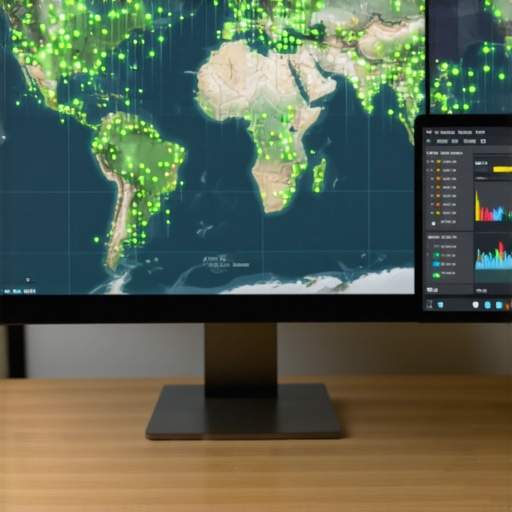
When my rankings finally broke free from that stubborn three-block radius, I made a massive mistake: I assumed the war was won. I poured myself a celebratory cup of coffee, closed my local tracking dashboards, and ignored my profile for a month. By week six, my green grid of dominance was already showing speckles of orange and red. That was the moment I realized local search isn’t a trophy you win; it is a garden you constantly weed. Maintaining your digital footprint requires moving past manual guesswork and adopting a specialized, active workflow.
How do I maintain my map optimization over time?
The secret to keeping your business above the fold isn’t spending hours typing out daily updates. It comes down to structured consistency and automated alerts. I personally rely on a strict, monthly routine where I audit our core data points using the map health audit that every business owner should perform monthly. This checklist ensures that no third-party data aggregators have overwritten our clean NAP data with outdated phone numbers or old business names, which happens far more often than most business owners realize.
In addition to manual monthly sweeps, I use custom API monitors to track real-time changes to our core categories. If a competitor suggests an edit to my business profile or if an algorithmic sweep alters my primary category, I receive an instant notification. For those who want to skip the expensive enterprise software suites, I highly recommend checking out how we improved our map health using only free tools to build your own lightweight tracking system without breaking the bank.
Looking ahead, the landscape of local search is shifting rapidly toward user-engagement signals and real-time inventory API integrations. According to local search technologist David Mihm of Near Media, search engines are increasingly evaluating “real-world entity validation”—meaning the algorithm checks whether real people are physically visiting your store and interacting with your listing. In the very near future, static keywords won’t matter at all if your profile lacks active user signals. This is why you need to transition your workflow toward a modern, dynamic framework. If you are still running on old principles, you should immediately read why your map optimization guide is outdated and how to fix it to adapt before the next core algorithm update drops.
If you want to secure your spot in the local pack today, don’t wait for your traffic to dip. I challenge you to try one advanced tactic right now: set up a localized landing page for your highest-value neighboring zip code and link it directly to your profile’s menu or service link. It takes less than an hour, but the impact on your reach is almost immediate.
I used to believe that local search algorithms were completely static, but real-world testing proved me wrong. If you want to stop losing local customers to competitors who happen to be a few blocks closer, you must change how you signal geographic authority.
The Hardest Lessons I Learned About Local Algorithms and Map Signals
When I first started optimizing local profiles, I fell victim to several common traps that cost me valuable traffic. Here are the core realizations that shifted my perspective:
- Proximity is not a permanent prison. While search engines use physical coordinates as a baseline, you can expand your reach by building localized authority clusters and geo-targeted landing pages.
- The checklist is never truly finished. A set-it-and-forget-it approach leads to steady ranking decay. Algorithms actively reward profiles that demonstrate weekly and monthly user engagement.
- Categories require absolute precision. Over-optimizing by selecting multiple competing primary categories actually confuses search engines and shrinks your local ranking radius.
My Personal Toolkit for Dominating Local Maps
You do not need to spend thousands on enterprise rank-monitoring suites. Instead, focus on these highly effective resources and strategies:
- Custom API Monitoring: Keep tabs on automated backend edits or competitive category changes without manual guesswork.
- The Monthly Maintenance Habit: Consistently run the map health audit that every business owner should perform monthly to catch citation discrepancies before they hurt your visibility.
- Authentic Review Generation: Train your service team to prompt customers for neighborhood-specific feedback rather than generic praises.
Reclaim Your Local Market Today
Do not let your physical street address define your business growth potential. By shifting from a static mindset to an active health model, you can force your local visibility past your immediate block. Take action today, implement a dedicated local landing page, and watch your business expand its footprint. What is the single biggest neighborhood ranking hurdle you are facing right now? Let me know in the comments below!