How we identified the spam profiles pushing us out of the map pack
I remember staring at my screen at 2 AM, the blue light stinging my eyes, wondering where on earth my business had gone. One day I was comfortably sitting in the top 3, and the next, I wasn’t even on the first page. I felt like a ghost. I’d followed every map optimization guide I could find, but nothing made sense. I was doing everything by the book, yet my phone stopped ringing. My first instinct was to panic and change my own profile, but that was a huge mistake. I spent two weeks over-optimizing my photos when the real problem was staring me in the face from the top of the search results. It wasn’t my map health that was failing; it was a targeted invasion of fake listings.
The Night Our Map Ranking Vanished Without a Trace
It’s a gut-punch when you realize your hard-earned visibility has been hijacked by profiles that shouldn’t even exist. I discovered that a handful of ‘businesses’ had popped up overnight, all using keyword-stuffed names and addresses that led to empty parking lots or UPS stores. These spam profiles were effectively pushing legitimate local businesses out of the map pack by gaming the algorithm. If you have noticed a sudden dip in your visibility, you might be facing the same issue. Have you ever checked your local rankings and seen a competitor with a name that sounds more like a search query than a real business? That’s exactly how our nightmare started. I’m going to share how we identified these bad actors and the steps we took to restore our map health and ranking.
Can You Really Outsmart Profiles That Cheat?
Many business owners I talk to are terrified that the ‘cheaters’ have some secret sauce that makes them invincible. The truth is much simpler. These spam profiles rely on the fact that most people won’t report them. According to research by Search Engine Journal, map spam remains one of the biggest hurdles for local SEO, often accounting for a significant portion of the top-ranking results in competitive niches like plumbing or locksmiths. By using a strict maps seo checklist, you can spot these anomalies before they drain your revenue. I’ll show you how to look past the surface and identify the ghosted business listings that are cluttering your local market. We are going to clean up your search environment today, and I promise you, it’s not as daunting as it sounds.
Find the Weeds in Your Local Search Garden
Fighting these fake listings is a lot like weeding a garden. If you don’t pull them by the root, they just keep coming back and choking your legitimate business. I started my cleanup by using the audit checklist for identifying ghosted business listings to separate the real competitors from the phantoms. One specific time, I found three ‘competitors’ who all had their addresses listed at the same shared office space downtown, but when I drove by, none of them actually had a physical sign or suite. I took high-resolution photos of the empty building directory and attached them to my reports. It felt like playing detective, but it was the only way to prove to Google that these weren’t real brick-and-mortar locations. If you’re seeing profiles with names like ‘Best Plumber City Pro,’ that’s a massive red flag. 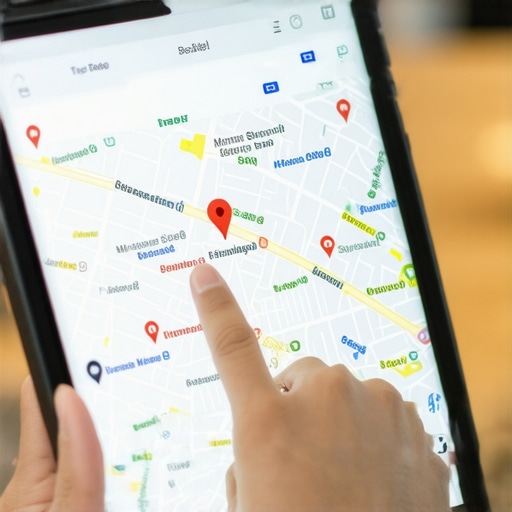
Clean Up the Neighborhood with Strategic Reporting
Reporting isn’t just about clicking ‘spam’ and hoping for the best. You need a method. Google’s ‘Suggest an Edit’ tool is powerful, but it’s often ignored if you don’t provide a reason that fits their guidelines. I used to think I was being a ‘snitch,’ but then I realized these bad actors were literally stealing revenue from my family. You need a solid 4-step process for reclaiming a hijacked business profile to ensure your edits actually stick. I once reported a competitor seven times before I realized I was just hitting the ‘closed’ button without providing context. Once I started adding ‘does not exist at this location’ and citing local licensing records, the listings started dropping like flies. This isn’t just about being right; it’s about following your complete maps seo checklist for enhanced visibility that forces the algorithm to take notice.
Build a Fortress Around Your Local Ranking
While you’re cleaning up the trash in your local area, you have to harden your own profile. This is where monitoring map health becomes your daily armor. I learned the hard way that a the tiny discrepancy in your map health score—like a phone number that doesn’t match your Facebook page—can make Google trust a well-optimized fake listing more than your actual shop. You have to ensure your data is airtight. I spent a whole weekend auditing our own records because I found our suite number was missing on three different local directories. It seemed small, but fixing it was like plugging a leak in a dam. You should be following a step-by-step map optimization guide that focuses on data integrity first. If your own house isn’t in order, you’re just as vulnerable as the spammers. Check your google listing checklist to see if your service hours or primary category have drifted. A stagnant profile is a target, but a healthy, active one is much harder for a spammer to displace.
Let’s dig deeper because most people think that once they’ve checked off a few boxes, they’re invincible. I see so many folks obsessed with their review count, thinking that hitting 100 five-star reviews is the ultimate finish line. It’s not. In fact, you can stop chasing reviews and fix these 4 map health signals instead if you want to see actual growth. I’ve seen profiles with half the reviews of their competitors dominate the map pack because their underlying monitoring map health was superior. Reviews are social proof, but they aren’t the engine that drives your rank; that engine is built on data integrity and niche relevance.
Stop Chasing Reviews and Fix Your Data Foundation
Everyone tells you to use every secondary category available. This is often a huge trap. Over-categorization can actually dilute your primary ranking power. If you’re a plumber and you also list yourself as a ‘flooring contractor’ just because you once fixed a pipe under a tile floor, you’re confusing the algorithm. This is a classic example of why your google listing checklist needs a weekly audit to ensure you haven’t drifted into ‘relevance clutter.’ Google wants to know exactly what you are, not a list of everything you might be. Focusing on a tight, relevant profile is how you win in a crowded market.

How Do You Spot the Invisible Ranking Factors Killing Your Reach?
It often comes down to technical data integrity across the web that doesn’t even live on your Google profile. According to research by local search experts at Whitespark, while proximity is a massive factor, the ‘on-page signals’ from your linked website carry significant weight in how Google perceives your map listing’s authority. If you have broken local schema on your site, it doesn’t matter how many high-quality photos you upload to your profile. You are essentially invisible because the bridge between your website and the map is broken. You need to look beyond the profile dashboard to see the full picture of your maps seo checklist.
The Vanity Metric Trap That Stops Your Phone From Ringing
Don’t fall for the trap of vanity metrics. I once used an automated tool that told me my ‘health score’ was 100%, yet our phone didn’t ring for three days. You have to learn how to spot map seo health checks that are just vanity metrics. Real health is measured in actual interactions—clicks to calls and direction requests—not a green checkmark on a third-party dashboard. If your software is feeding you useless data, you are flying blind. You should be focused on how to fix the map optimization guide mistakes killing your clicks rather than chasing a perfect score in an app. Have you ever fallen into this trap where your software says you’re winning, but your bank account says otherwise? Let me know in the comments.
The mistake I made early on was thinking I could just walk away once I hit the top spot. But local search is a battlefield, and your competitors are always sharpening their swords. I’ve found that why your google listing checklist needs a weekly audit is the difference between a business that thrives and one that disappears. I personally use a simple spreadsheet to track my primary keywords every Tuesday morning. Why Tuesday? Because it’s far enough from the weekend for the data to settle, yet early enough in the week to fix any issues before the weekend rush. This kind of hands-on monitoring map health prevents those sudden drops that happen when Google pushes a small algorithm update overnight. When I talk about tools, I’m not talking about some expensive $500-a-month software that spits out a generic report. I’m talking about tools like Local Falcon or BrightLocal for geo-grid tracking, but using them as a compass, not a pilot. You need to be the pilot. I’ve found that the 4-step local seo checklist for service businesses losing traffic works best when you combine it with manual verification. For example, when checking my citations, I don’t just trust a dashboard; I actually search for my phone number in quotes and see what junk comes up. That is the only way to catch the ‘ghost’ listings that are secretly siphoning your authority.
Use a Manual Toolkit to Keep Your Ranking Glued to the Top
I’ve also stopped relying on those big, automated citation ‘blast’ services. They are messy. I’ve seen them create more problems than they solve by duplicating data on low-quality sites. I’m a firm believer that why manual citation building beats automated tools every time because you have total control over the narrative. If you aren’t looking at your mastering map optimization essential seo checklist for local growth at least once a month, you are leaving your revenue up to chance. One of the biggest lessons I learned from the experts at Sterling Sky was that proximity is only one piece of the puzzle; relevance and prominence are where you actually win the long game. They have noted through extensive research that since the ‘Vicinity’ update, the weight of on-page signals has skyrocketed.
How do I maintain my map health over the long haul?
The secret isn’t just checking boxes; it’s about consistent engagement. Think of your profile like a storefront window—if you never change the display, people stop looking. I predict that the next major shift will involve AI-driven visual search. Google is already getting incredibly good at ‘reading’ what is inside your photos via the Cloud Vision API. In the future, simply having a photo of your truck won’t be enough; you’ll need videos and images that clearly show you performing the specific service the customer is searching for. Real, raw, unedited photos of your work site are the future of step-by-step map optimization guide success. This is how you scale without losing that local trust that the big national brands can’t replicate. 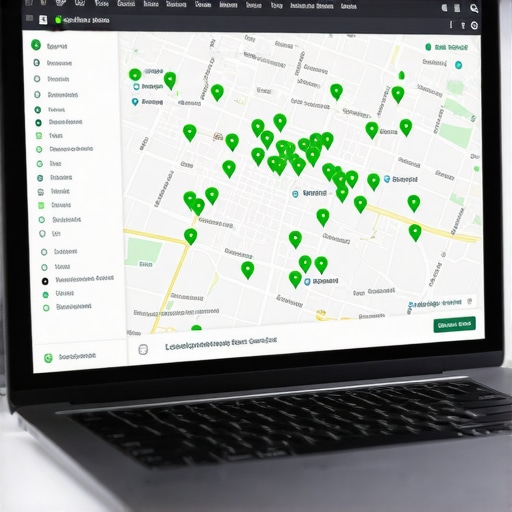 If you want to stay ahead of the curve, stop doing what everyone else is doing. My favorite advanced move is to how to build authority for your listing using hyper-local news. Start mentioning local landmarks or events in your business posts. It signals to Google that you aren’t just a business in the city, but a business of the city. Try this today: write one post on your profile about a local community event you support, and watch how it anchors your relevance in that specific zip code.
The Hardest Lesson I Learned About Staying Relevant
I used to think that map rankings were a set-it-and-forget-it deal, but that mindset almost cost me my business. The most significant ‘lightbulb moment’ I had was realizing that Google trusts data consistency more than it trusts a high review count. If you have map health errors like mismatched suite numbers or inconsistent business hours across the web, your ranking will eventually crumble regardless of how many photos you upload. Another lesson? Don’t ignore the technical foundation. I found that fixing broken local schema on my main website did more for my visibility than three months of posting updates on the profile itself. Lastly, remember that your competitors are watching you just as closely as you are watching them. Staying ahead means you have to be the most reliable, most accurate data source in your local area.
The Reliable Toolkit I Use Every Tuesday
You don’t need a massive budget to win at local SEO, but you do need the right tools to cut through the noise. I personally swear by Local Falcon for geo-grid tracking because it shows you exactly where your ‘bubbles’ of visibility are shrinking. I also recommend BrightLocal for citation tracking, though I always remind people that manual citation building beats automated tools every single time when accuracy is on the line. For my weekly routine, I follow the essential seo checklist for local growth to ensure nothing has drifted. Finally, I keep the Google Maps app itself on my phone as a ‘customer’ would use it, searching for my own services from different parts of town to see the real-world results.
Your Roadmap to Local Search Dominance
Taking control of your local presence is one of the most empowering things you can do for your business. It’s about more than just numbers; it’s about making sure the people in your community who need your help can actually find you. Use your maps seo checklist as your guide, and don’t let the fear of ‘phantoms’ or spammers slow you down. You now have the strategies to identify the weeds and plant a garden that lasts. The future of your business is bright when your local visibility is secure. Have you ever suspected a competitor was using a fake office or a keyword-stuffed name to outrank you? Let me know your experience in the comments below!