How to Generate Leads From Google Maps Without Using Paid Promoted Pins
I remember the exact moment I almost threw my laptop across the room. It was a Tuesday evening, and I was staring at a ‘zero calls’ dashboard while my competitor down the street was clearly drowning in customers. I had spent a small fortune on promoted pins, thinking that if I just gave Google enough money, the phone would start ringing. It didn’t. I was paying for clicks that went nowhere, and my organic ranking was buried on page four like a forgotten time capsule. It was a punch to the gut, but it led me to a realization: throwing money at Google is a band-aid, not a cure.
Stop Handing Your Hard-Earned Cash to Google
We have been told for years that the only way to survive the local market is to ‘pay to play.’ I am here to tell you that is a load of nonsense. When I finally stopped obsessing over my ad spend and started looking at the actual health of my profile, everything shifted. You see, Google’s algorithm isn’t just looking for the highest bidder; it’s looking for the most relevant, trustworthy answer to a user’s problem. I made the massive mistake early on of thinking that stuffing my business description with keywords was the golden ticket. Instead, it made me look like a spammer and actually tanked my visibility. I learned the hard way that a clean, honest maps seo checklist is worth ten times more than a promoted pin.
Does organic ranking even work anymore?
I hear this all the time from business owners who are tired of being ghosted by the search results. They worry that Google has hidden all the free spots behind a paywall. The truth is actually more encouraging. According to data from BrightLocal, nearly 98% of consumers read online reviews for local businesses, and they are increasingly savvy at spotting the difference between an organic ‘Top 3’ result and a paid ad. People trust the businesses that earned their spot. Today, I want to show you how to turn those map impressions into real phone calls without touching your credit card. Have you felt like you are shouting into a void despite having a great business? Let me know, because I have been there, and there is a way out that doesn’t involve a monthly subscription to Google Ads.
Make Your Business Data Unshakable Across the Web
Think of your business information as a digital fingerprint. If your name, address, or phone number—what we call NAP—is different on Facebook than it is on your website or your Google profile, the algorithm gets confused. It is exactly like a GPS that gives you three different locations for the same destination; eventually, you just stop trusting it. I once worked with a local landscaping company that couldn’t understand why they disappeared from the map pack. After a quick audit, we found they had moved offices three years prior, but their old address was still lingering on half a dozen forgotten local directories. We had to go in and perform a manual cleanup using a solid google listing checklist to ensure every single mention of their brand was identical. Once Google saw a consistent, unified story, their ranking didn’t just crawl back—it leaped. This is the foundation of the 5 map health rules every small business should know if they want to stay relevant.
Stop Using Blurry Photos and Start Showing Your Work
Most business owners treat their Google listing like a static yellow pages ad from 1995. They upload one logo, a grainy photo of the front door, and then wonder why nobody is clicking. People eat with their eyes first, and they hire with their eyes too. I remember a specific plumbing client who was losing emergency calls to a guy three towns over. When we looked at his profile, his only photo was a dark, blurry shot of a van in a driveway. We swapped that for ten high-resolution, bright photos of his actual team working on complex pipe bursts and smiling with happy customers. Within two weeks, his click-through rate skyrocketed. This is one of the tiny details in your google listing checklist that drive massive clicks that most people ignore because it feels too simple. 
The Review Loop That Actually Drives Clicks
Getting reviews is great, but getting the *right* reviews is the real game-changer. I made the mistake early on of just asking people for ‘five stars.’ The problem is, a five-star review with no text tells Google almost nothing about your actual service. I started coaching my clients to ask customers to mention the specific service they received and the neighborhood they are in. When a customer writes, ‘Best water heater repair in North Austin,’ they are doing the SEO work for you. It builds a layer of local authority that a generic ‘Great job!’ simply can’t touch. You should follow the specific way to request reviews that customers won’t ignore to build this momentum. When you combine this with the map optimization guide to winning the local 3-pack, you stop being a choice and start becoming the obvious answer.
Beating the Proximity Barrier Without Moving Your Office
I hear it all the time: ‘I can only rank if the customer is standing right outside my door.’ That is the proximity myth. While distance is a factor, relevance and prominence can often override it. I managed to rank a boutique gym in the top three for a search performed five miles away, simply by flooding their profile with local signals—posts about local events, photos of local landmarks, and geo-tagged updates. We applied the specific proximity move that finally put us in the top 3 and watched the ‘request directions’ button start glowing. It is about proving to Google that you are the most active and trusted authority in that entire region, not just on your specific street corner.Building on that proximity trick, I need to address the elephant in the room: the ‘perfect’ listing trap. Most gurus will tell you to fill out every field and walk away. They treat a google listing checklist like a grocery list—once the milk is in the cart, you’re done. But in my experience, a ‘complete’ profile that never changes is a dying profile. Google loves ‘freshness’ and engagement signals far more than a static, keyword-rich description. In fact, if you aren’t monitoring map health with a focus on how people interact with your listing, you’re missing the forest for the trees. Have you ever spent hours ‘optimizing’ only to see your numbers flatline? Let me know in the comments, because I’ve been there.
Why do competitors with fewer reviews still outrank you?
It’s frustrating to see a guy with a 4.2 rating and ten reviews sitting in the Top 3 while your 4.9-rated business with 200 reviews is stuck at number six. This often happens because of ‘behavioral signals.’ According to the annual Whitespark Local Search Ranking Factors, things like click-through rate and the frequency of new photos carry massive weight. If that lower-rated competitor is getting more clicks or has more recent ‘check-ins’ via mobile users, Google views them as the more ‘active’ and relevant choice. This is one of the 4 missing pieces in most google listing checklists that people simply ignore.
Don’t fall for the keyword-stuffing siren song
Here is the ‘oops’ factor I see weekly: business owners adding ‘Best Plumber Austin’ to their actual business name field. Yes, it might give you a temporary boost, but it is a one-way ticket to a profile suspension. I’ve seen businesses lose years of reputation in an afternoon because they tried to game the system. Instead, you need to understand why your optimization checklist is still missing the human touch. Real humans don’t want to see a string of keywords; they want to see your face, your work, and your responses to questions. If you are struggling with a lack of movement, you are likely making map optimization guide mistakes by focusing on the bots instead of the people actually holding the phones. 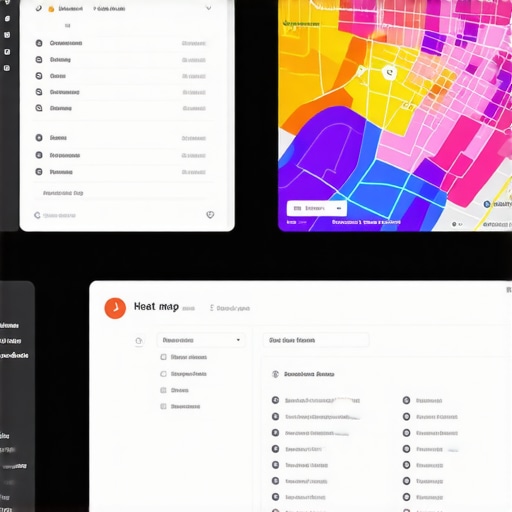
The dangerous obsession with vanity metrics
A high ‘optimization score’ from a third-party tool doesn’t pay the bills. I’ve audited profiles that looked perfect on paper but were actually ‘ghosted’ because of underlying data conflicts. You have to look past the surface and fix the hidden technical glitches, like inconsistent service area definitions or broken links in your ‘Order’ or ‘Appointment’ buttons. It’s about the friction-less journey from search to call. If your current strategy is just ‘posting once a week,’ you’re likely losing ground. Let’s talk about the real metrics that matter.
So, how do we move from obsessing over vanity metrics to actually building a machine that spits out leads? I used to think I could just ‘set it and forget it.’ I was wrong. The moment I stepped away, my competitors started chipping away at my territory. I realized that keeping a listing at the top is exactly like keeping a garden; if you don’t pull the weeds of outdated info and water it with fresh content, it withers. Today, I want to talk about the actual gear I use to keep my clients—and my own business—from disappearing.
The Tools I Actually Use to Stop the Guesswork
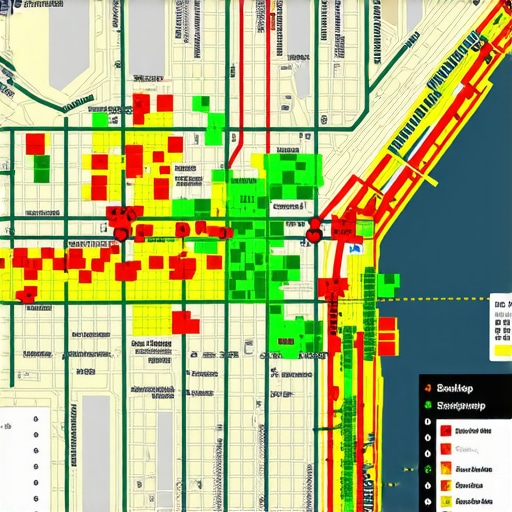
I am a bit of a nerd when it comes to data, but I hate over-complicated software that takes a PhD to navigate. For my daily workflow, I rely heavily on Local Falcon. Why? Because it gives me a ‘bird’s eye view’ through heatmaps. A standard rank tracker tells you that you are #1 in your office, which is useless. Local Falcon shows me exactly where my visibility drops off, street by street. This is how I identify when my monitoring map health efforts are actually working or if I am just shouting at my own four walls. If I see a ‘red zone’ two miles north, I know I need to focus my next batch of geotagged photos or local posts on that specific neighborhood. According to the latest technical analysis from Search Engine Journal, local signals are becoming more fragmented, meaning Google is looking for cross-platform confirmation of your business status more than ever before. This is why I also keep a strict weekly audit of my google listing checklist to ensure no one has ‘suggested an edit’ to my phone number or hours that I didn’t authorize.
How do I keep my map ranking from falling off a cliff?
The secret isn’t a secret at all—it’s consistency. I have a ‘Sunday Ritual’ where I spend thirty minutes inside my dashboard. I reply to every single review, even the ones that are just stars, and I upload three photos from my phone’s camera roll that I took during the week. This signals to Google that the lights are on and someone is home. When you stop interacting, the algorithm assumes the business might be stagnating. If you feel like your momentum has slowed, you likely need a step-by-step map optimization guide to reset your baseline. I’ve seen businesses jump back into the Top 3 just by resuming a regular posting schedule. It sounds too simple to be true, but in a world of automated bots, human activity is the ultimate ranking signal. This is why I tell people to stop local ranking decay by treating their profile like a social media feed rather than a static billboard.
The Future of Maps Is Smarter Than You Think
Looking ahead, I predict we are moving away from ‘keyword matching’ and toward ‘intent matching’ driven by AI. Google’s Search Generative Experience (SGE) is already starting to summarize reviews to answer complex queries like ‘Which plumber here is best for old copper pipes?’ This means your maps seo checklist needs to include getting your customers to be incredibly descriptive in their feedback. In the next 18 months, the businesses that win won’t just be the ones with the most reviews, but the ones with the most informative reviews. I’m already shifting my strategy to focus on this, and you should too. My challenge to you: Go into your profile right now and find one ‘red flag’—maybe an old photo or an unanswered question—and fix it. Then, grab a heatmap tool and see where your ‘blind spots’ are. You can’t fix what you can’t see, and you can’t rank where you aren’t active. If you are still feeling stuck, it might be time to dive back into a mastering map optimization workflow to ensure your foundation hasn’t cracked under the pressure of new updates.
The Hardest Lesson I Learned While Chasing the Map Pack
If I could go back and talk to my frustrated self sitting in that quiet office years ago, I’d tell him that “perfect” is the enemy of profit. I spent months trying to find the one magic setting that would turn the tide, but the truth is much simpler: Google rewards the businesses that show up every day. I learned that the brutal truth about why your business is not in the top 3 map spots usually boils down to a lack of genuine activity rather than a technical failure. You can have the most optimized profile in the world, but if you treat it like a museum piece, it will eventually gather digital dust. I also realized that I was often overlooking the most obvious signals; for instance, I once spent a week on backlink strategy while ignoring a broken “call” button on my own profile. It’s the small, human-centric details—the stuff that doesn’t feel like “SEO”—that actually move the needle the most.
The Exact Gear I Trust to Handle the Heavy Lifting
You don’t need a massive budget to win this game, but you do need the right lens to look through. I personally swear by a few specific things to keep my sanity. First, I keep a dedicated “Photo Friday” on my calendar—it’s not software, but it’s the most effective tool I have for ensuring I never forget why your optimization checklist is missing this vital photo step. For technical data, I stick to Local Falcon for those hyper-local heatmaps and Whitespark’s Citation Finder to clean up the messes I find in local directories. Most importantly, I focus on the one map health metric that actually matters to business owners: high-intent conversions, not just impressions. If a tool doesn’t help me see why a customer is or isn’t calling, I don’t use it. These resources combined with a solid 7 maps seo checklist items for profiles that stopped showing up will give you more clarity than any expensive agency ever could.
Stop Letting the Map Algorithm Win
The local market is more competitive than ever, but that just means there is more opportunity for the businesses that actually care. You don’t have to be a tech genius to master your presence; you just have to be the most reliable and active neighbor in the digital neighborhood. Every review you answer and every photo you upload is a brick in the wall of your local authority. When you follow a consistent optimization checklist, you aren’t just gaming a system—you are building a bridge to your future customers. It’s time to stop guessing and start taking back the territory you’ve worked so hard to build. Have you ever noticed your ranking drop suddenly after a period of inactivity? Let me know in the comments below, and let’s figure out how to get you back on top.