Why Your Maps SEO Checklist Is Failing to Beat Your Nearest Neighbor
I was staring at my screen, heart sinking. My competitor—a guy whose shop is literally three doors down and who still uses a flip phone—was sitting comfortably at the top of the Map Pack. Me? I was buried on page three like some forgotten digital relic. I had followed every best practice I found online. I had my NAP consistent, I had five-star reviews, and I had filled out every possible field. Yet, I was losing. It was the moment I realized that a generic maps SEO checklist was actually making me invisible to the people who mattered most: my neighbors. I was checking boxes, but I wasn’t actually building authority. I was playing a game of numbers while my neighbor was playing a game of relevance, and he was winning without even trying. This realization hit me like a ton of bricks. Today, I am going to show you exactly how to stop being just another pin on the map and start being the pin that everyone clicks. We are going to fix the hidden leaks in your profile and ensure you never get outranked by a less-qualified competitor again.
Stop Following the Same Old Rules as Everyone Else
Most of us are just copying the guy at the top. But if you copy him, you are always one step behind. Early on, I made the massive mistake of thinking more keywords in my business description meant more calls. I thought if I just mentioned every suburb within twenty miles, Google would love me. Instead, my business description didn’t actually help me rank; it just made my profile look like spam. I was ignoring the actual map health errors that were quietly filtering me out of local results. A study by BrightLocal confirms that while proximity is a primary factor, it is the quality of engagement and local relevance signals that actually push a listing above its immediate neighbors. You cannot change your physical address, but you can change how Google perceives your authority within that radius. Have you ever felt like you are doing everything right but still getting ghosted by Google? It is a frustrating plateau to hit.
Does this stuff actually work when the map is crowded?
You might be skeptical. After all, if the market is saturated, how can a few tweaks make a difference? I used to think the same until I saw how we used this specific map optimization guide to win search terms that were previously dominated by big-box franchises. The secret isn’t in doing more; it is in doing the specific things that the brutal truth about why your current checklist is failing finally reveals. We are moving away from mindless data entry and toward a strategy that prioritizes monitoring map health like a vital sign for your business. By the time we are done today, you will have a clear path to reclaiming your local territory and ensuring that when someone nearby searches for your services, your name is the only one that truly stands out.
Cleaning Up the Mess Before Adding Fuel
Before you worry about complex strategies, you have to realize that your profile is likely leaking authority through tiny cracks. Think of your Google presence like a bucket; if it is full of holes, it does not matter how much water you pour in. I once spent three weeks trying to rank a local plumber, only to realize his previous agency had created three duplicate listings with slightly different names. He was competing against himself. We had to run a map health audit that actually finds problems, focusing on cleaning up those duplicates before any real progress could happen. It was a mess, but once those duplicates were merged, his main profile jumped five spots in forty-eight hours.
Fix the Tiny Data Points That Push the Pin
Precision matters more than volume. Google is obsessed with consistency because consistency equals trust. If your office suite number is missing on one directory but present on your main listing, that is a red flag for the algorithm. I have found that the small data points in our map health check that moved the pin the most were often the simplest: ensuring the phone number format was identical across the web and that our primary category was ultra-specific rather than broad. Use a specific way to use a google listing checklist for maximum reach by auditing your categories once a month to see if Google has added a more relevant option for your niche.
Stop Stuffing Keywords and Start Answering Questions
Most business owners treat their business description like a junk drawer for keywords. They write sentences like “Best local plumber in Chicago for plumbing repair and Chicago drain cleaning.” It is painful to read and, quite frankly, your business description does not actually help you rank in the way you think it does. Google uses that space for conversion and context, not for keyword counting. Instead, focus on the Q&A section. I started a habit of having my team use customer questions to improve your profile’s relevance. We would take the top five questions we got on the phone and post them ourselves as the business, then provide the definitive answer. This creates a rich, keyword-natural environment that helps both the user and the algorithm.
Upload Photos That Prove You Are Real
The quickest way to lose trust is to use stock photos of people in suits shaking hands. Google’s AI is smart enough to identify stock imagery, and it will suppress those photos in favor of real, “gritty” shots. I learned this the hard way when I tried to use a professional stock photo for a storefront; the listing’s engagement plummeted. There is a hidden danger of using stock photos on your business profile because it signals to Google that you might not actually exist at that location.  Grab your phone, walk outside, and take a photo of your sign, your team at work, and your lobby. These authentic signals are what trigger the proximity trust. If you are struggling with the initial setup, such as how to verify your business listing when the postcard never arrives, authentic photos can actually serve as secondary proof during a manual support review. Keep monitoring map health by adding at least two new real-world photos every week to keep the listing fresh and active in the eyes of the local search engine.
Most people will tell you that the secret to the Map Pack is simply getting more reviews than the guy across the street. It sounds logical, right? But here is the contrarian truth I have learned after years in the trenches: a high review count is often a vanity metric. In fact, why a high review count doesn’t guarantee a top map spot is one of the hardest lessons for local business owners to swallow. I have seen profiles with 500 reviews get buried by a competitor with 80 because the latter had better review velocity and more diverse keyword-rich sentiment. Google’s algorithm is looking for active, ongoing engagement, not a static pile of five-star ratings from three years ago.
This brings me to the “Oops” factor that most of those cookie-cutter guides ignore. You have probably been told that NAP (Name, Address, Phone) consistency is the holy grail of local SEO. While it is important, obsession with absolute standardization can lead to a “robotic” footprint. I have seen businesses spend thousands of dollars on citation cleanup only to see zero movement in the rankings. Why? Because why most map optimization guides fail to address real ranking factors is that they ignore local authority. If your business is listed perfectly on 100 directories no one visits, but you have zero mentions on your local chamber of commerce or the neighborhood blog, Google views you as a data point, not a local pillar.
Is your service area setting a trap for your proximity signals?
One of the most advanced mistakes I see involves the “service area” settings. If you are a plumber or a locksmith, you might be tempted to check every box for every city within a 50-mile radius. Don’t. A study by Whitespark highlights that proximity remains the single most influential ranking factor. When you tell Google you serve a massive, unrealistic area without the localized content to back it up, you dilute your relevance. This is why your current optimization checklist is creating ranking plateaus; you are trying to be everywhere and ending up nowhere. Instead, use a maps SEO checklist to dominate nearby neighborhoods by focusing on a 5-to-10-mile radius first and proving your authority there through localized posts and geo-tagged project updates.
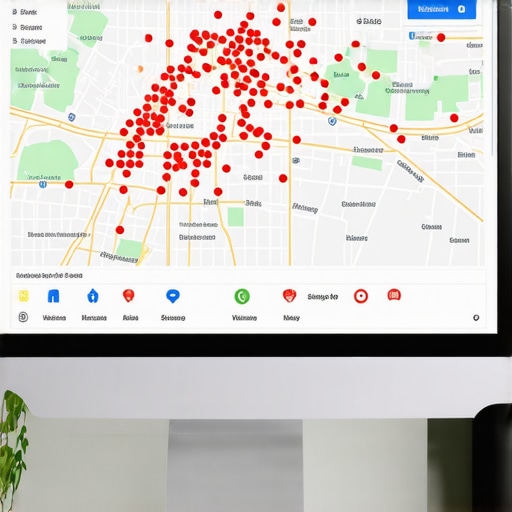
Another nuance people miss is the “Authority Factor.” You can have a perfect profile, but if your website is a mess, your map ranking will suffer. This is why most optimization checklists ignore the authority factor—it is harder to fix than just filling out a Google profile. Your website’s local signals, like embedded maps and location-specific landing pages, act as the foundation for your listing. Without them, your monitoring map health efforts are just putting lipstick on a pig. I once worked with a client who couldn’t break the top 10 until we realized their website’s footer had a different phone number than their Google listing. That one tiny discrepancy was enough for Google to lose trust in the data.
Have you ever fallen into this trap of focusing on the wrong metrics? Let me know in the comments. We need to move toward a map optimization guide that prioritizes user intent over just checking boxes. It is about being the most relevant answer to a neighbor’s problem, not just the loudest voice in the digital room. If you are ready to stop guessing, it is time to audit your map health and fix ranking leaks instantly by looking at the data points that actually move the needle.
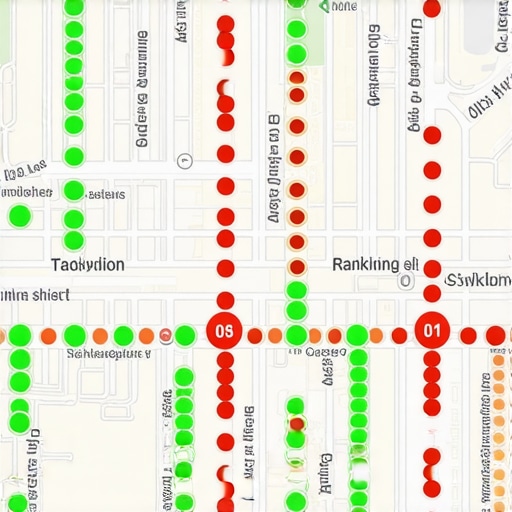
I used to think checking my rankings from my office desk was enough. It wasn’t. Google knows where you are, and it shows you a biased result. That is why I started using grid-based tracking tools. Seeing a 13×13 grid of your city tells you the truth: you might be #1 at your front door but #10 three blocks away. This is exactly the tiny audit detail that fixed our ranking in two days for a client in a dense urban area. We stopped optimizing for the general city name and started optimizing for the specific neighborhoods where the map showed we were weak.
How do I maintain my map visibility over the long haul?
Maintaining your spot isn’t about a one-and-done setup. I set a recurring calendar invite for 15 minutes every Tuesday morning. I follow my own monitoring map health checklist and do three non-negotiable things: respond to every new review (even the old ones I missed), upload two real-world photos of our team in action, and check for ‘suggested edits’ from competitors. You would be shocked how many people try to change your business hours or website link behind your back. If you don’t stay on top of these edits, your map health score will drop along with your lead flow.
Beyond the basics, I rely on tools that analyze the sentiment of reviews. I don’t just want five stars; I want customers using the specific keywords we are targeting. If we are a roofing company, I want to see the word ‘asphalt shingles’ or ’emergency leak repair’ in their text. This is how to improve map health using customer engagement signals rather than just asking for a generic rating. According to Google’s official documentation on local rankings, ‘prominence’ is heavily weighted by the information Google has about a business from across the web, including links, articles, and directories. This means your map listing is only as strong as your broader digital footprint.
Build a System That Handles Growth Without Breaking
As you scale, the manual work becomes a bottleneck. I transitioned to the google listing checklist we use for high growth clients to ensure that even with multiple locations, the quality never dips. The future of local search is moving toward AI-driven snapshots. Google’s Search Generative Experience is already pulling data from the most detailed profiles to provide summary answers to users. If your profile lacks depth, you will be filtered out by the AI before a human ever sees your name. It is about building a repository of local relevance that machines can easily digest.
The trend is clear: Google is rewarding ‘lived-in’ profiles over ‘optimized’ ones. The more you can prove you are an active part of your community through localized posts and authentic imagery, the harder it will be for a competitor to dislodge you. Try this today: Pick one neighborhood where your grid tracker shows you at #4 or #5, and post a Google Update specifically mentioning a local landmark or street name near a recent job site. It is the fastest way to triple your impressions in a specific pocket of your town without spending a dime on ads.
What I Finally Realized After Years of Fighting the Map Pack Algorithm
If I could go back to my first year in business, I would tell myself that Google isn’t a math problem; it is a trust exercise. I spent way too much time obsessing over keyword density and not nearly enough time showing Google that I was a real, breathing part of the community. One of the biggest 7 items every map optimization guide should include that most people miss is the focus on human-centric signals. I realized that consistency is the ultimate authority. It isn’t about one massive update every six months; it is about the small, weekly habit of checking your profile. I also learned that negative reviews, while painful, are actually a massive opportunity to prove your customer service to the algorithm and your neighbors. It is all about maintaining a healthy monitoring map health routine that keeps the bots happy and the customers calling.
The Tools and Resources That Saved My Sanity
I do not believe in over-complicating things with expensive software that promises the world. Instead, I rely on a few specific resources that provide clarity. First, you need a reliable grid tracker to see how your proximity changes block-by-block—this is the only way to see the truth about your reach. Second, I always keep my simple audit guide handy for those days when traffic seems to dip for no reason. I also highly recommend diving into the Google Business Profile Help Community; seeing the weird edge cases other owners face will prepare you for anything. Finally, if you are just starting to scale, use a complete maps seo checklist to ensure you do not miss the foundational stuff like category selection or service area nuances.
Stop Being the Best Kept Secret in Your Neighborhood
The local map pack is the most valuable piece of digital real estate on the planet for a small business. You have the knowledge now to stop guessing and start growing. Do not let the technical jargon intimidate you; at its core, this is just about making sure the people who live three blocks away know you are the best person to help them. Take that first step today, even if it is just uploading one new photo or fixing a single typo. By following a solid map optimization guide, you are building a long-term asset that will pay dividends in phone calls and foot traffic for years to come. Your neighbors are out there searching for you right now—make sure they can find you. Have you ever found a duplicate listing or a weird ‘suggested edit’ that tried to hijack your business profile? Let me know your cleanup stories in the comments below!