The Google Listing Checklist for Profiles in Highly Competitive Niches
I still remember the sinking feeling in my gut when I realized my biggest competitor—a guy who didn’t even have a physical office in my zip code—was somehow outranking me for every ‘near me’ search that mattered. I had the better office, the better team, and arguably the better coffee, but my map health was flatlining. I spent months following those generic ‘fill out every field’ tutorials, but in a competitive market, that’s just the entry fee. It’s not the winning strategy. I realized that to win, I needed a google listing checklist designed for the trenches, not just for a hobbyist blog. Today, I am handing you the keys to the kingdom. We are going to fix the foundational leaks in your profile and give you the tools to outmaneuver the giants in your neighborhood.
Stop Bringing a Knife to a Gunfight in the Map Pack
When you’re operating in a ‘Red Zone’—those niches where everyone and their mother is fighting for the top three spots—you can’t afford a single sloppy data point. Most people think they just need more reviews. I fell into that trap, too. I spent a fortune on review generation only to realize that a high review count doesn’t guarantee a top spot if your relevance signals are weak. We’re going to peel back the curtain today and look at the aggressive, yet safe, tactics that actually move the needle. We’ll fix your primary categories, audit your ‘hidden’ attributes, and ensure your essential seo checklist is actually tuned for growth. The goal isn’t just to be seen; it’s to be the obvious choice for a customer who is ready to buy right now.
Does this high-intensity strategy actually work for small budgets?
It’s a fair question. You see the big franchises with 500 reviews and think it’s over. But here’s the secret: the bigger they are, the slower they move. I once discovered one tiny audit detail that a national franchise missed, and it allowed my local client to leapfrog them in 48 hours. According to research by BrightLocal, while proximity remains a dominant ranking factor, ‘behavioral signals’ like click-through rates and direction requests are surging in importance. This means if you can make your listing look more ‘clickable’ than the big guys, you win. I messed up early on by using stock photos—a huge mistake that kills customer trust. I’ll show you why authentic, real photos of your actual work always beat a polished studio shot. Have you ever felt like you’re doing everything right but still can’t crack the Top 3? I want to know what you’ve tried so far—drop me a line or reach out directly. We’re about to dive into the step-by-step map optimization guide that took me from the ‘Page 2 Purgatory’ to being the first thing customers see.
Secure Your Foundation with a Brutal Audit
Think of your Google Business Profile like a high-performance engine. You can have the flashiest paint job in the world, but if the timing belt is snapped, you aren’t moving an inch. I once worked with a local locksmith in a high-density urban area who couldn’t figure out why his visibility vanished overnight. He was using a monitoring map health strategy that only looked at his average star rating. When we finally performed a map health audit that actually finds problems, we discovered he had three duplicate listings from a previous marketing agency’s ‘experiments.’ Google saw those and effectively put him in a timeout. We had to ruthlessly prune those duplicates and align his NAP data across every major directory. If you haven’t looked at your core data in six months, you’re likely leaking leads through cracks you don’t even know exist.
Pick the Category That Actually Pays the Bills
Most business owners treat the category section like a quick checkbox, but it is actually the most powerful lever you have for relevance. I remember a HVAC client who was struggling to get leads for AC repair during a record-breaking heatwave. He was buried under competitors who had half his reviews. It turned out he had ‘HVAC Contractor’ as his primary category, which is fine, but his main competitor was using ‘Air Conditioning Repair Service.’ In Google’s eyes, the more specific category won the ‘intent’ battle every time. You need to audit your google listing checklist for hidden category errors regularly because Google often updates what these categories imply for local intent. 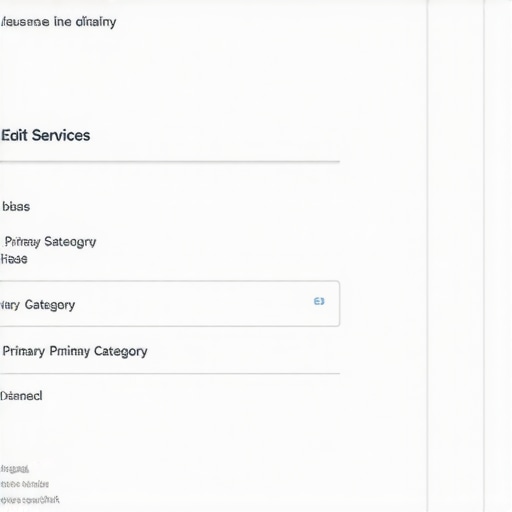
Clean Up Your Digital Footprint Before Google Does It for You
Consistency isn’t just a buzzword; it’s a trust signal. When I first started, I thought I could outsmart the system by slightly varying my business name to include keywords like ‘best’ or ‘cheap.’ I quickly learned that your business name shouldn’t include a list of services. Not only does it look desperate to customers, but it’s a red flag for Google’s spam filters that can lead to an instant suspension. We spent weeks using the specific citation audit that cleared up our ranking confusion just to revert the damage. Your address, phone number, and name must be a carbon copy of your official legal documents across the entire web. If Google finds a version of your business at 123 Main St Ste A and another at 123 Main Street Suite A, it creates a ‘micro-friction’ that weighs down your maps seo checklist score.
Feed the Algorithm with Real Human Interactions
Google doesn’t just look at what you say about yourself; it looks at how the neighborhood talks to you. This is where those ‘behavioral signals’ I mentioned earlier come into play. I once had a client who jumped from #7 to #2 in three weeks simply by encouraging customers to upload their own photos. These local review signals act as trust anchors that no amount of backlinking can replace. When a user asks a question on your profile and you respond within the hour, you are telling Google’s AI that this business is alive, active, and helpful. Check the profile settings that could be accidentally filtering you out to ensure your ‘Chat’ and ‘Q&A’ notifications are actually hitting your phone. If you are slow to respond, you are effectively telling Google to send that lead to the guy down the street who is faster.Let’s dig deeper into the actual mechanics of why some listings thrive while others, despite following every ‘best practice,’ just rot on page two. One of the most pervasive myths in local SEO—and I see this in every ‘beginner’ map optimization guide—is that your business description is a primary ranking factor. I’ve watched business owners spend hours meticulously stuffing keywords into that 750-character box. Here’s the cold truth: why your business description doesn’t actually help you rank is because Google’s algorithm uses it for conversion and user experience, not for organic positioning. If you’re obsessing over keyword density there, you’re missing the forest for the trees and likely neglecting the technical signals that actually move the pin.
How much does my website’s authority actually influence the Map Pack?
This is where the separation between the pros and the amateurs happens. You can have a perfect GBP, but if your linked website is a digital ghost town, your map listing will suffer. According to the Whitespark Local Search Ranking Factors study, the authority and on-page optimization of the domain linked to your profile are among the top drivers of map rankings. I’ve seen cases where the correlation between website authority and map pack rank was so strong that we stopped touching the GBP altogether and focused solely on localized link building and site speed. If you aren’t looking at why your map ranking depends on your website’s backlink profile, you’re essentially fighting with one hand tied behind your back in a high-competition market.
Avoid the trap of over-standardized citations
Another common mistake that creates a frustrating ranking plateau is the obsession with accumulating hundreds of low-quality, automated citations. Many agencies sell these ‘citation blast’ packages as a silver bullet. In reality, why standardized citations might be hurting your local reach often comes down to the quality and relevance of those signals. I once took over an account for a local contractor that had 300+ junk citations but was stuck at position #11. We ruthlessly pruned the low-quality entries and focused on just five high-authority local sponsorships. Their map health soared instantly because we cleared the digital noise that was confusing Google’s proximity filters. You need to identify the map health metrics that actually predict your next phone call, such as the ratio of discovery searches to direction requests, rather than just chasing a raw number of mentions.
What to do when your rankings hit a ceiling
Have you ever followed a maps seo checklist to the letter, only to see your traffic stall? It’s a common ‘Oops’ factor that usually indicates why your current optimization checklist is creating ranking plateaus. Often, the algorithm has put you in a ‘filter’ because your data is too identical to a competitor nearby. Have you ever fallen into this trap? Let me know in the comments. To break through, you have to move past the static google listing checklist items and start feeding the algorithm ‘unstructured’ data—things like localized geo-tagged images and customer-driven Q&A. If you’re ready to stop guessing, it’s time to move toward a more essential seo checklist that prioritizes real-world engagement over vanity metrics.Rankings are not a ‘set it and forget it’ trophy. I have seen business owners climb to the top of the Map Pack, pop the champagne, and then vanish from the first page three months later because they stopped doing the work. If you aren’t actively tending to your profile, the algorithm assumes your business is either stagnant or closed. To avoid this, I use a specific stack of tools and a weekly rhythm that makes monitoring map health feel like a habit rather than a chore. My personal favorite tool is the PlePer Chrome extension; it allows me to see the exact weight of categories and attributes my competitors are using in real-time. I also rely on LocalFalcon for grid tracking because it shows me exactly where my ‘influence’ drops off geographically. This data-driven approach is what separates a lucky ranking from a sustainable business asset.
How do I maintain my map optimization over time?
Consistency beats intensity every single time. I tell my clients to follow a profile maintenance routine that keeps you in the top 3. Every Tuesday, we spend fifteen minutes uploading three new photos from the field. Why? Because your profile needs fresh photos every single week to signal to Google that you are an active member of the local community. On Thursdays, we respond to every single review, even the ones without text. If you’re lucky enough to be busy, you’ll need to learn how to manage a massive influx of reviews without looking robotic. According to local search expert Joy Hawkins from Sterling Sky, Google ‘justifications’—those snippets like ‘sold here’ or ‘provides X service’—are becoming a massive driver of clicks. This means your maintenance must include updating your services and posts to reflect what people are actually searching for today. 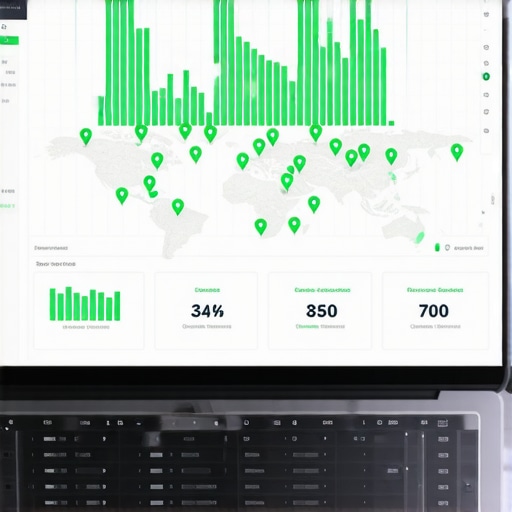
The New Era of AI and Visual Search
Looking ahead, the game is shifting toward ‘Search Generative Experience’ (SGE). Google’s AI is getting better at ‘reading’ the images you upload and the Q&A you provide. In the next 18 months, your google listing checklist will need to prioritize high-resolution, context-rich images that the AI can easily categorize. We are moving away from simple text matching and toward a world where Google understands the ‘vibe’ and physical reality of your shop through the eyes of your customers. I’ve started using the specific way to use a google listing checklist for maximum reach to ensure every data point—from wheelchair accessibility to Wi-Fi availability—is toggled correctly. If you want to stay ahead of the curve, I recommend you try this one advanced tip today: go into your ‘Products’ section and add your top three most profitable services as physical products. Use a real photo of the service being performed, and watch your click-through rate climb. If you aren’t sure how to phrase it, the specific way to add products to your profile for more clicks will guide you through the conversion-heavy language that actually works. Don’t wait for your traffic to dip to start caring about these details; the best time to optimize is when you’re already winning.
The Hard Truths About Map Health Every Owner Misses
I’ve spent years in the local SEO trenches, and if there’s one thing that keeps me awake, it’s how quickly a ‘perfect’ profile can slide into obscurity. I used to think a massive review count was a shield, but I learned the hard way that a high review count doesn’t guarantee a top map spot if your engagement signals go cold. The ‘lightbulb moment’ for me was realizing that Google prioritizes businesses that feel alive. If you aren’t posting or updating, you’re invisible. Another hard lesson? Proximity is a beast, but you can beat it by proving your relevance through the map health metrics that actually predict your next phone call, like how often people ask for directions from outside your immediate block.
The Tools and Resources I Lean On Daily
You don’t need a massive budget, but you do need the right gear. I personally rely on the google listing checklist we use for high growth clients to keep my workflows streamlined. For tracking, I swear by LocalFalcon for its visual grid heatmaps and the PlePer Chrome extension for competitive category analysis. If you’re looking for deep-dive theory, Joy Hawkins and the team at Sterling Sky are the gold standard for real-world testing. I also keep a close eye on monitoring map health via my own weekly internal dashboard to spot ranking dips before they become revenue losses.
Stop Guessing and Start Owning Your Local Market
The local search landscape is changing, but the fundamentals of human trust remain the same. Don’t let the technical jargon paralyze you. Start with your complete maps seo checklist for enhanced visibility and tackle one small task every day. Whether it’s responding to a review or uploading a photo of your latest project, those micro-actions compound into market dominance. You have the tools, the data, and the strategy—now it’s time to put them to work. Which part of your profile feels like the biggest hurdle right now: the technical audit or getting consistent customer engagement? Let me know in the comments below!