How to Build a Google Listing Checklist That Converts Views Into Sales
I remember staring at my Google Business Profile dashboard late on a Tuesday night, feeling like a total genius. My ‘Views’ graph was spiking like a mountain range, and I just knew my shop was going to be packed the next day. But when morning came, the only sound in my office was the air conditioner humming. Not a single phone call. Not one new walk-in. That was my ‘lightbulb moment’—I realized that being seen on a map is absolutely worthless if no one actually clicks ‘Call’ or ‘Get Directions.’ I had been winning at visibility but failing at persuasion, and it’s why I had to totally rethink my google listing checklist from the ground up.
Stop Chasing Empty Metrics and Focus on What Fills Your Calendar
Years ago, I made the huge mistake of thinking that keywords were the only thing that mattered. I spent weeks trying to figure out the truth about local keyword density, thinking that if I just hit the right magic number, I’d be rich. It was a total waste of time. While I was busy acting like an amateur coder, my competitors were busy looking like real, trustworthy neighbors. The reality is that your map health isn’t just about search engine bots; it is about the human being on the other side of the screen who is deciding whether or not to trust you with their hard-earned money. If your listing looks like a ghost town or an automated bot wrote it, they will skip you every single time. Have you ever felt that frustration of seeing your stats go up while your actual bank balance stays the same?
Does all this tiny profile tweaking actually work?
It is easy to be skeptical when ‘experts’ tell you to change your business hours or upload a new photo of your storefront. You might think, ‘Is my customer really going to care about that?’ The answer is a resounding yes. According to Google’s own research, businesses with a complete and detailed profile are 70% more likely to attract location visits than those with incomplete ones. That isn’t just a small bump; that is the difference between thriving and just surviving. We need to stop looking at our profiles as static billboards and start treating them like active sales funnels. By following a google listing checklist that prioritizes the user experience, you turn those passing glances into real, paying customers. I want to show you exactly how to find the map health metrics that actually predict your next phone call so you can stop wasting time on the stuff that doesn’t move the needle.
Fix Your Categories Before You Do Anything Else
Most business owners treat their primary category like a set-it-and-forget-it box, but that is where the first leak in your map health usually happens. I once worked with a local contractor who was struggling to get leads despite having fifty five-star reviews. When we sat down to audit his google listing checklist for hidden category errors, we realized he had ignored his secondary categories entirely. He was a ‘General Contractor’ but didn’t list ‘Kitchen Remodeling’ or ‘Deck Building.’ By simply adding those specific service labels, he started appearing in searches he didn’t even know he was missing. Your primary category tells Google who you are, but your secondary categories tell them what you actually do for money. Don’t get greedy and add irrelevant ones, though; that is a fast track to getting filtered out. Focus on the core services that actually pay your bills.
Stop Using Stock Photos and Start Using Your Phone
If you are still using that generic ‘handshake’ stock photo or a blurry picture of a computer screen, you are killing your conversion rate. I made the mistake of thinking professional-grade stock photos made me look ‘big’ and ‘established.’ In reality, they made me look like a scam. Customers have a built-in radar for fake imagery. When you follow a step-by-step map optimization guide, you’ll see that real, ‘ugly’ photos often outperform polished ones. Take your phone out right now and snap a picture of your lobby, your team in action, or even your truck parked out front. There are specific photo types that boost customer engagement because they prove you exist in the real world. 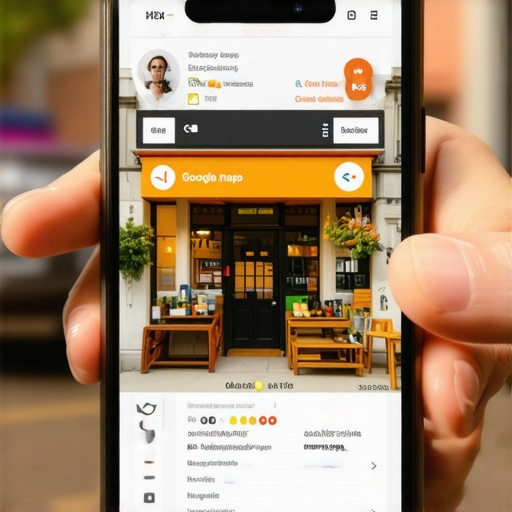
Answer Every Question Like a Human Not a Billboard
One of the most overlooked parts of any optimization checklist is the Q&A section. Most people wait for a customer to ask a question, but you can actually seed your own questions. Think about the three things every customer asks before they hire you. Is there parking? Do you offer same-day quotes? Are you pet-friendly? You can use local QA to answer customer objections before they even pick up the phone. I started doing this for a client in the service industry who was tired of answering the same ‘Do you travel to X city?’ question ten times a day. We posted the question ourselves and answered it clearly. Not only did it save him time, but it also signaled to Google that his profile was active and helpful. This kind of map health maintenance is what keeps you ahead of the guys who just set up a profile and forgot it.
Respond to Reviews with Context Not Just a Thank You
When a review comes in, don’t just copy and paste ‘Thanks for the business!’ That is a wasted opportunity. Use the specific way to respond to reviews to boost local trust by mentioning the service you provided. Instead of a generic reply, say something like, ‘It was great helping you with your water heater repair in the downtown area!’ This provides context to both the customer and the search engine. I remember a time when I got a 3-star review from a guy who was just having a bad day. Instead of getting defensive, I responded professionally and offered to make it right. He actually went back and changed it to a 4-star because he saw I was a real person who cared. That single interaction did more for my google listing checklist tweaks than any keyword stuffing ever could.Let’s dig deeper into the nuances that most ‘gurus’ get wrong. You’ll often hear that you need to jam as many keywords as possible into your business description to rank higher. In my experience, this is the quickest way to look like a spammer while gaining zero ranking juice. The truth is that why your business description doesn’t actually help you rank is one of the best-kept secrets in local search. Google uses that field to help users understand what you do, but it isn’t a primary ranking factor for the algorithm. If you are spending hours on it for SEO purposes, you are ignoring the map health metrics that actually predict your next phone call, like user engagement and click-through rates. One of the biggest ‘oops’ factors I see—and it breaks my heart because it is so avoidable—is when business owners try to get clever with their business name. Adding ‘Best Plumber’ or ’24/7 Emergency Service’ to your actual business name on the profile is a massive red flag. This is one of those profile optimization mistakes that lead to instant suspension. I have seen businesses with ten years of history vanish overnight because they followed an outdated optimization checklist that suggested keyword stuffing. Always use your legal business name; why your business name shouldnt include a list of services is a lesson you do not want to learn through a manual penalty. 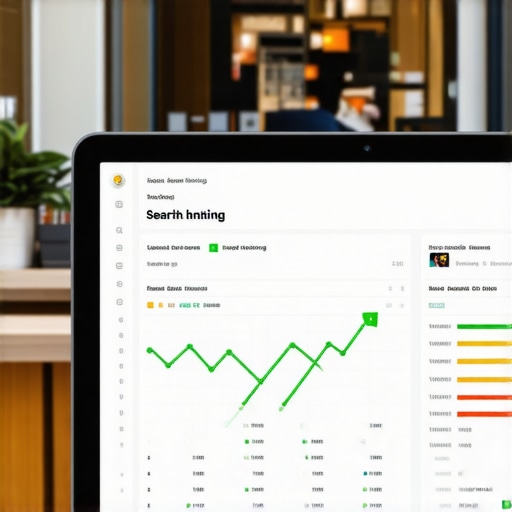
Why a high review count doesn’t guarantee a top map spot
It is incredibly frustrating to see a competitor with five reviews outrank you when you have fifty. You might think the system is rigged, but why a high review count doesn’t guarantee a top map spot often comes down to the velocity and diversity of those reviews rather than the raw number. According to research by local SEO authority Whitespark, the presence of keywords in the review text and the sustained frequency of new reviews are significantly more influential than just having a high lifetime total. If you got forty reviews in one week and then nothing for three months, Google sees that as suspicious. This is why the profile maintenance routine that keeps you in the top 3 is so much more valuable than a one-time effort. Finally, many people ignore the ‘invisible’ connection between their website and their map. You can follow every map optimization guide on the planet, but if your website is slow or lacks authority, you are fighting with one hand tied behind your back. There is a direct correlation between website authority and map pack rank. Your site’s backlinks and localized content act as the fuel for your listing’s visibility. Most standard guides also tell you to get as many citations as possible, but why standard optimization checklists fail service area businesses is because they often prioritize quantity over quality. If you are a service-area business without a storefront, you need a specialized checklist for identifying ghosted business listings to ensure you haven’t been filtered out by proximity rules. Have you ever fallen into this trap of focusing on the wrong metrics? Let me know in the comments.Once you stop making the rookie mistakes, you realize that Google Maps isn’t a trophy you win once; it’s a garden you have to water every single week. I developed the profile maintenance routine that keeps you in the top 3 because I got tired of waking up and seeing my ranking drop just because a competitor decided to finally wake up. For me, maintenance isn’t about massive overhauls; it is about the the 5-minute map health fix for businesses losing nearby clicks that I perform every Monday morning while my coffee is brewing. I personally rely on the ‘Local Search Grid’ from BrightLocal because it shows me exactly where my ‘visibility bubble’ starts to pop. If you aren’t looking at your data geographically, why your profile audit results are different from what customers see will always be a mystery to you. 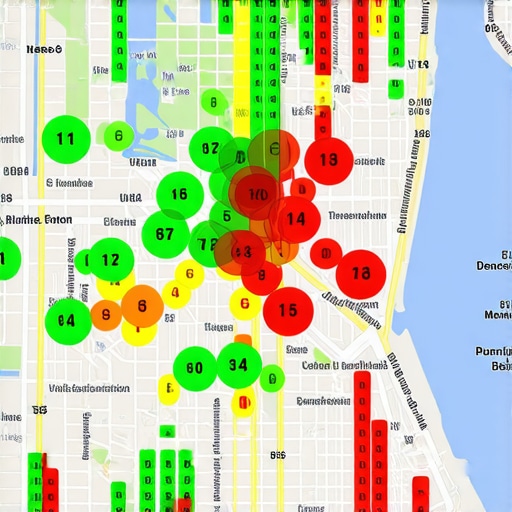
How do I keep my map health from flatlining?
The secret is consistency over intensity. I tell my clients to treat their profile like a social media feed. You need to know the specific way to use google posts to convert casual searchers, which means uploading at least one real-world photo every seven days. As Joy Hawkins from Sterling Sky often points out in her local search studies, Google’s algorithm heavily favors businesses that demonstrate ‘recent’ activity and engagement. This is why monitoring map health isn’t a luxury; it is a necessity for survival. Looking ahead, I predict that ‘Visual Search’ through Google Lens will soon become a primary ranking factor. If your photos don’t clearly identify your tools, your storefront, and your service area, you’ll be invisible to the next generation of mobile searchers. Use how to run a map health audit that actually finds problems to see if your current imagery actually tells a story or just fills a box. I challenge you to open your profile right now and delete one stock photo, replacing it with a raw shot of your workspace. It’s the single most effective move you can make today to how to stop the clicks from dropping using a proven maps seo checklist.
The Invisible Mistakes That Almost Sank My Business Listing
I spent far too long treating Google like a math problem and forgot it is actually a trust problem. One of the hardest lessons I learned is that search engines are just mirrors of human behavior. If you ignore the profile errors that make you look untrustworthy to customers, no amount of keyword optimization will save your bottom line. I used to think I could just do a one-time audit and be done, but why we scrapped our old map optimization guide for this new strategy was because we realized the market moves too fast for a static approach. Your listing needs to breathe and grow alongside your actual business. Stop waiting for the perfect moment to start and focus on being the most helpful version of your business online today. #IMAGE_PLACEHOLDER_E#
The Toolbelt I Rely on for Daily Growth
I do not believe in buying every shiny new software that hits the market, but I do have a few essential resources that stay in my rotation. For visual tracking of how my rank changes block-by-block, I swear by the Local Search Grid from BrightLocal. It takes the guesswork out of geographic performance. I also keep a physical copy of your complete maps seo checklist for enhanced visibility pinned to my office wall so I never miss the small details during my weekly check-ins. For deep-dive research into algorithm shifts, I constantly monitor Joy Hawkins at Sterling Sky; her team’s data-driven approach to local search is the only way to stay ahead of the curve. These tools aren’t just about data; they are about giving you back the time you would otherwise spend guessing.
Start Turning Those Map Views Into Real Conversations
The gap between being seen and being hired is much smaller than you probably think. It doesn’t require a degree in computer science to win at local search; it just takes a little bit of consistent, intentional effort to keep your digital storefront inviting. You now have the strategies to maintain your map health and the confidence to ignore the metrics that don’t actually matter. If you ever feel stuck or just want a second pair of eyes on your specific situation, you can always contact us for a bit of expert guidance. You have the tools, the knowledge, and the maps seo checklist to dominate your local market. Now, it’s time to stop reading and start clicking. Which of these optimization steps are you going to tackle first this afternoon? Let me know in the comments below!