How to Audit Your Google Listing Checklist for Hidden Category Errors
I sat there for three hours, drinking lukewarm coffee and refreshing my browser, wondering why on earth my phone wasn’t ringing. I had the reviews. I had the photos. I’d even updated my hours for the holiday weekend. Yet, when I searched for my services from the sandwich shop next door, I was nowhere to be found. It felt like I was shouting into a void, but it turns out I was just shouting in the wrong room. I had fallen into the trap of hidden category errors, a silent killer that most small business owners don’t even know exists. If you’ve ever felt like your business is invisible despite your best efforts, I’ve got some news: it probably isn’t your SEO—it’s your identity.
Stop letting Google guess what you actually do
Most of us treat our business categories like a ‘set it and forget it’ chore. You pick ‘Plumber’ or ‘Bakery’ and move on. But Google’s algorithm is a fickle beast. If your primary and secondary categories don’t align perfectly with your actual services, you’re essentially handing your leads to the guy down the street. I learned this the hard way when I realized my own map health was tanking because I’d selected ‘Professional Services’ instead of the hyper-specific niche I actually occupied. It’s a common flaw in any standard google listing checklist. We are going to fix that today. Identifying these conflicts is the first step in a proper maps seo checklist to ensure you aren’t being filtered out by a simple clerical error.
Does one tiny category choice really change your rank?
You might think I’m being dramatic. It’s just a label, right? Wrong. According to the Moz Local Search Ranking Factors report, the primary category is consistently cited as one of the top three most important factors for ranking in the local map pack. One wrong click can categorize you as ‘irrelevant’ for the keywords that actually put food on your table. It happened to me—I lost an entire month of organic leads because I thought being ‘broad’ was better. I was wrong. Being broad is how you get ghosted by the algorithm. If you aren’t showing up for your main service, your category might be the culprit.
The mistake that cost me a month of leads
Early on, I thought I was being clever by adding every possible secondary category I could find. I figured, ‘Hey, more categories means more visibility, right?’ It’s a logic that feels sound but backfires spectacularly. Google saw my conflicting categories and got confused about my core business. This led to a massive visibility gap that took weeks to repair. Before you dive into a map optimization guide, you have to audit these foundations. Have you ever looked at your listing and seen a category you don’t remember picking? Drop me a line if you’ve seen Google ‘helpfully’ change your business type without asking. It’s more common than you think, and it’s almost always the reason for a sudden drop in calls.
Audit your identity before you spend another dime
You cannot fix what you haven’t diagnosed. To start, you need to see what Google thinks you are. Open your business dashboard and look at the ‘Edit Profile’ section. It sounds simple, but you would be surprised how many people haven’t looked at this in years. I once worked with a local landscaper who was accidentally categorized as a ‘Landscape Architect.’ He was getting calls for blueprints and design consultations instead of lawn mowers and mulch. This is a classic tiny audit detail that ruins conversion rates because the user intent doesn’t match the service provided. You need to verify that your primary category is the exact thing people type into the search bar when they need you. If you are struggling with a sudden drop in calls, your first move should be monitoring map health to see if a category change occurred without your consent.
Pick one primary category to rule them all
Think of your primary category as the ‘Big Bucket’ that holds your entire business reputation. This choice determines about 70% of your local ranking weight. If you are a plumber, be a ‘Plumber,’ not a ‘Water Heater Repair Service’—unless that is literally the only thing you do. When I was trying to rank my own side project, I played it too safe and picked a generic ‘Professional Services’ label. My traffic flatlined. As soon as I switched it to a hyper-relevant niche category, my visibility in the local pack shot up within 48 hours. If you aren’t sure which one to pick, look at the competitors currently sitting in the top three spots. You can use a map optimization guide to audit their listings and see which primary labels they are using to capture the most traffic. 
Keep your secondary list short and honest
Secondary categories are where most business owners get greedy. They think adding twelve different categories will make them show up for everything. In reality, it just dilutes your authority. If you add ‘Cleaning Service’ when you are primarily a ‘Carpet Cleaner,’ but your website doesn’t have a dedicated page for general house cleaning, Google’s algorithm smells a rat. This creates the profile errors that trigger filters and keep you off the front page. Limit yourself to 3-5 highly relevant secondary categories. Every single one must be backed up by content on your website. If you are using a maps seo checklist, make sure you check for category consistency across your entire digital footprint.
Sync your website and your map profile
Your website and your Google profile are not separate islands; they are a team. Google looks at your site to confirm that you actually do what your map listing says you do. This is where you should use local schema to give the algorithm a clear, coded map of your services. I remember a case where a local shop was stuck on page five because their website used fancy, creative names for their services instead of the standard industry terms Google recognizes. Once we updated their site headers to match their Google categories, they finally broke into the top three. This is a vital part of any google listing checklist. You also need to ensure your service menu is properly formatted, as the specific way to optimize your service menu can significantly boost your relevance for secondary keywords. Don’t let a simple naming discrepancy keep you invisible.Most people think that if they just follow a standard optimization checklist, they’re set. But there’s a nuance that many experts miss: the ‘quality over quantity’ trap. Everyone tells you to blast your business name across every directory, yet this is often why your current citation strategy is failing to move the needle on rank. If those citations aren’t niche-specific, they’re just digital noise. I used to think I needed 200 citations; I actually only needed the 20 that mattered to my industry. Have you ever fallen into this trap of over-optimizing the wrong things? Let me know in the comments. Another massive ‘Oops’ factor is the temptation to add keywords to your business name. I’ve seen businesses double their traffic overnight by adding ‘Best Pizza’ to their title, only to be permanently suspended 48 hours later. These are the profile optimization mistakes that lead to instant suspension, and they are notoriously difficult to fix. According to research by Sterling Sky, keyword stuffing is the leading cause of manual takedowns in the local pack. Instead of gaming the system, you should stop guessing your map health and focus on signals that Google actually trusts. 
Is the city center really the only place to rank?
Advanced SEOs often obsess over their proximity to the centroid of a city, but that’s a dated way of thinking. Google’s ‘Possum’ update changed the game. You can actually outrank businesses closer to the center if your ‘prominence’ signals are stronger. If you’re seeing a brutal truth about why your local seo audit is returning zero roi, it’s likely because you’re fighting a proximity filter you don’t understand. I once helped a client identify the audit move that identified a proximity filter problem, allowing them to capture leads from three suburbs away just by strengthening their local backlinks instead of moving their office. It’s about building authority that overrides physical distance.Once you’ve cleared the hurdles of proximity and categories, the real challenge begins: not sliding back into the abyss. I’ve seen countless businesses hit the top three only to vanish three months later because they treated their SEO like a finished project. The truth is, your competitors are watching you. They are using the same map optimization guide you used, and they are coming for your spot. To defend it, I rely on a combination of ‘Grid Tracking’ and ‘Engagement Spikes.’ I personally use Local Falcon because it allows me to see exactly where my authority ends. If I’m ranking #1 at my front door but #10 two blocks away, I know I have a prominence problem, not a technical one. This is why monitoring map health is a weekly obligation, not a yearly audit. 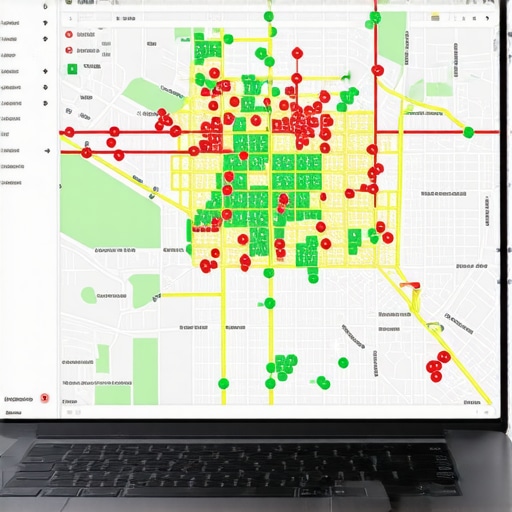
Stop the rank decay with a 15-minute ritual
I call this my ‘coffee audit.’ Every Tuesday morning, while my coffee is still hot, I check for user-suggested edits. Google allows any random person to suggest a change to your phone number or hours, and if you don’t catch it, those changes can go live and wreck your consistency. I also look at the engagement metrics that actually influence your map position, specifically looking for a dip in ‘Direction Requests.’ If that number drops, it’s a sign that my ‘Freshness Signal’ is fading. This is the core of the profile maintenance routine that keeps you in the top 3. It isn’t about magic; it’s about being the most active entity in your neighborhood.
How do I maintain my Google Map rank over time?
Consistency beats intensity. You don’t need to spend five hours a week on this. You need 15 minutes of high-quality interaction. I make it a point to use the specific way to use google posts to convert casual searchers by uploading a real, unedited photo of our team or a recent project every Friday. As Mike Blumenthal from Near Media often points out, Google is increasingly using ‘implicit signals’—like how long a user hovers over your photos—to determine your relevance. If your profile is a graveyard of stock photos from 2019, you are telling the algorithm you’re no longer relevant.
The future of local search is an AI conversation
We are moving toward a world where your business isn’t just a destination, but a data point in a larger AI conversation. With Google’s ‘AI Overviews’ (formerly SGE), the algorithm is now ‘reading’ your reviews to answer complex questions like ‘Where is the best place for a quiet business lunch with vegan options?’ If your reviews don’t mention those specific details, you won’t be the answer the AI provides. This makes your complete maps seo checklist more about content quality than just keyword density. My prediction? In two years, your map rank will depend entirely on the ‘semantic richness’ of what your customers say about you. To prepare for this, you must ensure your technical foundation is perfect. Take ten minutes today to how-to-fix-broken-local-schema-that-blocks-your-map-ranking so that Google’s AI has a clear, structured roadmap of exactly who you are and what you offer. If the bot can’t parse your data, it won’t recommend your business to the next generation of voice and AI searchers.
The hard truth about why your map health often stalls
After years of trial and error, I realized that a perfect optimization checklist isn’t a one-time fix; it is a living document that requires constant attention. First, I learned that Google trusts consistency over volume every single time. I would much rather have five detailed reviews mentioning my specific niche services than fifty generic ‘Great job!’ comments that give the algorithm no context. Second, being too broad is the fastest way to become invisible in a competitive market. I once thought I could be everything to everyone, but I had to stop guessing your map health and start focusing on the hyper-local identity of my business. Finally, do not ignore the quiet signals; even a small discrepancy in your weekend hours can tell the bot you are no longer active. #IMAGE_PLACEHOLDER_E#
Where I go when the algorithm changes overnight
I do not navigate these changes in a vacuum, and neither should you. My first stop is always the Near Media blog for deep dives into how consumer behavior is shifting. For a hands-on map optimization guide, I keep a bookmark on my own step-by-step map optimization guide to ensure I never miss a technical detail during a profile pivot. I also swear by Local Falcon for visualizing my proximity reach—it is the only way to see the ‘invisible walls’ where your ranking suddenly drops off. Lastly, I suggest keeping a maps seo checklist handy, like the your complete maps seo checklist for enhanced visibility, to verify your data against your top three competitors once a month.
Your neighborhood is waiting for you to show up
Optimizing your presence isn’t just about beating the guy down the street; it is about making sure the people in your community can actually find the help they need when they need it most. Don’t let a clerical error or a buried category setting keep you from serving your customers. If you follow a solid google listing checklist and stick to the profile maintenance routine that keeps you in the top 3, the ranking results will naturally follow. You have already done the hard work of building a great business—now make sure the digital world can see it. Have you ever discovered a category or service on your profile that you never actually added yourself? Let me know in the comments below!