How to manage a massive influx of reviews without looking robotic
I remember the morning I woke up to forty-seven new notifications blinking on my phone. My first thought wasn’t “Hooray, we’re finally viral!” It was pure, unadulterated panic. I had spent months begging for feedback, and when the floodgates finally opened, I felt like I was drowning in digital ink. My response to the third review was a polite “Thanks for the feedback!” By the tenth, I was copy-pasting that same sentence. By the twentieth? I looked like a malfunctioning chatbot from a decade ago. I realized right then that a high volume of feedback is a gift, but only if you don’t lose your soul in the process of acknowledging it.
Don’t Let Your Success Kill Your Brand’s Personality
It’s a strange problem to have, right? You want people talking about you, but when they do, the sheer volume makes you want to hide under your desk. I’ve seen so many business owners fall into the trap of using “efficiency” as an excuse for being cold. I made that exact mistake early on. I thought I was being smart by using an automated tool that fired off the same three variations of “We appreciate your business” to every single person. I didn’t realize that local review signals act as trust anchors, and I was basically cutting the chain. Customers noticed. My engagement dropped. People stopped leaving detailed stories and started leaving one-word blurbs because they knew I wasn’t really reading them. Today, we are going to fix that. I’ll show you the system I developed to stay personal even when the notifications won’t stop.
Can you really stay “real” when you’re replying to hundreds?
You might be thinking this sounds like a full-time job. I get it. You have a business to run, and spending four hours a day typing unique essays to every person who enjoyed their latte seems impossible. But there is a middle ground between “Robo-Responder” and “Silence.” According to data from BrightLocal, 88% of consumers are likely to use a business if they see the owner responding to all reviews—both positive and negative. The key isn’t writing a novel; it’s mastering the specific way to respond to reviews to boost local trust by identifying unique nuggets in their feedback. Have you ever felt that sinking feeling when you realized your “quick” replies were actually making you look like a faceless corporation?
The Secret to Scaling Sincerity Without Losing Sleep
The first thing we need to address is your map health signals. When a massive influx hits, Google’s algorithms are watching how you react. If you ignore everyone, you lose momentum. If you reply with identical text to 100 people in ten minutes, you trigger “bot” flags. I found that the sweet spot is creating a “Response Matrix” that focuses on specific keywords the customer actually used. It’s about being a helpful neighbor, not a corporate script-reader. Let’s break down how to build that framework so you can get back to work while your reputation grows.
Stop Copy-Pasting and Start Hunting for Keywords
Think of every review like a small piece of data that Google is trying to categorize. When you send a generic response, you’re throwing away free SEO fuel. I use a technique I call ‘Keyword Echoing.’ If a customer mentions your ‘fast delivery’ or ‘organic ingredients,’ you need to echo those exact phrases back to them in a natural way. This isn’t just about being polite; it’s a core part of your mastering map optimization essential SEO checklist for local growth. By repeating those terms, you are confirming to the search algorithm that your business actually provides what the customer is praising. It turns a simple ‘thank you’ into a relevance signal that strengthens your listing.
Why Your Response Rate is the Heartbeat of Your Map Health
You can’t just respond to the five-star raves and ignore the rest. Your map health depends on the consistency of your engagement. Think of your Google Business Profile like a garden; if you only water the prettiest flowers and ignore the weeds, the whole plot eventually looks neglected. Google tracks how quickly and how often you interact with users. If you let reviews sit for weeks, you’re effectively telling the algorithm that your business is dormant or, worse, that you don’t care about the customer experience. This neglect is one of those forgotten details in your google listing checklist that can quietly kill your local reach. 
The Week I Tried to Outsmart the Algorithm with Brute Force
I remember working with a local landscaping client who suddenly got featured in a regional magazine. They went from getting two reviews a month to forty in a single weekend. In a moment of over-ambition, I sat down and tried to write unique, three-paragraph essays for every single one. By review fifteen, I was delirious. By review thirty, I was making typos and accidentally calling customers by the wrong names. It was a disaster. The ‘messy’ result was that while our engagement numbers looked high, our conversion rate actually dipped because the responses felt frantic and weird. That was the ‘aha’ moment where I realized I needed a system—not a script, but a framework. I went back and applied the tiny audit detail that fixed our ranking in two days: I focused on one specific noun from each review and built a single, punchy sentence around it.
Build a Workflow That Doesn’t Eat Your Entire Afternoon
To stay sane, you need a tiered approach. Group your reviews into ‘buckets’ based on sentiment and specific services mentioned. This is a vital step in any google listing checklist. For the standard ‘Great job!’ reviews, have a rotating set of five personal openings. For the detailed stories, give them the ‘Echo’ treatment. This prevents you from triggering the ‘bot’ filters while keeping your tone human. If you find yourself staring at a blank screen, remember that the specific way to respond to reviews to boost local trust isn’t about being a poet; it’s about being present. Dedicate twenty minutes every Tuesday and Thursday to this, rather than trying to tackle a mountain of notifications once a month.
So, we’ve talked about the workflow, but let’s get into the heavy lifting—the stuff that actually moves the needle when the standard advice fails you. I see a lot of ‘experts’ out there shouting about review counts like they’re the only metric that matters. Here is the contrarian truth: having five hundred reviews won’t save a listing that has a broken foundation. In fact, why a high review count doesn’t guarantee a top map spot is often down to something much more boring: technical map health and site authority.
Ditch the Review Count Obsession
Everyone tells you to chase five-star ratings until your fingers bleed, but volume is just a vanity metric if your velocity is stagnant. Google’s AI is looking for patterns. If you get fifty reviews in a week and then zero for three months, it looks suspicious. Instead of chasing numbers, I focus on monitoring map health key checkpoints for ongoing optimization. This involves looking at how often users interact with your photos and how frequently you post updates. It’s about the heartbeat of the listing, not just the cumulative score.
Does your website really dictate your map position?
This is where most people get tripped up. They treat their Google Business Profile and their website like two different islands. They aren’t. In my experience, the correlation between website authority and map pack rank is the single most overlooked factor in local SEO. If your website is slow, lacks local schema, or has zero quality backlinks, Google is less likely to trust your map listing for high-competition keywords. According to the annual Local Search Ranking Factors study by Whitespark, the ‘organic’ signals from your website are now more influential than almost any on-profile tweak you can make. If you aren’t looking at your site, you’re only seeing half the picture.
The Business Description Trap
Here is a specific ‘oops’ factor I see every single day: business owners spending hours crafting the perfect, keyword-stuffed business description. I hate to be the bearer of bad news, but why your business description doesn’t actually help you rank is simply because Google’s algorithm barely weighs it for ranking purposes. It’s there for the human reader, not the search bot. If you’re stuffing ‘best plumber in Chicago’ into your description ten times, you’re just making yourself look desperate to customers while gaining zero SEO ground. Your time is better spent on the 3 map health errors sabotaging your local traffic right now, like fixing inconsistent NAP (Name, Address, Phone) data across the web.
The Proximity Filter is a Real Pain
You might be doing everything right—great photos, consistent replies, and a fast website—and still see your ranking vanish three miles from your office. This is the proximity filter at work. Many people think they can ‘hack’ this with more keywords, but that’s a one-way ticket to a suspension. Instead, you have to build hyper-local relevance. I’ve found that the audit move that identified a proximity filter problem usually reveals a lack of local citations or ‘neighboring’ content on the main site. You can’t fight the map, but you can expand your circle of influence by proving you are a pillar of that specific community. Have you ever fallen into the trap of thinking more reviews would magically solve a ranking drop? Let me know in the comments below.
I used to think that reaching the top three spots in the map pack was the finish line. I thought I could just set it, forget it, and watch the leads roll in forever. I was dead wrong. Within three months of ‘relaxing,’ my ranking plummeted from number one to number twelve. It was a wake-up call that local search isn’t a trophy you win; it’s a house you have to keep painting. That is why I started treating my listing as a living asset rather than a static billboard.
Heat Maps and the Harsh Reality of Your Service Area
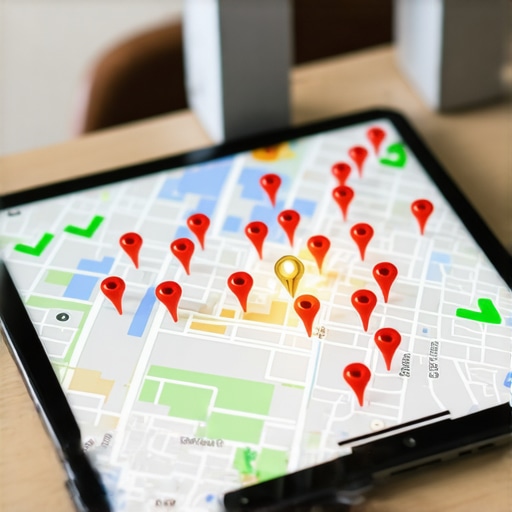
The first tool I added to my belt was a local rank tracker that uses a grid-based heat map. If you aren’t using something like LocalFalcon or BrightLocal’s grid view, you are essentially flying a plane without a radar. When I first saw my ‘heat map,’ I realized I was only ranking well within a two-block radius of my shop. Everywhere else was a sea of red. This changed everything. Instead of generic SEO, I started following a step-by-step map optimization guide for better local rankings specifically designed to push that green radius further out into the suburbs.
How do I maintain my ranking without checking it every hour?
The secret is a Tuesday morning ritual I call the ‘Health Check.’ I don’t look at my vanity metrics; I look at my core engagement. I spend exactly fifteen minutes going through the profile maintenance routine that keeps you in the top 3. This isn’t about massive overhauls; it’s about checking for ‘suggested edits’ from competitors and ensuring my monitoring map health key checkpoints for ongoing optimization are all in the green. I’ve found that consistency beats intensity every single time in the eyes of the algorithm.
#IMAGE_PLACE_HOLDER_D#
The Automation Trap That Actually Helps
I generally hate automation in local SEO, but I make an exception for photo scheduling. Google loves ‘freshness.’ I use a simple scheduler to post one new photo every Thursday. It’s usually just a behind-the-scenes shot or a finished project. Why? Because the specific photo types that boost customer engagement aren’t always professional shots; often, it’s the raw, ‘real’ photos that keep the algorithm happy. This small habit prevents the ‘dead profile’ syndrome that triggers the 3 map health errors sabotaging your local traffic right now.
What the Future of Local Search Looks Like
As we look toward 2025, Joy Hawkins from Sterling Sky has noted that Google’s ‘Search Generative Experience’ (SGE) is beginning to prioritize profiles that have high-quality, diverse user-generated content over those that just have ‘optimized’ text. I predict that we will soon see a shift where your map rank depends heavily on ‘Video Reviews’ and real-time inventory updates. If you aren’t already using this 7 point maps seo checklist stops your ranking from dropping, you’re going to find yourself in the dark when the AI-led search transition fully takes over. My advanced tip for you today: Run a 7×7 grid scan on your most profitable keyword tonight. See where your green stops and your red begins—that is where your next marketing campaign needs to live.
Hard Lessons from the Local Search Trenches
I’ve spent years tinkering with listings, and if I could go back in time, I’d tell myself three things. First, stop panicking over a single negative review; learning how to build a local reputation that search engines trust is about the aggregate story and how you respond, not just maintaining a perfect score. Second, I realized that fixing the profile audit errors that actually prevent map pack appearances is far more important than any keyword-stuffed description. Finally, I learned that local SEO isn’t a ‘set it and forget it’ task; it’s a weekly habit that pays dividends in phone calls. My favorite entry on my google listing checklist is now simply ‘be human,’ because that is what converts views into customers.
The Shortlist of Resources I Actually Use
I don’t believe in overcomplicating things with twenty different tools. I keep my strategy lean to protect my map health without burnout. I rely on LocalFalcon for grid-based tracking because it reveals the truth about proximity filters. I also keep a bookmarked copy of this your complete maps seo checklist for enhanced visibility to ensure I’m not missing the small technical shifts that Google sneaks in during core updates. For visual impact, I focus on capturing the specific photo types that boost customer engagement, such as real-time shots of my team in action, rather than relying on stale stock photography.
#IMAGE_PLACEHOLDER_E#
Your Journey to the Top of the Map Pack Starts Today
Don’t let the technical jargon paralyze you. You don’t need to be an algorithm expert to see results; you just need to be more consistent than the guy down the street. Start by identifying the 3 map health errors sabotaging your local traffic right now and then follow a proven map optimization guide to fill the remaining gaps. Your business deserves to be seen by the people standing right outside your door, searching for exactly what you offer. Which part of your map listing feels the most overwhelming right now—the reviews, the photos, or the technical backend? Let’s talk about it in the comments.