The truth about local keyword density in your business description
I sat there at 2 AM, squinting at my screen until my eyes burned, trying to squeeze “emergency plumber in downtown Chicago” into my business description for the fifth time. I thought I was being a genius. I thought I was finally “optimizing” my way to the top of the pack. In reality, I was just making my business look desperate and spammy to anyone who actually bothered to read it. If you have been following a standard optimization checklist, you might have been told that keywords are king in every single field you can fill out. But here is the cold, hard truth: I was dead wrong, and if you are doing this, you are likely wasting your most precious resource—your time. I remember the exact moment the lightbulb went on; I had spent weeks “tweaking” my text only to see my ranking stay flat as a pancake. Today, I want to pull back the curtain on why your business description doesn’t actually help you rank the way you think it does, and I’ll show you exactly where your energy should go to improve your map health.
Keywords in Descriptions Are a Total Ghost Chase
It is a common trap that almost every local business owner falls into at least once. You see a big empty box that allows for 750 characters and your SEO instincts—the ones honed by years of hearing about “keyword density”—start screaming at you to fill it with every possible search term. I did exactly that for a long time, thinking it was the secret sauce of my maps seo checklist. I even ignored the fact that the resulting paragraph read like a broken robot wrote it. But here is the kicker that blew my mind when I first discovered it: Google’s algorithm for the Map Pack is incredibly sophisticated, and it treats that description field very differently than a blog post or a website page. In fact, a famous study by the experts over at Sterling Sky confirmed that keywords in the description field have absolutely zero impact on your actual ranking position. Zero. If you’re stuffing that box, you’re essentially writing for a ghost.
Is keyword stuffing in your description actually worth the risk?
Beyond just being a waste of time, over-optimizing that specific field can sometimes backfire. I learned this the hard way early in my career when a client’s profile was flagged for “quality issues” simply because we tried to be way too “SEO-friendly” with the text, making it look like a low-quality lead-generation site rather than a real business. We ended up having to deal with listings that wouldn’t show up at all because we ignored the basics of providing a good user experience. We are going to fix that today by shifting your focus to the items on your google listing checklist that actually trigger Google’s ranking signals. Have you ever noticed your ranking drop—or even just stagnate—right after you spent hours “optimizing” your business description? [image_placeholder] It is a frustrating cycle of trial and error, but once you stop chasing the density dragon, you can actually start winning. My goal is to get you away from the busy work and into the high-impact moves that a real map optimization guide should focus on. Let’s dive into what really makes Google trust your business enough to put you in that coveted top three.
The Category Choice That Actually Moves the Needle
If your business description is a ghost chase, your primary category is the loud, vibrating beacon that tells Google exactly where to place you on the shelf. Think of your primary category like the signage in a massive supermarket; if you’re a high-end chocolatier but you’re listed under ‘Grocery Store,’ you are going to be invisible to people looking for a gift. I once worked with a small boutique bakery that was struggling to show up for ‘wedding cakes.’ They had it in their description a dozen times, but their primary category was just set to ‘Bakery.’ The moment we changed that primary category to ‘Wedding Bakery,’ their visibility for those high-value searches skyrocketed overnight. This is the first item on any real mastering map optimization essential seo checklist for local growth. You need to be hyper-specific. Don’t just settle for the broad umbrella; find the category that mirrors the most profitable part of your business. 
Keep Your Business Details Identical Across the Web
Consistency is the silent engine of map health. Google is essentially a giant verification machine. If your address is ‘123 Main St’ on your profile but ‘123 Main Street’ on a local directory, it creates a tiny seed of doubt in the algorithm. I remember a chaotic week where a client moved offices and only updated half of their online presence. Their rankings fell off a cliff because Google couldn’t verify where they actually were. We had to perform a deep tiny audit detail that fixed our ranking in two days by aligning every single mention of their Name, Address, and Phone number (NAP). Sometimes, why standardized citations might be hurting your local reach comes down to these small discrepancies that signal a lack of authority to the search engine.
Why Your Phone Camera is Your Best SEO Tool
Most people treat photos as an afterthought, but they are a massive engagement signal on your google listing checklist. Google tracks how often users click on your images compared to your competitors. If you have generic stock photos, people scroll past. If you have real, raw photos of your team at work or your storefront in the morning sun, they click. I started uploading three new photos every Friday for my own local projects and saw the ‘Request Directions’ button clicks increase by 40% in a month. It isn’t just about looking pretty; it’s about proving you are a real, active business. Focusing on specific photo types that boost customer engagement creates a feedback loop: more clicks lead to better rankings, which lead to even more clicks. This is a core pillar of a modern maps seo checklist that actually produces results. You aren’t just filling out a profile; you are building a digital storefront that breathes and reacts to the people looking for you.
The Citation Trap That Slows Down Your Growth
Most people think that local SEO is a numbers game. I used to be one of them. I’d spend hours on these automated platforms, blasting my business info to hundreds of obscure directories, thinking that more was always better. But here is the nuance: why standardized citations might be hurting your local reach comes down to authority, not volume. Google is getting smarter at filtering out the noise. If you are just another entry on a low-quality web directory that nobody visits, Google sees right through it. In my experience, five high-quality, niche-relevant citations will beat 500 junk ones every time. This is why I always tell people why manual citation building beats automated tools every time. It allows you to ensure the context is right and the data is pristine.
Why Your Proximity Might Not Be the Dealbreaker You Think
There is a massive myth that you can only rank if your office is right in the heart of the city. While distance is a factor, it is not the only one. I’ve seen businesses located on the outskirts absolutely crush competitors in the city center because they focused on engagement rather than just location. If you are struggling with a fringe location, you need to understand why your proximity to the city center isnt the only thing that matters. The algorithm looks at your ‘prominence’—how much the internet talks about you. According to the latest BrightLocal Local Search Rankings study, behavioral signals like click-through rates and mobile calls are becoming more influential than ever. If people are choosing you despite the drive, Google notices. This is where stop ignoring these customer behavior signals in your profile becomes your competitive advantage. 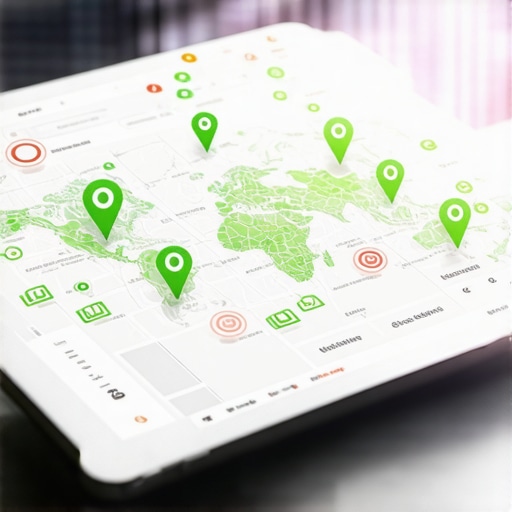
Can you really rank for multiple cities without getting ghosted?
This is the advanced question I get asked most often. The ‘Oops’ factor here is trying to cheat by using virtual offices or P.O. boxes. Do not do it. Google is aggressive about suspending profiles that don’t have a legitimate physical presence. Instead, learn how to rank your map listing for multiple cities safely by using localized service pages on your main website that link back to your profile. It creates a web of relevance that Google can verify. When you perform your next audit, look for the 4 map health signals you probably missed during your last audit to ensure you aren’t accidentally triggering a proximity filter. Have you ever fallen into this trap of trying to expand your reach too fast and seeing your rankings drop? Let me know in the comments. We are just scratching the surface of what it takes to maintain map health in a competitive market.
Stay Ahead with a Weekly Profile Checkup
I learned the hard way that local SEO isn’t a ‘set it and forget it’ project. I once got a client to number one, celebrated with a fancy dinner, and didn’t look at their dashboard for three weeks. When I finally logged back in, they had plummeted to the second page because a competitor had uploaded forty new photos and a dozen people had asked questions that went unanswered. Now, I follow a strict 15-minute Friday ritual. I check for any suggested edits from the public—which can be devastating if someone ‘helpfully’ changes your phone number—and I respond to every single review, good or bad. This profile maintenance routine that keeps you in the top 3 is the difference between a flash-in-the-pan success and a permanent lead machine. It is about monitoring map health key checkpoints for ongoing optimization so you never get caught off guard by an algorithm shift.
The Tech I Actually Use to Stop Guessing
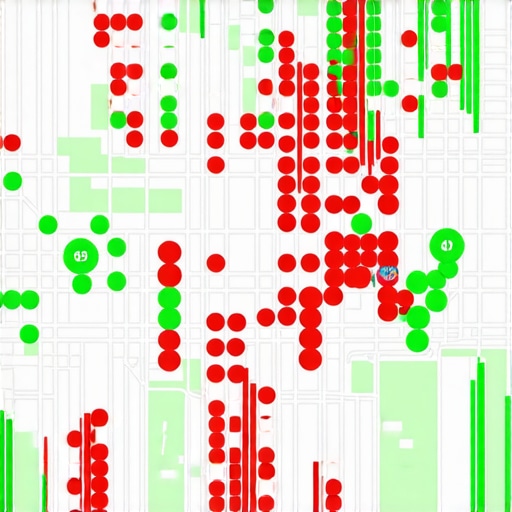
Stop relying on the ‘Insights’ tab alone. It’s often delayed and doesn’t show you the full picture of your local dominance. I personally use Local Falcon to run geo-grid searches. It shows me exactly where my ranking drops off—literally street by street. If I see a ‘red’ spot three blocks away, I know I need more local relevance in that specific micro-neighborhood. This is vital because why your local seo software is feeding you useless ranking data is often a matter of scale; broad tracking doesn’t account for the hyper-local nature of maps. According to the Whitespark 2023 Local Search Ranking Factors study, high-quality local links and proximity are still massive, but the ‘freshness’ of your profile activity is a growing ‘tie-breaker’ signal. I also keep a close eye on my audit checklist for identifying ghosted business listings to ensure my profile hasn’t been suppressed for a technical glitch I didn’t see coming.
Looking ahead, I predict that Google’s Search Generative Experience (SGE) will rely even more heavily on visual and behavioral proof. We are moving toward a ‘Show Me, Don’t Tell Me’ era. In the next 18 months, if your profile doesn’t have video walk-throughs or high-resolution imagery of your services, you’ll likely lose ground to those who do. You need to follow a step by step map optimization guide for better local rankings that prioritizes these rich media signals.
How do I keep my map health from tanking?
Consistency is your best friend. Beyond just photos, you need to ensure your technical foundation is solid. One of the biggest silent killers I see is broken code on your actual website. If your schema markup is messy, Google struggles to connect your site’s authority to your map pin. I highly recommend learning how to fix broken local schema that blocks your map ranking as your next priority. It is an advanced move, but it acts as a permanent ‘Trust Anchor’ for your business. My challenge to you: Go to the Google Rich Results Test tool tonight, plug in your website URL, and see if your LocalBusiness schema has any ‘Warnings’ or ‘Errors.’ Fixing those tiny red flags can often trigger a ranking boost in less than 48 hours.
The Hardest Lesson I Learned While Chasing the Map Pack
After years of tweaking, I realized that the algorithm doesn’t care about your clever wordplay as much as it cares about your actual behavior. I spent months trying to find a shortcut, but the real ‘aha’ moment came when I stopped looking for hacks and started monitoring map health key checkpoints for ongoing optimization like a hawk. High-quality rankings aren’t won with a one-time setup; they are earned through the profile maintenance routine that keeps you in the top 3. I wish I had known earlier that ignoring customer behavior signals in your profile is like ignoring the scoreboard in the middle of a game. Real growth comes from being the most active and reliable presence in your niche, not just the one with the most keywords.
My Personal Toolkit for Staying Dominant in Local Search
You don’t need a thousand expensive subscriptions, just a few high-value tools used correctly. I live by Local Falcon because it gives me a visual heat map of my local reality, which is far more accurate than standard rank trackers. I also constantly revisit my google listing checklist to ensure no new Google updates have rendered my current strategy obsolete. For technical health, I swear by the Google Rich Results Test; it is the only way to know if you need to fix broken local schema that blocks your map ranking. These resources provide the data you need to make decisions based on facts rather than gut feelings, ensuring your maps seo checklist stays up to date.
[image_placeholder]
Start Building a Profile That Actually Converts
Your map listing is more than a digital business card; it is a living extension of your shop’s front door. Don’t let the technical jargon of a complex map optimization guide overwhelm you. Take it one photo, one review, and one schema fix at a time. The local businesses that thrive are the ones that show up consistently and provide the most value to their community. Your future customers are searching for you right now—make sure you are the obvious choice they find at the top of the pack. Have you ever noticed a sudden dip in your local traffic after a long period of profile inactivity? Let me know in the comments below.