
Why your business description doesn’t actually help you rank
I remember sitting in my home office three years ago, hunched over my keyboard until 2 AM, trying to craft the “perfect” 750-character business description. I was convinced that if I just squeezed in one more mention of my city and a few more adjectives about my services, Google would finally notice me. I treated that little box like a magic spell. I hit save, refreshed the page for three days straight, and… nothing happened. My ranking didn’t budge an inch. It was a humbling moment that taught me a hard lesson: Google doesn’t actually care about the keywords in your “About” section for ranking purposes. I was ignoring my google listing checklist and focusing on the one thing that was essentially invisible to the algorithm.
Why I Wasted Weeks on the Perfect Paragraph
I used to think SEO was about being the loudest person in the room, but in the world of Local Maps, it’s about being the most relevant. While I was busy playing poet, my competitors were quietly fixing their map health and building real local authority. My biggest mistake early on was thinking I could “hack” the system with a clever bio while my website authority was basically non-existent. I spent so much time on prose that I missed the forgotten details in your google listing checklist that kill local reach. Today, I want to show you exactly why that description box is for your customers’ hearts, not the search engine’s brain, and how you can stop spinning your wheels on tasks that offer zero ROI.
Is the “About” section a total waste of space?
Not exactly, but it’s not a ranking factor. According to research by industry experts at Sterling Sky and public statements from Google’s own representatives, keywords placed in your business description do not impact your position in the local search results. It’s a bitter pill to swallow when you’ve put your heart and soul into it. If you are struggling to be seen, you likely have a proximity filter problem or you’re missing crucial trust anchors that actually signal to Google that you are a legitimate business. Have you ever spent hours agonizing over a single sentence in your profile only to see your ranking stay exactly the same? It’s frustrating, right? We’re going to pivot away from the fluff and start looking at the step-by-step map optimization guide for better local rankings that actually moves the needle.
Fix the data foundation before you paint the walls
The first thing we need to do is stop treating your profile like a static billboard and start seeing it as a dynamic data feed. Think of your business data like a credit score; one late payment or a mismatched address can tank your trustworthiness in an instant. This is where your complete maps seo checklist for enhanced visibility comes into play. I once audited a local plumber who could not figure out why he was stuck on page three despite hundreds of five-star reviews. It turned out his suite number was missing on his website but present on his Google profile. That tiny discrepancy was enough for the algorithm to lose confidence. To avoid this, you need a rigorous map optimization guide that prioritizes data accuracy over creative writing.

Why your map health is leaking potential calls
Think of map health as the structural integrity of your digital presence. You can have the best services in the world, but if your profile has leaks—like unanswered questions, outdated holiday hours, or duplicate listings—customers will simply move to the next pin on the map. I remember working with a boutique gym that had a ghost profile from a previous owner at the same address. We had to follow a process for reclaiming a hijacked business profile and merging duplicates before their rankings finally stabilized. If you are not checking specific data points tonight, you are essentially flying blind while your competitors are using a GPS.
Stop ignoring your website authority
There is a massive misconception that your Google Maps profile exists in a vacuum. In reality, it is deeply tethered to your website. If your site is slow, lacks local context, or has a poor backlink profile, your map ranking will suffer. This is the correlation between website authority and map pack rank that most business owners miss. You need to ensure your local landing pages are optimized not just for keywords, but for user experience. I have seen businesses jump into the Top 3 simply by using local schema to help their map profile stand out, which bridges the gap between their website data and what Google sees on the map.
The simple tweak that saved a stagnant profile
I will never forget a specific project involving a locksmith. They were doing everything by the book but still losing to lower-rated competitors. We realized their service menu was generic and did not match the specific terms people were searching for in their neighborhood. By applying this simple google listing checklist tweak, we updated their service menu to reflect hyper-local needs. Within ten days, their call volume increased by 40%. It was not about the About section; it was about the specific way to optimize your service menu for map search. This is why a google listing checklist is your most valuable asset—it keeps you focused on the high-ROI tasks that actually drive revenue.
We need to talk about the “more is better” trap because it’s the primary reason most local businesses plateau. In the early days, I used to think that blasting out hundreds of automated citations would force Google’s hand. I was wrong. I’ve found that manual citation building beats automated tools every time because consistency and niche relevance are what actually build the “trust bridge” between your listing and the algorithm. If your data is scattered across low-quality directories, you aren’t building authority; you’re creating noise that dilutes your rank.
Stop chasing volume and start focusing on authority
Here is a contrarian view that most agencies won’t tell you: A listing with 20 high-authority, locally relevant mentions will almost always outrank a listing with 200 automated ones. When you look at the brutal truth about why your business is not in the top 3 map spots, it usually comes down to the quality of the signals you are sending, not the quantity. I recently saw a law firm double their leads by deleting 50% of their “zombie” citations and focusing on just three local neighborhood blogs. It sounds counterintuitive, but Google values a clear, focused digital footprint over a wide, messy one.
How can you beat a competitor who is physically closer to the customer?
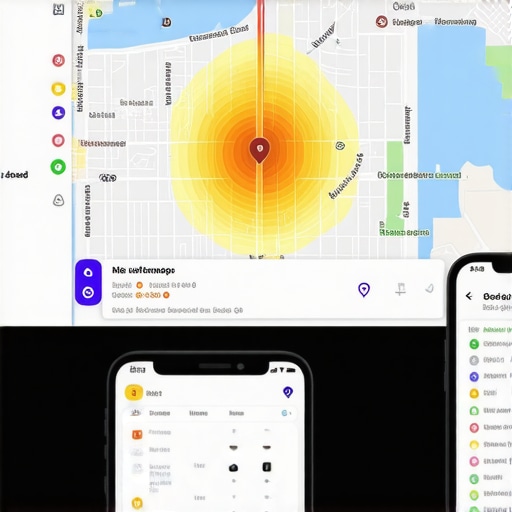
This is the “holy grail” of local SEO. Most people assume proximity is an unbeatable wall. However, the 2023 Local Search Ranking Factors study by Darren Shaw at Whitespark confirms that while proximity is a heavy weight, “relevance” and “prominence” can overcome it. This is where monitoring map health becomes your secret weapon. If your listing has higher engagement rates—meaning more people click to call or ask for directions compared to the guy next door—Google will often expand your “radius” to include searchers further away. You are essentially proving that you are the better choice, regardless of the extra three-minute drive.
The dangerous “oops” factor that triggers a suspension
One of the biggest mistakes I see advanced users make is “category dilution.” They think that by adding every semi-related service category, they’ll show up for more searches. In reality, this often confuses the algorithm and can lead to a drop in your primary keyword rankings. Even worse is the temptation to add keywords to your business name. While it might work for a week, it’s a violation of Google’s Terms of Service that leads to “hard” suspensions. If you’ve noticed that your map health score is actually costing you calls, check for these over-optimization red flags first. You want to be clean, accurate, and authoritative, not desperate for clicks.
We are looking for the hidden factors that determine who appears in the map expansion, and that usually starts with user behavior. Have you ever fallen into the trap of over-optimizing your categories or name only to see your visibility vanish? Let me know in the comments—I’d love to hear your “war stories” from the local search trenches.
Once you’ve stopped the bleeding from those early mistakes, the real challenge begins: staying there. I’ve seen too many businesses climb to the top of the Map Pack only to vanish three months later because they treated their maps seo checklist as a one-time project. In my experience, local SEO is a lot like going to the gym; you don’t stay fit by looking at the equipment. You need a consistent profile maintenance routine that keeps the algorithm happy. For me, that means using tools like GMB Everywhere or BrightLocal not just for the pretty charts, but to audit the ‘behind-the-scenes’ category shifts that Google often makes without telling anyone. If you aren’t checking for map health signals you probably missed, you are leaving your rankings to chance.
How do I maintain my map ranking over time?
The secret is scheduled vigilance. I personally set a calendar alert for the first Tuesday of every month to run through a map optimization guide check. During this time, I look specifically for user-suggested edits that might have changed our business hours or service areas. I also dive into the local SEO roi metrics that actually matter, like direction requests and phone calls, rather than just raw impressions. If I see a dip, I immediately look at items for profiles that stopped showing up to see if a competitor has started a spam campaign or if my data has become inconsistent. This proactive approach is why I rarely have to deal with the stress of a sudden ranking drop.
Why I prefer surgical tools over generic dashboards
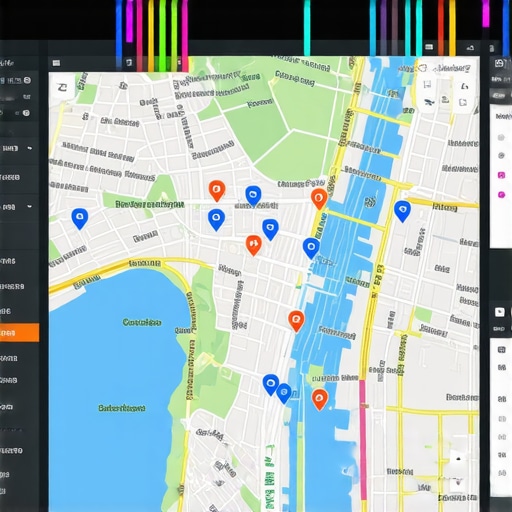
I’ve tested almost every piece of gmb software that actually moves the needle, and the biggest lesson I’ve learned is that more data isn’t always better data. Generic SEO dashboards often feed you “national” rankings that have zero bearing on what a customer sees from their mobile phone two blocks away. This is why your local seo software is feeding you useless ranking data most of the time. Instead, I use hyper-local grid trackers to see exactly where our visibility starts and ends. It allows me to see if we are losing ground in a specific neighborhood, which usually signals it is time to build more authority using hyper-local news or local backlinks. As local SEO expert Mike Blumenthal often notes, Google is increasingly focusing on the ‘real-world’ presence of a brand, meaning your digital signals must match your physical ones.
The future of local search is visual and immediate
Looking ahead, I predict that static text will matter even less while interactive media will become the primary ranking driver. We are already seeing Google use AI to ‘read’ the photos you upload to see if they match the services you claim to offer. This is why using video on our profile has been such a game-changer for us. I expect that soon, the google listing checklist will be dominated by augmented reality and real-time inventory updates. If you want a head start, I strongly encourage you to try one advanced tip: start adding products to your profile even if you are a service-based business. It creates more ‘real estate’ on your listing and gives customers more reasons to click before they even reach your website. Don’t wait for the competition to do it first—go update your service menu or product gallery right now and see how the engagement shifts.
What I Learned the Hard Way about Ranking in the Map Pack
Looking back at my early failures, the most profound realization was that Google values stability over cleverness. I used to think I could outsmart the algorithm by changing my business categories every week, but I soon realized that consistency is the ultimate trust signal. If you are constantly tweaking, you are essentially telling Google you don’t know who you are yet. I also learned that why your current google listing checklist is making you invisible often comes down to the basics rather than the advanced tricks. Another lightbulb moment was when I stopped obsessing over keywords and started looking at my monitoring map health checkpoints; the data doesn’t lie, and if your NAP (Name, Address, Phone) isn’t 100% synchronized, you’re building on sand.
The Tools That Keep My Clients in the Top Three
I don’t believe in using every tool on the market, but there are a few I can’t live without. For hyper-local tracking, I always turn to Local Falcon or BrightLocal because their grid-based reports show the reality of the map, not just a single point of data. If you’re on a budget, you should learn how to audit your google listing checklist without expensive tools by using manual searches in incognito mode from different zip codes. I also swear by the GMB Everywhere Chrome extension for a quick peek at competitor categories. These aren’t just gadgets; they are the gmb software that actually moves the needle by giving you actionable insights rather than vanity metrics.
Take the First Step Toward Dominating Your Local Market
Local SEO isn’t a dark art, though it can certainly feel like one when you’re staring at a stagnant profile. It’s a process of elimination—removing the errors, the noise, and the inconsistencies until only the truth of your business remains. By following a robust mastering map optimization essential seo checklist, you are giving your business the best possible chance to be found by the people who need you most. Don’t let the technical jargon intimidate you; just focus on one small fix today, whether it’s a photo upload or a citation check. Your maps seo checklist is your roadmap to growth, and the journey starts with that first honest audit. Have you ever noticed a sudden ranking drop after making what seemed like a minor edit to your profile? Let me know in the comments below!