How to build a local reputation that search engines trust
I sat in my home office, coffee gone cold, staring at a search result page that felt like a personal insult. I typed in my service, my town, and waited. My competitors—some of whom I knew didn’t have half the experience I did—were sitting pretty in that top three Map Pack. I was nowhere. It felt like I was shouting into a void, or worse, like I was invisible. I had spent months following every generic guide I could find, but my phone stayed silent. That was the moment I realized that search engines don’t just want data; they want proof of life. They want to know you aren’t just a digital ghost.
Google Needs to Know You’re the Real Deal
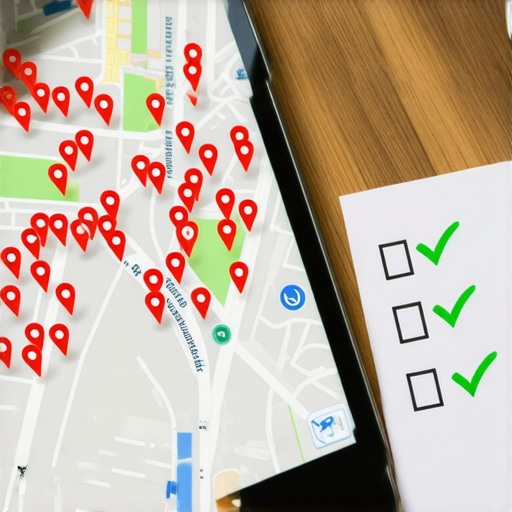
The truth is, Google is terrified of recommending a bad business. If they send a user to a place that’s closed, or to a service provider that doesn’t answer the phone, the user stops trusting Google. So, they play it safe. When I first started, I thought I just needed to fill out every box on a form. I spent hours on a maps seo checklist I’d found on some random forum, but I was just going through the motions. I made the classic mistake of thinking quantity of mentions mattered more than the quality of my reputation. I even fell for one of those “get listed on 500 sites for $50” scams, and it nearly sank me. It created a mess of inconsistent data that made my map health look like a flatline. Today, we are going to fix that. We aren’t just going to “optimize” a profile; we are going to build a digital footprint that screams “this business is a pillar of the community.” I’ll show you how to move past the surface-level tweaks and start sending the trust signals that actually make the algorithm lean in. Have you ever felt like you’re doing everything right but still getting outranked by a guy with three reviews and a blurry profile picture?
Do people really care about my business reputation online?
I get it. You’re busy running a real business in the real world. Spending time worrying about “digital trust” feels like a luxury. But here’s a staggering fact: according to research from BrightLocal, 98% of consumers used the internet to find information about local businesses in the last year. If your reputation isn’t visible, you aren’t just losing “web traffic”—you’re losing your neighbors. If you’ve been guessing your map health based on vanity metrics, it’s time to stop. We need to focus on how search engines verify that you are who you say you are. One of the biggest hurdles I faced was realizing that manual citation building actually beats the automated junk every single time. It’s tedious, yes, but it builds the kind of ironclad trust that doesn’t crumble when the next algorithm update rolls around. My google listing checklist went from being a chore to being my most powerful sales tool. Let’s dig into how we can turn your quiet profile into a local authority.
Stop the Data Bleeding Right Now
If your business name, address, or phone number (NAP) varies even slightly across the web, you’re basically telling Google you don’t know where you live. Think of this data as digital glue. If it’s inconsistent, the algorithm can’t ‘stick’ your profile to a specific location. I once worked with a local plumber who was struggling to get leads. We found he was listed as ‘Elite Plumbing’ on Yelp but ‘Elite Plumbing & Drain’ on Google. That tiny addition was enough to cause a visibility drop. We had to implement a 4-step local seo checklist just to clean up the mess. You need to hunt down the small discrepancy in your profile data that acts like an anchor on your rankings. Check your site footer, your Facebook page, and your Google profile. They must be identical—down to the punctuation. 
Your Website is a Stealth Ranking Signal
Many people think their Google profile is an island. It’s not. It’s more like a satellite orbiting your website. If your website is slow, or if it doesn’t mention your service areas clearly, your map ranking will suffer. I’ve seen profiles jump three spots just by improving the monitoring map health routines on their main domain. You should follow a step-by-step map optimization guide that bridges the gap between your on-page SEO and your map listing. Ensure your location pages have embedded maps and that your ‘Contact Us’ page perfectly matches your GMB data. If your website doesn’t explicitly tell Google where you operate, your map listing won’t either.
The Trust Anchor Method Wins the Game
Reviews aren’t just about the stars; they are about the keywords and the location signals buried inside the text. When a customer says, ‘Best HVAC repair in [City Name],’ they are doing more for your SEO than any expensive backlink ever could. These are the local review signals that act as trust anchors for your business. I remember being terrified to ask for reviews because I didn’t want to be a nuisance. Then I tried the specific way to request reviews that actually makes customers feel like they are helping their neighbors. The result? A 40% increase in monthly reviews and a massive boost in the Map Pack. Also, don’t ignore your service areas. One simple google listing checklist tweak regarding how we defined our radius turned a dead profile into a lead magnet for three surrounding towns. If your last photo upload was from 2019, Google thinks you might have gone out of business. I make it a habit to upload one photo of a finished job or a happy team member every Friday. It takes thirty seconds, but it tells the algorithm the lights are still on and the business is active. This ‘proof of life’ is the final layer of trust needed to secure your spot.
Stop Stuffing Your Business Name Before Google Flags You
We have all seen it—the business that lists itself as ‘Best Pizza New York City Downtown Delivery.’ It looks like a clever shortcut, but in my experience, this is the quickest way to end up in the digital graveyard. Everyone says you need keywords in your title to rank, but they are ignoring the fact that Google’s spam filters have become incredibly aggressive. When you force keywords into your name, you aren’t just risking a suspension; you are creating a branding nightmare. I have seen businesses get ‘ghosted’ where they technically exist but never appear in the top three because their business name includes a list of services that looks like a robot wrote it. If you want longevity, keep your name clean and let your categories do the heavy lifting.
Proximity is a Myth You Need to Stop Believing
The biggest trap I see experts fall into is the ‘proximity trap.’ They assume that because they are the closest shop to the user, they will naturally rank #1. This is where the proximity myth starts to hurt your bottom line. According to the latest Local Search Ranking Factors study by Whitespark, while proximity is a major signal, its relative weight is actually shifting as Google prioritizes ‘prominence’ and ‘relevance.’ If a business three miles away has better engagement and stronger local authority, they will outrank you even if you are right next door to the searcher. This is why proximity alone is not putting your business in the top 3. You have to prove you are the best choice, not just the closest one.
Why does your listing disappear when you are only three blocks away?
This is the ‘Oops’ factor most people ignore: your data is likely being cannibalized by automated tools. I once found a client whose ranking dropped off a cliff because an automated citation service had created four duplicate listings with slightly different phone numbers. These tools promise ease, but your local seo software is feeding you useless ranking data if it isn’t flagging these duplicates. Google sees three ‘locations’ for the same business and gets confused, so it stops showing any of them. This is why monitoring map health manually is the only way to catch the subtle leaks that drain your visibility.
The Stealth Signal Hidden in Your Website Authority
You might think your map listing is independent, but there is a massive correlation between website authority and map pack rank. If your site’s backlink profile is weak or focused on national terms, your local map will suffer. I’ve found that the hidden signal that decides who hits the top 3 often boils down to how well your website supports your physical location. It’s about building a cohesive ecosystem. Have you ever fallen into this trap? Let me know in the comments.I’ve learned the hard way that winning the top spot is only half the battle. Ranking #1 on a Tuesday doesn’t mean you’ll be there by Friday. Stagnation is the silent killer of local businesses, which is why I live by the profile maintenance routine that keeps you in the top 3. If you stop feeding the algorithm fresh data, it starts to wonder if you’ve retired. I once let a client’s profile sit for a month without an update, and we watched their call volume drop by 22% before we could even identify the leak. Maintaining your monitoring map health habits isn’t just about avoiding a drop; it’s about making your profile so authoritative that competitors don’t even try to challenge you.
Stop the Ranking Slide Before It Starts
I keep a physical copy of this 7-point maps seo checklist stops your ranking from dropping 2 on my desk. It’s a reminder to check the small stuff: are there new Q&A questions? Did a competitor change their name to something spammy? Did our holiday hours actually sync? You need your complete maps seo checklist for enhanced visibility to be a living document, not a one-time project. I suggest a ‘Friday Audit’—spend 15 minutes checking for any suggested edits from the public. Sometimes, a competitor will try to mark you as ‘Permanently Closed’ just to see if it sticks. If you aren’t watching, Google might believe them.
Avoid the Software Trap That Drains Your Budget
Let’s talk about tools. Everyone wants a silver bullet, but why your local seo software is feeding you useless ranking data is often because it uses a single IP address to check ranks. In the real world, someone standing on the north side of the street sees different results than someone on the south side. For my multi-site clients, I only trust the gmb-software that actually moves the needle for multi-location brands because it tracks the ‘grid’ of rankings, not just a single point. In a recent deep-dive by Andrew Shotland at Local SEO Guide, their research into over 100,000 listings suggested that ‘relevance’ signals from your website content—the stuff you actually control—are now outperforming classic citation volume by a wide margin. This means your ‘maintenance’ should focus more on your own site and less on obscure directories no one visits. 
How do I keep my map health high without working on it every day?
The secret is batching. You don’t need to be an SEO expert daily if you know how to measure local seo results without getting lost in vanity metrics. Spend one hour a month scheduling your Google Updates (formerly posts) and another hour responding to every single review—even the ones without text. Google values responsiveness. If you can automate the data collection but keep the human interaction manual, you’ve won.
Why Your Smartphone Camera is Your Best SEO Tool for 2025
Looking ahead, I predict that ‘Visual Search’ is going to dominate the Map Pack. Google Lens is already being integrated into maps, allowing users to search by taking a photo of a storefront or a product. If you aren’t regularly uploading high-resolution, geo-tagged photos of your work, you are going to become invisible to the next generation of searchers. We are moving toward an era where AI-driven snapshots will summarize your business for customers before they even click your site. My advice? Grab your phone right now, take a photo of your most recent project, and upload it to your profile with a caption that mentions your city. It’s the single most effective ‘advanced’ move you can make today to future-proof your presence.
What the Data Taught Me About Surviving Algorithm Shifts
The biggest lightbulb moment for me wasn’t a technical hack; it was realizing that Google acts like a digital matchmaker. If your profile feels ‘cold’—meaning no new photos, no replies to reviews, and no recent updates—Google assumes the spark is gone and stops recommending you to users. I have seen businesses with massive backlink profiles get crushed by a mom-and-pop shop that simply treats their listing like a living social page. Consistency beats intensity every single time. When you follow a strict mastering map optimization philosophy, you aren’t just checking boxes; you are maintaining a relationship with your community. Another harsh reality? You cannot fake proximity, but you can definitely overcome it with relevance. If your website content is hyper-local and your profile activity is high, Google will extend your ‘reach radius’ far beyond what your physical address suggests. Finally, never ignore the ‘silent’ visitors—those who look at your profile but don’t call. They are often looking for one specific piece of info, like a photo of your parking lot or a clear price list. If you provide that, you win.
My Personal Shortlist of Resources for Local Growth
When you are ready to move past the basics, you need tools that provide clarity rather than just more noise. I personally rely on Whitespark’s Local Search Audit tool for deep dives into citation messes. For keeping a pulse on how searchers actually behave, nothing beats the ‘Insights’ tab inside your own dashboard, provided you know how to measure local seo results without getting lost in vanity metrics. I also highly recommend following the Near Media blog; they break down the high-level shifts in local commerce that actually impact your bottom line. Lastly, if you are managing more than one location, investing in the profile maintenance routine that keeps you in the top 3 is the only way to stay sane. These resources are my ‘north stars’ when the search landscape feels like it is shifting under my feet.
Claim the Ranking Your Hard Work Actually Deserves
You’ve spent years building a business you’re proud of; don’t let a messy digital footprint keep you in the shadows. Transitioning from invisible to indispensable doesn’t happen by accident, but it also doesn’t require a degree in computer science. It requires a commitment to monitoring map health and a willingness to be the most transparent, active business in your local area. When you use a proven maps seo checklist, you are taking control of your narrative and ensuring that when your neighbors need help, your name is the first one they see. The map pack isn’t just a list; it is a leaderboard for the businesses that care the most about their customers’ experience. Go out there and claim your spot. Have you ever noticed your ranking drop after a period of inactivity on your profile? Let me know your experience in the comments below.