Why your business name shouldn’t include a list of services
I’ll never forget the morning I woke up to a ‘Suspended’ red badge on my Google Business Profile. It felt like a punch to the gut. I thought I was being a genius by naming my small repair shop ‘Fairview Tech Repair, Screen Replacement, Battery Fix, and Data Recovery.’ I wanted to hit every keyword possible. Instead, Google’s automated bots flagged me for ‘misleading representation,’ and I spent three weeks begging for reinstatement while my phone stayed silent. It was a brutal lesson in why your business name shouldn’t be a laundry list of services. Today, we’re going to fix your approach to the google listing checklist so you don’t repeat my expensive mistake. We’re stripping away the spam and building a name that actually builds trust with both Google and your neighbors. Have you ever been tempted to add ‘just one more’ service to your profile name to see if it moves the needle?
I nearly tanked my first local listing with a name that looked like a grocery receipt
I see it every single day. A local plumber names their business ‘Best Plumbing & Drain Cleaning & Water Heater Repair & 24/7 Emergency Service.’ They think they’re winning at the SEO game, but they’re actually destroying their map health. When I did this, I noticed my clicks didn’t go up; they actually cratered. Customers aren’t looking for a list; they’re looking for a name they can remember. If your name looks like a keyword-stuffed mess, you’re likely following a current google listing checklist making you invisible. Google wants to see the name you actually use on your storefront, your trucks, and your business cards. Anything else is a red flag. I learned the hard way that the tiny discrepancy in your map health score often starts with your identity. The lightbulb moment for me happened when I realized that my competitors—the ones who were actually taking all the calls—had incredibly simple names. They weren’t fighting the algorithm; they were feeding it exactly what it wanted: clarity. By trying to be everything to everyone in a single line of text, I was becoming nothing to nobody. My maps seo checklist was fundamentally flawed because I was prioritizing ‘tricking’ the system over serving the user.
Does listing every service actually hurt my credibility?
You might be skeptical. After all, if people are searching for ‘HVAC repair,’ shouldn’t that be in the name? The answer is a resounding no. According to official Google Business Profile Guidelines, including marketing taglines, service descriptions, or store codes in your business name is strictly prohibited. When you ignore this, you risk being ‘ghosted’ by the algorithm. I’ve helped dozens of folks use an audit checklist for identifying ghosted business listings, and nine times out of ten, a bloated name is the culprit. It makes your brand look cheap and desperate. Think about it: would you rather call ‘The Master Plumber’ or ‘Plumber Drain Repair Cheap Quick Service’? The first sounds like an expert; the second sounds like a scam. We need to move beyond the 4-step local seo checklist for service businesses losing traffic and focus on high-integrity branding. If your profile feels like it’s stalled, don’t just add more keywords. That’s like trying to fix a sinking boat by adding more heavy gold to it. You need to lighten the load, verify your core data, and ensure your simple google listing checklist tweak focuses on accuracy above all else. Let’s get into the nitty-gritty of why your category selection does the heavy lifting so your name doesn’t have to.
Stop using your name as a billboard and start using categories
Think of your business name like a handshake and your primary category like your professional license. If you walk into a room and shout ‘PLUMBER DRAIN CLEANER EMERGENCY REPAIR,’ people back away. But if you say ‘Hi, I’m Joe,’ and your uniform clearly says ‘Master Plumber,’ you’ve won. I once worked with a local locksmith who couldn’t figure out why he was stuck on page four. We looked at his your complete maps seo checklist for enhanced visibility and realized he had himself listed as a ‘Home Goods Store’ because he sold keys in a small retail space. As soon as we switched his primary category to ‘Locksmith,’ he jumped to the top three in 48 hours. Your primary category is the single most powerful lever in your step-by-step map optimization guide for better local rankings. It tells Google exactly which ‘bucket’ to put you in when a user types a query.
Pick your primary category like your life depends on it
The mistake most people make is being too broad or too narrow. If you do roof repair, don’t just pick ‘Contractor.’ Pick ‘Roofing Contractor.’ This specificity is the backbone of your monitoring map health. If you choose a category that doesn’t perfectly align with your real-world services, Google’s trust in your profile erodes. I remember a client who insisted on using ‘Restaurant’ as their primary category when they were strictly a ‘Pizza Delivery’ shop. They were competing against fine dining spots and losing. By narrowing the focus, we cleared up the the 3 map health errors sabotaging your local traffic right now 2 and saw a 40% increase in relevant calls. 
Clean up the digital paper trail that confuses Google
Your business name and category don’t live in a vacuum. Google’s bots are constantly scouring the web to see if the information on your profile matches your ‘NAP’ (Name, Address, Phone number) on other sites. This is where the the specific citation move that breaks the proximity barrier comes into play. If your website says ‘Main St. Garage’ but your Yelp says ‘Main Street Auto Repair,’ Google gets confused. When Google gets confused, it hides your listing to protect the user experience. I spent a whole weekend once manually fixing 15 different variations of a client’s name across local directories. It was tedious, but it’s why why manual citation building beats automated tools every time. Automated tools often miss the nuances or create duplicate entries that further damage your the specific citation audit that cleared up our ranking confusion.
Move your keywords into the service menu instead
If you’re dying to tell Google that you do ‘Emergency Pipe Bursting,’ don’t put it in the title. Put it in the services section. This is a crucial part of a mastering map optimization essential seo checklist for local growth. Google scans your service descriptions and menus to understand the breadth of what you offer. When I shifted a client’s service list from a generic paragraph to a detailed, keyword-rich menu, their ‘long-tail’ traffic—people searching for very specific fixes—tripled. You can learn more about the specific way to optimize your service menu for map search to ensure you aren’t leaving money on the table. This allows your business name to stay clean and professional while your service list does the heavy lifting of capturing search intent.
While a clean name and the right category get you through the door, most people hit a ceiling because they fall for the ‘proximity trap.’ Conventional wisdom says you can’t rank if you aren’t sitting right on top of the city center. In my experience, that’s just not true anymore. I’ve seen businesses five miles out outshine those in the heart of downtown because they mastered authority over distance. This is where the proximity myth why distance isnt your only problem becomes the most important lesson in your growth journey. Google is shifting toward ‘relevance’ and ‘prominence’ as much as physical location, which is why why proximity alone is not putting your business in the top 3. If your map health is strong enough, Google will extend your ‘radius of influence’ far beyond your physical doorstep.
Stop setting your service area to a 50-mile radius
One of the biggest mistakes I see—and I’ll admit, I did this too early on—is trying to claim an entire state as your service area. You think you’re being ambitious, but you’re actually signaling to Google that you aren’t a local expert anywhere. This ‘Oops’ factor creates a massive visibility gap. When you claim too much territory, your profile gets diluted, and you’ll find that why your secondary service areas arent getting any calls is directly linked to this lack of focus. It’s better to be a king in a 5-mile radius than a ghost in a 50-mile one. Real map optimization guide success comes from tightening your service area to where you actually have a physical footprint or historical job data. 
Why does my competitor with fewer reviews still outrank me?
This is the question that keeps business owners up at night. It feels unfair, right? But the 2023 Whitespark Local Search Ranking Factors study confirms that ‘Review Quantity’ is actually lower on the priority list than most think. The secret often lies in behavioral signals—things like how many people click ‘Directions’ and actually follow through, or how long they spend looking at your photos. This is the hidden signal that decides who hits the top 3 map pack spots. If you want to win, you have to stop chasing reviews and fix these 4 map health signals instead. Google prioritizes businesses that users actually interact with. If your competitor has 10 reviews but a 90% click-through rate because their photos are stunning, they will beat your 100 reviews and mediocre engagement every time. Have you ever fallen into this trap of focusing on the wrong numbers? Let me know in the comments.
Advanced maps seo checklist strategies also require you to look at the ‘Map Expansion.’ Sometimes, your listing is actually there, but it’s hidden under a ‘View More’ button because of local filters you didn’t even know existed. Understanding the hidden factors that determine who appears in the map expansion is crucial for staying visible as Google continues to tweak the layout. Keep monitoring map health by looking at your actual user behavior, not just your rank. Following a step-by-step map optimization guide means adjusting to what the data tells you, not what you wish was true about your location.
I used to think that once I hit the top 3, I could just coast. I was dead wrong. Your local listing isn’t a ‘set it and forget it’ trophy; it’s more like a high-performance engine that needs constant tuning. If you stop monitoring map health, you are essentially handing your hard-earned leads to the competitor across the street who is paying closer attention. The moment you get comfortable is the moment your visibility starts to slip. This is why a consistent why your google listing checklist needs a weekly audit is the difference between a one-hit wonder and a local staple.
Keep your momentum from fading
The secret to staying at the top isn’t some magical hack; it’s the accumulation of small, boring actions done repeatedly. I’ve noticed that listings that go quiet for more than two weeks—no new photos, no review responses, no updates—start to see their ‘reach’ contract. Google likes active businesses because activity signals reliability. I personally dedicate 15 minutes every Tuesday morning to my mastering map optimization essential seo checklist for local growth. I check for ‘suggested edits’ from the public, which can often be malicious or just plain wrong, and I ensure my the one map health metric that actually matters to business owners—the conversion rate—is holding steady. If calls are down but impressions are up, I know my profile is visible but my message isn’t landing.
How do I keep my map rank steady over time?
Maintenance is about more than just checking boxes; it’s about staying ahead of Google’s constant shifts. For instance, according to local SEO expert Joy Hawkins from Sterling Sky, Google’s ‘Vicinity Update’ significantly changed how proximity impacts ranking, making it harder for ‘office-less’ businesses to rank far from their verified address. To counter these shifts, you need a robust your complete maps seo checklist for enhanced visibility that includes regular local citation audits. I’ve found that even a single digit wrong in a phone number on an obscure local directory can trigger a ‘data mismatch’ flag. 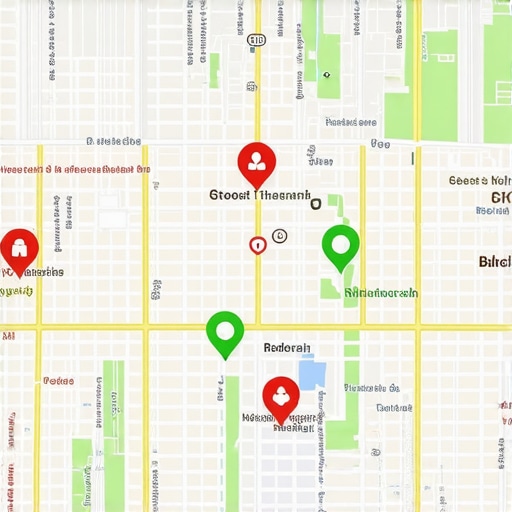
Software that actually makes your life easier
I’m often asked what tools I use to scale these efforts. While manual work is king for citations, I rely on ‘grid tracking’ software to see the truth. Standard SEO tools tell you that you’re ‘Ranked #1,’ but they don’t tell you that you’re only #1 if the person is standing in your parking lot. I use tools that show a bird’s-eye view of a city with a grid of ranking bubbles. If I see a sea of green bubbles around my shop but red ones three miles away, I know I need to focus on why your map ranking depends on your websites backlink profile specifically from those neighboring areas. This level of detail is a core part of any professional step-by-step map optimization guide for better local rankings.
Looking ahead, I predict that Google will lean even more heavily into ‘Visual Search’ and AI-driven summaries. We’re already seeing Google ‘read’ the text inside your photos to determine relevance. If you aren’t uploading high-quality, relevant images weekly, you’re missing out on the next wave of google listing checklist requirements. Advanced Tip: Go into your service menu right now and add 3-5 high-resolution photos directly to your most profitable services. This small move links your visual assets to your service keywords, which is a powerful signal for the algorithm. Don’t wait for your rank to drop to start caring about these details.
The Hard Truths I Learned While Rescuing Tanked Profiles
Over the years, I’ve realized that the biggest enemy of map health isn’t the algorithm; it’s our own impatience. We often want results yesterday, so we over-optimize until the profile breaks under the weight of keyword spam. One of the most painful lessons I had to learn was that the small discrepancy in your profile data that keeps you off the map is usually self-inflicted. It’s often that one ‘extra’ service keyword we thought would help that actually triggered a manual review or a shadow-ban.
I also discovered that why generic seo optimization tips fail local businesses is because they ignore the human element. Google is getting incredibly good at detecting ‘manufactured’ engagement. If your maps seo checklist doesn’t prioritize real user-generated photos and genuine, helpful Q&A, you’re building your visibility on shifting sand. Finally, don’t be afraid to shrink your radius to win; sometimes narrowing your service area is the only way to actually start showing up in the local results that drive real revenue.
My Go-To Kit for Dominating the Local Pack
You don’t need a thousand-dollar software suite to win, but you do need precision. First, I always recommend a solid ‘grid tracker’ like WhiteSpark or BrightLocal. These tools reveal the ‘invisible’ borders where your ranking drops off, helping you identify how to audit your google listing checklist without expensive tools. Second, I swear by using high-resolution, mobile-uploaded photos. These aren’t just pretty pictures; they are data points that prove your physical presence at a job site. This is one of those 4 profile engagement tactics that actually turn map views into phone calls that most businesses completely ignore.
Third, keep the official Google Business Profile Help Community bookmarked. When things go sideways—and they will—the volunteers there have seen every weird suspension reason under the sun. I’ve used their collective wisdom many times, especially when I was figuring out how we recovered a suspended profile without using shady tactics. Lastly, ensure your own website’s footer mirrors the exact name and phone number on your profile to create a perfect circle of digital trust. #IMAGE_PLACEHOLDER_E#
Your Map Doesn’t Have to Stay Red Forever
It’s easy to feel defeated when you look at a local ranking report and see a sea of red bubbles, but every single one of those can be turned green with a consistent optimization checklist. You now have the tools, the internal data, and the strategy to reclaim your local territory from competitors who are likely cutting corners. This map optimization guide isn’t just about technical boxes; it’s about making your business the most obvious and trusted choice for your neighbors. Start with one clean change today—whether it’s fixing your name or auditing your categories—and watch how the algorithm rewards your clarity. If you’re ready to stop guessing and start growing, follow a step-by-step map optimization guide for better local rankings to secure your spot in the top 3. Have you ever seen a competitor rank higher than you despite having significantly worse reviews? Let me know your theories in the comments below!