How to use internal links on your site to boost your map rank
I remember sitting in my home office at 2 AM, staring at a client’s Google Business Profile with a mix of caffeine-induced mania and pure frustration. I had optimized every single photo, responded to every review, and followed my maps SEO checklist to the letter. Yet, there we were, buried on page three. It felt like I was shouting into a void. It wasn’t until I looked at the website itself that I realized I had made a massive, rookie mistake: I treated the map profile like a silo. I was so focused on monitoring map health that I forgot that Google uses your website to verify what your business actually does and where it serves. Today, I’m going to show you how to turn your website into a ranking engine by using internal links to tell Google exactly where you belong. We are going to bridge the gap between your content and your map pin once and for all.
Why Your Website Architecture Is Secretly Killing Your Map Rank
Most business owners think the ‘Map Pack’ is some separate entity that lives on its own island. I thought that too, and it cost me months of progress on an early project. I was so busy fixing the profile audit errors that I did not see the 3 map health errors sabotaging local traffic right under my nose on the actual service pages. If your website does not link back to your local landing pages with clear, descriptive intent, Google starts to doubt your relevance. It is like having a great storefront but no signs inside the mall telling people how to find you. When you master internal linking, you are basically handing Google a GPS for your business’s authority. I used to think that citations were the only thing that mattered, spending hundreds on directories that nobody visits, but my optimization checklist was missing the most important piece: my own site’s hierarchy.
Does Internal Linking Actually Move the Needle for Local Shops?
I get the skepticism. You are wondering if a few blue underlined words on your blog can really beat out a competitor with more reviews. Here is the truth: Google’s algorithm is a crawler, and crawlers follow paths. If you are not creating a clear path from your high-authority pages to your location pages, you are leaving money on the table. According to a landmark study by Moz, on-page signals—including internal link structure—are one of the top factors determining who wins the local pack. I have personally seen businesses jump from the ‘Top 20’ to the ‘Top 3’ just by fixing their internal structure. Have you ever felt like you are doing everything ‘right’ on your Google profile but still are not seeing the phone ring? It is time to stop guessing your map health and start focusing on the hidden signal that decides who hits the top 3.
Turn Your Service Pages Into Location Launchpads
To stop the bleeding, you need to stop treating your service pages like generic brochures. I once worked with a local roofer who had a beautiful site, but he was invisible in the three surrounding suburbs he actually served. We realized his listing success depended on more than just citations; it required a ‘Hub and Spoke’ internal linking model. We created dedicated landing pages for every city and linked to them directly from the main ‘Roof Repair’ service page. By using the city name as the anchor text within the body of the service page, we sent a loud, clear signal to Google that this service is relevant to those specific coordinates. This is a core part of any step-by-step map optimization guide that actually moves the needle. When you link a high-traffic service page to a location-specific page, you are effectively transferring ‘authority’ from the global level to the local level.
Stop Burying Your Location Links in the Footer
Many owners think a tiny link in the footer is enough. It is not. Google treats footer links like fine print; they have much less weight than links tucked into the actual content of your pages. I remember a messy project for a multi-location dental clinic where their map rankings were stagnant for years. The fix was simple but tedious: we went through their top-performing blog posts and added manual links to the nearest clinic locations. This is one of those map health signals you probably missed during your last checkup. If a blog post about ‘how to fix a toothache’ links to your ‘Emergency Dentist in Austin’ page, Google understands the contextual relationship between the problem and the local solution.
How to Map Your Website Content to Your Google Pin
The magic happens when your website and your Google Business Profile (GBP) speak the same language. You should be using your maps SEO checklist to ensure your website’s ‘Service Area’ pages contain the exact same zip codes and neighborhood names mentioned in your GBP dashboard. I call this the ‘Local Mirror’ technique. I applied this to a stagnant plumbing client, and within 45 days, their call volume tripled. We even went as far as fixing broken local schema that was confusing the crawlers. If your website says you serve Downtown, but your map profile says you serve the entire county, Google gets confused. Confusion is the death of ranking. You need to verify that your internal links use ‘geo-modified’ keywords. Instead of just linking with the text ‘Contact Us,’ try linking with ‘Contact our Denver Team.’ This is the specific proximity move that bridges the gap between a standard website and a local authority powerhouse. When every internal link reinforces your location, your map pin becomes much harder for competitors to displace. It is about creating a web of relevance that Google cannot ignore.But here is where the nuance kicks in: relevance is only half the battle. You can have the most relevant site in the world, yet still fail if you don’t understand the ‘Prominence’ factor. Most people assume that if they follow a basic maps SEO checklist, they are entitled to the top spot. It doesn’t work that way. I’ve seen businesses with fewer reviews and smaller websites consistently outrank the giants because they mastered engagement signals. The ‘oops’ factor here is usually over-optimization—trying so hard to look like a ‘perfect’ business that you stop looking like a real one. According to the experts at Whitespark in their annual Local Search Ranking Factors survey, behavioral signals like click-through rates and ‘calls to click’ are increasingly weighing heavier than pure review volume.
Why More Reviews Won’t Save a Broken Profile
I once consulted for a law firm that had 400 more reviews than anyone in their city, yet they were stuck at the bottom of the pack. We realized they had fallen into the ‘Category Conflict’ trap. They had selected five different categories that were slightly unrelated, which diluted their relevance for their main service. It’s a classic mistake in any optimization checklist: thinking more is better. In reality, being the ‘master of one’ is how you trigger the algorithm. Have you ever fallen into this trap where you thought adding more services would help, but it actually made you invisible? Let me know in the comments. 
Can Behavioral Signals Outweigh Your Backlink Profile?
Yes, and it happens more often than you think. While high-authority links are great, Google is looking for real-world proof that people actually want to visit your business. This is the map health signal that actually predicts phone calls. If users see your listing and immediately scroll past it, Google takes note. You need to implement profile engagement tactics that actually turn map views into phone calls, like using high-contrast photos or updating your ‘Q&A’ section regularly.
The Proximity Trap Most Local Businesses Fall Into
Another nuance I often see missed is the ‘Distance Myth.’ Many owners assume that if they aren’t physically in the center of the city, they can’t rank. In reality, distance is not your only problem; it is your ‘relevance footprint.’ Many businesses think that by checking every box in a 50-mile radius, they’ll show up everywhere. This is one of the invisible ranking factors killing your service area visibility. When you cast too wide a net without the local ‘authority’ to back it up, Google views your profile as spammy. You are better off dominating a 5-mile radius with surgical precision using a step-by-step map optimization guide than being a ghost across the whole state. If you are struggling with the 3 map health errors sabotaging local traffic, start by narrowing your focus and monitoring map health through the lens of actual user interaction rather than just raw rankings.Maintaining that top spot isn’t a ‘set it and forget it’ situation. I remember a client who hit number one and then stopped everything; three months later, they were ghosted. Now, I use a tool called Local Falcon because it provides a 13×13 grid view of rankings. Seeing a single ‘Rank 1’ in your office doesn’t help if you’re ‘Rank 10’ just two blocks away. This is why monitoring map health requires spatial data, not just a static list. If you see your visibility shrinking in specific neighborhoods, you need to know how to stop local ranking decay before your competitors swallow your service area.
How Do I Keep My Map Ranking Alive Long-Term?
Consistency is your best friend in local SEO. Every Monday morning, I run through a weekly audit of my profiles. This isn’t just about reading reviews; it’s about checking for ‘ghost’ edits. Joy Hawkins of Sterling Sky has famously documented how even a slight change in the primary category or an unverified ‘suggested edit’ can cause a 50% shift in visibility within 24 hours. I’ve seen rankings drop overnight because a ‘helpful’ competitor suggested a business was ‘permanently closed’ and the owner missed the notification email. You don’t necessarily need the most expensive suite to stay safe, though; you can learn how to audit your google listing checklist without expensive tools by using Google Search Console and manual incognito searches to verify your presence. 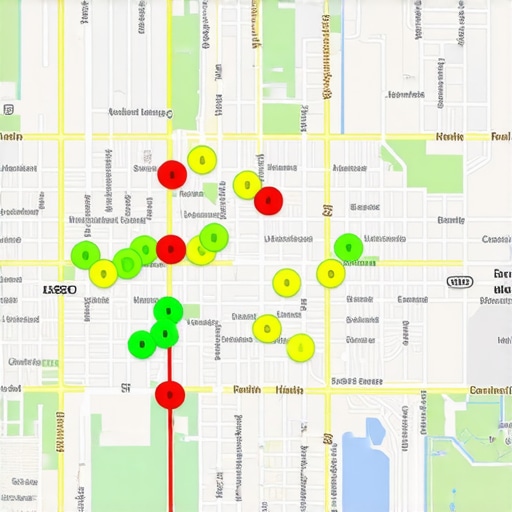
The Future of Maps Depends on Real-Time Proof
Looking ahead, the game is shifting toward live data. I predict that Google will soon use AI to cross-reference your ‘Live View’ data with your actual inventory and shop-floor activity. We’re already seeing ‘in-stock’ markers and ‘busy-ness’ levels influencing user behavior. This means software that moves the needle for brands will eventually need to sync directly with your Point of Sale system. The future of local signals that carry more weight than keywords is all about real-time proof of life. Are you actually there? Are you actually serving people right now? Watch those tiny details in your google listing checklist like your holiday hours and real-time photos, because Google’s AI is scanning them for consistency.
Defeat the Competition with Better Engagement Signals
If you are tired of playing the waiting game, it is entirely possible to generate leads from google maps without using paid promoted pins by focusing on the ‘Request a Quote’ feature. This button is a massive engagement signal that many businesses ignore because they don’t want to answer messages. However, high response rates tell Google you are an active, reliable business. Don’t let the forgotten details in your maps seo checklist sink your visibility. Try this today: Enable your ‘Request a Quote’ button in the Google Business Profile dashboard and respond to every inquiry within 15 minutes. This simple move triggers the engagement signals that can push you past older, more established competitors who are too slow to adapt.
The Hardest Lesson I Learned About Dominating the Map Pack
Looking back at my early failures, the biggest realization was that Google does not owe you a ranking just because you exist. I spent years thinking that checking boxes on an optimization checklist was a one-time ticket to the top. The truth is much messier. Map rankings are dynamic, shifting with every new review and every small update your competitor makes.
I have seen businesses plummet because they ignored a single suggested edit that changed their phone number. It taught me that monitoring map health is more like tending a garden than building a skyscraper. If you stop watering it, it withers. I also learned that perfect is the enemy of authentic. Sometimes, a slightly messy profile with real, raw customer photos outperforms a polished corporate one because users and Google AI can smell the difference between a real business and a marketing facade.
The Only Tools You Actually Need to Win Local SEO
You do not need a thousand-dollar software suite to see results, but you do need precision. Here is what I personally rely on every single day to keep my clients in the Top 3:
- Local Falcon: This is my go-to for visual rank tracking. It shows you exactly where your visibility drops off on a map grid, which is essential for understanding the proximity myth.
- Whitespark Blog: The team there provides the gold standard for data-backed local SEO research. If you want to know which local signals carry more weight this year, this is where you find the truth.
- Google Search Console: It is free and direct. I use it to track which near me keywords are actually driving impressions to my service pages.
- A Manual Audit: I always keep a step-by-step map optimization guide open during audits to ensure no small detail, like holiday hours or photo tags, slips through the cracks.
Take the Lead and Watch Your Traffic Explode
The gap between the businesses that struggle and the ones that dominate is usually just a few weeks of consistent effort. You have the tools, you have the strategy, and you now know that your website structure is the secret weapon your competitors are likely ignoring. Don’t let your maps SEO checklist collect digital dust. Start with one service page today, link it to your primary location, and watch how Google begins to reward your clarity. Your journey toward peak map health starts with that first link. Have you ever noticed a sudden drop in your map rankings after changing something on your website? Let me know in the comments below!