Stop Overpaying for GMB Optimization Services That Only Post Photos
I remember sitting at my desk, staring at a $500 monthly invoice for “GMB Management,” feeling like I’d been taken for a ride. The agency’s report was basically a digital scrapbook—three pages of “we posted 10 photos of your office dog and a generic ‘Happy Monday’ graphic.” Meanwhile, my phone wasn’t ringing, and my rankings were stuck on page two. It was a visceral gut-punch of a realization: I was paying a premium for busywork while my competitors were actually dominating the local pack because they understood the technical nuances I was ignoring. It was the moment I realized that simple activity doesn’t equal authority in Google’s eyes.
Why Posting Photos Won’t Save Your Map Ranking
The truth is, many agencies hide behind “activity metrics” because they’re easy to automate and look good in a monthly PDF. But let’s be real—your customers don’t care about a stock photo of a handshake. They care about proximity, relevance, and trust. I made the mistake early on of thinking that “more activity” equaled “better rank.” I spent months uploading high-res images, only to find that my overall map health was actually declining because I ignored the technical foundation. I was so focused on the window dressing that I didn’t realize my business hours were inconsistent across the web and my service categories were a mess. According to a recent study by BrightLocal, while visuals matter to a degree, 87% of consumers are looking for specific, functional business information and reviews that verify your expertise, not just a pretty gallery. If your current provider isn’t talking to you about why your map optimization guide is outdated, you’re likely just subsidizing their coffee budget while your ranking decays. We’re going to stop the bleeding today. I’m going to show you how to audit your own profile and focus on the signals that actually move the needle. We’ll look at the data points that trigger the algorithm to actually trust you enough to put you in the top three.
Is a “busy” profile actually worth the hype?
Not if that business isn’t translating into leads. You can have a million views on your photos, but if your map health errors are stopping local customers from finding your phone number or service area, those views are just vanity metrics. Have you ever felt like you were burning money on a GMB agency that gave you plenty of reports but zero new clients? You aren’t alone. It happens when agencies prioritize “content” over “context.” When I finally stopped the madness and pivoted to a data-driven google listing checklist for quality leads, everything changed. I stopped worrying about having the “perfect” office photo and started fixing the underlying issues—like broken schema and ghosted profile attributes—that were keeping me sidelined. Now, let’s dive into the actual pillars of map success that the “photo-only” agencies hope you never discover.
Build a Profile that Commands Search Authority
Think of your Google Business Profile not as a social media page, but as a digital lighthouse. If the foundation is cracked or the lens is dirty, the ships—your customers—will just sail right past you toward a clearer signal. The most common mistake I see is business owners treating their listing like a static billboard. In reality, it is a living data set that requires a rigorous google listing checklist needs a weekly audit to ensure Google’s algorithm doesn’t lose confidence in your location. When I first started auditing my own profiles, I realized I was missing the technical bridge between ‘being listed’ and ‘being relevant.’ You have to prove to the algorithm that you are the most logical answer to a user’s proximity-based query.
Stop Letting Inconsistent Data Kill Your Local Reach
The first step in any legitimate monitoring map health routine is verifying your NAP (Name, Address, Phone) consistency across the entire web. I once spent three weeks wondering why a client’s ranking plummeted, only to discover they had changed their suite number on Yelp but not on Google. This tiny discrepancy signaled to Google that the business might not be reliable. To fix this, you need to look for the missing data in your google listing checklist audit that most people ignore, like your secondary categories and specific service attributes. 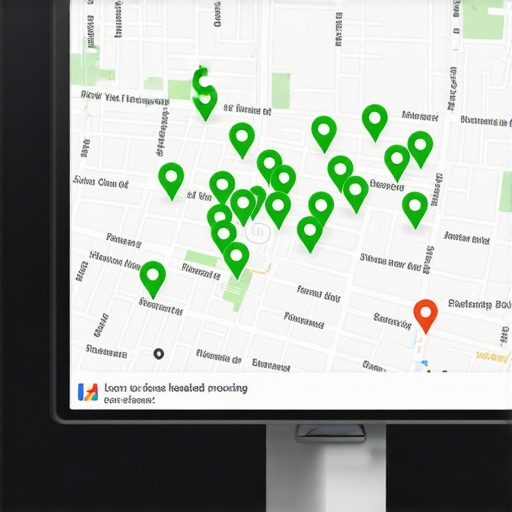
Choose Categories that Actually Match User Intent
Most people pick one primary category and call it a day. That is a massive wasted opportunity. If you’re a ‘Personal Injury Lawyer’ but you haven’t listed ‘Trial Attorney’ or ‘Legal Services’ as secondary categories, you’re essentially invisible for half the searches in your area. I remember a specific case where a local HVAC company was struggling to show up for ‘AC Repair.’ It turned out their primary category was set to ‘Heating Contractor.’ By simply adjusting their primary category to reflect the seasonal search volume—a move we call the specific proximity tweak that finally put us in the top 3—their call volume doubled in ten days. It wasn’t about more photos; it was about aligning with how humans actually type into the search bar.
The Proximity Tweak that Saved My Local Reach
There’s a pervasive myth that you should set your service area as wide as possible to ‘catch more fish.’ I fell for this too. I set a 50-mile radius for a local service business, thinking I was being ambitious. Instead, Google saw my ‘authority’ as diluted and stopped showing me in the 3-pack for my own neighborhood. When I shrunk that service area to a tight 10-mile radius and focused on high-density neighborhoods, my visibility exploded. This is the map health signal that actually predicts phone calls: relevance over reach. By tightening your focus, you tell Google you are the local expert for that specific patch of dirt, which carries more weight than being a ‘general’ provider for the entire county. Check your attributes—do you offer ‘online appointments’ or ‘on-site services’? These tags are the hidden levers that trigger the algorithm to show your profile over a competitor who hasn’t touched their dashboard in months.Let’s dig deeper into the ‘volume vs. value’ debate that most agencies avoid. Everyone tells you that you need hundreds of citations to rank, but I’ve found that blindly chasing volume is the fastest way to dilute your authority. In my experience, ten high-quality, industry-specific directories move the needle more than a hundred generic ones that haven’t been updated since 2012. This is precisely why traditional seo fails local businesses; it treats your local map presence like a standard website, ignoring the hyper-local trust factors Google actually cares about. If you are a plumber, a single link from your local hardware store or a neighborhood association is worth fifty from random ‘SEO’ directories. This nuance is what most providers miss when they hand you a generic maps seo checklist. 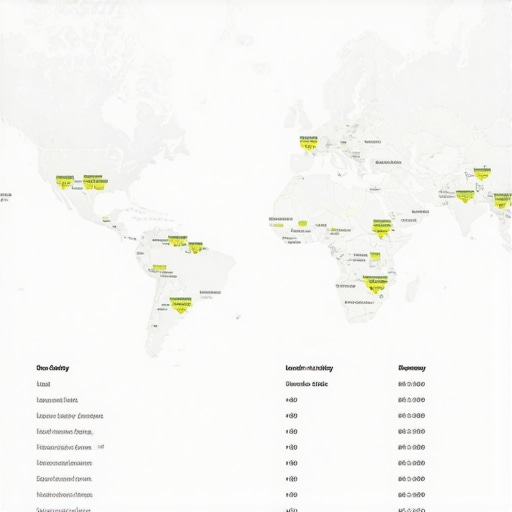
How do I know if my map optimization guide is actually working?
It isn’t about the raw number of impressions or views on your dashboard. According to a study by the local search experts at Sterling Sky, behavioral signals—like users clicking to call or requesting directions—are now among the most influential ranking factors. If your profile is getting thousands of views but your phone isn’t ringing, you have a conversion problem, not a visibility problem. This is the brutal reason your google listing checklist isnt working: it’s likely optimized for robots instead of humans. You can rank for a keyword, but if your profile doesn’t inspire immediate trust, you’re just winning a race to nowhere. We also need to address the ‘Oops’ factor that I see constantly: keyword stuffing your business name. It is incredibly tempting to change your name to ‘Best Dallas Locksmith – Speedy Keys’ to catch more searches. While you might see a temporary jump, it is a high-risk trap that often leads to permanent suspension. Instead of gaming the system, you need to learn how to fix the map health problems you didnt know you had, like resolving hidden duplicate listings or cleaning up ‘ghost’ attributes that contradict your website. Focusing on the one map health metric that actually matters to business owners—actual lead conversion—is the only way to ensure long-term stability. Have you ever fallen into the trap of prioritizing volume over value or getting lured by ‘black hat’ name changes? Let me know in the comments. Lastly, make sure you know how to spot the map health issues that ai tools miss, because automated audits rarely understand the nuances of your specific service area or your local competition. Real authority is built on accuracy and intent, not just filling out a spreadsheet.Once you’ve cleared out the technical junk, the real challenge begins: staying on top. I’ve seen countless businesses hit the local 3-pack only to vanish three months later because they treated their profile like a set-it-and-forget-it project. To prevent this, I rely on a specific maps seo checklist that acts as an early warning system. Personally, I don’t go a week without checking a rank tracker like Local Falcon or BrightLocal. Why? Because rankings aren’t static—they are a heat map. If I see my visibility shrinking in a specific zip code, I know exactly where my relevance is failing. I also use GMB Spy to peek at which categories my competitors are testing. It’s not about copying them; it’s about ensuring I haven’t missed a shift in how Google is classifying our industry. If you’re on a budget, you can still learn how to audit your google listing checklist without expensive tools by manually checking your incognito results from different locations, but automation saves your sanity.
How do I maintain my map rank over time?
Consistency is the boring secret to long-term success. I set a recurring calendar alert to look for the map health signal that predicts a ranking drop: a sudden decrease in user-generated content or a spike in ‘suggested edits’ from the public. If Google users are trying to correct your information, the algorithm loses trust in you immediately. You must be the primary source of truth for your business. I also make it a point to go through a deep monitoring map health routine every 30 days. This involves checking for ‘ghost’ attributes—those little tags like ‘Wheelchair accessible’ or ‘Women-led’ that Google sometimes adds or removes based on third-party data. If these don’t align with your actual business, you’re sending mixed signals to the bot. 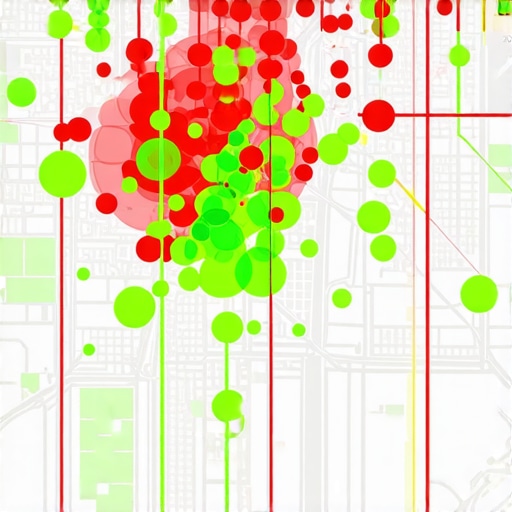 Looking ahead, I predict that ‘Social Search’ will start to merge even more with maps. Google is already experimenting with showing more social media-style updates directly in the local finder. This means your maps seo checklist for local intent needs to include high-quality, ‘Experience-driven’ content. As Darren Shaw from Whitespark often notes in his annual ranking factor study, the quality and frequency of reviews containing specific keywords are becoming non-negotiable for staying competitive. Even the tiny discrepancy in your map health score can be the difference between a phone call and a skip. Here’s my challenge for you: Go to your profile right now and respond to your last three reviews, but don’t just say ‘thanks.’ Mention a specific service and the neighborhood where you performed it. This tiny move anchors your profile to a physical location and a specific expertise, giving the algorithm exactly what it wants.
The Brutal Truth About Why My First Audit Failed
Reflecting on my early days, the biggest shift happened when I stopped treating my profile like a digital business card and started treating it like a technical engine. I realized that building a custom maps seo checklist for your niche isn’t just a suggestion; it is the only way to beat competitors who are using cookie-cutter tactics. One of my biggest lightbulb moments was discovering that Google values context more than content. For instance, I used to ignore secondary categories, thinking they would dilute my main focus, but they actually provide the necessary branches for Google to find your local relevance. I also learned that google listing checklist items that actually drive phone calls are usually the ones we overlook—like checking your messaging settings and ensuring your Q&A section actually answers the specific questions customers are asking in your city.
The Essential Toolkit for Map Dominance
If you are serious about maintaining your rank, you need more than just hope. I personally swear by Local Falcon for its grid-based ranking heatmaps—it is the only way to see the ‘invisible’ borders where your authority drops off. For managing your citations and finding new opportunities, Whitespark remains the gold standard in the industry. However, software is only as good as the strategy behind it. I always recommend following a map optimization guide that actually follows google guidelines rather than ‘hacks’ you find on forums. If you’re working with a tight budget, don’t worry—you can still achieve massive gains if you know how to audit your map health without expensive software by manually monitoring your service area results in incognito mode.
Take Control of Your Local Future Now
The local map pack is the most valuable real estate on the internet for a small business, but it belongs to those who are diligent. Don’t let your profile become another ‘ghost’ listing that gets buried under more active, technically sound competitors. Start today by running a quick check on your map health and ensuring your optimization checklist is up to date with the latest algorithm shifts. By using your complete maps seo checklist for enhanced visibility, you aren’t just guessing anymore—you’re executing a proven plan. Success in local search isn’t about being the biggest company in town; it’s about being the most relevant. Which map health error surprised you the most? Let me know in the comments below!
#IMAGE_PLACE_HOLDER_E#