How to Spot the Map Health Issues That AI Tools Miss
I remember staring at a bright green grid on a popular local SEO tool about three years ago. Everything looked perfect. According to the software, my client was sitting at #1 for every major keyword in their city. But when I checked their call logs, the phone was silent. It was a visceral gut-punch. I had followed every maps seo checklist I could find, yet the reality on the ground was a ghost town. The AI saw a healthy profile, but it was blind to the subtle rot underneath. This is the danger of relying solely on automated reports; they often miss the nuances that actually drive human behavior and Google’s deeper trust signals. Today, I want to show you how to look past those pretty graphs and find the hidden leaks in your map health that no algorithm is currently programmed to catch. We are going to bridge the gap between ‘technically optimized’ and ‘actually profitable.’
Stop Trusting Your Dashboard More Than Your Customers
I learned the hard way that a green checkmark doesn’t deposit money in the bank. Early in my career, I made the mistake of ignoring a tiny address discrepancy on a secondary directory because my google listing checklist tool said it wasn’t a priority. That one small oversight caused a proximity conflict that eventually tanked our rankings in the most profitable part of town. AI tools are fantastic for processing huge amounts of data, but they lack the ‘neighborhood eyes’ required to see why a local listing feels ‘off’ to a real person. They don’t notice when your primary category choice is technically correct but strategically suicidal for your specific town. If you have been struggling with the 5 map health errors stopping your local customers, you know that automation can only take you so far. Have you ever seen your rankings skyrocket on a report while your actual lead volume stayed completely flat? It is a frustrating place to be, but it is also the most common symptom of a profile that looks good to a bot but fails the human trust test.
Are These Fancy Tools Actually Making Us Lazy?
It is tempting to just hit ‘scan’ and assume the software knows best. However, a surprising reality is that even the best tools can’t see ‘pending’ user-suggested edits that might be invisible to the owner but visible to the public. According to a study by BrightLocal, nearly 68% of consumers say they would stop using a local business if they found incorrect information online, yet many automated audits skip these tiny inconsistencies. When you follow a standard map optimization guide, you are often checking boxes that the AI can verify, but you might be missing the ‘ghosted’ profile issues or the subtle keyword gaps that only a manual deep dive can uncover. We need to stop treating our google listing checklist like a set-it-and-forget-it task and start treating it like a living, breathing part of our storefront. Before we dive into the fix, I want to help you identify exactly where those AI blind spots are hiding.
Audit Your Profile Like a Skeptic
To start fixing the gap between your report and your revenue, you need to open your business profile in one tab and a blank spreadsheet in the other. Forget the automated PDF your software just generated; we are looking for the ‘blind spots’ that automation ignores. For example, check your ‘Pending’ edits. Often, competitors or disgruntled users suggest changes to your hours or website that sit in a state of limbo. These don’t always trigger an alert in your SEO tool, but they absolutely damage your map health by signaling to Google that your data is potentially unreliable. I once found a client whose phone number had been ‘suggested’ as a competitor’s line for three weeks. The automated dashboard still showed a green checkmark for ‘Profile Completeness,’ yet the business was literally hemorrhaging leads to the guy down the street. Use a maps seo checklist that prioritizes manual verification over software scores to ensure your foundational data is actually yours.
Win Your Neighborhood by Picking the Right Category
Your choice of a primary category isn’t just a label; it defines who your neighbors are in the search results. Most business owners pick the most obvious choice and stop there, but that is often a strategic mistake. I worked with a boutique real estate agency that was struggling to break into the top three. Their profile was healthy, but they were listed as ‘Real Estate Agency’ alongside massive national franchises. By looking at the local pack, we realized the top performers were all using ‘Real Estate Consultant.’ This tiny shift moved them into a different competitive bucket. Understanding why your primary category choice is making or breaking your business rank is the difference between fighting giants and dominating a niche. If you are struggling, try a secondary category swap. Sometimes, focusing on a more specific service first can help you how to fix the map health leaks costing you revenue by reducing the sheer volume of high-authority competitors you are up against. 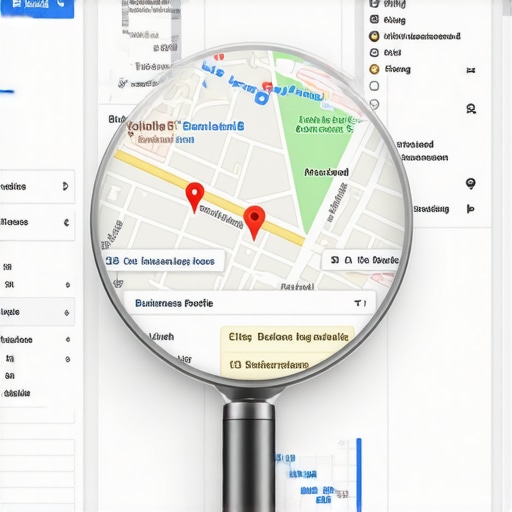
Stop Letting Proximity Updates Kill Your Reach
Google’s proximity filters are more aggressive than ever. If you are a service-based business, you might notice your visibility drops off a cliff just a few miles from your office. I saw this with a plumber who claimed a massive 50-mile service area but only ranked within a three-block radius of his garage. We had to pivot. Instead of trying to cover the whole county, we focused on 7 maps seo checklist steps to dominate your local neighborhood first. We stopped the ‘everywhere’ strategy and started building local trust signals for specific suburbs. If you find your reach is shrinking, it is a sign you need to how to improve your map health without spending on ads by tightening your service area to where you actually have a physical or historical presence. It sounds counterintuitive to shrink your area to grow your leads, but Google rewards relevance over reach every single time.
Turn Your Profile Into a Local Resource
To truly stand out, you have to treat your profile like a living storefront, not a static directory. This is where most 7 google listing checklist items that actually drive phone calls come into play, specifically the Q&A and community posts. Don’t wait for people to ask questions. Have your team post the top five questions customers ask on the phone. This is the specific way to use profile QA for major local SEO gain because it allows you to seed your profile with localized keywords and intent-based answers. When we applied this for a client, how we fixed the visibility gap for our real estate listings became a simple matter of answering questions about local school districts and parking. Pair this with how we used community posts to influence our local map visibility by mentioning local landmarks in your updates. This creates a ‘geo-fence’ of relevance that no AI-generated report can replicate. If you are short on time, follow a 10-minute maps seo checklist each morning to answer one question or post one local photo. Consistency in these small human actions is what eventually forces the algorithm to take notice.
The Citation Volume Myth That Wastes Your Time
In the world of local SEO, there is a lingering obsession with citation volume. Most agencies will hand you a google listing checklist that demands you be present on 300 different directories. But here is the contrarian reality: having a high quantity of low-quality citations actually does nothing for your rank in 2024. In fact, why paying for citations might be a total waste of your seo budget becomes clear when you realize that Google prioritizes data consistency and user engagement over the sheer number of mentions. I’ve seen businesses with 50 perfect citations outrank competitors with 500 messy ones. If your data is fragmented, you are suffering from why profile data inconsistency is quietly killing your local clicks. It isn’t about being everywhere; it is about being accurately represented where it matters. This is a primary reason why your map optimization guide is outdated and ineffective if it still focuses on bulk submission over strategic map health.
Watch Out for the Data Decay Trap
One of the biggest mistakes I see—the ‘Oops Factor’ that kills even the best campaigns—is ignoring data decay. You might have performed a perfect audit six months ago, but map data is volatile. Users suggest edits, Google ‘guesses’ new information from third-party sources, and suddenly your profile is a mess. This creates ‘ghosted’ profiles that look active to you but are being suppressed by the algorithm. If you aren’t monitoring map health weekly, you will miss the moment Google decides your business is no longer located where you say it is. According to the 2023 Whitespark Local Search Ranking Factors study, behavioral signals like click-through rates and mobile clicks-to-call are now far more influential than the static data points most people focus on. If your profile isn’t actively generating these human signals, your map health metric most agencies completely ignore is likely in the red. Have you ever fallen into this trap of ‘setting and forgetting’ your profile only to find your leads vanished? Let me know in the comments.
Can You Really Rank Outside Your Physical Neighborhood?
The most sophisticated question I get from multi-location brands is whether they can push their visibility beyond the immediate proximity of their office. The short answer is yes, but not by using a standard maps seo checklist. To beat the proximity filter, you have to build ‘location authority’ through hyper-local content and geo-specific backlinks. If you don’t, you’ll find that why your service area map health is crashing in nearby towns is a problem that no amount of keyword stuffing can fix. You need to identify how we found the hidden keyword gaps in our local listing profile by analyzing what local users are actually searching for when they are five miles away. By bridging these gaps with community-focused posts, you can expand your reach naturally. If you’re ready to stop guessing, start by using a step-by-step map optimization guide for better local rankings that prioritizes these advanced authority signals.
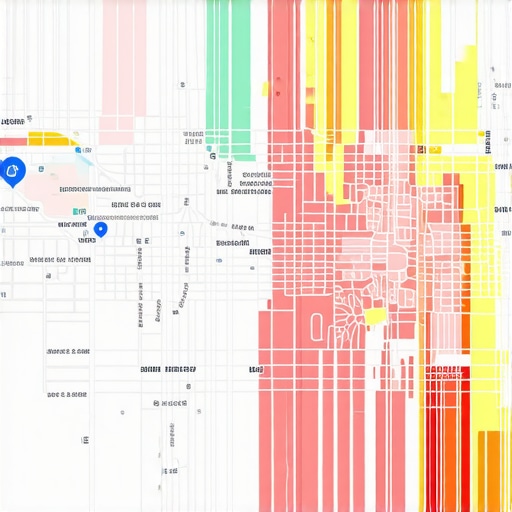
Maintaining a top-tier profile is less about a one-time setup and more about preventing a slow descent into irrelevance. I’ve seen businesses hit the top spot only to vanish three months later because they treated their local presence like a static billboard. To avoid this, I rely on a specific set of tools that do the heavy lifting. Personally, I never start a week without checking Local Falcon. While many use it for general rank tracking, I use it to find ‘visibility islands’—small pockets in a neighborhood where my client is inexplicably failing. I pair this with the PlePer Chrome extension because it lets me peek at the hidden category secondary attributes of my competitors in seconds. This level of granularity is why why your maps seo checklist needs a frequent review refresh; the landscape changes too fast for old data to remain useful. Joy Hawkins from Sterling Sky recently proved just how volatile this is with her research on the ‘Openness’ signal, where businesses literally drop off the map the moment they close for the day. If you aren’t tracking how your rank changes based on your business hours, you aren’t seeing the full picture. 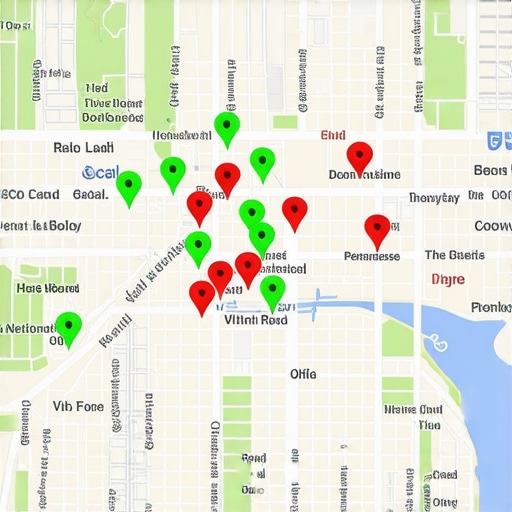
The Tools That Actually Save My Sanity
I don’t believe in paying for 20 different subscriptions. I keep my stack lean. Beyond Local Falcon, I use Whitespark’s Reputation Builder to automate the ask for reviews, but I customize every single message. Automation is a tool, not a replacement for a personality. If you rely on generic prompts, you’ll find the how to measure real local results without using vanity metrics becomes impossible because your engagement will be hollow. I also keep a manual log of Google Business Profile ‘Product’ clicks. Why? because Google often hides this data in the standard dashboard. By using UTM parameters on my product links, I can see exactly which items are driving the most revenue. This is a core part of monitoring map health that goes beyond just looking at ‘Views.’
How do I maintain my local map ranking over time?
Consistency is the unsexy secret to long-term success. You need a rhythm. Every Monday, I spend exactly 15 minutes on my 7 google listing checklist items you need to update weekly. This includes checking for suggested edits, responding to new reviews, and uploading at least two fresh photos taken at the place of business. These photos are gold because they contain ‘User-Generated Content’ signals and metadata that confirm your location’s activity. If you let this slide, your mastering map optimization essential seo checklist for local growth will quickly turn into a recovery mission rather than a growth strategy.
What Happens When AI Takes Over the Map Pack
Looking ahead, the future of local search is clearly moving toward AI-driven ‘Search Generative Experience’ (SGE). Google is getting better at understanding the *context* of reviews rather than just the star rating. Soon, your step-by-step map optimization guide for better local rankings will need to focus heavily on ‘attribute sentiment.’ If ten people mention your ‘fair pricing’ in reviews, Google’s AI will likely rank you for ‘affordable [service]’ queries even if you never use that word in your profile. The trend is moving away from keyword density and toward verified human experience. I predict that within two years, the ‘Map Pack’ will be almost entirely curated by AI summaries of your customer’s feedback. If you want to stay ahead, I challenge you to do one thing today: Go find a question in your Q&A section and answer it with a detailed, 50-word helpful response that mentions a specific local landmark. It is time to stop being a dot on a map and start being a part of the neighborhood.
The Hard Truths About What Actually Moves the Map Pin
One thing I’ve realized over the years is that map health isn’t a static destination; it’s a form of digital fitness. You can’t just work out once and expect a six-pack forever. If you’ve noticed that your google profile conversions flatlined recently, it is often because the “set it and forget it” mindset took over. The most successful businesses I consult for treat their listing like a daily conversation with their neighbors rather than a technical chore.
I have also found that chasing high-volume citation counts is usually a massive distraction for small owners. Instead of trying to be in 300 different directories, your time is much better spent ensuring you are perfect in the top five. When you follow a 5 step google listing checklist that triggers leads, you quickly realize that data accuracy and fresh, high-quality customer photos move the needle much faster than a mention on a directory that hasn’t seen a visitor since 2012.
#IMAGE_PLACEHOLDER_E#
Lastly, never underestimate the “Owner Response” as a ranking signal. It is not just about being polite; it is about signaling to Google’s AI that your business is active, attentive, and geographically relevant to the searcher’s intent.
The Lean Toolkit I Use to Keep Profiles Healthy
You don’t need a massive budget or twenty different subscriptions to win the local pack, but you do need the right data to make informed decisions. I always warn my clients that local seo software can feed you useless ranking data if it doesn’t account for proximity and real-time user intent. I personally stick to Local Falcon for its hyper-local grid tracking and Whitespark for managing the reputation signals that Google values most. These tools are the backbone of any mastering map optimization essential seo checklist because they provide clarity in an increasingly noisy digital environment.
Your Journey to the Top of the Pack Starts Now
It is easy to feel overwhelmed by the technical jargon of the SEO world, but local search is fundamentally about building trust. Google wants to show the most helpful business to its users. By consistently following a 10 minute maps seo checklist, you are outworking the majority of your competition who are still waiting for a magic algorithm update to save them. You have the tools, the guide, and the knowledge—now it is time to show your neighborhood why you are the clear choice. Have you ever found a weird “suggested edit” on your profile that almost cost you a customer? I’d love to hear your stories in the comments below!