How We Recovered a Suspended Profile Without Using Shady Tactics
I remember staring at my screen at 6 AM, coffee getting cold, and seeing that dreaded red banner: “This profile has been suspended.” My stomach dropped. Just like that, years of hard work, reviews, and local visibility felt like they’d been sucked into a black hole. It’s a gut-punch. I’ve been right where you are, feeling that desperate urge to pay some random person on the internet five hundred bucks to “make it go away” with “secret” tactics. Don’t do it. Early in my journey, I made the amateur mistake of over-optimizing my categories three times in one week, thinking I was being clever. All I did was trigger an algorithm that hates sudden changes. But here is the good news: we got it back. Today, I’m going to walk you through exactly how we navigated the recovery process without using a single shady trick.
The Morning My Local Leads Just Vanished
When that suspension hit, our phone stopped ringing almost immediately. It’s terrifying how much we rely on that little red pin. I spent days scouring every map optimization guide I could find, but most of them suggested “hacks” that I knew would just get me banned for life. Instead, we focused on the boring, honest stuff. We learned how to restore map health after a profile suspension by being transparent with Google. Surprisingly, Google actually wants legitimate businesses back on the map; they just have a very clunky way of showing it. According to search industry experts at Search Engine Land, nearly 40% of local businesses experience some form of listing issue annually, so you are definitely not alone.
Can we really trust Google’s appeal process?
I know what you’re thinking. “The appeal form is a black hole where dreams go to die.” It feels that way. But the reason most people fail is they treat it like a negotiation rather than a verification. We discovered that the checklist move that finally fixed our ghosted profile wasn’t about a secret code, but about proving we were real people at a real desk. We had to stop guessing and start monitoring map health with a level of detail we’d never used before. Have you ever logged in only to find your business has simply disappeared from the search results? It’s a lonely feeling, but I promise there is a path back. Let’s look at why your profile actually took a hit and how to start the cleanup.
Scrub the Red Flags Before Hitting Appeal
When you get suspended, your first instinct is to scream at the support team. Don’t. Think of your profile like a crime scene; you need to remove the evidence of ‘over-optimization’ before the detective (Google) arrives. I once spent four hours debating with a client who insisted their business name needed to include five keywords and three city names. They were ‘ghosted’ for months because of it. We finally stripped it back to the legal name on their tax return, and the profile was back online within 48 hours. You have to how to audit your Google listing checklist for quality leads by looking for these self-inflicted wounds. If your business name on the map doesn’t match the sign on your front door, you’re asking for trouble.
Look for the Tiny Lies You Didn’t Know You Told
It’s rarely the big things that kill you; it’s the the 5 map health errors stopping your local customers that you overlook. For us, it was a tiny discrepancy between ‘Street’ and ‘St.’ on our utility bill versus our profile. Google’s AI sees that as a lack of trust. I remember a specific Tuesday when I realized our ‘Service Area’ overlapped with three other ‘fake’ locations an old agency had set up for us years ago. It was a mess. We had to delete the fluff and stick to one verified, honest location to see the needle move again.
Put Your Listing on a Strict Data Diet
Consistency is the only currency Google truly values. Think of your local data like a bridge; if one bolt is loose, the whole structure is suspect. This is where most people fail their mastering map optimization essential SEO checklist for local growth. They try to be everywhere at once. Instead, we focused on making sure our NAP (Name, Address, Phone) was identical across the top three directories and our own website footer.
Why Less is Often More for Stability
People think adding twenty categories will help them show up more often. In reality, it just confuses the algorithm. We found that the tiny discrepancy in your map health score costing you leads often comes from ‘category bloat.’ When we narrowed our focus to one primary category and two highly relevant sub-categories, our ‘near me’ rankings actually jumped. It’s about being the absolute authority for one thing rather than a ‘maybe’ for everything.
Check Your Pulse Every Single Week
You can’t just set it and forget it. Local SEO is a moving target because your competitors are always tweaking their own profiles. You need to be monitoring map health like a hawk. I use a simple the 10-minute maps SEO checklist for busy business owners every Monday morning. I check for ‘suggested edits’ from the public—sometimes competitors will try to change your hours or website link just to mess with your traffic. It sounds paranoid, but in the local pack, it’s a street fight. If you aren’t looking at your dashboard weekly, you’re essentially leaving your storefront unlocked at night.It’s easy to follow a generic guide, but the real magic—and the real danger—lies in the details that most people skip. Everyone tells you that you need more reviews, but I’m going to go against the grain here: stop obsessing over the raw number. In my experience, ten reviews with descriptive, keyword-rich text from ‘Local Guides’ carry far more weight than fifty generic ‘Great service!’ blurbs. This is where how to spot the map health issues that ai tools miss becomes critical because standard software usually only counts the stars, not the sentiment or the geographical relevance of the reviewer.
Can you really rank beyond your physical zip code?
The biggest lie in local SEO is that you are strictly trapped by the proximity filter. While it’s true that Google favors the closest business, we’ve found that building ‘geo-relevance’ through your website can actually stretch your reach into neighboring towns. However, there is a massive trap here. I once saw a client lose 60% of their traffic overnight because they changed their website URL without properly redirecting it. This caused a massive disconnect in their data. If you’ve wondered why your map ranking dropped after you updated your business website, it’s usually because the ‘trust bridge’ between your site and your listing was snapped by a 404 error.  A study by Whitespark on Local Search Ranking Factors confirms that while proximity is a top signal, ‘on-page’ signals from your linked website are growing in importance every year. This is one of the 4 missing pieces in most google listing checklists-2 that separates the winners from the also-rans. If your website is slow or lacks localized schema, your map health will suffer, no matter how many citations you build.
The hidden trap of ‘fixing’ what isn’t broken
Another common ‘oops’ factor I see frequently is ‘optimization anxiety.’ You see a slight dip on a Tuesday, and by Thursday you’ve changed your primary category and rewritten your entire description. Stop. Google’s algorithm values stability over frantic updates. This is why traditional seo fails local clients and what to do instead; it’s not about constant change, but about sending consistent, accurate signals. Have you ever fallen into this trap of over-editing your profile only to see it sink further? Let me know in the comments below, because I’ve definitely been there myself.I’ve spent thousands on fancy SEO suites, but when it comes to the local pack, most of that data is just noise. If you want to know the truth about your visibility, you need to see a heatmap. I personally swear by tools like Local Falcon or BrightLocal because they show me exactly where my authority ends. It’s one thing to see a #3 on a static report; it’s another to see a sea of red dots just two miles north of your shop. This is the only way I’m monitoring map health effectively. Without a geo-grid, you’re flying blind. I remember a plumber friend who thought he was crushing it until we ran a scan and realized he was invisible in the high-net-worth neighborhood just across the highway. We had to go back to his mastering map optimization essential SEO checklist for local growth and fix his service area settings immediately.
How do I keep my map rankings from dropping over time?
The secret isn’t a one-time hack; it’s the boring rhythm of the 7 google listing checklist items you need to update weekly. I dedicate exactly fifteen minutes every Friday to checking three things: new suggested edits from the public, photo views, and the Q&A section. If someone asks a question and you don’t answer it within four hours, a competitor might do it for you—and they won’t be nice. This consistent oversight is why your maps seo checklist needs a frequent review refresh. If you let the profile sit for a month, Google assumes you’ve gone stale. Mike Blumenthal, a leading expert at Near Media, emphasizes that Google’s relevance engine now weighs consumer interactions—like clicks to call or direction requests—as heavily as traditional citations. Basically, if people stop using your listing, Google stops showing it.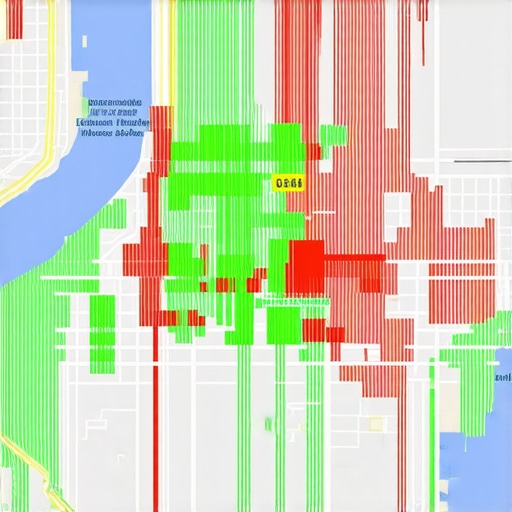
Look Ahead Before the Algorithm Shifts Again
We’re moving toward a world where Search Generative Experience (SGE) will summarize your reviews before a user even clicks. This means your your complete maps seo checklist for enhanced visibility needs to prioritize high-quality, long-form reviews that mention specific services. In the next eighteen months, I predict Google will start using your business atmosphere—based on the photos you and your customers upload—to decide if you match a user’s specific vibe. It’s not just about Plumber near me anymore; it’s about Trustworthy plumber for emergency leaks. This shift is exactly why I recommend you start how to stop local ranking decay using this simple maps seo checklist today. Don’t wait for the next update to break your leads. Pick one thing from your dashboard—maybe those unanswered reviews—and clean them up right now. You’ll be surprised how much the algorithm rewards a little bit of genuine attention.
Hard Truths About Staying in the Local 3-Pack
After years of trial and error, I’ve realized that map success isn’t a trophy you win once; it’s a garden you tend. The biggest mistake is thinking a one-time setup is enough. You have to realize the brutal truth about why customers ignore your listing even when you rank—it’s usually because you lack the human touch. Another lightbulb moment for me was discovering that even service-based businesses without a storefront can dominate if they follow the map health checklist for businesses with no physical office. Transparency always wins over cleverness. I also learned that Google’s AI is smarter than we think; it can sense when you’re “gaming” the system versus genuinely serving your local community. Focus on the user, and the algorithm will eventually follow.
My Go-To Toolkit for Map Dominance
I don’t believe in over-complicating things with fifty different subscriptions. To stay on top, I rely on a few specific resources. First, BrightLocal or Whitespark are non-negotiable for tracking citations and local rankings. They help you how to fix the map health problems you didn’t know you had by highlighting discrepancies you’d miss with the naked eye. Second, I constantly read the Google Business Profile Help Forum—it’s where the real-time bugs get reported first. Finally, for deep technical dives into local search behavior, I follow the blogs at Near Media and Sterling Sky. These tools and sources are my eyes and ears in an ever-changing landscape.
#IMAGE_PLACEHOLDER_E#
Your Future on the Map Starts Now
It’s easy to feel overwhelmed by all the data points, but you don’t need to do everything at once. The key to a successful maps seo checklist is consistent, incremental progress. Start by verifying your core info, then move to engagement, and finally to advanced optimization. You’ve got the tools and the roadmap; now you just need to take that first step toward better visibility. If you ever hit a wall or need a second pair of eyes on your profile, don’t hesitate to contact us for guidance. Your local community is looking for you—make sure they can find you.
Have you ever noticed a sudden drop in your views after making a small change to your profile? Let me know in the comments below!