The Checklist for Auditing Your Local Competition Without Pro Tools
I’ll never forget the Tuesday afternoon I spent banging my head against my desk. I had followed every maps seo checklist I could find, yet the guy down the street—the one with the grainy profile photo and zero social media presence—was still sitting pretty in that #1 spot. It felt personal. I assumed he must be paying some fancy agency thousands of dollars for pro tools and secret software. I almost whipped out my credit card to buy a subscription I couldn’t afford just to see what he was doing. But then I realized something: Google tells us everything we need to know for free if we just know where to look. Today, I’m going to share how I stopped obsessing over the black box of SEO and started performing a DIY audit that actually gets results without costing a dime.
Stop Guessing Why Your Neighbors are Outranking You
The truth is, most of us are flying blind when it comes to competition. We see a rival ranking higher and we just assume they have better backlinks or more reviews. I made that exact mistake early on. I spent three months chasing reviews, only to find out later that the competitor was winning because of a tiny, overlooked error in my own map listing that had nothing to do with my star rating. You don’t need a $200-a-month subscription to uncover these local ranking signals. You just need a pair of eyes and a bit of patience to look at their profile through a different lens. My realization was simple: if I could manually spot their primary and secondary categories, I could mirror their success. According to research by Moz, while proximity is a massive factor, the way a competitor structures their business categories is often the hidden lever that moves the needle. By pulling back the curtain on their setup, you can stop shouting into the void and start making surgical adjustments to your own profile.
Can you actually win against high-budget agencies?
I get this question all the time: Is it actually worth the effort if I’m competing with a massive franchise or an agency-backed firm? The answer is a resounding yes. In fact, large agencies often get lazy and use automated tools that miss the hyper-local nuances of a specific neighborhood. By using these 3 sneaky moves to see how your competitors are winning, you can spot the gaps they’re leaving wide open. We’re going to dive into the brutal truth about your map spots and show you exactly how to pivot. Have you ever felt like you’re doing everything right but the needle just won’t move? That usually means there is a hidden trust signal you are missing, and your competitors are likely holding the map. [image placeholder] Let’s look at how we can strip away the mystery and get you back into the top three without the heavy software fees.
Get Inside Your Competitor’s Head Without Paying for Tools
To start, you need to realize that your competitors aren’t just lucky; they’re likely exploiting the secondary category feature better than you are. I once spent weeks trying to figure out why a local bakery was crushing it for ‘wedding cakes’ when they weren’t even mentioning it in their main description. I did a deep dive into their source code—it sounds techy, but it’s just a right-click away—and saw they had added four niche sub-categories. You can do this too if you want to how to increase foot traffic by fixing your secondary profile categories manually. It’s like finding the secret ingredient in a rival’s recipe. By searching for their business on Maps and viewing the page source, you can find the primary and secondary categories they use. If they have three and you have one, that’s your first gap to bridge.
Find the Secret Categories Your Rivals Are Hiding
Most people stop at the primary category and wonder why they aren’t appearing for related searches. Think of your primary category as your job title and your secondary categories as your specific skills. If you’re a ‘General Contractor’ but you also do kitchen remodeling, and you don’t list both, you are essentially invisible when someone searches for the latter. [image placeholder] When I helped a friend with his repair shop, we realized his competitor was ranking for six different niche terms just by layering these categories correctly. It wasn’t magic; it was just a more thorough maps seo checklist detail that we had ignored.
Fix the Tiny Data Leaks Killing Your Map Health
Map health is a lot like a car’s wheel alignment. If it’s off by even a fraction of an inch, your car is going to pull to one side, no matter how much gas you give it. In the local SEO world, this alignment is your NAP—Name, Address, and Phone Number. My friend Dave owned a shop where his suite number was listed as ‘Ste 4’ on his website but ‘#4’ on his Google profile. That tiny difference—basically a data stutter—was enough for Google to lose trust. Fixing that small discrepancy in your profile data is often the first step in a real monitoring map health routine. You have to scrub the internet to ensure every mention of your business is identical down to the punctuation.
Turn Your Photo Gallery Into a Conversion Machine
Google loves data, and photos are packed with it. But don’t just upload any grainy smartphone shot. I noticed a massive shift in my own local ranking when I started using the exact photo strategy that boosted our map engagement fast, which involves high-quality, relevant images of the actual work being done. It’s not just about looking pretty; it’s about proving to the algorithm that you are a real, active business. Every time you post a new photo, you are sending a signal that the lights are on and someone is home. This constant activity is a primary reason why your local listing success depends on consistent customer activity. I saw one client’s map impressions triple in a month just by having their technicians take one photo at every job site and uploading them weekly. We weren’t even chasing new reviews yet; we were just feeding the map health signals that we monitored to triple our service area clicks. Consistency wins the game every single time.Most ‘gurus’ will tell you that the secret to map dominance is just getting more reviews. I’m here to tell you that’s a dangerous oversimplification. I’ve seen profiles with 500 five-star reviews get buried by a competitor with 50 reviews simply because the latter had superior ‘entity health.’ You see, Google isn’t just looking at what people say about you; it’s looking at how well it can verify your existence across the web. If you think a maps seo checklist is just a ‘set it and forget it’ task, you’re going to get left behind. Many business owners incorrectly think that checking more boxes on an optimization checklist will automatically grant them a top spot. But here is the nuance: Google now uses AI to detect ‘intent’ and ‘relevance’ based on how users interact with your pin. This means the brutal reason your google listing checklist isnt generating phone calls might be that your profile looks active but doesn’t actually answer the user’s immediate problem.
Stop Buying Citations You Don’t Need
One of the biggest myths in local SEO is that you need hundreds of directory listings to rank. In my experience, focusing on quantity over quality is exactly why your current citation strategy is failing to move the needle on rank. I once worked with a plumber who had 300 citations, but 200 of them had an old phone number or a slightly misspelled street address. This created a ‘data fog’ that made Google doubt the business’s actual location. Instead of adding more noise, we performed a deep clean. This is why a standard google listing checklist isnt enough—it doesn’t account for the cleanup of toxic or outdated data that confuses the algorithm. #IMAGE_PLACE_HOLDER_C#
The Stealthy Technical Error That Kills Your Local Trust
While everyone is obsessed with the front-end of their profile, they often ignore their website’s technical relationship with the map. There is a massive missing link between your website authority and map pack position. If your site’s local schema is broken, Google cannot ‘match’ your website’s organic authority to your map pin. I’ve seen rankings recover overnight just by fixing broken local schema that was preventing the map bot from reading the site data. It’s an ‘oops’ factor that most DIY-ers miss because it’s hidden in the code, yet it acts as the foundation for every map optimization guide you’ll ever read.
How do you fix a map ranking that suddenly flatlined?
If your ranking has stalled or dropped off a cliff, it’s usually not because of a lack of reviews—it’s a signal consistency problem. You need to look for 3 map health errors sabotaging your local traffic, such as duplicate profiles or conflicting service area settings. According to the experts at Whitespark, while citation consistency has slightly decreased in weight compared to five years ago, the ‘entity’ understanding—how Google connects your brand across all platforms—has become a primary driver. This means if you aren’t monitoring map health via key checkpoints, you are essentially flying blind. Have you ever fallen into this ‘more is better’ trap where you bought low-quality links or services that didn’t move the needle? Let me know in the comments below. We need to focus on 7 specific moves to fix your map health before we even think about chasing more reviews. It’s time to stop guessing and start auditing what actually matters for long-term growth.So, how do we actually stay on top? I see too many business owners treat their Google listing like a slow cooker—set it and forget it. But the map environment is more like a garden; if you don’t pull the weeds of outdated data, they’ll choke out your growth. I personally dedicate the first Monday of every month to a deep dive into my stats. I’m not just looking at how many people called, I’m looking at the monitoring map health key checkpoints that most people ignore. This involves checking if any ‘helpful’ users suggested edits that Google auto-applied—like changing my hours or website link—which happens more often than you’d think and can create the small discrepancy in your profile data that tanks your trust score overnight.
How do I maintain my map dominance over the long haul?
Maintenance isn’t about doing everything at once; it’s about doing the right things consistently. Every two weeks, I follow my own step-by-step map optimization guide to ensure I haven’t missed a beat. One tool I swear by is a grid-based rank tracker. Unlike standard trackers that give you a single number, a grid shows you exactly where your ‘ranking bubble’ ends. If I see my rank drop from #2 to #8 just three blocks away, I know I have a proximity authority issue, not a profile issue. This is why I always tell people that why your local seo software is feeding you useless ranking data is often because it doesn’t account for geographical variance. 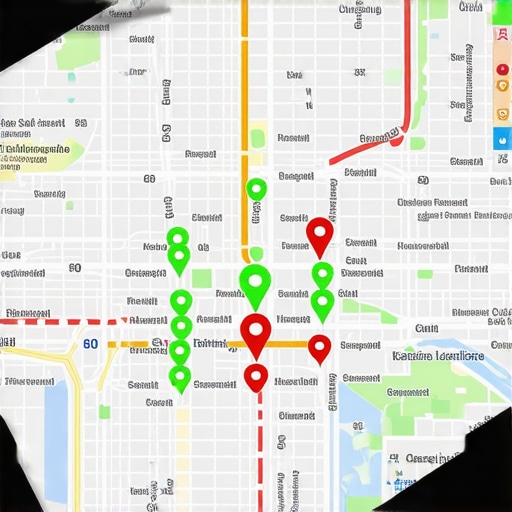 You need to see the real-time ‘heat’ of your presence to know where to focus your next local outreach.
My Favorite Tools for Fighting the Algorithm
When people ask for my secret sauce, I point them toward specialized local tools rather than the big, generic SEO platforms. I use Local Falcon or BrightLocal’s grid tool specifically because it visualizes the local pack in a way that makes sense for a service area business. But even the best tool is useless if your foundation is shaky. If you haven’t gone through a unlocking google listings crucial checklist for map success, you’re just measuring how fast you’re sinking. I also keep a close eye on technical shifts. According to Joy Hawkins of Sterling Sky, Google’s algorithm is becoming increasingly sensitive to ‘openness’—meaning if your business is marked as closed when a search happens, you basically vanish from the map pack instantly for that user. That’s a massive shift from how things worked just a few years ago. Looking ahead, I predict we are moving toward a ‘Video-First’ map experience. Google is already testing auto-playing videos in the local results, and I suspect those who start uploading 15-second vertical clips of their work now will be the ones who own the top spots in 2025. If you want to get ahead of the curve, stop worrying about the mastering map optimization tactics of yesterday and start focusing on real-time activity and how to fix broken local schema on your back-end. Try this today: Go into your profile and answer one ‘Question’ in the Q&A section yourself. It’s a simple move that signals to Google that you are an active, helpful entity.
The Local Search Breakthrough I Wish I Had Found Sooner
If I could go back to that Tuesday afternoon when I was ready to quit, I’d tell myself that Google isn’t a wall to be climbed, but a conversation to be joined. One of the biggest lessons I learned is that trust is cumulative. It’s not about one massive update; it’s about the small, consistent signals that show you are a reliable neighbor. I used to think I needed a massive budget, but the real needle-mover was simply monitoring map health key checkpoints that my competitors were ignoring. I also realized that while reviews are great, a profile that answers a user’s question before they even ask it is what truly builds authority. Don’t fall for the trap of thinking your google listing checklist is just a one-time chore—it’s the pulse of your business. It’s the difference between being a temporary visitor in the top three and owning that spot for the long haul.
Tools That Earn Their Keep When the Map Gets Messy
I don’t believe in buying every shiny new software, but there are a few resources that have become my go-to for mastering map optimization. First, I always recommend Local Falcon for visualizing your proximity; it’s the only way to see if your ‘ranking bubble’ is actually expanding across the city. For cleaning up the data clutter that confuses Google, BrightLocal is worth every penny because it handles the grunt work of citation auditing. Finally, for staying ahead of the frequent algorithm shifts, I never miss a post from the team at Sterling Sky—they provide the data-backed insights that help me pivot before my competitors even notice a change. If you are struggling with the tech side, especially how to fix broken local schema, these specific resources will save you hours of trial and error.
Take Control of Your Digital Storefront Starting Today
You don’t have to be a tech genius to dominate your local area. You just need to be more attentive than the business next door. By following a solid maps seo checklist and staying consistent with your weekly updates, you are already ahead of the vast majority of the market. The map pack isn’t reserved for the businesses with the biggest marketing budgets; it’s reserved for the ones that provide the most relevance and trust to the user. Go out there, update your photos, answer a customer question, and watch how the algorithm rewards your presence. Have you ever noticed your ranking drop suddenly when your business hours were changed or during a holiday? Let me know your experiences with these sudden ranking shifts in the comments below!