Why Your Service Area Pages Are Failing to Show Up in Nearby Towns
Why Your Service Area Pages Are Failing to Show Up in Nearby Towns (and How to Fix It)
You’ve done the work. You’ve claimed your listing, uploaded high-resolution photos, and painstakingly filled out every field in your dashboard. You serve a 20-mile radius, providing top-tier plumbing, legal counsel, or roofing services to homeowners across three different counties. Yet, when you check your rankings, you see a familiar, frustrating pattern: you are a king in the two-mile radius surrounding your office, but an absolute ghost in the neighboring town just ten minutes away.
This is the “Invisible Service Area” problem. It is the single most common complaint among Service Area Businesses (SABs) and local practitioners. Many business owners assume that by simply selecting service areas within their Google Business Profile (GBP) settings, Google will naturally extend their reach. The brutal truth? Google doesn’t care what you say your service area is; it only cares what you can prove it is through relevance, prominence, and proximity signals.
Most firms fail because they treat local service areas as a simple list of zip codes rather than a complex ranking challenge. To win in the Map Pack, you must understand that google business profile seo is not a “set it and forget it” task. It requires a strategic alignment of on-page content, technical schema, and off-page trust signals. If you’re ready to stop being invisible, you need to follow Your Complete Maps SEO Checklist for Enhanced Visibility and address the fundamental reasons why your city pages are failing to convert impressions into leads.
The Proximity Paradox: Why Google Limits Your Reach
In the world of local search, Google operates on a triad of ranking factors: Proximity, Relevance, and Prominence. For years, proximity was the undisputed heavyweight champion. If you were physically closer to the searcher, you won. However, as the local algorithm has matured, we have entered the era of the “Proximity Paradox.”
According to the 2025 Search Atlas study, proximity remains the #1 driver of visibility – it gets you seen – but “reviews get you chosen.” The paradox lies in the fact that while Google wants to show the closest result, it also wants to show the best result. If a business five miles away has significantly higher relevance and prominence than the business one mile away, Google will “stretch” the proximity filter to show the superior option.
For Service Area Businesses, there is an additional hurdle. Google’s algorithm creates a “proximity filter” based on the physical address you used to verify your account, even if that address is hidden from the public. If you are physically located outside a specific town, you effectively start with a penalty. To break through this filter and rank in nearby towns, you need 10x the relevance and prominence signals of a competitor who is physically located there. You are essentially fighting an uphill battle against the map’s natural gravity. To learn how to combat this, see our guide on How to Reclaim Your Local Reach When Proximity Shrinks.
Reason #1: The “Copy-Paste” Content Trap
The most frequent mistake SEOs and business owners make is creating “cookie-cutter” city pages. You know the ones: the content is exactly the same on the “Plumber in Springfield” page as it is on the “Plumber in Shelbyville” page, with only the city name swapped out.
Google’s helpful content systems are designed to identify and devalue “reused or generic material.” As noted by Adam Heitzman in recent LinkedIn research, location pages fail because they lack unique, clear, and trustworthy information specific to the area. If your page doesn’t provide value beyond a keyword-stuffed headline, Google has no reason to rank it over a local competitor’s homepage.
How to Build Hyperlocal Relevance
To fix the “Copy-Paste” trap, you must move toward “Hyperlocal” content. This isn’t just about mentioning the city name; it’s about proving you are active in that community. Here is what a high-performing service area page should include:
- Specific Landmarks: Mentioning that you provide services near the “Old Town Square” or the “South County Mall” signals to Google that you understand the local geography.
- Neighborhood Names: Don’t just target the city; target the specific subdivisions and neighborhoods where your customers live.
- Local Projects: Feature case studies or photos of work completed in that specific town. Mentioning a roof replacement on “Maple Avenue” is a powerful geo-signal.
- Local Partnerships: Mentioning local charities you support or local events you sponsor.
Using local seo tools can help you identify the specific keywords and neighborhood clusters that your competitors are missing, allowing you to build pages that feel organic and helpful rather than automated.
Reason #2: The Schema & Signal Mismatch
Technical SEO is often where service area strategies fall apart. Many businesses use the exact same Schema Markup on every city page, which confuses Google’s crawlers. If every page on your site tells Google you are a LocalBusiness located at “123 Main St,” but the page content says you are in a town 15 miles away, you are sending mixed signals.
BrightLocal offers a critical piece of advice for SABs: “Avoid using LocalBusiness schema on pages you want to rank for outside of your service area.” Instead, you should focus on the AreaServed property within your organization schema. This tells Google, “We are headquartered here, but we officially provide services in these specific regions.”
Correct Map Embedding
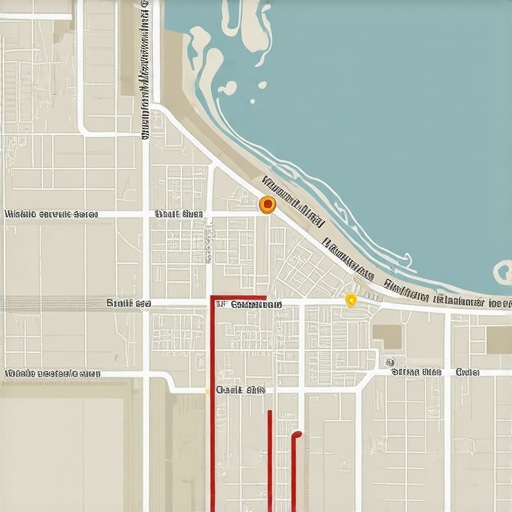
Another common error is embedding the same static map of your office on every service area page. To rank in a nearby town, your embedded map should reflect that specific town. You can create a custom Google My Map that outlines your service boundaries for that specific municipality and embed that instead. This creates a cohesive “Geo-Context” for the page. Small technical adjustments like this are often the missing piece of the puzzle. For a deeper dive into these technicalities, read The Simple Google Listing Checklist Tweak That Finally Fixed Our Service Area Visibility.
Reason #3: Missing Trust Signals & Review Gaps
Google’s algorithm is increasingly sophisticated at parsing the text within reviews to determine “geo-relevance.” If you have 100 reviews, but every single one of them mentions “Springfield,” Google will view you as a Springfield-only business. When a user in “Shelbyville” searches for your services, Google looks for proof that people in Shelbyville trust you.
This is the “Review Gap.” To rank in neighboring towns, you need a localized review strategy. This doesn’t mean getting fake reviews; it means being intentional about your current customer base. When you complete a job in a target expansion town, that review is worth five times more than a review in your home base.
The strategy is simple but rarely executed: ask your customers to mention their city or neighborhood in the review. A review that says, “Great service on our water heater in [Town Name]!” is a massive ranking signal for that specific locality. This builds what we call “Localized Prominence.” If you struggle with this, check out The Specific Way to Ask for 5-Star Google Reviews That Customers Can’t Ignore. To further boost your profile’s authority, you might consider a professional google maps ranking service to help manage these complex signals.
How to Fix It: The “Nearby Town” Domination Framework
Fixing your service area visibility isn’t about one single trick; it’s about a multi-layered approach that builds a “shield” of relevance around your business. If you are losing traffic to competitors who are further away, follow this 4-step framework to reclaim your territory.
Step 1: Audit Your Current Map Health
Before you can fix the problem, you need to see it. Use a google business profile audit tool to visualize your current rankings on a grid. You might find that you rank well to the North but are completely blocked to the South by a specific competitor or a geographic barrier (like a river or highway). Understanding the “shape” of your current visibility is essential for planning your expansion.
Step 2: Build Niche Citations & Hyper-Local Backlinks
Standard citations (Yelp, YellowPages) are the bare minimum. To rank in a nearby town, you need citations that are specific to that town. Look for local chamber of commerce directories, town-specific blogs, or neighborhood association sites. A single backlink from a “Shelbyville High School” athletic sponsorship is more valuable for your Shelbyville city page than a hundred generic directory links. To understand how to execute this, read How to Build Local Backlinks That Actually Move Your Map Pin.
Step 3: Deploy Localized Content Silos
Don’t just build one page for a city. Build a silo. If you are a landscaper, don’t just have a “Landscaping in Shelbyville” page. Create blog posts about “The Best Grass Types for Shelbyville Soil” or “How Shelbyville’s Recent Drought is Affecting Local Lawns.” This depth of content signals to Google that you are an expert in that specific location.
Step 4: Track with Precision
You cannot manage what you do not measure. Use high-quality local seo software to track your progress on a granular level. You want to see your “green pins” expanding outward from your office over time. If a specific town remains “red,” you know you need to double down on localized reviews and niche backlinks for that specific area. Consistently monitoring your progress is the only way to rank google business profile listings effectively across a wide geography.
For more detailed steps, refer to The 4-Step Local SEO Checklist for Service Businesses Losing Traffic.
Conclusion: Proving Relevance Where You Don’t Have a Footprint
The digital landscape for local businesses is more competitive than ever. As Google continues to refine its understanding of local intent, the “easy wins” of the past – like keyword stuffing your business name – are being replaced by a need for genuine local authority.
As I often tell my clients, “Scaling local SEO isn’t just local SEO x 100; it’s about proving relevance where you don’t have a physical footprint.” You have to work harder than the local guy to prove to Google that you belong in that Map Pack. It requires a commitment to unique content, technical precision, and a proactive review strategy.
Stop letting your competitors steal leads in towns that you rightfully serve. Start by auditing your profile today. Whether you use a manual process or a dedicated google business profile audit tool, the first step is admitting that your current “invisible” boundaries are holding you back. Build the content, secure the reviews, and fix your schema. The leads are there – you just have to show Google that you’re the best choice to handle them.