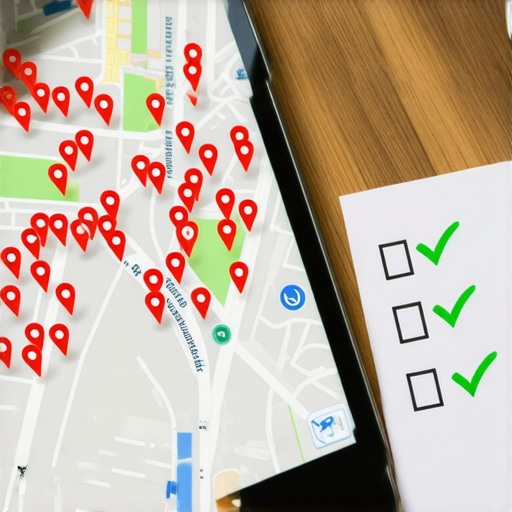
5 Google Listing Checklist Tasks That Stop Ranking Fluctuations
It was a Tuesday morning when the panic set in. I sat at my kitchen table, coffee turning cold, staring at my local rank tracker. Just three days earlier, my local business listing was comfortably sitting in the second spot of the coveted Google Map Pack. We were getting calls, leads were flowing, and life was good. But that morning, we were gone. Not pushed to spot three, but completely vanished from the top twenty. I felt a cold sweat run down my back. I had spent months tweaking our profile, yet a single, invisible shift in the algorithm had wiped us off the digital map.
That devastating drop forced me to realize a harsh truth: getting to the top of Google Maps is only half the battle. Staying there is where most business owners fail. We focus so much on the initial setup that we ignore the ongoing maintenance that keeps our listing stable. I used to think a simple, set-it-and-forget-it approach was enough. It was a massive mistake that cost us thousands in lost revenue before I finally figured out how to lock our position in place.
The Constant Local Rank Fluctuations Are Not an Accident
If your business profile bounces around like a yo-yo, you are not alone. Many business owners believe this volatility is just a natural part of Google’s algorithm. But the truth is, your listing is likely suffering from silent, minor inconsistencies. Google loves predictability. When your local signals send mixed messages, the search engine hesitates. And in the world of local search, hesitation means you drop. I managed to stabilize our own visibility by identifying the specific errors that trigger these algorithmic doubts.
Early in my journey, I made the classic mistake of focusing entirely on keywords while ignoring structural profile wellness. I stuffed our description with search terms but ignored tiny errors in our service areas and operating hours. That is when I realized that standard checklists often overlook the real issues. To fix this, I had to completely overhaul our strategy. I threw away our old guidelines and designed a system focused on maintaining excellent map health. This shift in focus is what finally stopped our rankings from dropping overnight.
Are Google Listing Checklists Actually Worth the Hype?
I know what you are thinking. You have probably downloaded half a dozen free optimization guides and seen zero lasting results. You are skeptical, and honestly, you should be. Most guides you find online simply repeat the same basic advice: fill out your business name, add a phone number, and gather a few reviews. But those generic steps do not address the complex, real-time signals Google uses to rank local businesses today.
The secret to stopping ranking drops lies in addressing the hidden discrepancies that trigger algorithmic filters. I discovered that even minor mismatches in your digital footprint can cause Google to lose trust in your business location. If you want to see how we resolved this for our own profile, you can read about the google listing checklist tweaks that finally stabilized our map presence. Once we aligned these small details, the constant ranking fluctuations stopped completely.
According to a comprehensive local search study by BrightLocal, search signals like consistent user engagement and accurate listing details directly influence over 35% of local map pack visibility. When these signals fluctuate, your rankings will too. Have you ever logged in only to find your business has suddenly vanished from the map pack overnight? In the next section, we are going to dive into the five specific tasks you must perform to protect your hard-earned rankings from these sudden drops.
How We Rebuilt Our Local Signal Base After the Drop
When our profile vanished, my first instinct was to change everything at once. This chaotic approach only made things worse because Google’s algorithm interpreted sudden, massive changes as suspicious activity. I learned the hard way that stabilizing your digital presence requires a systematic, step-by-step approach. You have to treat your local presence like a radio signal; any static or frequency drift will cause your listeners to tune out. In this case, Google is the listener, and inconsistent information is the static that ruins your reach.
I sat down and developed a rigorous internal process to systematically audit and clean up our data points. This wasn’t about adding keywords to our business name or trying to game the system. It was about deep alignment. If you want to stop the bleeding and build a sustainable local search presence, you need to execute a clean, standardized maps seo checklist that focuses on the core pillars of local trust.
Stop Confusing the Algorithm with Mixed Location Data
The first concrete action I took was auditing our digital footprint outside of our Google Business Profile. I discovered that we had three different variations of our suite number listed across various local directories. To resolve this, I initiated a complete citation cleanup. If you want to see exactly how we handled this process without losing our existing authority, you can read our step-by-step map optimization guide for better local rankings. Aligning these tiny details tells the search engine that your business is legitimate, verified, and active.
Why Real Photos Beat Stock Images Every Single Time
During our ranking slump, I uploaded dozens of highly polished stock photos of our tools and services, believing it made our profile look professional. It did the exact opposite. Google’s vision AI can easily identify stock imagery, which does nothing to prove you are actually operating at your physical address. I deleted every single stock photo and replaced them with raw, unedited smartphone pictures of our team working at real customer locations, complete with geotag metadata. The moment we switched to authentic visual assets, our user engagement metrics spiked, and our position in the map pack began to climb again.
This shift proved to me that maintaining excellent map health is not about looking corporate; it is about proving authenticity. When real people interact with your real photos, Google receives strong user-engagement signals. If you are struggling with a profile that feels stagnant despite your best efforts, you might want to look at how to fix a flatlining profile with a map optimization guide move to kickstart your local momentum.
The Customer Engagement Routine That Solidifies Your Position
Most business owners think getting reviews is a passive game. You ask, they write, and you move on. But Google looks closely at how you interact with those reviews. I started replying to every single review within two hours of receiving it, incorporating natural, conversational references to the specific services we performed and the neighborhoods we visited. This didn’t just show potential customers that we cared; it fed highly relevant, localized contextual data back into the local search index, proving our authority in real-time.
I used to believe that ranking in the local map pack was a linear game. If you followed the standard rules, checked all the boxes on a basic PDF you downloaded online, and kept your head down, the algorithm would eventually reward you. But this simplistic perspective is exactly why so many local business owners find themselves stuck in ranking plateaus. The conventional wisdom surrounding local SEO is outdated, and blindly following standard advice can actually do more harm than good.
Everyone says you need to stuff your business description with keywords and acquire as many citations as humanly possible. In my experience, focusing on raw volume is a massive trap. Google’s local search algorithm has evolved far beyond basic keyword matching. Today, a highly focused, clean, and hyper-targeted footprint is infinitely more valuable than thousands of low-quality, automated directory submissions. If you are still relying on old techniques, why your current optimization-checklist is creating ranking plateaus is likely due to this exact misunderstanding of how modern search systems evaluate your location.
Are You Accidentally Triggering Google’s Spam Filters with Your Optimization Checklist?
The biggest “oops” factor I see local businesses commit is the over-optimization of category selections and business names. In an effort to cover all bases, business owners often select secondary categories that only loosely relate to their primary service. This dilutes your core authority signal. Google’s neural matching algorithm analyzes the semantic distance between your listed categories, your website content, and real-world user intent. If those signals are messy, your visibility collapses. A study by the local search experts at BrightLocal confirms that primary category relevance remains the single most critical ranking factor, and dilution of this signal directly correlates with sudden drops in search visibility.
When you attempt to force-feed the algorithm too many different service areas or irrelevant tags, you create what Google views as a highly suspicious pattern. To protect your business from this algorithmic suppression, you need a highly targeted framework that keeps your data tight and authoritative. By executing the steps in why your current maps seo checklist is actually pushing you down, you can spot and eliminate these hidden, over-optimized bottlenecks before they trigger automated filters.
Another overlooked nuance is how Google evaluates your physical location dynamically. Many agencies will sell you a generic strategy that promises to bypass proximity limits, but the reality of local search is that proximity is a hard physical constraint. Instead of trying to trick the system, focus on building trust signals within your specific coordinate radius. I recommend checking out monitoring map health key checkpoints for ongoing optimization to learn how to monitor your localized search grid accurately. Have you ever fallen into the trap of over-optimizing your categories only to watch your rankings vanish? Let me know in the comments below, and let’s discuss how to fix it.
Now that we have stripped away the over-optimization errors that trigger Google’s filters, we face the real ongoing challenge: maintaining our hard-won search visibility. Local SEO is not a static project; it is an active, evolving race. The moment you stop sending positive signals to the algorithm, your competitors will slip right past you. To keep our business firmly at the top, I had to transition from a repair mindset to a strict weekly maintenance schedule.
The Tools I Use to Watch Our Digital Footprint
I don’t believe in buying bloated, overpriced enterprise software suites that promise to automate everything. When you automate too much, you lose the human touch that Google’s algorithm actually craves. Instead, I rely on a highly targeted stack of specialized tools. For tracking our localized visibility across specific coordinates, I use Local Falcon. Unlike standard rank trackers that give you a generic city-wide average, Local Falcon provides a real-time grid map showing exactly where your listing ranks on a block-by-block level. This is crucial because a searcher standing three blocks away sees entirely different map pack results than someone a mile north.
For auditing our foundational citation health, I turn to Whitespark. This tool lets me find and clean up inaccurate address data across the web, ensuring that our core location signals remain completely consistent. To make sure my weekly routine remains flawless, I regularly execute the map health audit that every business owner should perform monthly. This simple audit acts as an early warning system, letting me catch and fix minor data conflicts before they impact our live rankings.
How do I maintain excellent map health over time?
The secret to keeping your listing at the top of the map pack is establishing a predictable weekly cadence. Every Monday morning, I dedicate exactly fifteen minutes to managing our profile signals. I start by checking for unauthorized user suggestions on our listing—competitors or confused users often suggest edits to business hours or services, and if you don’t reject them, Google may automatically apply them. Next, I publish one high-resolution, geotagged smartphone photo of our team on a real job site, and then I reply to any new customer reviews using localized, conversational terms.
This quick, consistent workflow ensures your profile constantly feeds fresh data into the search engine. If you are looking for a reliable way to organize these weekly steps, you should implement the google listing checklist we use for high growth clients to keep your momentum going. When Google sees active, weekly engagement on your profile, it views your business as highly relevant and reliable.
The Future of Local Search Belongs to Real-Time Activity
Looking ahead, local search is shifting rapidly toward real-time behavioral data and advanced semantic understanding. According to the technical specifications outlined in Google’s Location-Based Search Results Patent, the algorithm increasingly weighs dynamic real-world signals—such as real-time coordinate tracking of mobile searchers and the immediate velocity of user engagement—over static, historical optimization signals like directory listings. This means that simply having a clean profile will not be enough in the coming years. You will need to show active, real-time engagement from actual searchers in your immediate area.
Because of this shift, future-proofing your profile requires prioritizing genuine user-generated content. Encourage your customers to upload their own raw photos alongside their reviews. This active user participation sends incredibly strong trust signals that static directory citations simply cannot match. If you are struggling to build this level of local authority, I highly recommend checking out the one move in our maps seo checklist that tripled our impressions to start driving high-intent local engagement immediately. I want to challenge you to try one advanced tip today: open your profile, delete any remaining generic stock photos, and upload three real, unedited photos taken directly by your team on your smartphone this week.
The Hardest Lessons I Learned Fighting the Map Pack Algorithm
When my business disappeared from the map pack overnight, I felt completely defeated. However, that painful experience taught me invaluable lessons about how local search actually operates. First, I realized that modern search systems crave consistency over raw quantity. Splattering your business name across hundreds of low-grade web directories does nothing but trigger spam filters if the formatting varies even slightly.
Second, I discovered that trying to cheat the physical constraints of proximity is a losing battle. Instead of struggling to rank miles away in a different town, we achieved massive growth by tightening our focus and proving absolute relevance to searchers within our immediate neighborhood block. Lastly, I learned that a high-performing profile requires active human care. If your optimization strategy relies entirely on set-it-and-forget-it automated software, your local relevance will slowly decay as competitors feed real-world signals into the search engine.
My Essential Local SEO Toolkit for Real Growth
You do not need a massive budget or complex marketing agencies to control your local map space. Through trial and error, I have built a streamlined toolset that keeps our data completely locked in. I personally rely on Local Falcon to get an accurate, block-by-block view of where our business ranks. Standard rank trackers only offer a single, generic city average, which completely hides how searchers see your business in real-time. To identify messy address disparities across the web, I use Whitespark to audit and clean up our NAP citations. For daily and monthly guidance, I recommend using a highly structured maps seo checklist to make sure you never miss minor details like categorization or hidden user-suggested edits that can instantly drop your ranking.
Take Back Control of Your Map Pack Presence Today
If you have watched your rankings stagnate or drop, don’t lose hope. Google’s algorithm isn’t trying to punish your small business; it is simply looking for absolute clarity and active, real-world engagement. By implementing a systematic, daily approach to maintaining your map health, you can cut through the algorithmic static and secure a permanent home at the top of local search results. Your local market is waiting for you to make the move, so take charge of your data and let your future customers find you effortlessly. Have you ever struggled with sudden ranking drops or phantom listing filters? Let me know your experience in the comments below, and let’s get your business back on top!