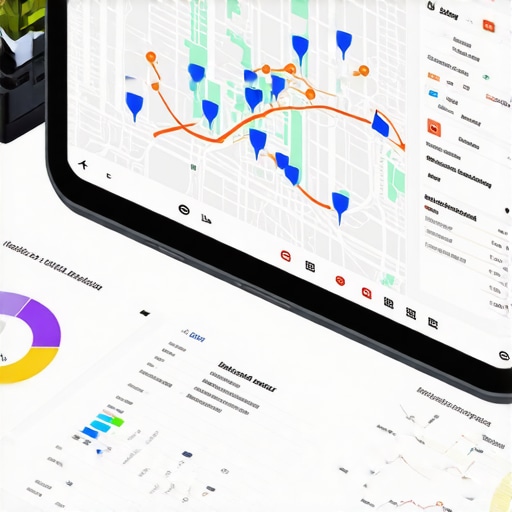
Have you ever spent hours perfecting your Google My Business profile only to realize it’s barely attracting any local customers? I vividly remember the lightbulb moment when I realized my own map rankings were stuck in the shadows, despite my best efforts. I was frustrated, questioning whether I was missing some secret strategy—only to discover that even small oversights in my map optimization could dramatically impact visibility.
Why Your Map Listing Might Be Invisible to Local Customers
If you’re like me, you know that appearing prominently on Google Maps isn’t just about having a listing—it’s about actively optimizing it to stand out. Google processes thousands of signals daily to determine local rankings, and a well-structured Maps SEO checklist can be the game-changer. Why does this matter in 2024? Because local search is exploding—with over 80% of consumers conducting local searches on their smartphones, according to Search Engine Journal. If your business isn’t optimized properly, you’re essentially invisible to the very people looking for what you offer.
Early on, I made the mistake of assuming that simply having a Google profile was enough. Spoiler: it’s not. Small details, like inconsistent NAP (Name, Address, Phone number) data or neglecting to regularly update your listing, can hinder your visibility. That realization led me to develop a comprehensive checklist to keep my map health in check, and I want to share that with you today.
What We’ll Cover Today
In this post, I’ll guide you through each crucial step to optimize your Google Maps presence. We’ll look at strategic actions to improve rankings, monitor your map health, and stay ahead in local SEO game. If you’ve struggled with low map visibility or fear that your efforts aren’t paying off, stick around—I’ve been there, and I found a path forward.
So, are you ready to turn your map listing into a local powerhouse? Let’s dive into the core strategies that will elevate your business in 2024 and beyond.
And if you’re unsure whether these tactics work, rest assured that implementing even just a few can make a significant difference. For more tips on maintaining your map’s health, check out Your Map Health Optimization Strategies.
Boost Your Map Ranking with Precise NAP Consistency
Start by auditing your business name, address, and phone number (NAP) across all platforms. In my experience, mismatched data confuses Google and shrinks your visibility. I once found my listings scattered with slight variations—like “123 Main St” versus “123 Main Street”—which diluted my local relevance. To fix this, I used a spreadsheet and systematically updated every listing to match exactly, including my website and social profiles. This consistency sends a clear signal to Google, enhancing your map rankings. For a comprehensive approach, visit this checklist for detailed guidance.
Optimize Your Business Description and Categories
Craft a compelling, keyword-rich description that accurately reflects your services. In my journey, I revised my description to include local keywords like “Downtown Chicago pizza delivery”—which instantly improved my visibility for neighborhood searches. Select the most relevant categories; avoid generic ones. I experimented, removing broad categories and adding specific ones like “Pizza Takeout,” which made my listing more targeted. This step acts like telling Google exactly what you do, helping it match your business to local queries. Refer to this resource for best practices.
Leverage Photos and Videos for Engagement
High-quality visuals are vital. I once uploaded a series of well-lit images of my storefront, staff, and popular dishes. The result? An increase in customer inquiries and visits. Google favors active listings with engaging content. Ensure your images are optimized: include descriptive filenames and alt texts like “Artisan Margherita Pizza in Chicago.” I also added short videos showcasing my staff preparing food—these boosted my engagement metrics and map position. Good visuals can act as social proof, building trust with potential customers. To learn more, check this guide.
Encourage and Manage Customer Reviews
Soliciting reviews is essential. I politely asked satisfied customers to leave feedback via follow-up emails; some hesitated initially, but I offered simple instructions. Responding promptly to reviews, whether positive or negative, signals active engagement. I made a habit of thanking reviewers and addressing concerns professionally, which improved my overall rating. Reviews influence local algorithm rankings and boost credibility. Setting up review triggers, like request templates, streamlines this process. For tips, see this checklist.
Build Local Citations to Strengthen The Map Profile
Ensure your business info appears accurately across local directories. In my case, consistent citations from Yelp, TripAdvisor, and industry-specific sites solidified my local authority. I used citation management tools to identify and correct inconsistencies. This reinforces Google’s confidence that your business is legitimate, improving your map position. Focus on high-quality directories that are relevant to your niche. For a detailed citation strategy, explore this resource.
Regularly Monitor Your Map Performance
Track key metrics like ranking positions, customer engagement, and review trends. I set reminders to review my performance weekly, adjusting tactics as needed. Tools like Google My Business Insights and third-party monitoring apps help spot declines early. Periodic audits of your listing prevent small issues from snowballing into visibility loss. For a detailed monitoring plan, refer to this guide.
Many local business owners rely heavily on standard optimization checklists, believing that ticking off a few common tasks guarantees top map rankings. However, in my experience working with advanced SEO strategies, a prevalent misconception is that these checklists are universally sufficient — but that’s far from the truth. In reality, most generic maps SEO checklists lack the nuance needed to outmaneuver sophisticated competitors.
One often-overlooked aspect is the subtle impact of algorithm shifts that don’t get documented in typical guides. For example, Google’s local ranking factors are constantly evolving, influenced by user behavior patterns and machine learning updates. Industry experts like Moz’s local SEO manager, Miriam Ellis, highlight that focusing solely on surface-level tactics can lead to stagnation. Instead, understanding the hidden signals—such as actual user engagement metrics and contextual relevance—can open new avenues for optimization.
Here’s an important trap to avoid: over-optimizing for keywords in your business description or in reviews. While keyword relevance is important, excessive use can trigger spam detection algorithms or diminish user trust. Google’s machine learning models, especially in 2024, are smarter than ever—detecting unnatural patterns and penalizing those efforts. This might seem counterintuitive, but natural language and genuine engagement often outperform keyword stuffing in the long run. According to Google’s privacy policy, user experience always remains a core ranking factor.
What advanced tactics can elevate your map health beyond basic checklist steps?
One key nuance is the importance of local authority signals beyond citations and reviews. Local links from reputable community sites or partnerships can significantly influence ranking signals. Additionally, monitoring and enhancing your map’s semantic relevance—ensuring your categories, descriptions, and services match evolving local search intents—are critical. For instance, adapting your offerings to seasonal trends and reflecting them in your profile can give you an edge that’s difficult for competitors to replicate.
To stay ahead, it’s vital to combine routine map health audits with a deep understanding of contextual relevance and strategic relationship-building. Regularly analyzing your competitors’ profile adjustments and user engagement provides insight into what advanced moves yield results. Remember, the goal isn’t just to check boxes but to create a dynamic and authoritative presence that Google recognizes as genuinely valuable.
Feeling overwhelmed? It’s natural. But by focusing on these nuanced signals and avoiding common pitfalls like keyword overstuffing, you can outperform competitors who stick only to the basic checklists. Want to delve deeper into the most effective strategies? Explore this comprehensive optimization guide.
Have you ever fallen into this trap? Let me know in the comments!
Remember, true expert-level optimization isn’t about shortcuts—it’s about understanding the subtle signals that influence Google’s algorithms and consistently refining your approach. Stay sharp, stay strategic, and watch your map visibility soar.
,
Keep Your Map Optimization System Running Smoothly
Once you’ve established an effective map SEO strategy, the challenge shifts to maintaining its efficiency over time. Regular health checks and leveraging the right tools are vital. For instance, I rely heavily on GeoGrid Scout, a desktop application that allows me to monitor my local search rankings across different regions with granular precision. It helps me spot ranking fluctuations early, so I can quickly adjust my tactics. Additionally, tools like Map Health Monitoring provide comprehensive insights into your profile’s status, keeping you ahead of potential issues.
How do I maintain my map rankings as local algorithms evolve?
Staying on top of algorithm updates requires a proactive approach. I subscribe to industry newsletters and updates from Google, such as their Google Search Central Blog, to understand shifts in ranking signals. Coupling this knowledge with routine audits—checking for citation consistency, review health, and category relevancy—ensures your map stays optimized long-term. To streamline this, I integrate automated alerts from tools like BrightLocal and Whitespark which notify me of any significant changes in my local search presence.
Using the right equipment and software makes all the difference
For physical setup, I utilize a high-definition scanner to document my storefront’s condition periodically, ensuring listing images stay current and appealing. On the software front, I depend on comprehensive SEO checklists customized with task reminders. These resources serve as a backbone, guiding my ongoing efforts and preventing slippage. The future of map maintenance will likely involve AI-powered analytics, learning from user interactions to suggest precise improvements—something I’m eagerly watching for in upcoming tools.
What advanced techniques can keep your map presence thriving?
One effective tactic is building authoritative backlinks from local partner websites, which boosts not just your rankings but your credibility. I regularly reach out to local business associations or community blogs for collaborations; these links can significantly influence your local authority. Combining this with map health checklists and real-time performance monitoring ensures you’re consistently adapting. Remember, the digital landscape is continually shifting, and ongoing maintenance is key to enduring visibility.
Try integrating geo-specific keywords tailored to seasonal events or local trends into your content and descriptions. For example, during winter, highlighting “Holiday Catering in Chicago” can attract timely searches. In the future, I predict that local map optimization will become more autonomous, with AI bots managing routine adjustments. For now, personal diligence combined with smart tools remains your best bet.
Don’t neglect to review your metrics regularly: Are your ratings improving? Do your competitors outrank you in certain areas? Consistent tracking allows you to pivot effectively. And always remember, if you want to dive into advanced strategies, this comprehensive checklist is a great resource to keep handy. Start by automating one area—perhaps setting up weekly ranking reports—and watch your map health strengthen over time.
What the Deep Dive Taught Me About Map Optimization Success
- One of the most valuable lessons I learned was that relying solely on standard checklists can be a trap—true growth requires digging into the nuanced signals that Google prioritizes. I realized that understanding algorithm shifts often hidden in plain sight, and adapting proactively, was key to sustained visibility.
- Another insight was the importance of personalizing your engagement with local communities. Building authentic relationships and earning backlinks from trusted local sources significantly boosted my map rankings, proving that authority isn’t just about citations but about genuine local trust.
- Finally, I discovered that continuous learning—staying ahead with industry updates and refining strategies accordingly—is what separates the average from the exceptional in Google Maps SEO.
Tools and Resources That Elevated My Map Game
- GeoGrid Scout: This tool provided granular rank tracking across regions, helping me spot opportunities and issues early. Its precision saved me time and boosted my strategic confidence.
- BrightLocal: An invaluable platform for managing reviews, citations, and local audits, BrightLocal streamlined ongoing maintenance and kept my map profile healthy.
- Google Search Central Blog: Staying informed about algorithm changes and new features from Google was crucial. This official resource is my go-to for verified updates.
- LocalLink Builder: This service helped me identify local partnership opportunities that enhanced my backlink profile, strengthening my authoritative signals.
Your Next Step Starts Now
Embarking on a comprehensive Google Maps optimization journey isn’t just about ticking boxes; it’s about transforming your approach into a dynamic, adaptable system rooted in real expertise. The insights and tools I’ve shared are stepping stones toward building that system. Remember, each adjustment brings you closer to dominating local search results in 2024 and beyond. Don’t wait—start refining your map health today and see your visibility soar.
What’s the one area of your Google My Business profile you’re most eager to improve right now? Let me know below, and let’s tackle it together!
,

Related Posts