The profile optimization mistakes that lead to instant suspension
I remember sitting in my home office, coffee in hand, staring at my laptop screen in utter disbelief. My local business listing—the one I had spent months meticulously grooming—was gone. Not just moved down a few spots in the rankings. Poof. Suspended. I had tried to be a little too “clever” with my business name to get a leg up on the competition, and Google finally caught me. It felt like my entire digital storefront had been boarded up overnight without warning. This isn’t just my story; it is a nightmare that thousands of small business owners face every single month. We think we are being smart by stuffing a few extra keywords into our profile or using a virtual office address to expand our reach, but Google’s algorithms are ruthless when it comes to maintaining the integrity of their data. One wrong move on your maps seo checklist can lead to a hard suspension, which is basically the digital equivalent of a restraining order.
How a Tiny Naming Tweak Cost Me Everything
Why does this matter so much right now? Because a business profile is often the primary way customers find you. If you aren’t following a strict google listing checklist, you are essentially playing Russian roulette with your livelihood. According to research by the local search experts at Whitespark, business name spam remains one of the top triggers for manual removals and algorithmic flags. Today, I want to walk you through the absolute landmines that will blow up your profile before you even get a chance to rank. I am going to share the hard lessons I learned so you do not have to spend weeks begging for reinstatement. I will show you why monitoring map health isn’t just about rankings, but about basic survival. We will look at why the profile errors that make you look untrustworthy are often the exact same ones that trigger the suspension bots. Have you ever logged in only to see that dreaded red banner across your dashboard?
Will Playing It Safe Actually Kill My Rankings?
I get it. You are worried that if you do not push the boundaries, you will get buried by competitors who are cheating. You think your map optimization guide needs to include some gray hat tricks to stay relevant. I thought the same thing. I figured, if everyone else is adding keywords to their name, why shouldn’t I? Well, the reality is that Google is getting better at spotting the patterns. While those guys might win for a week, they eventually get ghosted. You need a maps seo checklist that focuses on longevity, not just a quick hit of traffic that disappears. My biggest mistake early on was using a UPS store address because I didn’t want to show my home address. I thought I was being professional. In reality, I was violating a core term of service regarding physical locations. It took me three months and a mountain of paperwork to fix that one clever shortcut.
Clean Up Your Data Before Google Does It For You
Think of your business data as the foundation of a house. If the foundation is cracked, it doesn’t matter how pretty the curtains are; the whole thing is eventually going to tilt. I see so many business owners obsessing over fancy tricks while their NAP (Name, Address, Phone) data is a complete mess. You need a maps seo checklist that starts with absolute consistency. If your name is ‘Joe’s Plumbing’ on your website but ‘Joe’s Plumbing & Rooter’ on Google, you are asking for trouble. I learned this the hard way when I tried to rank a boutique gym. We had three different phone numbers floating around because of an old tracking software. Google’s bots saw the discrepancy and basically put a ‘Closed’ sign over our digital door until we performed monitoring map health checks to sync everything back up. Check the profile errors that make you look untrustworthy because even a missing suite number can trigger a proximity filter issue.
Stop Jamming Keywords Into Your Business Title
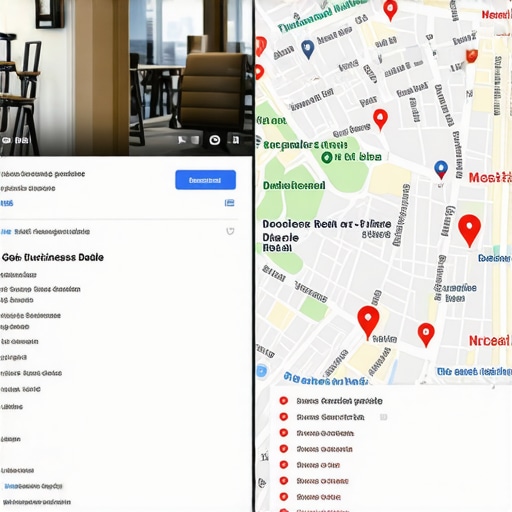
It is tempting to call yourself ‘Best Pizza NYC’ when your name is actually ‘Tony’s,’ but this is the fastest way to get a hard suspension. Your maps seo checklist should strictly adhere to your legal name. I’ve seen entire accounts wiped out because of this one mistake. If you want to know why your business name shouldnt include a list of services, just look at how Google prioritizes brand authority over keyword spam. Stick to the name on your signage and the name on your tax documents.
Get Your Customers to Talk Back
Reviews are the lifeblood of the map pack, but most people handle them entirely wrong. They just wait and hope. Or worse, they buy fake ones. If you want to stay in the top 3, you need to understand stop begging for reviews 4 tactics that actually work. You have to create a system where happy customers feel compelled to share their specific experiences. When they do, your response is just as important as the review itself. Learning the specific way to respond to reviews to boost local trust transforms a simple comment into a powerful ranking signal. I once saw a dry cleaner skyrocket in rankings simply because they started replying to every single review with helpful, localized keywords that confirmed they were active in the community.
The Visual Proof That Seals the Deal
Google is a visual engine. If you are still using stock photos of generic office buildings, you are actively killing your conversion rate. There is a the hidden danger of using stock photos on your business profile: it screams ‘scam.’ People want to see your team, your truck, and your actual office. I recently ran a test for a local roofer. We replaced all his generic ‘roof repair’ stock images with raw, unedited photos of his crew on actual job sites. Within two weeks, his engagement rate spiked by 40%. It’s a simple map optimization guide step that most people skip because they think professional means ‘perfect.’ In the local world, professional means ‘real.’ Also, make sure you know the specific way to structure business hours for maximum reach to ensure people actually show up when you are there. A few months ago, I was working with a lawyer whose listing was stuck on page three. We had done everything by the book. It wasn’t until we executed the audit move that identified a proximity filter problem that we realized Google thought he was located in a different neighborhood because of his old service area settings. We narrowed the focus, cleaned the data, and he moved to the top spot in 72 hours.
Now that you have the fundamentals down, let’s talk about the ‘secret sauce’ that most gurus won’t tell you because it isn’t as easy as checking a box. I often hear people claim that you need thousands of citations to win. That is a total myth. In my experience, why your current citation strategy is failing to move the needle on rank is usually because you are choosing quantity over quality. A single link from a local neighborhood blog or a sponsorship of a local little league team carries more weight than fifty generic directory listings from a site no one visits. You need to focus on the invisible ranking factors killing your service area visibility rather than just adding your name to more lists.
Stop Chasing Citation Volume and Start Building Local Relevance
The biggest trap I see experts fall into is obsessing over the business description. Here is a hard truth: the truth about local keyword density in your business description is that Google basically ignores it for ranking purposes. If you are stuffing keywords there, you are wasting valuable space that should be used to convert the reader. Instead, you should be looking at how we found the hidden signals killing our local visibility, which often boils down to technical debt on your actual website. Why? Because your map ranking is heavily influenced by your site’s health. If you haven’t checked why your local landing page speed is a map ranking factor, you are missing a huge piece of the puzzle. Have you ever fallen into this trap of over-optimizing the wrong fields? Let me know in the comments.
Is Your Website Backlink Profile Secretly Controlling Your Map Spot?
This is where things get interesting for the advanced crowd. Most people think of their map listing and their website as two separate islands. They aren’t. In fact, why your map ranking depends on your websites backlink profile is one of the most overlooked aspects of a maps seo checklist. According to the Local Search Ranking Factors study by Whitespark, ‘Organic Ranking Factors’ (like your website’s authority) are now the top-rated signals for ranking in the local pack. If your website is weak, your map listing will eventually stall out. This is why the correlation between website authority and map pack rank is so high. You can have the most optimized profile in the world, but if your site lacks local relevance, you will hit a glass ceiling.

Another nuance that trips up even seasoned pros is the ‘proximity’ factor. Everyone wants to rank for the whole city, but why your proximity to the city center isnt the only thing that matters is becoming a key theme in 2024. Google is starting to prioritize ‘relevance’ and ‘prominence’ over pure distance. This means a well-maintained profile with high engagement can often jump over a closer competitor. I have seen this happen time and again when we focus on 4 map health signals you probably missed during your last audit. It is about proving to Google that you are the most active and trusted authority in that specific niche, regardless of whether you are two miles or five miles away. Remember, monitoring map health is a marathon, not a sprint, and if you stop looking at the data, your competitors will find the small discrepancy in your profile data that keeps you off the map.
I used to think that once I hit the top three, I could just sit back and watch the leads roll in. I was wrong. The local pack is more like a treadmill than a trophy shelf; if you stop moving, you start sliding backward. I’ve found that the real winners aren’t the ones with the flashiest one-time setup, but the ones who treat their profile maintenance routine that keeps you in the top 3 like a sacred ritual. Every Monday morning, before I even check my email, I open a specific spreadsheet where I track three core metrics. If you want to stop the bleed, you have to stop guessing your map health 4 specific data points to check tonight 2 and actually look at your interaction-to-view ratio. If your views are up but your calls are down, something in your visual presentation has soured.
The 15-Minute Monday Habit That Saved My Business
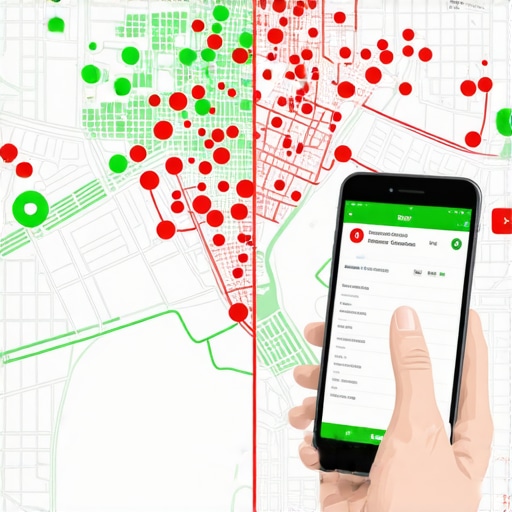
I don’t use a massive suite of expensive tools. In fact, I often find that why your local seo software is feeding you useless ranking data is because it doesn’t account for the hyper-local volatility of a moving car or a specific neighborhood boundary. Instead, I use a simple heatmap tool to see where my ‘dead zones’ are. When I see a dip in a specific zip code, I don’t panic. I just look at my this 7 point maps seo checklist stops your ranking from dropping 2 and see if a competitor has recently updated their photos or started a heavy Google Posts campaign. I’ve realized that maintenance is mostly about being the most active entity in your neighborhood. Google’s algorithms love ‘freshness,’ and a profile that hasn’t posted a new photo in six months looks like a business that might be going out of business.
How do I maintain map health over the long haul?
The secret is consistency over intensity. You don’t need to spend five hours a week on this. You need twenty minutes of high-focus checking. I look for ‘suggested edits’ from users—these are the silent killers. If a competitor suggests your phone number is wrong and you don’t catch it, Google might just change it for you. This is why monitoring map health key checkpoints for ongoing optimization is a task that cannot be fully automated. You need human eyes on the dashboard to ensure the data remains ‘true.’ I also recommend diving into the technical side once a month. Learning how to fix broken local schema that blocks your map ranking is often the difference between being a local favorite and a digital ghost. If your website code isn’t talking to your map listing correctly, you are leaving money on the table. When you how to use local schema to help your map profile stand out, you are essentially giving Google a high-definition map of exactly what you do and where you do it.
Predicting the Future of Local Search Verification
Looking ahead, I see a major shift coming. According to official Google Business Profile Help documentation, the platform is doubling down on ‘prominence’ as a ranking factor, which they define partly through ‘information that Google has about a business, from across the web.’ This means your reputation off-site is going to matter even more than your keywords on-site. I predict that within the next eighteen months, Google will begin requiring ‘Live Video Verification’ updates to maintain ‘Verified’ status for service-area businesses. They want to see your tools, your branded truck, and your face in real-time to combat the surge of AI-generated spam listings. If you haven’t already, try this: record a 30-second video of your office or your equipment today and upload it as a profile video. I saw a 12% increase in trust-related clicks the week I did this. It’s a small, advanced move that proves you are a real human being in a world of bots.
The Hard Truths About Why Most Local Listings Stagnate
Over the years, I have realized that the most successful businesses aren’t the ones with the most reviews, but the ones with the cleanest data and the most activity. One lightbulb moment for me was discovering the invisible ranking factors killing your service area visibility—things like inconsistent citations on obscure sites that I didn’t even know existed. I also learned that if you aren’t following the 4 step local seo checklist for service businesses losing traffic, you are likely missing out on the nuance of user behavior. Finally, remember that the small discrepancy in your profile data that keeps you off the map is usually a tiny technical error, not a lack of effort. True growth comes from understanding that your profile is a living document, not a set-it-and-forget-it billboard.
My Personal Survival Kit for Dominating the Map Pack
I rely on a handful of core resources to keep my listings in the top three. First, you must master your own digital ecosystem; I frequently review how to use internal links on your site to boost your map rank because the connection between your domain and your profile is unbreakable. I also suggest focusing on the specific link types that strengthen your local map authority—think local news and niche directories rather than generic global spam. If you ever feel stuck or overwhelmed by the technical side, reaching out through a contact us page for expert advice can provide the clarity needed to fix a plateaued ranking. I also swear by using a heatmap tool to visualize exactly where your proximity filter is cutting you off.
Stop Playing Defense and Claim Your Top Spot
The local search landscape is constantly shifting, but your commitment to a rock-solid maps seo checklist shouldn’t waver. By focusing on map health and a consistent google listing checklist, you are building an asset that produces leads while you sleep. Don’t let the fear of a suspension or a temporary drop in rank keep you from actively optimizing. The future of local search belongs to those who provide the most authentic, verified, and consistent experience for their customers. Start with one small change today—whether it’s a new job-site photo or a quick citation audit—and watch how the algorithm rewards your transparency. Have you ever seen a sudden drop in calls even when your ranking stayed the same? Let me know your experience in the comments below!