How to stay in the map pack when your office is on the edge of town
I remember staring at my phone three years ago, watching my ‘near me’ rankings drop as I drove just one mile away from my office. It was soul-crushing. My shop sat right on the edge of the industrial district—the literal border of the city—while my competitors were tucked neatly into the downtown core. I was convinced that unless I moved my entire operation, I was destined to be a ghost in the local search results. I even made the rookie mistake of trying to hide my address and setting a massive service area, thinking it would trick the algorithm. Spoiler: it didn’t. It actually made things worse.
Beat the Proximity Filter Without Moving Your Office
The truth is, Google’s Vicinity update made distance a much heavier factor, but it didn’t make it the only factor. I spent months obsessing over our map health before I realized that relevance and prominence can actually outweigh a few miles of pavement. You don’t need a fancy downtown storefront to win; you just need to prove you’re the most authoritative choice for that specific zip code. I eventually found the specific proximity move that finally put us in the top 3 map pack, and it had nothing to do with signing a new lease. We had to stop acting like a city-wide business and start dominating the local micro-signals that the big guys were ignoring. According to research by Search Engine Journal, local search signals like reviews and on-page SEO can account for over 50% of the ranking weight, proving that location isn’t everything.
Is being on the outskirts a death sentence for your rankings?
It certainly feels that way when you see your pin vanish the moment you cross a certain intersection. But here is the secret: most of your competitors are lazy. They rely on their central location and ignore the invisible ranking factors killing your service area visibility. By tightening up your maps seo checklist, you can signal to Google that your reach extends far beyond your front door. Have you ever felt like your physical location was a barrier that no amount of traditional SEO could fix? You’re not alone, and today we’re going to dismantle that barrier brick by brick. We’re going to look at why proximity alone is not putting your business in the top 3 and how to leverage your actual service quality to bridge the gap.
Turn Your Website Into a Signal Tower for Local Reach
Thinking of your website and your Google profile as two separate entities is the fastest way to stay invisible. Your website acts as the ground truth for Google’s crawlers. If your site doesn’t scream ‘local authority,’ your map pin won’t stand a chance when someone searches from three miles away. I’ve seen businesses with beautiful profiles get crushed because their site was a generic mess. You need to understand the correlation between website authority and map pack rank to realize that every blog post and backlink acts as a breadcrumb leading back to your physical location. 
Connect the Dots With Internal Linking
Most people dump their local keywords in the footer and hope for the best. That’s lazy. Instead, you should be learning how to use internal links on your site to boost your map rank. I once worked with a landscaper who only ranked for his specific street. We started linking his service pages—like ‘Lawn Aeration’ and ‘Sod Installation’—directly to his Google Business Profile CID link within localized blog content. Within six weeks, his ‘near me’ radius expanded by two miles without him changing a single thing on the profile itself. It’s about creating a web of relevance that the algorithm can’t ignore.
Fixing the Service Area Settings That Hide Your Business
Many service-based businesses make the mistake of selecting every possible city in a 50-mile radius. Google sees this and thinks you’re a ‘jack of all trades, master of none’—or worse, a spammer. You have to be surgical. I remember a specific case where a client was losing out to competitors who were literally across the street from the customers. We implemented the simple google listing checklist tweak that finally fixed our service area visibility by narrowing their focus to core zip codes where they already had high review density.
Refine Your Service Menu for Maximum Reach
Don’t just list ‘Repair’ as a service. Google’s AI is smart enough to read your menu and match it to specific long-tail queries. You need to know the specific way to optimize your service menu for map search. This means using the exact language your customers use. I spent three hours one Tuesday auditing a locksmith’s profile only to realize he hadn’t listed ‘car key programming’—the one thing everyone in the next town over was searching for. Adding that one service triggered a spike in calls from a zone he’d been ‘ghosted’ in for months.
Stop Fighting the Filter and Start Building Authority
Proximity is a filter, not a wall. You break through it by being the most prominent choice. This isn’t about more reviews; it’s about better signals. I used the audit checklist for identifying ghosted business listings to find out that our citations were a mess of old phone numbers and slightly different addresses. That small discrepancy was telling Google we weren’t trustworthy. By cleaning that up and focusing on step-by-step map optimization guide for better local rankings, we turned a ‘borderline’ business into a local powerhouse. Your goal isn’t to be everywhere; it’s to be undeniable where you already are.Let’s dig deeper into what actually moves the needle when the basic ‘optimize your profile’ advice fails. Everyone tells you that getting more reviews is the holy grail of local SEO. However, in my experience, why a high review count doesn’t guarantee a top map spot is the first lesson most pros learn the hard way. It’s not just about the raw number; it’s about ‘Review Velocity’ and the specific keywords your customers use in their feedback. According to the 2023 Local Search Ranking Factors survey by Whitespark, while review volume is a factor, the presence of keywords in reviews has a significantly higher impact on ranking than simply having a five-star average. If your customers aren’t mentioning your specific services, those reviews are just vanity metrics. Have you ever fallen into this trap? Let me know in the comments.
Stop hoarding reviews and start reading the text
Most people think stop chasing reviews and fix these 4 map health signals instead is bad advice until they see their rankings stall. The ‘Oops’ factor I see most often is the ‘Name Stuffing’ trap. It is incredibly tempting to change your business name on Google to ‘Best Plumber Downtown’ even if your legal name is just ‘John’s Services.’ While this might give you a temporary boost, it’s a high-risk move that often leads to a hard suspension or being ‘ghosted’ by the algorithm. I’ve seen years of hard work vanish overnight because someone got greedy with their google listing checklist. Instead, realize why your business name shouldnt include a list of services and focus on building genuine brand authority. 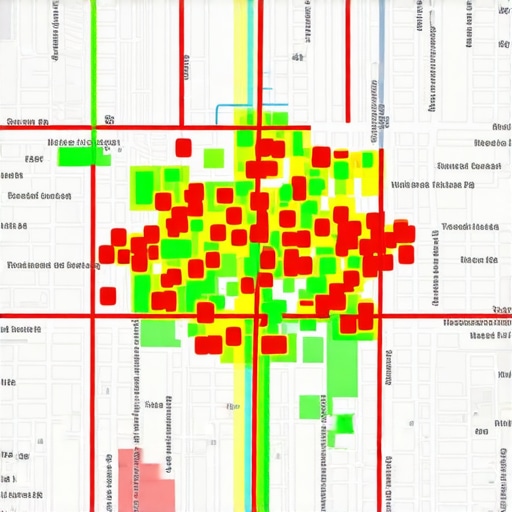
Why does your rank vanish when you change one tiny detail in the backend?
For the advanced reader, the answer usually lies in data discrepancy. We often obsess over keywords and forget that the small discrepancy in your profile data that keeps you off the map can be as minor as a ‘St.’ versus ‘Street’ in a random directory. This creates a trust gap in Google’s Knowledge Graph. Furthermore, the belief that you need thousands of citations is outdated. In fact, why standardized citations might be hurting your local reach is because Google now prioritizes niche-specific relevance over raw volume. If you’re a plumber, a link from a local hardware store’s blog is worth a hundred generic directory listings. Another sophisticated trap is the ‘Service Area Business’ (SAB) toggle. Many owners think that by hiding their address and checking 20 service areas, they’ll magically appear in all of them. The reality? Google often penalizes SABs that lack a clear, verified physical anchor. You need to understand the invisible ranking factors killing your service area visibility. It’s better to have one perfectly optimized city than ten ‘ghosted’ ones.
Keep your ranking from dropping with consistent maintenance
You can’t just set it and forget it. I use this 7 point maps seo checklist stops your ranking from dropping to ensure my clients stay ahead of the curve. This includes monitoring map health key checkpoints for ongoing optimization like checking for ‘shadow’ duplicate listings created by users or third-party apps. If you aren’t auditing your profile at least once a month, you aren’t doing SEO; you’re just hoping for the best. To truly win, you need to follow a step-by-step map optimization guide for better local rankings that treats your map presence as a living part of your digital ecosystem.Once you’ve cleared the hurdles of initial optimization, the real challenge begins: staying there. I’ve seen countless businesses hit the top 3 only to disappear because they treated their listing like a static billboard rather than a living asset. Personally, I don’t move a muscle without looking at a local rank tracking tool like Local Falcon or BrightLocal. Why? Because looking at a single ranking point is useless. I need to see the ‘heat map’ of where my authority drops off. By integrating the profile maintenance routine that keeps you in the top 3 into my monthly workflow, I can spot a competitor’s aggressive move before it actually hurts my bottom line. This isn’t just about ‘checking in’; it’s about monitoring map health key checkpoints for ongoing optimization that protect your territory from algorithm shifts.
How do I keep my map listing healthy for the long haul?
Maintenance starts with the data that Google pulls from the shadows. I once spent three weeks wondering why a client’s calls dropped, only to find a ‘helpful’ user had suggested an edit to their business hours that Google accepted without a notification. This is why you need a maps seo checklist that includes a weekly audit of your ‘Suggested Edits’ tab. Beyond that, you should be looking at the specific way to structure business hours for maximum reach, especially during holidays, to ensure you don’t lose ‘open now’ traffic.  Consistency is the fuel for the Google algorithm. According to the 2024 Local Search Ranking Factors report by Whitespark, the quality and consistency of your business data are more influential than ever in sustaining long-term rankings. If your hours on Facebook don’t match your hours on Google, you’re building a house of cards.
The Future of Maps is Conversational and Visual
Looking ahead, I predict that ‘Search Generative Experience’ (SGE) will make your static profile even less important than the ‘conversational’ data you provide. Google is already scanning your reviews and Q&A sections to answer specific user questions directly in the search results. If you haven’t learned how to use local qa to answer customer objections before they call, you’re going to lose to the AI assistants that are starting to curate local options. This isn’t just a trend; it’s a fundamental shift in how local intent is satisfied. To stay ahead, follow a step-by-step map optimization guide for better local rankings that prioritizes these interactive elements. My advanced tip for you today? Go into your ‘Q&A’ section right now and post the three most common questions your front desk gets, then answer them yourself from your owner account. It creates an immediate trust signal that the AI loves.
The Moment I Stopped Worrying About Distance
For years, I believed that my physical address was a fixed ceiling for my business potential. I was wrong. The biggest breakthrough came when I realized that Google cares more about verified trust than it does about the odometer on a customer’s car. Here are the hard truths I learned while navigating the proximity filter:
- Precision beats volume every time. I used to think I needed a hundred generic directory listings, but I eventually saw that monitoring map health key checkpoints for ongoing optimization is about the quality of those signals, not just the count.
- The map is an ecosystem, not a billboard. Your website’s health is the backbone of your map rank. If your site is slow or lacks local structure, your map pin will always struggle to breathe.
- Customers tell the story Google wants to hear. I stopped asking for generic reviews and started guiding customers to mention specific neighborhoods. This small shift in review context did more for our reach than a year of standard SEO ever could.
#IMAGE_PLACEHOLDER_E#
Tools and Resources That Keep My Business on the Map
You don’t need a massive budget to win, but you do need the right lens to see what Google sees. I personally rely on Local Falcon to visualize our proximity reach; seeing those red and green dots on a heatmap changed how I prioritized my weekly tasks. I also recommend diving into your complete maps seo checklist for enhanced visibility to ensure you haven’t missed the basic data anchors that hold your listing in place. For those looking to get ahead of the AI curve, learning how to use local qa to answer customer objections before they call is the single best way to build a ‘conversational’ profile that Google’s new search engine experience craves.
Take Back Your Local Territory
The proximity filter can feel like an invisible wall, but it is actually a filter for quality. By focusing on your map health and proving your relevance to every zip code you serve, you can effectively ‘stretch’ your visibility beyond your physical front door. Remember, why your proximity to the city center isnt the only thing that matters is because Google ultimately wants to provide the best answer, not just the closest one. Don’t let a suburban address stop you from dominating the downtown market. Start auditing your micro-signals today and watch that radius expand. Have you ever seen your rankings vanish just a few blocks away from your office? Share your proximity struggles in the comments below!