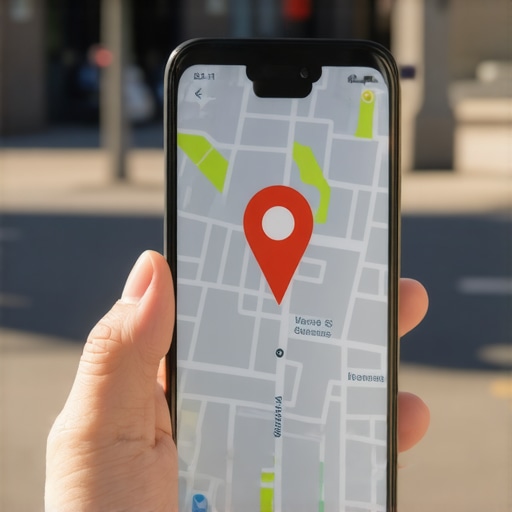
Why your map listing needs to be mobile-friendly first
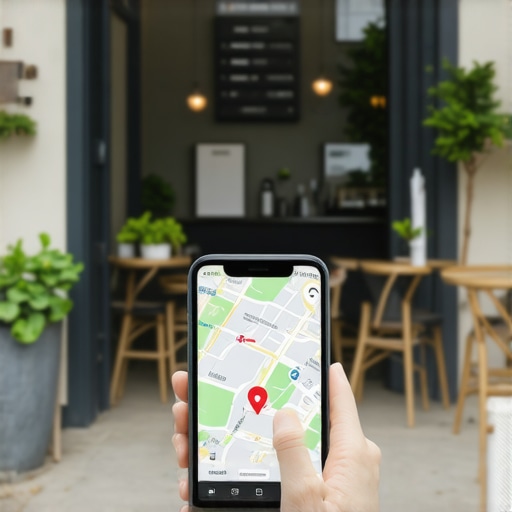
I remember standing on a cracked sidewalk, rain soaking through my jacket, staring at a map listing that refused to cooperate. My tire was flat, the ‘Call’ button on the screen was the size of a grain of rice, and every time I tried to zoom in, the interface jumped to a different screen. I was a customer with money in my hand, but that business made it impossible for me to give it to them. It was a wake-up call for my own work. I spent years obsessing over how things looked on a 27-inch iMac, completely ignoring the guy standing in the rain with a thumb too big for a tiny link.
Your Front Door is Now Four Inches Wide
We often treat our map listing as a ‘set it and forget it’ digital business card. I made the same mistake early on—I checked my boxes on a desktop and assumed I was winning. But the reality is that the vast majority of your neighbors are finding you while they’re on the move. If your profile feels clunky or your website link leads to a desktop-only mess, you’re essentially locking your front door. Today, I’m going to show you how to audit your presence so you never lose another ’emergency’ customer again.
Does my phone screen really dictate my ranking?
You might think that as long as your info is correct, the device doesn’t matter. But Google disagrees. According to data from Think with Google, 76% of people who search on their smartphones for something nearby visit a related business within a single day. If you don’t use a google listing checklist that prioritizes the mobile view, you are practically handing those leads to the guy across the street. I learned this the hard way when a client’s calls dropped by half simply because their mobile landing page took five seconds too long to load.
The Mobile Trap That Most Owners Fall Into
We often forget that the specific way to optimize for mobile map searchers is different than standard SEO. It’s about speed, thumb-friendly buttons, and immediate answers. I once managed a plumbing profile where we had great reviews, but we weren’t getting the ‘burst pipe’ calls. Why? Because our service menu was a PDF that didn’t open correctly on most phones. We had to implement a few maps seo checklist tweaks to fix that visibility gap. Have you ever tried to find your own business on a phone while standing in a busy parking lot? It’s an eye-opening experience that reveals exactly where your customers are getting frustrated. Let’s dig into how we turn that frustration into phone calls.
Clean Up Your Data Before You Chase Rankings
You cannot build a skyscraper on a swamp. Most business owners start by throwing money at ads or buying shady links, but if your underlying data is messy, you are essentially pouring water into a leaky bucket. I remember a landscape contractor who was completely invisible in the town right next to his home base. We did not start with a complex strategy; we performed a specific audit without expensive tools and found three different phone numbers listed across various old directories. To Google, he looked like three different (and untrustworthy) businesses. Fixing that consistency is the foundational step in any map optimization guide.
Winning the Proximity War Without Moving Your Office
People often think if they aren’t located in the dead center of a city, they are doomed to stay in the shadows. That is a myth. While proximity is a major factor, proximity alone is not putting your business in the top 3 anymore. Google’s algorithm weighs “Prominence” heavily—which is how much the internet at large talks about you. I once helped a garage door repair shop jump to the top of the pack for a city ten miles away just by focusing on hyper-local content on their website that mirrored their profile. This is where the specific way to optimize for mobile map searchers becomes your secret weapon; you have to prove your relevance to the specific micro-location of the person holding the phone.
Keep Your Map Health from Flatlining
Think of your profile as a living organism. If you do not feed it new data and monitor its vitals, it loses its competitive edge. I have seen thriving profiles vanish because of 3 map health errors sabotaging local traffic, such as ignoring the ‘Questions & Answers’ section or keeping outdated photos from five years ago.  One client of mine lost nearly 30% of their weekly calls simply because a competitor suggested an edit to their business hours, and they did not have a system to catch it. You have to monitor the one map health metric that actually matters: engagement. If people are clicking ‘Directions,’ tapping the ‘Call’ button, or asking about your services, Google receives a signal that you are the most helpful option in the area.
The Right Way to Handle Service Areas
If you are a plumber, electrician, or roofer, you likely do not have a traditional storefront. A common trap is selecting a massive 50-mile radius in your settings and hoping for the best. Instead, use a google listing checklist that focuses on the specific zip codes where your trucks are actually on the ground. When I worked with a pest control company, we stopped trying to blanket the whole county. We used a maps seo checklist to align their specific landing pages with high-value neighborhoods. Their calls tripled within six weeks because we narrowed our focus to where they could actually provide the fastest service.
I’ve noticed a pattern in every failed audit I’ve performed over the last decade. Most business owners follow a google listing checklist like a robot, ticking boxes but missing the soul of the algorithm. You’ve probably heard the common advice that the more reviews you have, the higher you’ll rank. That’s a half-truth that often leads to deep frustration. In my experience, having 500 reviews with zero engagement—no owner replies, no helpful votes, and no new customer photos—looks like a dead profile to Google. According to the annual Local Search Ranking Factors study by Whitespark, the quality and context of your reviews, specifically the keywords customers use naturally in their descriptions, often outweigh the raw count of five-star clicks.
Can I win the map pack if my competitor is closer to the city center?
The answer is a resounding yes, but not by playing their game. Many think proximity is the ultimate king of the map, but it’s just one piece of monitoring map health effectively. If your profile demonstrates higher prominence and relevance through hyper-local content and high-quality local citations, you can effectively outrank a competitor who is physically closer to the searcher. This is where why standard seo tactics fail; you aren’t just ranking for a keyword, you’re ranking for a specific coordinate on a grid. You have to prove to Google that the extra half-mile drive to your door is worth it for the user by showing consistent activity and local authority.
The Dangerous Game of Keyword-Rich Business Names
Here is the oops factor that kills more listings than almost anything else: adding your city or service to your business name when it isn’t part of your legal identity. It’s incredibly tempting to call yourself Main Street Plumbers even if your legal name is John’s Repair. You might see a temporary, intoxicating boost in the rankings, but Google has become aggressive with suspensions lately. I strongly believe why your business name shouldnt include a list of services is the most important lesson for longevity.  The risk of a permanent ban or a hard suspension far outweighs the short-term ranking spike. I once saw a thriving locksmith lose 90% of his monthly leads overnight because he tried to optimize his name against my advice. If you’ve been hit by this, you need a serious plan for how to reclaim your local reach without relying on these shady shortcuts. When you’re auditing your presence, don’t just look for green checkmarks in a software dashboard. Look for discrepancies between what you see and what your customers see. A google listing checklist is only truly useful if it accounts for how the algorithm actually views your business’s legitimacy in the real world. Have you ever fallen into this trap of trying to game the system only to have it backfire? Or perhaps you’ve seen a competitor doing it and wondered why they haven’t been caught yet? Let me know in the comments, and let’s discuss the right way to handle it.
I’ve seen business owners treat a ranking like a trophy they can stick on a shelf and forget. That is the quickest way to find yourself back on page four. Local SEO is not a race with a finish line; it is more like a gym membership. If you stop showing up, your results will eventually atrophy. I personally stick to a strict the profile maintenance routine that keeps you in the top 3 because I have seen how fast a clean profile can get cluttered with spam or incorrect user-suggested edits that the owner never bothered to reject.
How do I keep my map health from fading over time?
Maintaining dominance requires a shift from building to monitoring. I do not just glance at my dashboard once a month. I look for the small shifts that signal a problem before it becomes a disaster. Is my click-through rate dipping? Are competitors suddenly getting more review photos than me? I use a very specific monitoring map health strategy that focuses on behavioral signals rather than just raw rankings. If I see a dip, I immediately run through a map optimization guide to see if a core algorithm update shifted the weight of my categories or attributes.
The gear I actually use to stay ahead
I am often asked what expensive software I use. The truth is that most of it is noise. I rely heavily on tools like BrightLocal’s Local Search Grid because it gives me a heat map of where I am actually visible. Seeing a ‘1’ in the center of town means nothing if I am a ’10’ two blocks away. I also keep a close eye on the audit checklist for identifying ghosted business listings to ensure my profile has not been soft-suspended by a glitchy update. #IMAGE_PLACE_HOLDER_D# Darren Shaw of Whitespark recently pointed out in his 2023 Local Search Ranking Factors analysis that the ‘Primary Category’ remains the single most important factor for ranking, so I never mess with it unless there is a massive shift in my business model.
Why video is the next battlefield
If you want to know where this is all going, look at how younger generations use visual platforms like search engines. Google is already responding by showing more visual content in the map pack. I have started advising my clients to lean into short-form clips. We have seen incredible results after learning how we used video on our profile to double our conversion rate. It is not just about being found anymore; it is about being chosen. In the next year, I predict that static images will not be enough to hold a top spot. Google’s AI will likely begin ‘watching’ your profile videos to understand the context of your services better than ever before.
Stop over-complicating things and start stop ignoring these customer behavior signals in your profile. If you want a quick win today, go into your profile, find your most popular question in the Q&A section, and record a 30-second video answering it. Upload that to your updates section. You will be surprised how much that one human touch can how to reclaim your local reach by signaling fresh, high-quality engagement to the algorithm.
Hard Truths from the Map Pack Trenches
After auditing hundreds of profiles, I’ve realized that the biggest enemy of success isn’t the competition; it’s the assumption that you’re ‘finished.’ I spent years thinking a high review count was a shield, but I’ve seen those shields shatter when owners ignore customer behavior signals that Google prioritizes today.
Here are a few things I learned the hard way:
- Reviews are conversations, not trophies. If you aren’t replying, you’re telling Google the business is unattended.
- Local relevance beats global authority every time for maps. One link from a neighborhood blogger is worth ten from a generic industry site.
- Your google listing checklist should be a living document, not a one-time task.
The Tools That Keep My Clients Dominant
You don’t need a massive budget to win, but you do need clarity. I personally rely on the Local Search Grid from BrightLocal because it reveals the ‘hidden’ pockets where you’re losing visibility. #IMAGE_PLACEHOLDER_E# I also recommend following the work of experts who use actual data-backed insights rather than rumors. For those managing multiple sites, I’ve found that specific GMB software for multi-location brands is the only way to maintain sanity while keeping map health consistent across the board.
Your Journey to the Top Starts with One Tweak
The distance between where you are and the top three spots is often just a handful of intentional actions. Don’t let the technical jargon paralyze you. Start by fixing one discrepancy or recording one video today. When you follow a proven map optimization guide, the momentum builds faster than you think. You’ve got the tools and the knowledge; now it’s time to show your neighborhood that you’re the best choice they can make.
Have you ever noticed your ranking drop suddenly after a simple change to your profile? Let me know in the comments below!