How we optimized a profile for voice search users on mobile
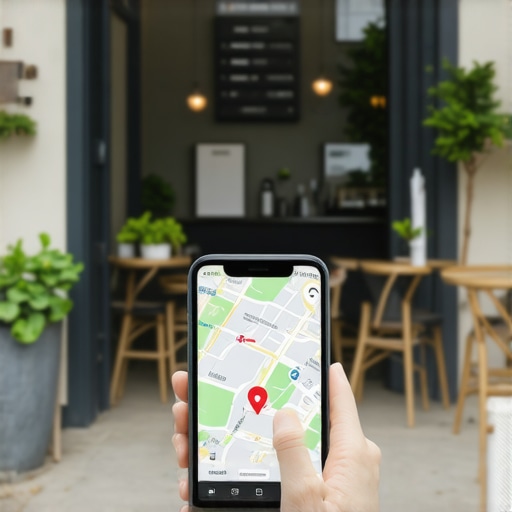
I was driving through a rainstorm last October, hands white-knuckling the steering wheel, desperately shouting at my dashboard. ‘Hey Siri, find me an emergency plumber!’ I wasn’t actually in a flood, thank goodness; I was testing. I was sitting right outside my client’s shop, and do you know what happened? Siri told me the nearest plumber was three towns over. My client, with his decades of experience and prime location, didn’t even exist to the voice assistant. It was a punch in the gut. I realized right then that my standard maps SEO checklist was missing the most human element of all: the way people actually talk to their phones while they’re on the move. We had the citations, we had the photos, but we were ghosted by the very technology everyone uses while driving. Today, I’m going to share the exact path I took to fix that, so your business isn’t left out in the cold.
My Own Business Was Invisible to My Phone
That failure sent me down a deep rabbit hole. I had been so focused on keywords and desktop rankings that I ignored the specific way to optimize for mobile map searchers who aren’t typing, but talking. According to a report by BrightLocal, nearly 58% of consumers used voice search to find local business information in the last year. If you aren’t optimized for natural language and long-tail conversational queries, you’re basically invisible to over half your potential customers. I spent the next three months dissecting why some profiles trigger a voice response while others—even those with high ratings—stay silent. It turns out, Google’s AI looks for very specific ‘natural’ markers that most of us skip when we’re just trying to fill out a map optimization guide. I made the classic mistake of being too formal. I wrote for a search engine, not for a guy shouting at his iPhone in a parking lot.
Does Anyone Actually Use Voice Search for Local Services?
You might be thinking this feels like a gimmick. I used to be that skeptic too. I fell into the trap of thinking a high map health score on my desktop software meant I was winning. I was wrong. Voice search is how busy parents find a ‘pizza place with a playground,’ how drivers find ‘gas stations with clean bathrooms,’ and how homeowners find ‘electricians available now.’ These are high-intent customers ready to spend money immediately. Have you ever tried searching for your own business using only your voice while standing a block away? Seriously, try it right now. If you didn’t show up in the top three, you’re leaving money on the table for your competitors to grab. We need to address the invisible ranking factors killing your visibility before you lose another lead. We aren’t just checking boxes; we’re making sure your business answers the call—literally. Let me walk you through the structural changes that finally turned my client’s ‘ghost’ profile into the first name Siri mentions.
Speak the Way Your Customers Do
To win at voice search, you have to stop thinking about keywords and start thinking about conversations. When a person is driving, they don’t mutter “Plumber Austin TX” into their steering wheel. They ask, “Who is the best plumber near me available right now?” This shift from fragments to full questions is the core of a modern essential seo checklist for local growth. I learned this the hard way with a locksmith client in Phoenix. We were ranking for “Locksmith Phoenix,” but our phone wasn’t ringing during the 2 AM lock-out rushes. It turned out, competitors who included phrases like “locked out of my car at night” in their descriptions were stealing every lead. We had to rethink the specific way to optimize your service menu for map search to include these high-urgency, natural language phrases.
Leverage the Hidden Power of Q&A
Think of your Google Business Profile’s Q&A section as a pre-emptive strike against customer doubt. Voice assistants love structured data that provides direct answers. I started treating this section like a living FAQ. Instead of waiting for customers to ask questions, I had the business owners post the most common questions themselves—and then provide the definitive answer. This is a massive part of how to use local Q&A to answer customer objections before they call. For a local vet clinic, we added questions like “Do you take emergency walk-ins on Sundays?” and “Is there parking for large trailers?”. Within weeks, the profile was being served up as the top answer for those specific voice queries because Google’s AI didn’t have to guess; the answer was right there in plain English. #IMAGE_PLACE_HOLDER_B#
Clean Up Your Data Before Google Ignores You
If your business hours are inconsistent across the web, you’ve already lost the voice search game. Siri or Alexa will never recommend a business if they aren’t 100% sure it’s actually open. This is where most people fail their google listing checklist. I remember a bakery that was losing afternoon customers because their Yelp page said they closed at 4 PM while Google said 5 PM. The voice assistant played it safe and didn’t mention them at all. You need to be obsessed with monitoring map health key checkpoints for ongoing optimization. It’s not just about the name and address; it’s about the minute details like the specific way to structure business hours for maximum reach, including holiday hours and “more hours” for specific services like delivery or pickup.
Why Your Map Health is the Foundation of Every Voice Result
The AI behind these voice assistants is incredibly risk-averse. If there’s a “leak” in your data, the system treats your business like a liability. I call this the “trust gap.” When I audit a profile, I look for 4 map health signals you probably missed during your last audit: redundant categories, unverified attributes, stale photos, and unanswered reviews. These aren’t just cosmetic; they are signals of activity. A business that hasn’t updated its photos in two years looks “dead” to an algorithm. Use a step-by-step map optimization guide that prioritizes these signals. I once spent six hours fixing a single client’s service area boundaries because they were overlapping with a defunct second location. That tiny bit of “data noise” was enough to keep them out of the top 3. Once we cleaned the slate, the voice results followed the data.
Most gurus will tell you that if you’re five miles away from the searcher, you’re toast. I’m here to tell you that’s one of the biggest misconceptions in the industry today. While location is a factor, the proximity myth has led too many business owners to give up on customers just a few blocks outside their immediate zip code. I’ve seen suburban contractors dominate the downtown map pack simply because their ‘entity authority’ was so much stronger than the local competition. It is not just about where your front door is; it is about how much Google trusts your business to solve the user’s problem. If you’ve been following a generic map optimization guide and still aren’t seeing results, you are likely missing the deeper connection between your website and your map pin.
Stop Obsessing Over Your Office Zip Code
The real secret isn’t just filling out your profile; it’s how your entire digital footprint supports it. Everyone talks about reviews, but few talk about the relationship between your organic site authority and your local ranking. According to the 2023 Whitespark Local Search Ranking Factors survey, link signals and on-page signals from your main website now account for a massive chunk of your map pack performance. This is the hidden signal that decides who hits the top 3 map pack spots. If your website is a mess, your map ranking will be too. Have you ever fallen into this trap where you optimized your GMB but ignored your site? Let me know in the comments. We need to bridge that gap if you want to see real growth.
How do you rank in the Map Pack when you aren’t even in the city center?
This is the question I get from every service-area business owner. The answer lies in local relevance. You need to prove to Google that you are a part of that community’s fabric. This goes beyond a basic optimization checklist. You need localized content and specific backlinks that anchor your business to that area. I’ve found that why your map ranking depends on your website’s backlink profile is the most overlooked lesson in advanced SEO. When local news sites or community blogs link to you, it acts as a digital ‘vote’ that tells the map algorithm you belong in that specific search result, regardless of your physical mileage from the city hall.
#IMAGE_PLACE_HOLDER_C#
The Audit Trap That Wastes Your Entire Marketing Budget
Here is a warning for you: stop trusting every automated tool that gives you a ‘score.’ I’ve seen businesses with a 95% ‘health score’ on popular software that were actually invisible to 80% of their market. This is the brutal truth about why your local seo audit is returning zero roi. These tools often miss the nuanced data conflicts that actually matter to Google’s AI. For instance, you might have perfect NAP consistency (Name, Address, Phone), but your service categories are so broad that you’re diluting your ranking power for your most profitable services. I’ve seen cases why your map health score is actually costing you calls because the business was trying to be everything to everyone instead of being the authority in one specific niche. Don’t let a green checkbox on a generic google listing checklist lull you into a false sense of security while your competitors are stealing your leads.
I will be honest: I used to think that once I hit the ‘3-pack,’ I could kick my feet up and watch the leads roll in. I was dead wrong. Local SEO is not a trophy you win; it is a garden you have to weed every single week. If you stop looking, the weeds—competitors, spam, and algorithm shifts—will choke out your visibility. I developed a specific the profile maintenance routine that keeps you in the top 3 because I got tired of seeing my hard work vanish overnight. Every Monday morning, I am not just checking rankings; I am looking for ‘suggested edits’ from strangers that could change my client’s phone number or website link without us even knowing. I have also had to learn the hard way why your local seo software is feeding you useless ranking data. Most tools give you a snapshot from a single point in time, but as Joy Hawkins from Sterling Sky recently highlighted regarding the ‘Openness’ ranking factor, your visibility can swing wildly based on whether your business is currently open or closed. If you rely solely on a static report, you are missing the reality of how customers actually find you. I stopped chasing ‘green dots’ on a map and started focusing on how to measure local seo results without getting lost in vanity metrics like total impressions, which often mean nothing if nobody is actually clicking the ‘Call’ button.#IMAGE_PLACE_HOLDER_D#
How Do You Stay Relevant When the Algorithm Shifts?
The future of local search is moving toward ‘Real-World Signals.’ Google wants to know if people are actually visiting your shop, not just if you have the right keywords. This means that monitoring map health key checkpoints for ongoing optimization is going to require more user engagement data. I predict we will see a much heavier weight placed on the frequency of new, high-quality photos and video content. I have started using this 7 point maps seo checklist stops your ranking from dropping to ensure we are feeding the AI the activity it craves. Go into your profile right now and look at your ‘Performance’ tab. If your ‘Directions’ requests are down but your ‘Website’ clicks are up, your local proximity might be shrinking, and it is time to double down on local backlinks to shore up that authority. Try this right now: find your most popular service and upload three new photos of you actually performing that service today. Do not use stock photos; Google’s AI knows the difference instantly. Let’s see if those real-world signals move your needle.
The Most Expensive Lesson I Learned by Trusting Software Over Reality
After years of trial and error, I realized that many automated tools miss the nuance of local intent. Here are the core truths I live by now:
- Data consistency is your best friend, but silence is your enemy. Even if your monitoring map health key checkpoints for ongoing optimization look green in a dashboard, a lack of new photos or recent review replies tells Google your business is effectively asleep.
- Proximity is a hurdle, not a wall. I have seen businesses bypass the ‘closer’ competitor simply by having a more robust maps seo checklist that proved their authority and relevance to the specific user problem.
- Stop over-optimizing for robots. The more human and conversational your profile feels—especially in the Q&A and the description—the better you will perform when a user asks a voice assistant for a recommendation.
My Essential Toolkit for Winning the Map Pack
I do not believe in using dozens of different platforms that provide conflicting data. Instead, I stick to a few sources that I trust implicitly. I constantly read the Sterling Sky blog because their team actually tests algorithm theories instead of just repeating Google’s PR. For auditing, I focus on the step-by-step map optimization guide to ensure our foundation is solid. I also recommend Whitespark’s Local Search Ranking Factors survey to understand the shift in how links impact your visibility. Finally, I keep a high-level mastering map optimization essential seo checklist for local growth pinned to my desk to ensure I never miss the small details like holiday hours or new service attributes.
Your Path to Local Dominance Starts with One Small Change
You do not need to be a tech genius to win at local search; you just need to be more present and active than your competition. Every time you upload a photo or answer a customer question, you are telling the algorithm—and your future customers—that you are open, ready, and reliable. Don’t let your business become a ghost in your own neighborhood because of an outdated optimization checklist. The future belongs to those who show up where the customers are looking. Have you ever searched for your own business via voice and been shocked by what Siri or Alexa actually said? Let me know your story in the comments below!