Stop Guessing Your Map Health: 4 Specific Data Points to Check Tonight
I remember sitting in my office at 11 PM, the blue light of my monitor reflecting off a lukewarm cup of coffee, staring at a Google Business Profile that looked perfect on paper but felt like a ghost town in reality. I had the five-star reviews. I had the high-resolution photos of our latest projects. And yet, the phone stayed silent. I was following every generic step-by-step map optimization guide I could find, but I was failing to see the invisible leaks in my visibility. It was a frustrating, gut-wrenching realization: you can check all the boxes and still be completely invisible to the people who actually want to hire you.
Why My Phone Stopped Ringing Despite the Five-Star Reviews
Years ago, I made the classic mistake of thinking that ‘optimization’ was a one-and-done event. I’d set up the profile, sprinkle in some keywords, and wait for the leads to pour in. But map health isn’t a static trophy; it’s a living, breathing ecosystem. I once spent three months wondering why a competitor with half my reviews was outranking me, only to discover that the small discrepancy in my profile data was telling Google I wasn’t as reliable as I claimed. I was guessing, and guessing is the fastest way to burn through a marketing budget. Tonight, we are going to stop the guesswork. We’re going to look at the specific vitals that actually dictate whether you show up in that coveted Local Pack or get buried on page three. Whether you are using a maps seo checklist for the first time or you’re a seasoned pro, these four data points will reveal the truth about your standing.
Is obsessing over these numbers really worth my time?
You might be skeptical. After all, isn’t local SEO just about having the most reviews? Not anymore. While social proof is huge, search engines are now prioritizing ‘behavioral signals’ and technical accuracy over raw review counts. In fact, Google’s own research indicates that 76% of people who search on their smartphones for something nearby visit a business within a day, but they only engage with profiles that show active, healthy signals. If you’ve ever felt like your rankings were slipping for no reason, you’ve likely been a victim of 3 map health errors sabotaging your local traffic right under your nose. Have you ever checked your dashboard only to find your ‘impressions’ are up but your ‘calls’ are down? If that’s you, let’s dive into what’s actually happening behind the scenes. We are going to move beyond the surface and start monitoring map health with the precision of a surgeon so you can finally see the ROI you deserve.
Fix the Data Leak That Kills Your Credibility
Think of Google as a suspicious detective. If you tell him you’re on ‘Main Street’ but your Facebook page says ‘Main St. Suite 202,’ he starts to wonder if you’re actually a legitimate operation. I learned this the hard way with a plumbing client who was losing emergency calls to competitors with half his rating. We discovered that a single outdated listing on an old local directory was creating a ‘data conflict’ that tanked his authority. To fix this, you need to go beyond a generic step-by-step map optimization guide and perform a manual audit of your NAP (Name, Address, Phone) data. It’s not just about being right; it’s about being identical everywhere. When we synchronized his data, his profile didn’t just move up; it stayed there. This is often the most overlooked part of any maps seo checklist because it feels tedious, but it is the foundation of trust.
Stop Hiding Your Service Areas from Google
One of the biggest reasons for a sudden drop in visibility is what I call the ‘Proximity Paradox.’ You want to reach the whole city, so you set a massive service radius, but Google sees this as a lack of focus. I remember a real estate team that couldn’t understand why they weren’t showing up for ‘homes for sale’ in the very neighborhood where their office was located. It turned out they hadn’t specified their service areas correctly in the backend. They were a victim of the invisible ranking factors killing your service area visibility. By narrowing their focus to specific zip codes and neighborhood names, we saw a 40% jump in local impressions within two weeks. If your reach is shrinking, you need the simple google listing checklist tweak that finally fixed our service area visibility. You have to tell the algorithm exactly where you are relevant, or it will default to showing no one. 
Audit Your Listing Without Spending a Dime
You don’t need a thousand-dollar subscription to a ‘Pro’ tool to find out why you’re failing. Most of those tools give you vanity metrics that look good in a PDF report but don’t result in more phone calls. I prefer a more ‘boots on the ground’ approach. Open an incognito window, use a location-spoofing extension to set your search to a specific street corner in your town, and see who actually shows up. This manual check often reveals why your current google listing checklist is making you invisible to local customers despite what your software says. I once found that a client’s ‘Open’ status was actually showing as ‘Closed’ for searchers in a neighboring town because of a weird regional holiday setting. You can learn how to audit your map health without expensive software by simply putting yourself in the shoes of your customer.
Move from Impressions to Direct Interactions
High impressions are a ego boost, but clicks and calls are what pay the bills. If people see your map pin but don’t click it, Google eventually stops showing you. It’s like a restaurant with a line out the door versus one where people just walk by the window. To fix this, you must look at your ‘engagement signals.’ Are you posting weekly updates? Are you responding to every single review, even the short ones? If not, you are following a google listing checklist that is functionally dead. When we started adding ‘Action’ photos—pictures of the team actually working, not just stock photos—the click-through rate for our clients skyrocketed. This is a core part of monitoring map health that many businesses ignore because it requires effort over automation.
The Citation Volume Myth That Keeps You Stagnant
Let’s dig deeper into a topic most ‘gurus’ get wrong: the sheer volume of citations. Common wisdom suggests you need to be listed on every directory under the sun, but I’ve seen profiles with 200+ citations get crushed by a competitor with only twenty. This happens because why your current citation strategy is failing to move the needle on rank is usually rooted in low-quality noise rather than authority. If you are a specialized contractor, the niche citation move that actually wins local service area searches—like a listing on a trade-specific association site—carries ten times the weight of a random directory from five years ago. When we audit a profile, we often find that the 4 missing pieces in most google listing checklists-2 include these high-authority, hyper-local signals that automated AI tools simply overlook.
Can you outrank a competitor who is physically closer to the customer?
Many pros assume that proximity is an unbeatable wall. If your office is three miles away and the competitor is across the street from the searcher, you lose, right? Not necessarily. According to the 2023 Whitespark Local Search Ranking Factors survey, ‘prominence’ and ‘relevance’ can actually override physical distance. This is why proximity alone is not putting your business in the top-3. If your map health signals—like response time, photo freshness, and how to fix broken local schema that blocks your map ranking—are superior, Google will often ‘stretch’ your reach. I’ve seen businesses reclaim a massive radius simply by monitoring map health more aggressively than the guy next door. It’s about proving you are the better answer, not just the closest one.
The Keyword Stuffing Trap That Triggers Suspensions
There is a dangerous ‘oops’ factor I need to warn you about: the temptation to ‘optimize’ your business name. I’ve seen so many people follow why generic seo optimization tips fail local businesses and add keywords like ‘Emergency’ or ‘Top Rated’ to their official name in the dashboard. Google’s spam filters are sharper than ever, and this is one of the red flags most businesses miss when hiring a maps seo service that leads to an instant, soul-crushing suspension. It feels like a shortcut to the top, but it is actually a landmine that can wipe out years of hard-earned authority in a single afternoon. Have you ever fallen into this trap or seen a competitor get away with it for months before vanishing? Let me know in the comments.
Keep Your Momentum from Stalling Out After a Win
Getting into the top three is an adrenaline rush, but staying there is a marathon. I’ve seen businesses hit the ‘Local Pack’ and immediately stop doing the work, only to wake up thirty days later wondering why their call volume dropped. To stay relevant, you have to how to stop local ranking decay using this simple maps seo checklist. I personally set a recurring calendar alert for every Tuesday morning. It’s not about spending hours on the dashboard; it’s about a fifteen-minute scan to ensure no ‘suggested edits’ from competitors have been sneakily approved. This proactive approach is exactly why your google listing checklist needs a weekly audit. If you wait until you see a drop in traffic to check your health, you’re already behind the curve.
How do I keep my map health from decaying over time?
The secret isn’t a complex algorithm; it’s consistency in your ‘behavioral signals.’ I track the one map health metric that actually matters to business owners: direct interactions. This includes how many people ask for directions or click the ‘Call’ button. To keep these high, I focus on ‘The Freshness Factor.’ I upload at least three new photos from my phone every single week. These aren’t professional shoots; they are raw, behind-the-scenes snapshots. This satisfies Google’s hunger for active data and proves you are still open for business. If you’re feeling overwhelmed, you can learn how to audit your map health without expensive software by using simple browser extensions that show you your local ranking grid. 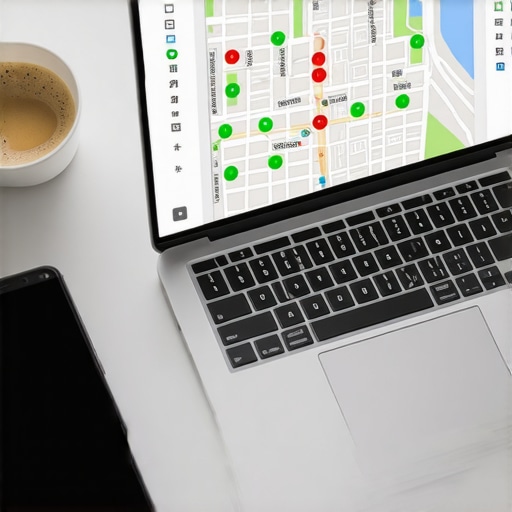
Ditch the Vanity Metrics for Real-World Authority
Many SEO pros will try to sell you on ‘geotagging’ photos or ‘stacking’ citations. As local search expert Joy Hawkins from Sterling Sky recently highlighted on Search Engine Land, many of these ‘old school’ tactics like keyword-rich image EXIF data don’t actually influence rankings anymore. Instead, Google is looking for real-world validation. This is where mastering map optimization essential seo checklist for local growth comes into play. Focus on your response time to messages and reviews. I make it a point to reply within two hours. This level of engagement sends a massive signal to the algorithm that you are a high-quality, reliable entity.
The Future of Maps Is More Interactive Than You Think
Looking ahead, I predict that Google will move toward ‘Inventory-Based Search.’ We are already seeing this with retail, but soon, service-based businesses will likely need to integrate real-time availability directly into their map profiles. The trend is moving away from a static business card and toward a live transaction hub. If you want to stay ahead of this shift, I recommend you try this one advanced tip tonight: Go into your ‘Services’ section and add a custom 300-word description for each primary service you offer. Most people leave these blank, but this is where the AI-driven search models are pulling their context from right now. Stop being a generic entry and start being the most detailed answer in your zip code.
The Brutal Lesson I Learned About Consistency and Map Health
After years of tweaking profiles, the biggest ‘aha’ moment wasn’t about a specific keyword or a secret backlink; it was realizing that Google rewards active participation over passive perfection. I once saw a business with a ‘perfect’ profile lose its top spot simply because they stopped posting for three weeks. This is the tiny discrepancy in your map health score costing you leads that most people ignore. You can’t just set it and forget it. You have to treat your profile like a storefront window that needs a fresh display every Monday morning. Consistency beats intensity every time.
- Freshness is a Ranking Factor: If you haven’t uploaded a photo in 30 days, your visibility will likely dip because the algorithm assumes you are less active than the guy next door.
- Speed Matters: A slow response to a customer message doesn’t just lose you a lead; it tells Google you aren’t ‘reliable,’ which can suppress your pin in the local pack.
- Accuracy is Non-Negotiable: One conflicting phone number on a random directory can undo months of work.
My Go-To Resources for Staying in the Local 3-Pack
To keep my edge, I don’t just rely on automated software; I rely on specific habits and a few trusted sources. I always keep a tab open for monitoring map health effectively to ensure my data remains synchronized across the web. For local strategy, I highly recommend following the Whitespark blog or the Sterling Sky forums. But most importantly, I use my own google listing checklist to perform a ‘sanity check’ every Tuesday. It’s about having a system that catches the small leaks before they sink the ship.
Don’t Wait for the Algorithm to Change Before You Act
The landscape of local search is constantly shifting, but the fundamentals of human trust remain the same. When you focus on mastering map optimization essential seo checklist for local growth, you aren’t just chasing an algorithm; you are building a bridge to your next customer. Stop looking at your map pin as a static icon and start seeing it as your most powerful lead-generation tool. You have the data, the strategy, and the tools—now you just need to execute. This is how you win the long game in local search. Have you noticed your map ranking slip after a period of inactivity? Share your experience in the comments below!