How to Use Local Service Ads and Organic Map Rank Together
I remember sitting at my kitchen table three years ago, staring at my laptop screen and feeling like I was being shaken down by a digital mob boss. I’d spent months meticulously following every map optimization guide I could find, yet my phone just wasn’t ringing. I was terrified that if I started paying for Local Service Ads (LSAs), I’d be ‘giving in’ and my organic rankings would just wither away. I thought it was an either-or game where you were either a ‘real’ business that ranked naturally or a desperate one that paid for clicks. I was dead wrong. [image-placeholder]
Why I Stopped Treating LSAs and SEO Like Rivals
I used to think of my marketing budget as a finite pie where every slice given to Google Ads was a slice taken away from my ‘real’ SEO work. It was a stressful way to live. The lightbulb moment happened when I realized that a customer seeing my face in the ‘Google Guaranteed’ section and in the local 3-pack wasn’t just repetitive—it was a psychological sledgehammer. It’s like seeing a neighbor’s lawn sign and then running into them at the grocery store; you just start to trust them more. I made a massive mistake early on by pausing my LSAs the second my organic rank hit the #2 spot. I thought I was being clever and saving money. Instead, my total lead volume didn’t just drop by the ad count—it plummeted across the board. My map health suffered because I lost that constant stream of high-intent interaction that Google loves to see. The truth is, Google’s real estate is shrinking every day. If you aren’t in the LSAs and you aren’t in the top three map spots, you basically don’t exist to someone searching on a mobile device. I learned the hard way that trying to fight the ads by being ‘purely organic’ was like trying to outrun a car on foot. You might be faster for a second, but eventually, the machine wins. We are going to look at how to make that machine work for you instead of against you.
Is Paying for Ads Actually Worth the Hype?
Look, I get the skepticism. Why pay Google for something you’re already working hard to get ‘for free’? But here’s the kicker: searchers are tribal. Some only trust the ‘Guaranteed’ checkmark, while others skip straight to the organic results. By playing both sides, you’re not just double-dipping; you’re creating a ‘surround sound’ effect for your brand. Research from industry leaders like WordStream suggests that having multiple entries on a single search results page—both paid and organic—dramatically increases the likelihood of a click because of the ‘halo effect’ of brand familiarity. When people see you everywhere, they assume you’re the leader.
The Synergy That Makes the Phone Ring
When you run LSAs, you get data that no optimization checklist can give you on its own: real-time feedback on which services people are actually willing to pay for right now. Have you ever felt like you’re optimized for the wrong keywords? I’ve been there, screaming at my dashboard because I was ranking for things that didn’t pay the bills. By using these two tools together, you can use your paid data to shore up your organic strategy, ensuring your maps seo checklist is actually targeting money-making terms. It isn’t just about being seen; it’s about being seen by the right person at the exact moment they need help. Have you ever noticed your organic clicks dropping the moment you paused your local ads? It’s a common frustration, but there is a better way to balance the two.
Clean Up Your Profile Before Spending a Dime
I once blew two grand in a month on LSAs only to realize my Google Business Profile was pointing to a dead landing page. I was essentially paying for a billboard on a road that led to a cliff. Before you touch that ‘Start Campaign’ button, you need to verify that your foundation is rock solid. This is where the 5 map health errors stopping your local customers come into play. If your NAP (Name, Address, Phone) data is inconsistent, Google’s algorithm gets confused, and your ad spend becomes half as effective because the trust signals aren’t lining up. Most business owners think the ‘Google Guaranteed’ badge fixes everything, but if your organic listing looks like a ghost town, customers will hesitate.
Stop the Bleeding by Finding Invisible Leaks
You have to look for the things that aren’t obvious. I remember a client who couldn’t figure out why their LSA leads were so expensive compared to their competitors. It turned out their map health leaks were caused by outdated office hours that contradicted their ad schedule. Google’s AI hates friction. If your ad says you are open 24/7 but your map profile says you close at 5 PM, you’re sending a mixed signal that kills your quality score. You need to use a google listing checklist to audit these details weekly. It’s like checking the oil in your car; it’s boring, but it prevents the whole engine from seizing up.
Let Your Paid Ads Lead Your Content Strategy
Think of your LSAs as the scouts and your SEO as the main army. While your 10 minute maps seo checklist helps with the basics, the ads show you the ‘buying intent’ keywords in real time. In my third year of business, I noticed that while I was trying to rank organically for ‘general contractor,’ my ads were getting slammed with calls for ’emergency roof repair.’ I was ignoring a goldmine because I was too focused on the wrong keywords. I immediately pivoted. I updated my google listing checklist to include specific photos of roof repairs I’d done that week. The result? My organic ranking for those specific high-value terms shot up within a month because I was finally feeding Google exactly what the market was asking for. 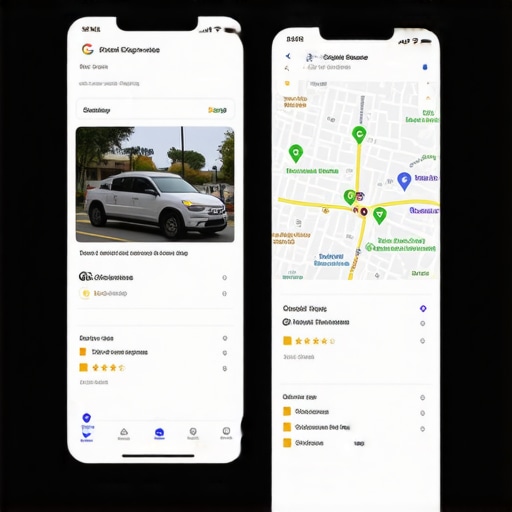
Turn Search Terms into Permanent Rankings
Once you identify which LSA categories are actually making your phone ring, you should bake those terms directly into your Google Business Profile posts and service descriptions. This creates a feedback loop. Every time someone clicks your ad and then clicks your organic listing to ‘check you out,’ Google sees that interaction. They see the user staying on your page, looking at your photos, and reading your reviews. This behavior is a massive signal that you are a relevant authority, which is the cornerstone of any map optimization guide. You are essentially using your ad budget to buy ‘relevance points’ that eventually help you rank for free. I’ve seen this strategy cut lead costs by 40% because the organic side starts doing the heavy lifting. You should also ensure you are following a strict maps seo checklist to maintain those positions once you get them, otherwise, you’re just renting space on page one instead of owning it.
Stop Obsessing Over the 100% Completion Bar
We’ve been conditioned to believe that ‘more is better.’ Every beginner-level tutorial tells you to fill out every single field Google offers, but here is a contrarian truth: a cluttered profile is often a penalized profile. I’ve seen business owners add every possible secondary category—from ‘handyman’ to ‘landscaper’ to ‘roofing contractor’—thinking they are casting a wide net. In reality, they are diluting their relevance. When you try to be everything, Google’s algorithm struggles to categorize you for anything specific. This is often the brutal reason your google listing checklist isnt working as intended. Instead of chasing a 100% completion score, you should be chasing hyper-relevance.
The Category Trap That Dilutes Your Authority
One of the most dangerous ‘oops’ factors I see involves the primary category. Changing this field too often, or selecting a category that doesn’t perfectly match your most profitable service, can cause your profile to vanish for weeks. Google needs stability to build trust. If you are constantly tweaking your core identity, the algorithm treats you like a high-risk entity. I once consulted for a plumber who changed his primary category to ‘HVAC’ because it was summer, only to find that his plumbing rankings didn’t just dip—they evaporated. This is a map health metric most agencies completely ignore during audits because they are too focused on surface-level keywords.
Why Does Your Ranking Drop Right When You Think You’ve Fixed Everything?
It is the ultimate frustration: you spend hours following a step-by-step map optimization guide, you clean up your data, and your ranking actually goes down. According to the 2023 Local Search Ranking Factors study by Whitespark, Google’s ‘Proximity Filter’ and ‘Re-indexing Lag’ are real phenomena. When you make significant changes, Google often ‘resets’ its understanding of your business, leading to a temporary visibility dip that can last 7 to 14 days. Don’t panic and revert your changes immediately; that just restarts the clock. You have to give the algorithm time to digest the new data. [image-placeholder]
Don’t Let the Software Do All the Thinking
I’ve seen people spend thousands on automated tools that promise to ‘sync’ their data across the web. While these are great for efficiency, they lack the nuance of human intent. If your optimization checklist is still missing the human touch, you’re just feeding a machine. Machines don’t know that your ‘service area’ shouldn’t include that one neighborhood across the bridge where traffic makes it impossible to turn a profit. They just see empty boxes to be filled. You need to manually fix the map optimization guide mistakes killing your clicks by ensuring your service area reflects your actual business operations, not just a 20-mile radius on a map. Have you ever fallen into the ‘100% completion’ trap only to see your leads dry up? Let me know in the comments below.
I used to think that once I hit the top three, I could just walk away and let the leads roll in forever. I was incredibly naive. Local SEO isn’t a trophy you win; it’s a garden you have to weed every single week. If you stop looking, the weeds—competitor spam, algorithm shifts, and ‘suggested edits’ from random users—will take over your hard-earned real estate. I learned this the hard way when a competitor ‘suggested’ my business was permanently closed, and Google accepted it because I hadn’t checked my dashboard in fourteen days. My phone stopped ringing overnight. That is why monitoring map health key checkpoints is now a non-negotiable part of my Monday morning routine.
Ditch the Automation and Get Your Hands Dirty
People always ask me what expensive software I use to stay on top. Honestly? I’ve found that the more I automate, the less I actually know about what’s happening. I use a simple Chrome extension called GMB Spy to peek at what categories my competitors are testing, but the real work happens in the ‘Performance’ tab of the Google Business Profile itself. I’ve developed a your complete maps seo checklist for enhanced visibility that focuses on engagement rather than just technical settings. As Darren Shaw from Whitespark often points out, ‘Review velocity’—the speed at which you gain new reviews—is a massive ranking signal that automation tools can’t fake. If you get ten reviews in a day and then zero for a month, it looks suspicious. You need a steady, human heartbeat of activity.
How do I maintain my map visibility over time?
Maintenance is about consistency over intensity. I don’t spend five hours a week on this; I spend fifteen minutes every Monday morning. I start by checking for any ‘pending’ edits on my profile to ensure no one has messed with my phone number or hours. Then, I look at 7 google listing checklist items you need to update weekly, specifically focusing on responding to every single review, even the ones without text. Google’s AI is looking for signs of life. If you aren’t talking back to your customers, Google assumes you aren’t open for business. I also make it a point to upload three fresh, high-quality photos from my phone every week. These aren’t professional headshots; they are ‘proof of work’ photos that show we are out in the community doing the job right now.
Looking Ahead to the Era of Zero-Click Searches
The future of local search is moving toward ‘Zero-Click’ results, where the user gets every answer they need without ever leaving the Google ecosystem. This means your essential seo checklist for local growth must prioritize things like the ‘Q&A’ section and your product/service menus. Google is becoming an AI-driven answering machine. If a customer asks, ‘Do you have emergency repair available on Sundays?’ and that information is buried in a PDF on your website instead of being clear on your map profile, you’ve already lost the lead. You have to fix the map optimization guide mistakes that keep your best information hidden. I predict that within the next two years, your ability to provide ‘social proof’ through customer-uploaded videos will be the number one factor in breaking the proximity barrier. Don’t wait for the change to happen; start asking your happy customers to record a five-second video of their finished project today. It’s the single most powerful move I’ve made this year to stay ahead of the pack.
I used to think that once I hit the top three, I could just walk away and let the leads roll in forever. I was incredibly naive. Local SEO isn’t a trophy you win; it’s a garden you have to weed every single week. If you stop looking, the weeds—competitor spam, algorithm shifts, and ‘suggested edits’ from random users—will take over your hard-earned real estate. I learned this the hard way when a competitor ‘suggested’ my business was permanently closed, and Google accepted it because I hadn’t checked my dashboard in fourteen days. My phone stopped ringing overnight. That is why monitoring map health key checkpoints is now a non-negotiable part of my Monday morning routine.
Ditch the Automation and Get Your Hands Dirty
People always ask me what expensive software I use to stay on top. Honestly? I’ve found that the more I automate, the less I actually know about what’s happening. I use a simple Chrome extension called GMB Spy to peek at what categories my competitors are testing, but the real work happens in the ‘Performance’ tab of the Google Business Profile itself. I’ve developed a your complete maps seo checklist for enhanced visibility that focuses on engagement rather than just technical settings. As Darren Shaw from Whitespark often points out, ‘Review velocity’—the speed at which you gain new reviews—is a massive ranking signal that automation tools can’t fake. If you get ten reviews in a day and then zero for a month, it looks suspicious. You need a steady, human heartbeat of activity.
How do I maintain my map visibility over time?
Maintenance is about consistency over intensity. I don’t spend five hours a week on this; I spend fifteen minutes every Monday morning. I start by checking for any ‘pending’ edits on my profile to ensure no one has messed with my phone number or hours. Then, I look at 7 google listing checklist items you need to update weekly, specifically focusing on responding to every single review, even the ones without text. Google’s AI is looking for signs of life. If you aren’t talking back to your customers, Google assumes you aren’t open for business. I also make it a point to upload three fresh, high-quality photos from my phone every week. These aren’t professional headshots; they are ‘proof of work’ photos that show we are out in the community doing the job right now.
Looking Ahead to the Era of Zero-Click Searches
The future of local search is moving toward ‘Zero-Click’ results, where the user gets every answer they need without ever leaving the Google ecosystem. This means your essential seo checklist for local growth must prioritize things like the ‘Q&A’ section and your product/service menus. Google is becoming an AI-driven answering machine. If a customer asks, ‘Do you have emergency repair available on Sundays?’ and that information is buried in a PDF on your website instead of being clear on your map profile, you’ve already lost the lead. You have to fix the map optimization guide mistakes that keep your best information hidden. I predict that within the next two years, your ability to provide ‘social proof’ through customer-uploaded videos will be the number one factor in breaking the proximity barrier. Don’t wait for the change to happen; start asking your happy customers to record a five-second video of their finished project today. It’s the single most powerful move I’ve made this year to stay ahead of the pack.
The Hard Truth About Staying on Top Once You Arrive
Looking back, the biggest mistake I made wasn’t a technical error; it was a mindset shift. I treated my visibility like a destination I could finally reach and then stop driving. In reality, your presence in the local pack is more like a high-performance engine that requires constant tuning. If you are afraid to spend a dollar to make five because you want to be ‘purely organic,’ you are leaving your territory open for a competitor to swoop in.
- Stop checking your rank every hour: It’s a vanity metric that will drive you crazy. Focus on lead volume and call quality instead.
- Google is a partner, not an enemy: Once I started seeing LSAs as a way to feed the algorithm the data it craves, my organic results followed suit.
- Consistency beats intensity: Doing ten minutes of work on your weekly google listing checklist is better than a five-hour overhaul once a year.
Tools That Keep My Map Health from Tanking
I don’t believe in overcomplicating things with dozen-layer software stacks. I rely heavily on a few core pillars. First, I always keep a map health monitoring routine active to spot shifts before they become disasters. Second, I recommend everyone dive into the Whitespark Local Search Ranking Factors report annually—it’s the closest thing we have to a roadmap. Lastly, I use a complete maps seo checklist to ensure I’m not missing the small details, like geotagged photos or responding to those often-ignored zero-star reviews. These steps provide the peace of mind that I’m not flying blind.
Building Your Digital Fortress One Review at a Time
You don’t need a massive marketing agency or a six-figure budget to dominate your neighborhood. You just need to be more helpful and more present than the guy down the street. Local search is the last frontier where a small business can actually outmaneuver a corporate giant simply by being more human. By mastering a map optimization guide that balances the speed of ads with the longevity of organic rank, you are building a business that can weather any algorithm update. The future of your local reach starts with the very next customer interaction you record. Have you noticed your organic clicks dropping the moment you paused your local ads, or has the ‘halo effect’ worked in your favor? Let me know your experience in the comments below.