The Map Health Checklist for Businesses with No Physical Office
I remember sitting at my kitchen table three years ago, staring at a Google Maps screen that felt like a personal insult. I had the skills, the insurance, and the happy clients, but because I ran my business out of a van instead of a fancy downtown office, I was practically invisible. I was a ghost in my own city. I spent weeks trying to follow every generic maps seo checklist I could find, but they all assumed I had a lobby where customers could sit. When you don’t have a physical address to show off, the standard rules don’t just feel broken—they feel rigged against you. I eventually learned that keeping a high level of map health for a service-area business requires a completely different playbook than a brick-and-mortar shop. Today, I want to pull back the curtain on how I stopped being a digital phantom and started actually showing up where it matters.
Stop Hiding Your Business in Plain Sight
The biggest mistake I made early on was trying to ‘game’ the system by using a P.O. Box address. I thought I was being clever, but Google caught on faster than a cat on a laser pointer. My profile was suspended within forty-eight hours, and I had to beg for reinstatement. That was my ‘lightbulb moment’: you cannot fake a physical presence, but you can absolutely dominate the map by proving your local authority through other signals. If you’ve noticed that your service area map looks small, it’s usually because your digital footprint isn’t leave-behind enough evidence of where you actually work. You need a specific google listing checklist that prioritizes service areas over street addresses. We are going to fix that today by focusing on the ‘Health’ of your profile—the invisible metrics that tell Google you’re a legitimate local pro, even if you’re working from a home office or a truck.
Does Google actually favor businesses with offices?
It’s the question that kept me up at night. The short answer is yes, proximity is a huge factor, but it’s not the only one. According to a landmark study by BrightLocal, nearly 40% of consumers find local business information on Google at least once a week, and they are increasingly comfortable with ‘Service Area Businesses’ (SABs) as long as the trust signals are there. The skepticism you feel is real, but it’s often a result of map health problems you might not even know are dragging you down. Have you ever felt like no matter what you tweak, your profile stays stuck on page three? I’ve been there, and usually, it’s because we’re following a map optimization guide meant for a dentist’s office, not a plumber or a consultant. We’re going to change that right now. [image_placeholder]
Ditch the P.O. Box and Build Real Digital Footprints
Think of your Google Business Profile as a digital GPS signal. If you don’t have a storefront, that signal is naturally weaker because you’re not a fixed point on the horizon. To fix this, you have to create ‘pings’ of activity that prove you exist where you say you do. My first breakthrough happened when I stopped trying to hide my home address and started focusing on my service area boundaries. I realized that why your google listing checklist is failing your service area is usually because of a lack of specificity. You can’t just select ‘United States’ and hope for the best. You need to define the exact towns where your boots (or tires) hit the pavement.
Define Your Territory Without Overreaching
When I was starting out, I checked every city within a fifty-mile radius. I thought more was better. I was wrong. Google saw my ‘territory’ as an unrealistic blob, and my rankings tanked. The sweet spot is selecting the top ten to fifteen zip codes where you actually spend time. If you’re struggling with visibility, follow the map optimization guide for fixing low view counts by tightening your service area to only the places where you have recent customer reviews. This tells the algorithm that your proximity is legitimate, not a guess.
Turn Your Website Into a Map Ranking Machine
Your website is the ‘anchor’ for your map pin. If your site doesn’t mention the cities you service, Google has no reason to trust your map profile. I once worked with a local plumber who was invisible in the neighboring high-end suburb. We built out a dedicated page for that specific town, and within three weeks, his map pin moved from page five to the top three. This works because you are creating a specific way to structure city pages for real local reach. These pages shouldn’t just be keyword-stuffed messes; they need to include local landmarks, neighborhood names, and even photos of projects you’ve done in that exact area. 
Force Google to See Your Real-World Activity
Photos are the most underrated part of any maps seo checklist. Most people upload a logo and a picture of their truck and call it a day. I started taking ‘work-in-progress’ shots at every job site. When you upload a photo from your phone, it often contains hidden location data (metadata). While there is some debate on how much weight this carries, I’ve seen a clear correlation between frequent, location-specific uploads and a boost in map health. You should read about the truth about how geo-tagged images really affect map visibility to understand why this matters. It’s not just about the picture; it’s about the proof of presence.
Update These Seven Items Every Single Week
Consistency is what separates the winners from the ‘ghost’ profiles. I used to think I could set it and forget it, but then I noticed my competitors were sliding past me. You need a google listing checklist that actually drives phone calls. This includes replying to every single review (even the short ones), posting a weekly update about a recent job, and checking for ‘suggested edits’ that competitors might be making to your profile to sabotage you. If you don’t stay on top of these, you’ll find how to fix the map health problems you didnt know you had becomes a full-time job of damage control instead of growth.
A lot of people will tell you that the secret to local search is just stuffing your business name with keywords or buying a thousand citations from a cheap freelancer. In my experience, that is the fastest way to flush your budget down the drain. While every generic maps seo checklist mentions citations, they rarely explain that quality and relevance have completely replaced quantity. I once saw a business owner spend thousands on 500 low-tier directory listings, only to find that their map health plummeted because the data was inconsistent. Google’s algorithms are now sophisticated enough to see through ‘noise’ and look for genuine authority signals.
Why does proximity alone fail to put your business in the top 3?
It is the most frustrating part of the game. You could be standing right in the center of your service area and still see a competitor from three towns over outranking you. This happens because Google values ‘Prominence’ and ‘Relevance’ just as much as distance. According to the Whitespark 2023 Local Search Ranking Factors study, on-page signals from your website are one of the most influential factors for the local pack. This is the missing link between your website authority and map pack position that most people miss. If your website doesn’t scream ‘local expert,’ your map pin will stay anchored to the bottom of the list, no matter how close you are to the customer. Have you ever fallen into this trap of thinking location was enough? Let me know in the comments.
The Dangerous Trap of Category Hopping
One ‘oops’ factor I see constantly is what I call ‘Category Chaos.’ Business owners get impatient and start changing their primary business category every two weeks, thinking they can capture different segments of the market. This is a massive mistake. Every time you change your primary category, you essentially reset the trust clock with Google’s local algorithm. It is far better to pick one rock-solid primary category and then use secondary profile categories to fill in the gaps. If you keep moving the goalposts, Google will never feel confident enough to rank you for the high-volume terms. I’ve seen profiles that were otherwise healthy get ‘ghosted’ simply because the owner couldn’t stop tinkering with the core settings. 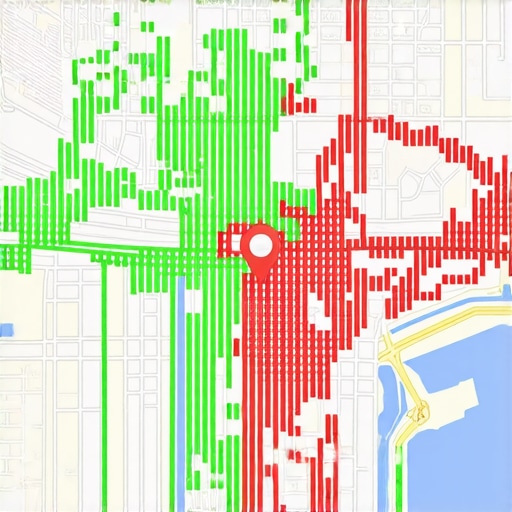
Build Real Authority With Geo-Targeted Signals
If you want to truly move the needle, you have to look past the surface-level tasks. You need to start building geo-targeted signals that prove your real-world activity. This isn’t just about writing a blog post; it’s about ensuring your digital footprint matches your physical service area. For instance, the truth about local schema is that it’s not a magic pill, but when combined with specific city pages, it creates a powerful map ranking machine. By mastering map optimization through this multi-layered approach, you aren’t just checking boxes—you are building a moat around your business that competitors can’t easily cross with a few fake reviews or keyword-stuffed titles.
The Software That Actually Tracks Where Your Van Is Seen
For a long time, I relied on vanity metrics. I would type my service into Google while sitting in my driveway, see myself at the top, and think I was winning. The reality is that rankings change block by block. To get a real sense of your reach, you need a local grid tracker. I personally use Local Falcon or the BrightLocal Local Search Grid because they show a heatmap of your rankings across the entire city. If you see a sea of red dots just two miles away, you know your map health is suffering in those specific neighborhoods. This is why why your local seo software is feeding you useless ranking data—most tools only check from one fixed point, which is useless for a business on wheels.
How do I maintain my map health over the long haul?
Maintenance isn’t about one big push; it’s about micro-habits. I’ve integrated a google listing checklist items you need to update weekly into my Sunday night routine. I spend ten minutes responding to new reviews, looking for spammy competitors who might be ‘keyword stuffing’ their titles to jump ahead of me, and posting one high-quality photo from a job site. If you let this slide, your profile becomes stagnant. Google rewards active businesses because it wants to provide users with ‘fresh’ results. You should treat your maps seo checklist as a living document, not a trophy on a shelf. According to Joy Hawkins of Sterling Sky, one of the most respected voices in local search, Google’s proximity filters are constantly tightening, meaning your ‘activity signals’ have to be louder than ever to compensate for distance.
Don’t Let Your Analytics Lie to You
Success isn’t measured in ‘impressions’ or ‘views.’ Those are often just bots or people looking for your phone number because they’re already your customers. You need to focus on how to measure real local results without using vanity metrics. I look at ‘Direction Requests’ and ‘Website Clicks’ from specific zip codes. If I see a spike in clicks from a town where I recently ran a local ad or finished a big project, I know my geo-targeted signals are working. This data tells me exactly where to focus my next round of city-page updates.
The Future of Local Search Is Conversation
I predict that within the next eighteen months, Google will transition even further into an AI-driven ‘Answer Engine.’ This means that the text inside your reviews and the Q&A section of your profile will matter more than your meta tags. Google is already pulling ‘justifications’ from reviews—those little snippets that say ‘They provide excellent water heater repair.’ If you aren’t encouraging customers to mention specific services in their reviews, you are missing out on the next wave of SEO. I challenge you to try this today: when you ask for a review, ask the client to name the specific service and the neighborhood you were in. It’s a small tweak that builds massive authority over time.
Proximity Is Not Destiny If Your Digital Signal Is Loud Enough
The hardest lesson I learned over the years is that Google doesn’t actually hate your mobile business; it just hates the lack of evidence that you are real. Early on, I thought I was failing because I didn’t have a storefront, but the reality was my map health was suffering from a lack of fresh, local data points. Here are a few lightbulb moments that changed everything for me:
- Google cares more about ‘prominence’ than the exact inch of your office location. If you are the most active pro in town, you can outrank the guy with the fancy lobby.
- Chasing 500 cheap citations is like trying to fix a leak with scotch tape. I saw way more growth when I focused on how to improve your map health without spending on ads by building real authority.
- The biggest shift happened when I stopped trying to ‘game’ the algorithm and started acting like the local expert I actually am.
The Survival Kit That Kept Me From Going Invisible
I didn’t get here by guessing. I rely on a few specific tools to ensure my maps seo checklist is actually working. I personally trust Local Falcon for its grid-tracking capabilities because it shows me exactly where my visibility drops off. I also keep a close eye on the Sterling Sky blog; Joy Hawkins and her team are the gold standard for knowing when Google changes the rules. For those of you who are strapped for time, I always recommend starting with the 10 minute maps seo checklist for busy business owners to keep your profile active without losing your mind.
Take Back Your Territory and Stop Being a Local Ghost
You have the skills and the happy clients to prove your worth. Now, it is just about making sure the map reflects that reality. Don’t let a missing physical address be the reason you lose out on jobs to less-qualified competitors. By sticking to the map optimization guide that actually follows google guidelines, you are building a business that stays visible for the long haul. It is your turn to stop being a digital phantom and start showing up exactly where your customers are looking for you. What is the biggest hurdle you have faced when trying to show up in a specific neighborhood you service? Let me know in the comments below!