The Pest Control SEO Move That Actually Triggers Emergency Calls
The Pest Control SEO Move That Actually Triggers Emergency Calls
When a homeowner walks into their kitchen at 2:00 AM and sees a cockroach skittering across the counter, or discovers a wasp nest the size of a basketball near the front door, they aren’t looking for a relationship. They aren’t scrolling through page four of Google search results to read about the history of entomology. They are in a state of high-stakes panic. In the world of pest control, we call this the “Emergency Search.”
In these moments, the consumer’s journey is incredibly short. They pull out their phone, type “pest control near me” or “emergency bed bug removal,” and they click the first trusted result that allows them to hit a “Call” button. If your business isn’t in that immediate field of vision, you don’t exist. This is why google business profile seo is no longer just a “nice to have” – it is the heartbeat of your lead generation engine. In fact, research from PushLeads shows that businesses with a complete and optimized Google Business Profile are 70% more likely to attract location visits and direct phone calls. If you aren’t capturing that 70%, you are effectively handing your local market share to your competitors on a silver platter.
As an SEO strategist who has spent years in the trenches of home services, I’ve seen countless companies waste thousands on broad national keywords while ignoring the technical levers in Google Maps that actually drive revenue. Today, I’m pulling back the curtain on the specific moves that turn casual impressions into high-intent emergency calls.
The Psychology of the “Emergency” Map Search
To dominate the local market, you have to understand the psychology of the “Map Pack.” When a user sees the map at the top of their search results, their brain processes three things almost instantaneously: Proximity, Relevance, and Prominence. This is the triad Google uses to rank you, but it’s also the triad the customer uses to trust you.
We are living in the era of the “zero-click” search. This means a significant portion of your potential customers will find your phone number, your hours, and your reviews directly on the search results page and call you without ever visiting your website. For an emergency pest control service, the phone call is the ultimate conversion. If your profile is buried, you’re losing the “proximity” battle before it even starts. Many owners ask me why your business isn’t in the top 3, and the answer usually lies in a failure to signal “relevance” to Google’s algorithm in a way that matches the user’s urgent intent.
In an emergency, the user wants to know: Are you close? Do you solve my specific problem? Can I trust you right now? If your Google Business Profile (GBP) doesn’t answer those three questions in three seconds, the user moves to the next listing. The move we are about to discuss ensures that Google knows exactly what problems you solve, placing you in front of the right person at the exact moment of their crisis.
The “Move”: Leveraging Predefined Services for Ranking Dominance
If you want to rank google business profile listings higher than the franchise down the street, you need to master the “Predefined Services” feature. In late 2024 and heading into 2025/2026, Google has significantly increased the weight it places on the specific services selected within the GBP dashboard. Most pest control owners simply select “Pest Control” and call it a day. That is a massive mistake.
Google provides a list of predefined services based on your primary category. For pest control, these include “Rodent extermination,” “Termite inspection,” “Bed bug treatment,” and “Ant extermination.” When you explicitly select these and – this is the crucial part – add custom descriptions to each, you are creating a relevancy loop. When a user searches for “emergency rodent removal,” Google looks for profiles that have “Rodent extermination” checked as a service. Profiles that have this specific data point will almost always outrank those that only have the broad “Pest Control” category.
To stay ahead of these algorithmic shifts, I often recommend using local seo tools to monitor how your competitors are categorizing their services. The goal is to be more specific than the “big box” exterminators. If you offer specialized wildlife removal or emergency beehive relocation, these must be listed as distinct services. This technical “move” signals to Google that you aren’t just a generalist; you are the specific solution to the user’s immediate, crawling, or stinging problem.
Furthermore, Google’s “Justifications” (those small snippets of text that appear under your map listing saying “Provides: Bed bug control”) are often pulled directly from these service selections and the content on your linked website. By aligning your predefined services with your website’s landing pages, you create a “relevance shield” that makes it very difficult for competitors to displace you.
Trust Signals That Stop the Scroll (and Start the Call)
Ranking is only half the battle. You can be #1 in the Map Pack, but if your profile looks like a digital graveyard, the user will skip you and call #2. In emergency pest control, trust is the primary currency. If a homeowner is going to let a stranger into their house at 9:00 PM to spray chemicals, they need to feel safe.
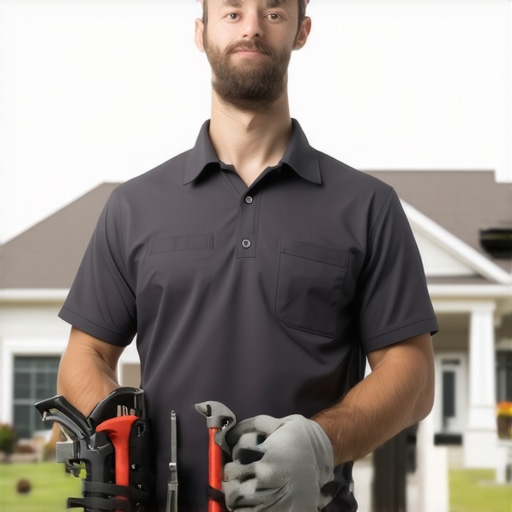
This is where conversion optimization within the GBP becomes vital. The most common mistake I see is the use of stock photography. If your profile features a generic photo of a guy in a lab coat looking at a magnifying glass, you are bleeding leads. To improve google business profile visibility and conversion, you need “real-world” photos. I’m talking about high-resolution shots of your branded trucks, your technicians in uniform, and even “before and after” shots of successful interventions (within the bounds of good taste, of course).
As I always say, “If your profile looks like a generic template, you’re handing emergency calls to your competitors who show their faces and their fleet.” These are the missing trust signals that often keep a business from converting its impressions into actual revenue. Google’s Vision AI also scans your photos. If it sees a truck with your logo and the words “Pest Control” on it, it confirms your business’s real-world prominence, which directly boosts your rankings.
Additionally, don’t ignore the Q&A section. Populate it yourself with common emergency questions. “Do you offer same-day service for wasp nests?” “Are your treatments safe for pets?” By answering these in advance, you remove the friction that prevents a user from hitting the “Call” button.
Managing the Service Area Business (SAB) Ghosting Issue
Many independent pest control operators run their business out of their homes. In Google’s eyes, these are Service Area Businesses (SABs). A major challenge for SABs is the “ghosting” effect, where Google’s proximity filters hide your business because you don’t have a physical storefront that users can visit. This can be devastating for local seo for pest control.
To combat this, you must be surgical with your Service Area settings. Do not simply select “United States” or an entire state. Define your service area by specific zip codes or cities within a 20-30 mile radius of your base. Overextending your service area in the dashboard actually dilutes your ranking power in the core areas where you are most likely to get calls. If you find your visibility dropping despite having good reviews, you may need a professional google maps ranking service to help recalibrate your NAP (Name, Address, Phone Number) consistency across the web.
NAP consistency is the bedrock of local SEO. If your business is listed as “City Pest Pros” on your GBP but “City Pest Pros LLC” on Yelp, Google sees a flicker of doubt. In the high-stakes world of emergency services, Google only wants to show businesses it is 100% certain are legitimate. Advanced verification is also becoming more common in the home services niche. Be prepared to provide video evidence of your equipment, your branded vehicle, and your business registration to maintain your “verified” status and stay visible in the Map Pack.
Preparing for 2026: AI Filters and Proximity Shifts
The future of local search is being shaped by AI. We are already seeing Google’s Search Generative Experience (SGE) and AI Overviews summarizing reviews and business information to answer user queries before they even see the traditional map results. For example, a user might ask, “Who is the best-rated exterminator for bed bugs that offers 24/7 service?” and the AI will generate a summary based on your profile content and customer reviews.
To ensure your 2026 local AI readiness, you must focus on “Hyperlocal SEO.” This means moving beyond general keywords and creating content – both on your website and in your GBP updates – that mentions specific neighborhoods, local landmarks, and local pests common to your area. If there’s an outbreak of spotted lanternflies in a specific suburb, you should be posting about it on your Google Business Profile.
AI filters will also place a higher premium on “sentiment analysis” of your reviews. It’s no longer enough to have five stars; the text of the reviews needs to mention the specific services you want to rank for. Encourage your customers to mention the specific pest you cleared. A review that says, “They arrived in 30 minutes and fixed our ant problem,” is worth ten reviews that just say, “Great service.” This level of detail is exactly what the next generation of google maps lead generation will depend on.
The 5-Minute Map Health Audit for Pest Control Owners
You don’t need to be a technical genius to start seeing results. Perform this quick audit tonight to see where you’re leaving money on the table:
- Check for “Ghosted” Profiles: Open an incognito window and search for your specific services in the neighborhoods you serve. If you don’t appear in the top 10, your proximity settings or NAP consistency are likely broken.
- Audit “Predefined Services”: Go into your GBP dashboard. Have you checked every relevant box? Have you added a 300-word description to your primary services like “Termite Control” or “Bed Bug Treatment”?
- Review the Q&A Section: Are there unanswered questions? Are there questions you can add yourself to address “Emergency” concerns?
- Photo Check: Do you have at least 5 photos of your branded trucks and 5 photos of your team in uniform? If not, take them tomorrow morning.
- Check Your “Justifications”: Look at your listing in the Map Pack. Does Google show a snippet like “Provides: Emergency Pest Control”? If not, you need to update your website and GBP services to match.
Using a Google listing checklist like this regularly is the difference between a stagnant business and one that has to hire new technicians just to keep up with the call volume.
Conclusion: Stop Ranking, Start Converting
At the end of the day, ranking #1 for “pest control” is a vanity metric if your phone isn’t ringing. In a reactive, emergency-driven industry, your Google Business Profile is your digital storefront. By mastering predefined services, injecting real-world trust signals, and fixing the technical hurdles that SABs face, you move from being just another name on a list to being the obvious choice for a homeowner in distress.
The move that turned map impressions into phone calls for my most successful clients wasn’t a magic trick; it was the disciplined application of these local SEO principles. Don’t let another high-value emergency call go to your competitor because your profile was incomplete or invisible. Audit your profile today using our comprehensive checklist, or leverage specialized GMB ranking tools from SEO Viper Tools to automate your local ranking tracking and stay ahead of the curve. Your next big contract is one “Call” button click away – make sure it’s clicking on your business.